

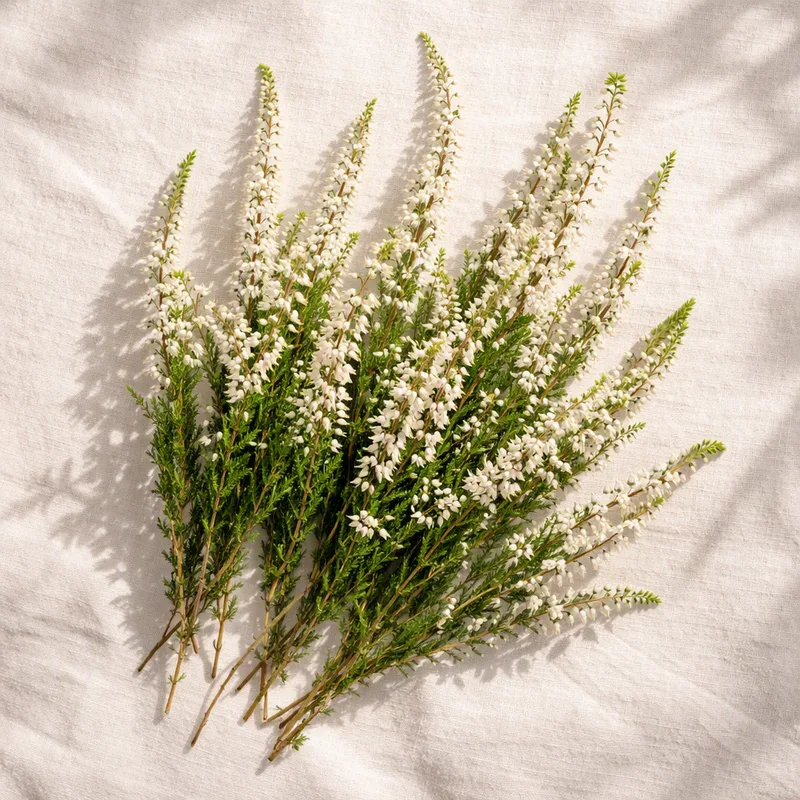
A natural rarity
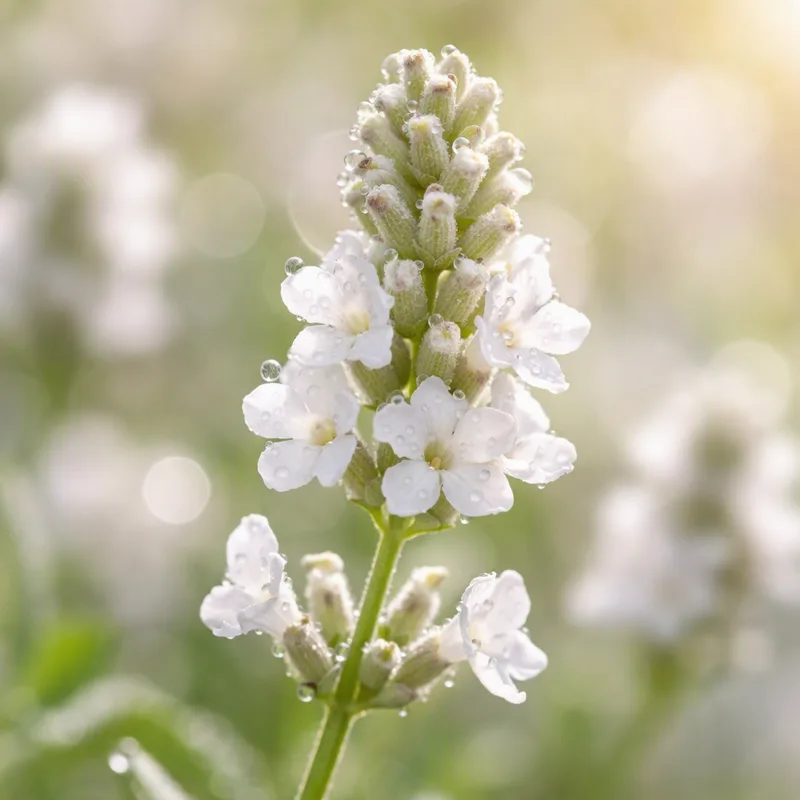
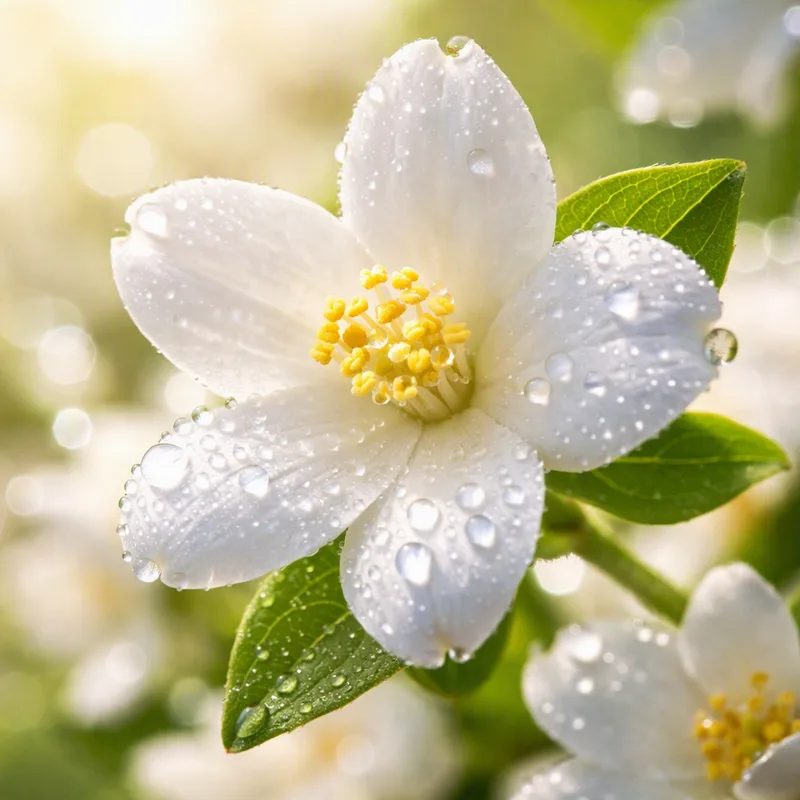
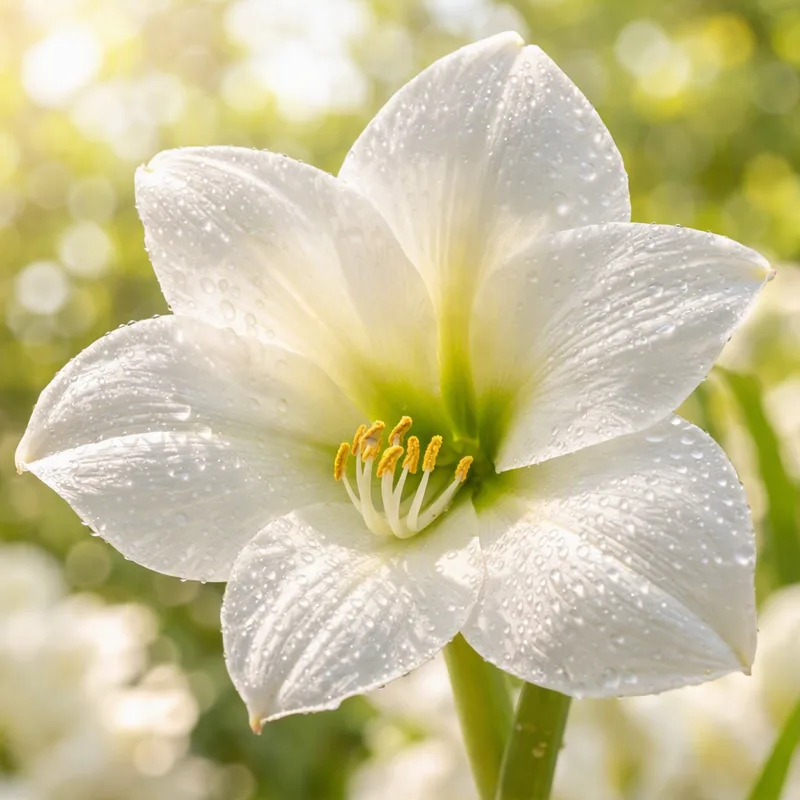
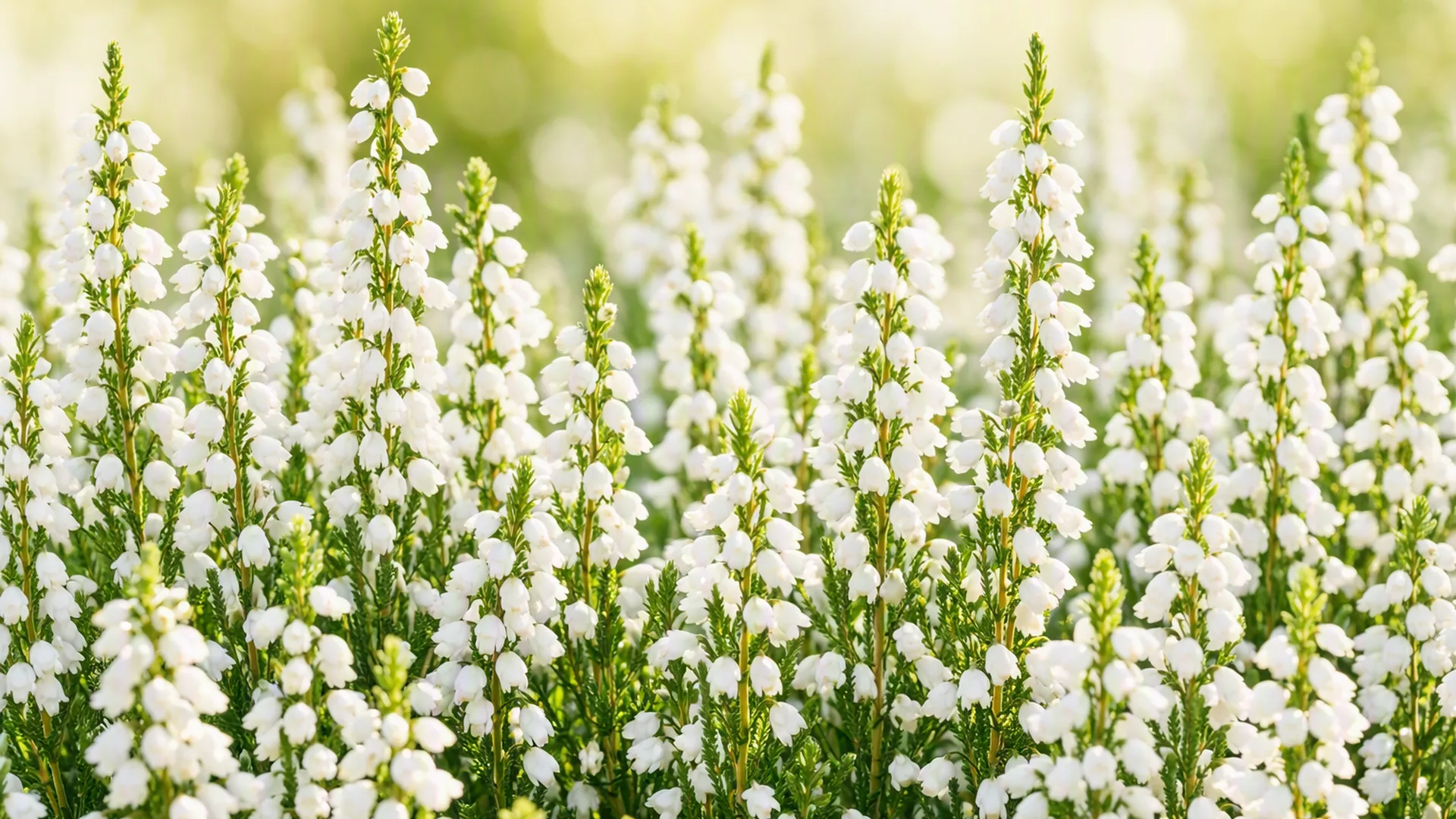
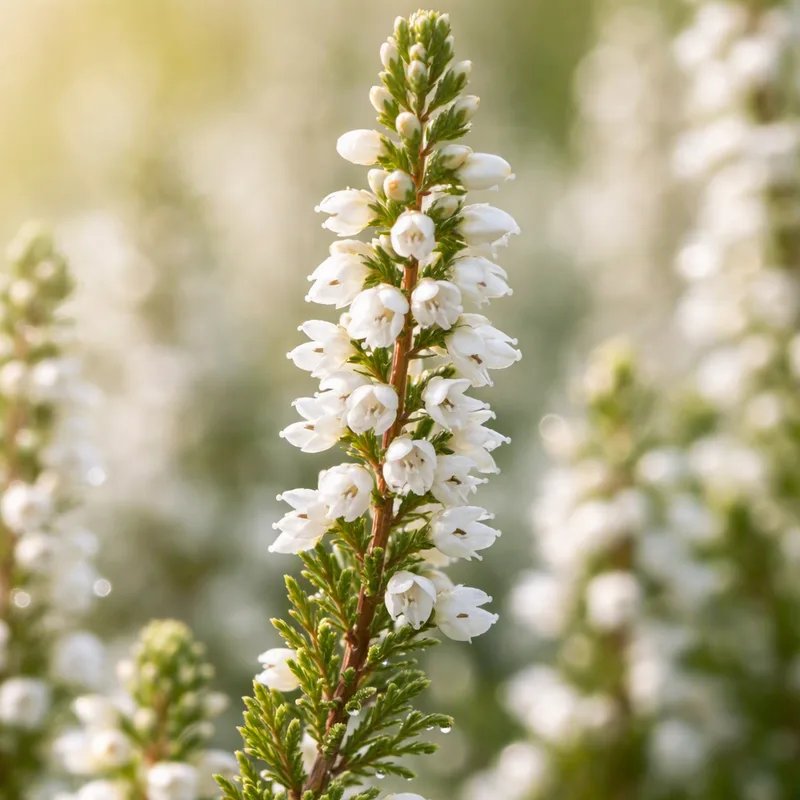
In the wild, Calluna vulgaris is normally mauve, but white-flowered plants appear occasionally. Nurseries have selected many white cultivars from those finds. White heather has a reputation as a lucky plant, and sprigs of it have long been added to bridal bouquets and buttonholes.
Searching for white heather plants
Look at the label rather than the colour name. A plant sold in a garden centre as white heather may be a Calluna, which flowers in late summer and autumn in the southern hemisphere, or an Erica, which often flowers through winter. They look alike from a distance but differ in leaf and flower shape. If you want the classic late-flowering Calluna, check the botanical name.
White heather in cool Australian gardens
Heather wants acid soil, full sun and cool conditions, which means it is a plant for Tasmania, the Victorian highlands and similar cool districts. Warm, humid climates rarely suit it, and alkaline soils cause yellowing.
- Plant in ericaceous mix or peaty, free-draining soil.
- Keep the roots mulched and moist but not waterlogged.
- Trim after flowering, just beneath the dead blooms.
- Avoid cutting into leafless old wood.
Cut sprigs and pets
White heather lasts well in a bouquet and dries easily. Wire it into a posy if you want a lasting keepsake.
The ASPCA toxic plant list does not include Calluna, but a missing listing is not proof of safety, so stop pets chewing it and call a vet if one does.