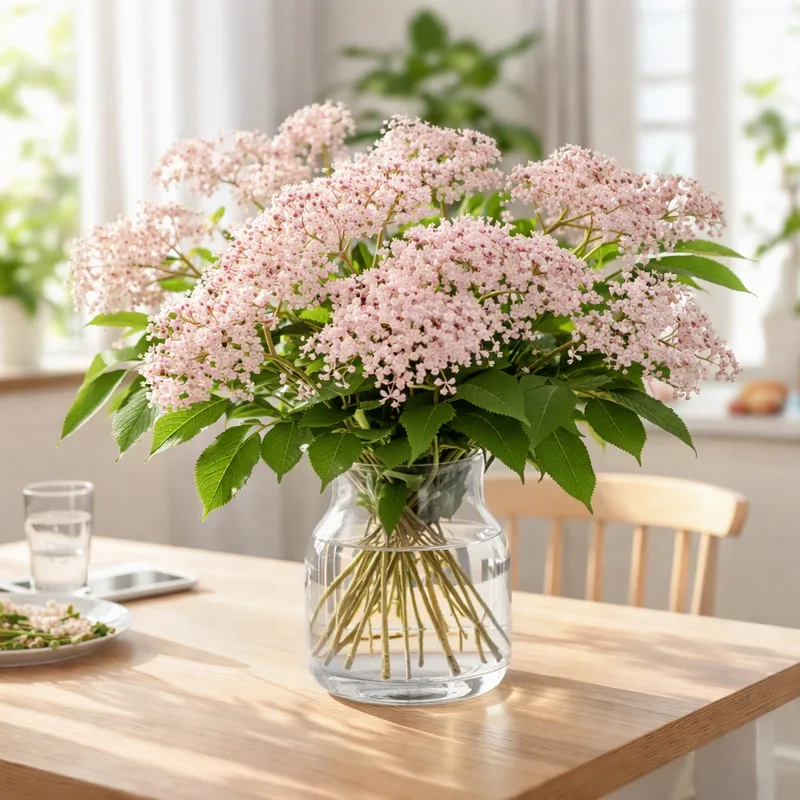
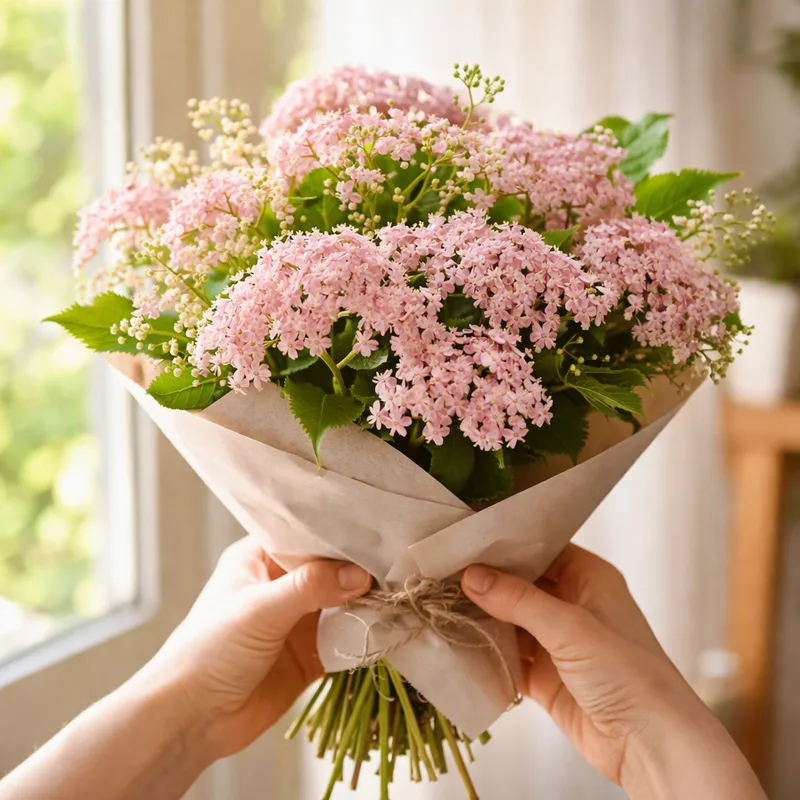
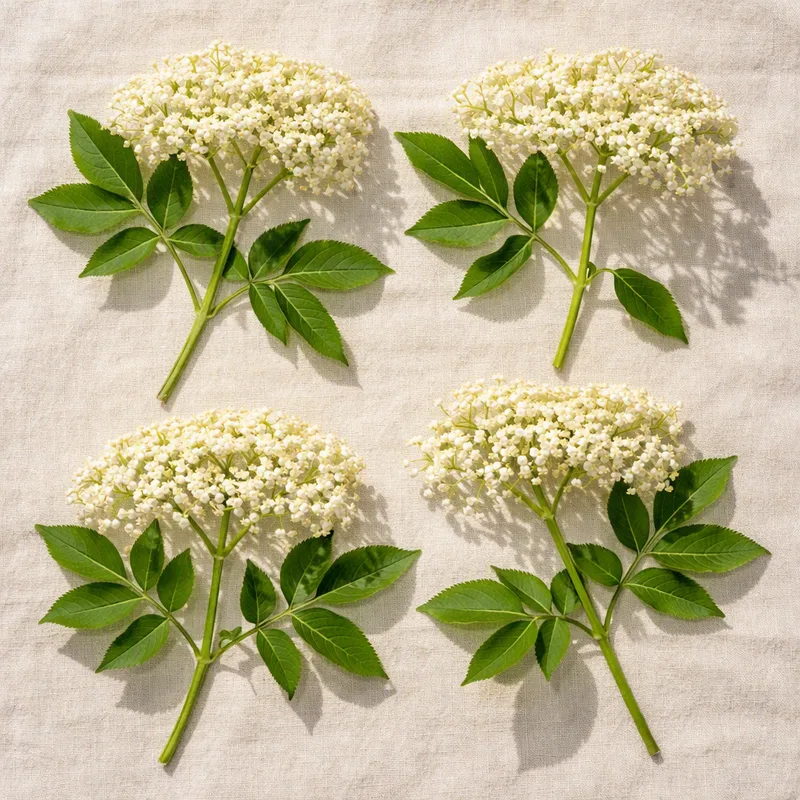
Elder with pink flowers is a garden form of Sambucus nigra, bred for ornament. The best known are dark-leaved cultivars such as 'Black Lace' and 'Black Beauty', which have deep purple foliage and pink-tinged flower heads, often with a lemon scent. They give an elegant shrub rather than a wild hedgerow tree.
Where pink elder fits
Pink-flowered elders suit cool-temperate gardens. They grow in Melbourne, Hobart, Canberra and cool hills, but struggle in humid heat. Put them in full sun for the best leaf colour, though in a hot spot a bit of afternoon shade avoids scorch. Water through the first summers.
Trimming for shape
Elder is vigorous and wants an annual trim. Cut stems back hard in late winter to keep a bushy shape and bigger flowers. Remove any shoots that revert to plain green. Prunings can be left to rot down but keep them away from animals.
Flowers and fruit
The pink heads appear in late spring, from about November, and can be used in cordial in the same way as the white ones. Later, dark berries ripen for birds and for jam.
Eat only the right parts
Wikipedia notes that, except for the flowers and ripe berries, all parts of Sambucus nigra are poisonous to mammals. Treat ornamental cultivars with the same caution: use only well-identified flowers and cooked ripe fruit.
Prunings and paddock animals
Elderberry sits on the ASPCA toxic list for dogs, cats and horses, so keep animals away from leaves, stems and unripe fruit.