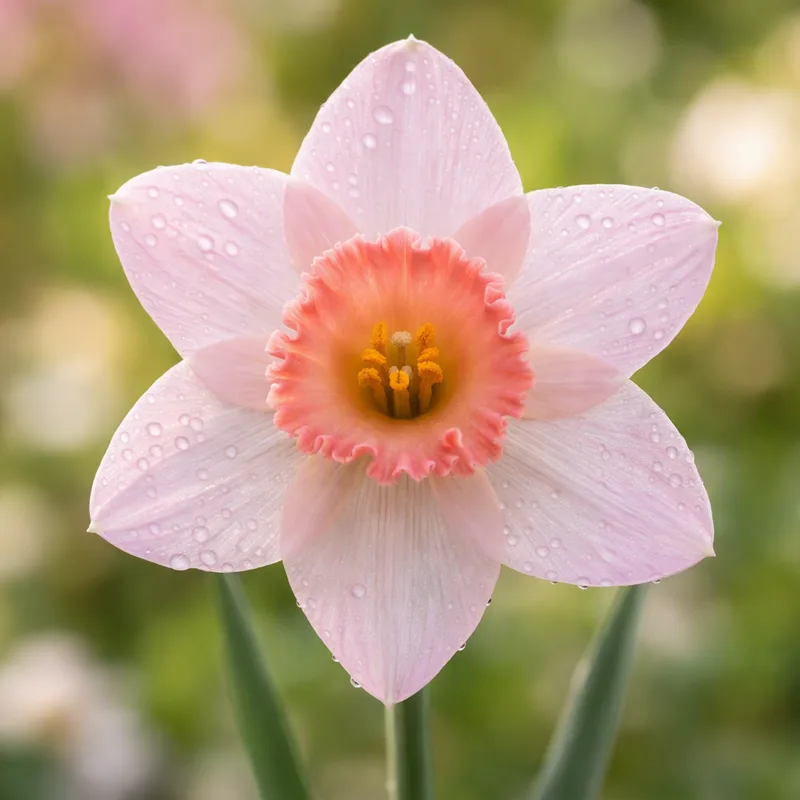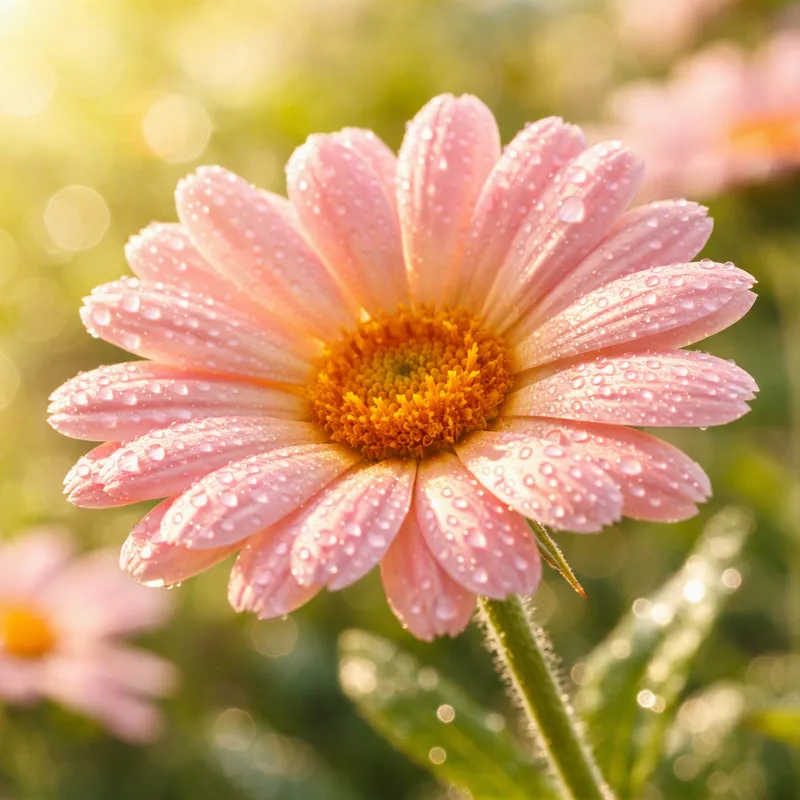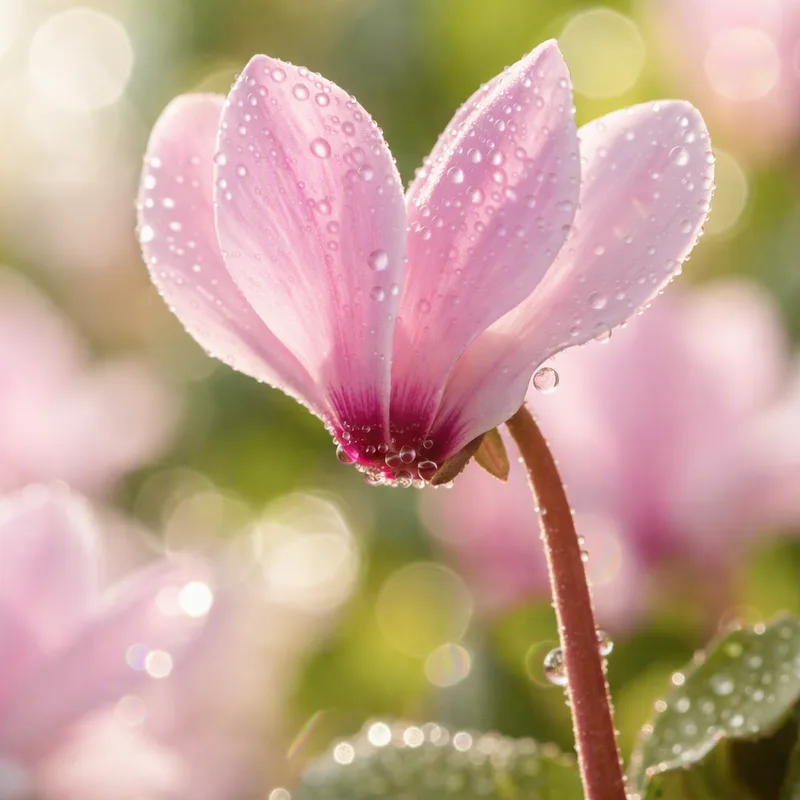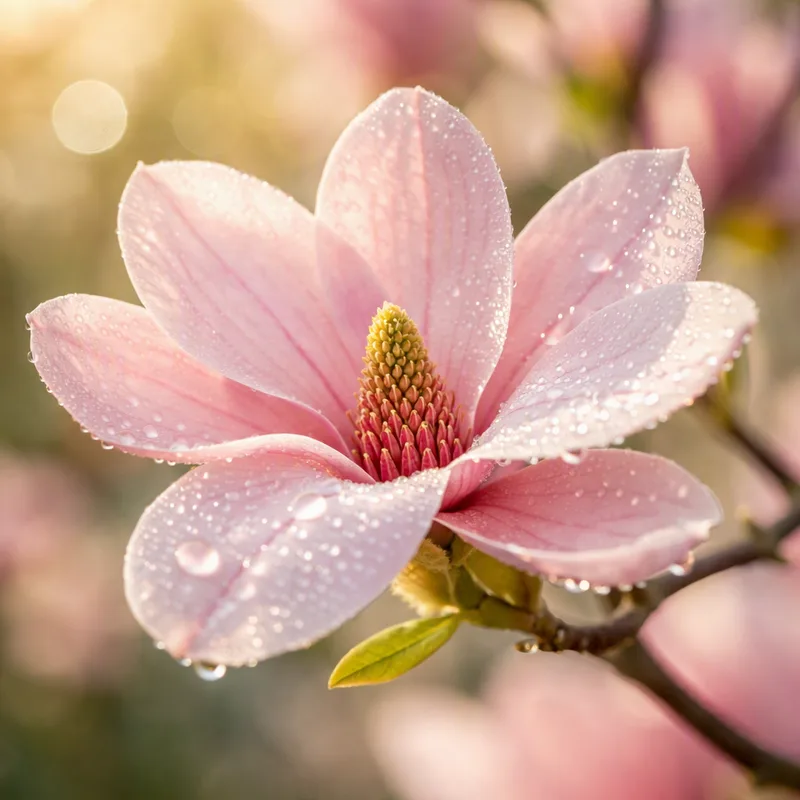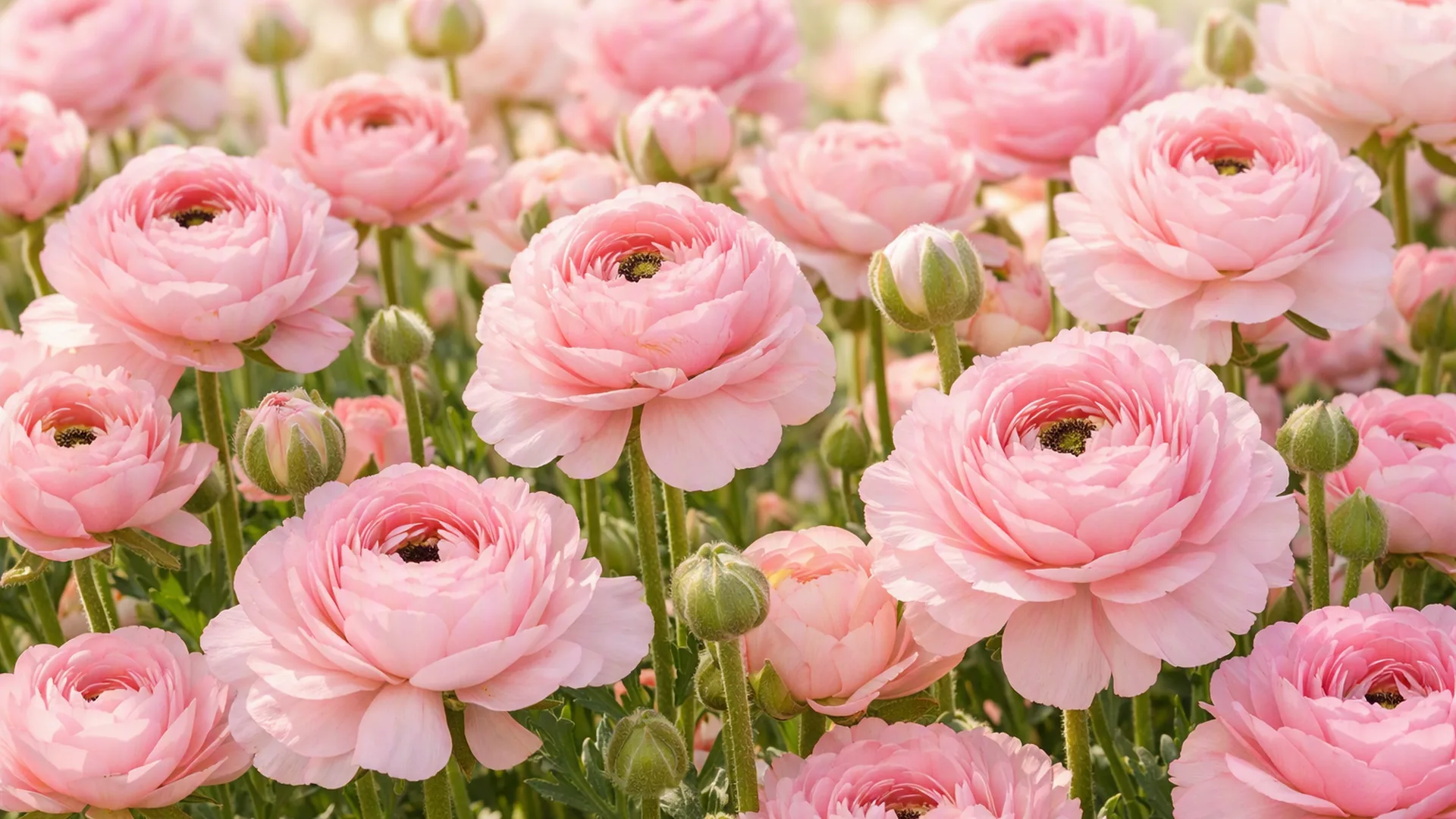
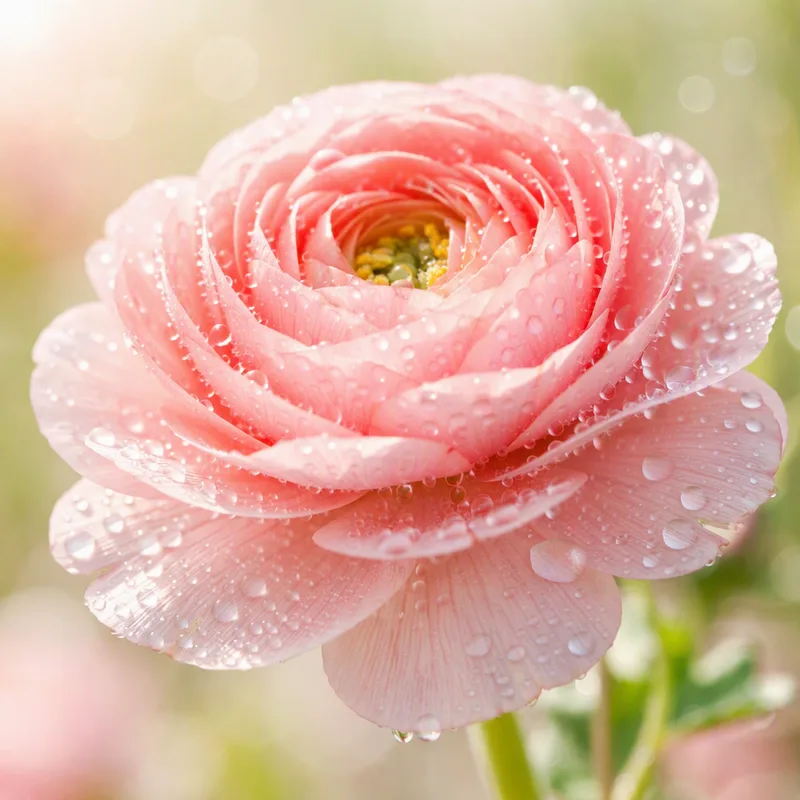
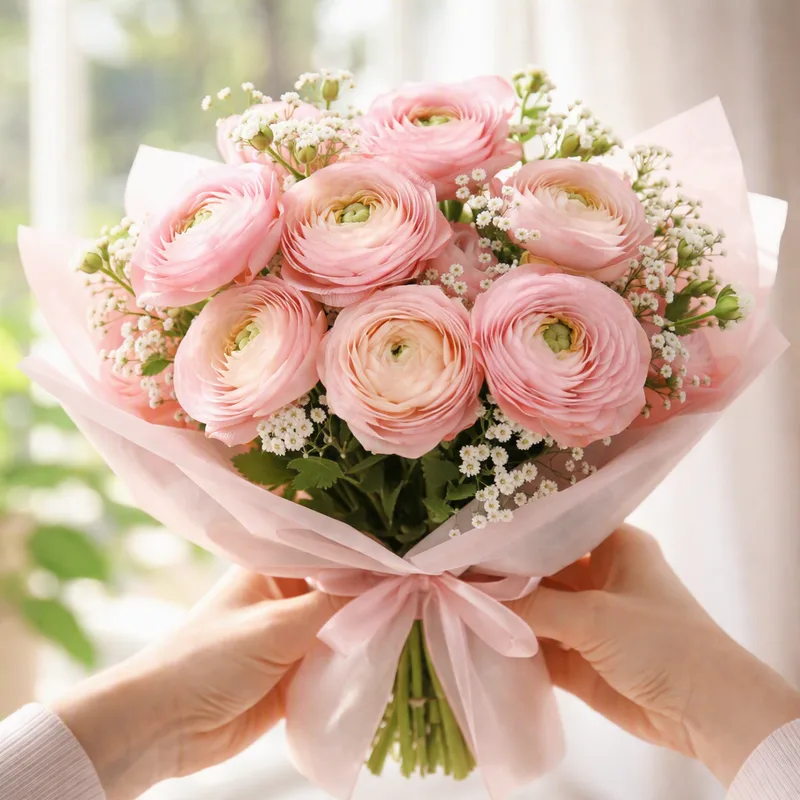
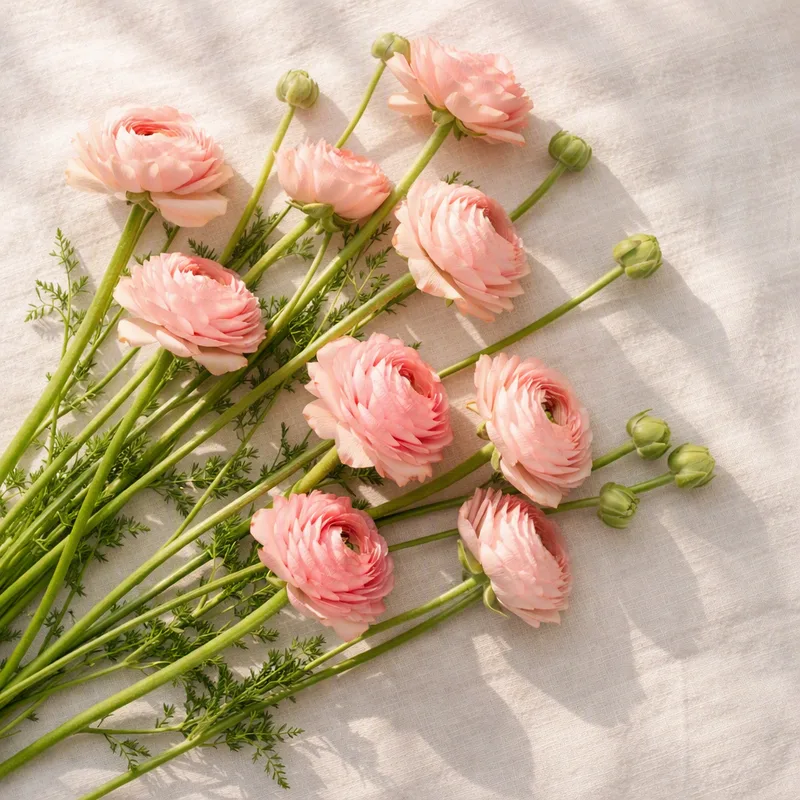
Pink ranunculus are the softest of the family: blush, baby pink, rose and a hot magenta, often with a deeper edge. They are the shade most associated with celebrations such as birthdays, baby showers and spring weddings.
Colour shifts
Pink flowers can fade in strong sun and develop a lighter tone as the petals age. In cool weather the colours stay richer. Growers say stems cut in the cool of the morning and put straight into water hold their colour longest. Some pinks open with a pale green centre and slowly flush as they unfold.
Planting and storage
Plant the claw-shaped tubers in autumn, March to May, claws pointing down and 3 to 5 cm deep. The first flowers open from about September, with the main show in October and November. Once leaves yellow in early summer, lift the tubers, let them dry in the shade and store them in a paper bag somewhere cool and airy. Replant them in autumn. If your climate is hot and wet, many gardeners simply buy fresh tubers each year.
Pots and bouquets
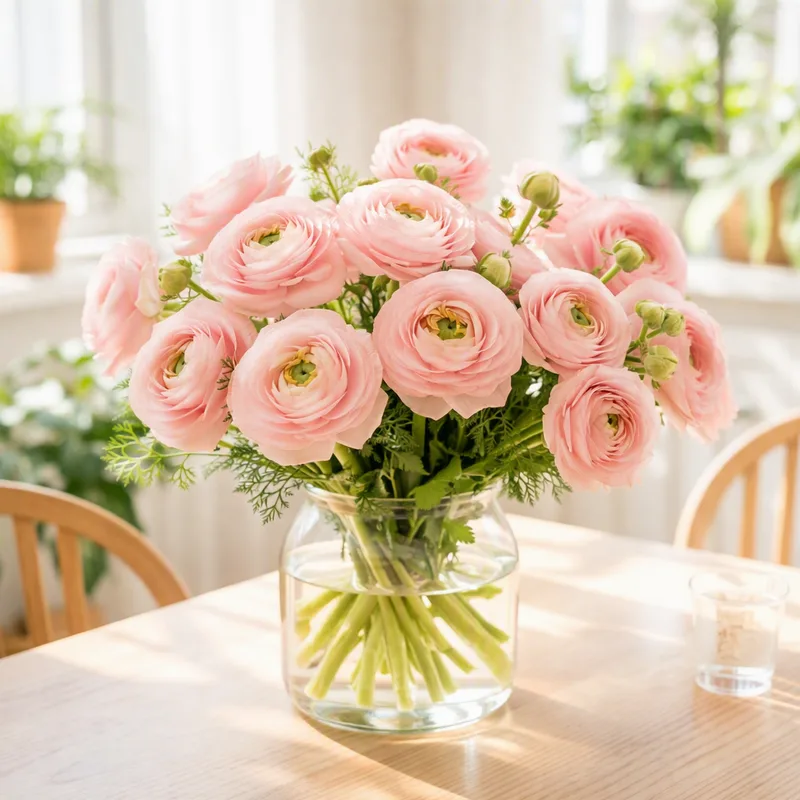
Ranunculus do well in pots on a sunny patio, and a cluster of three tubers in a small pot makes a good gift in autumn. Pink bunches pair well with white freesias or sprigs of wattle in late winter.
Good to know for pet owners
Buttercup plants are listed by the ASPCA as toxic to dogs and cats. The sap irritates, and animals may drool or vomit after chewing it. Check with your vet if your pet has eaten any.