
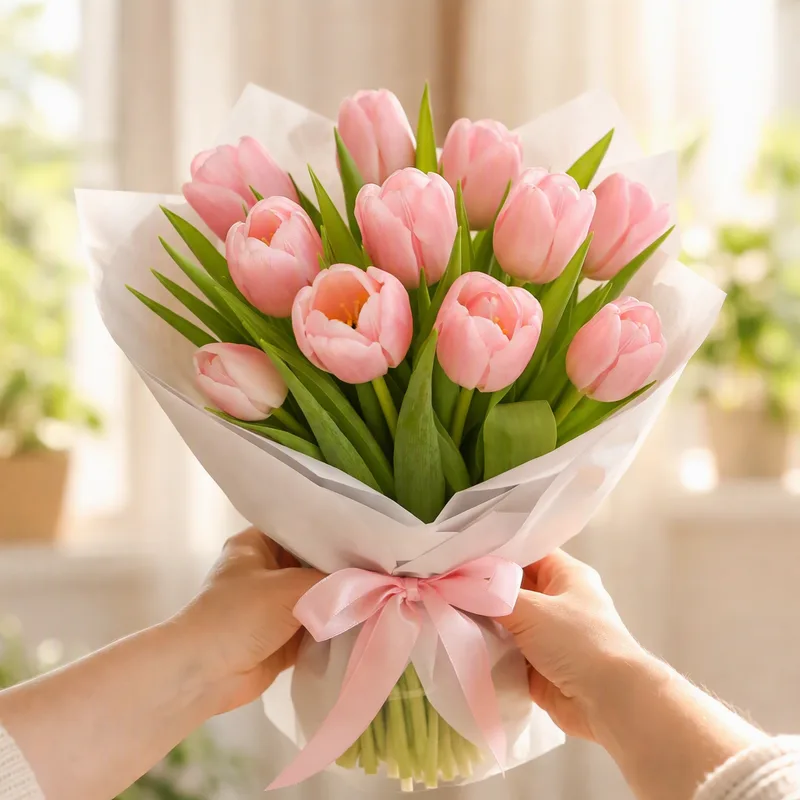
What pink tulips mean
Pink sits between white and red in the language of flowers. Light pink is commonly read as affection and good wishes, while deeper shades suggest stronger feeling and happiness. This is why pink tulips are a common pick for Mother's Day on the second Sunday of May, even though chrysanthemums are the Australian tradition for that day and tulips are barely in season.
A wide range of pinks
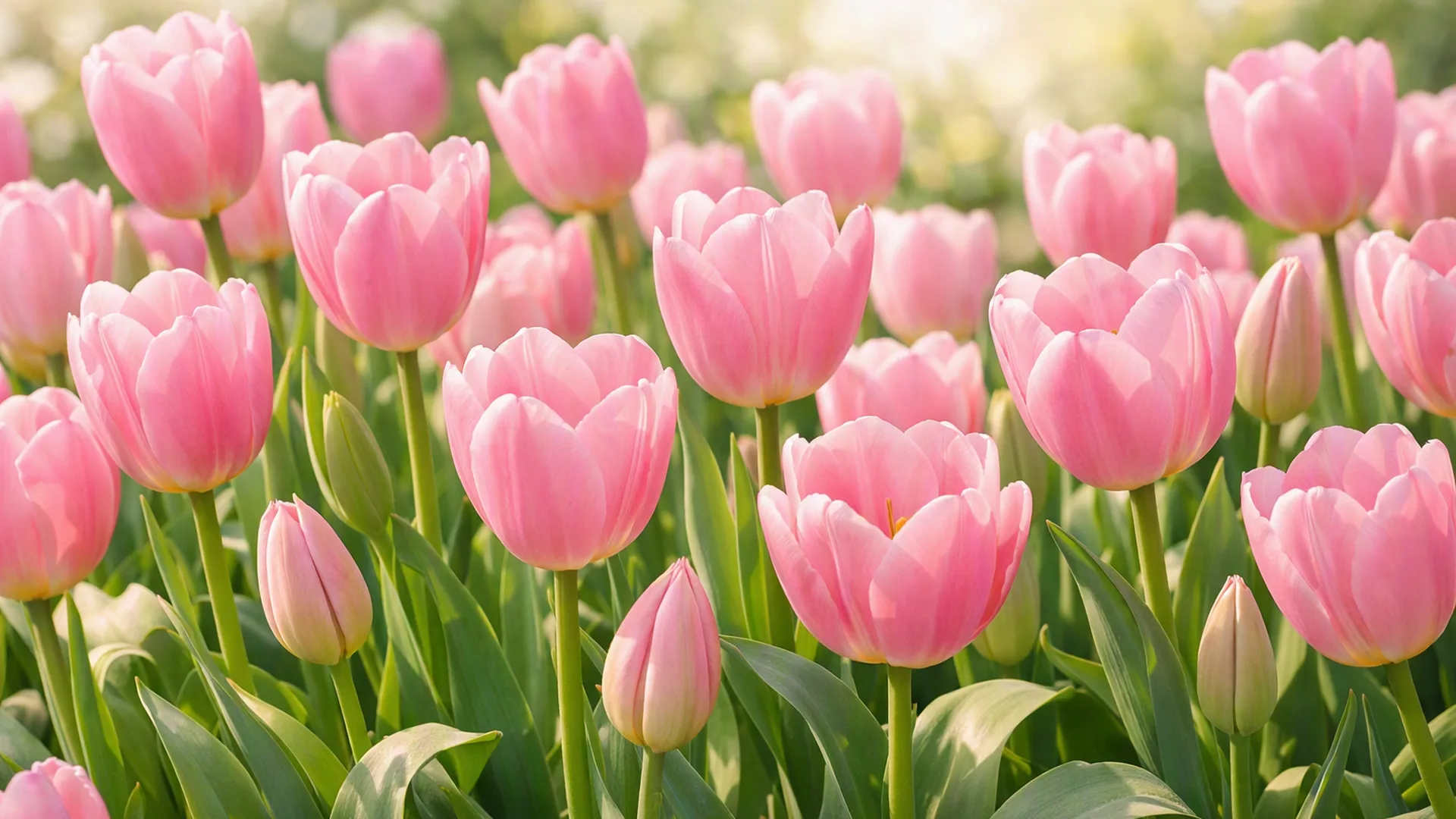
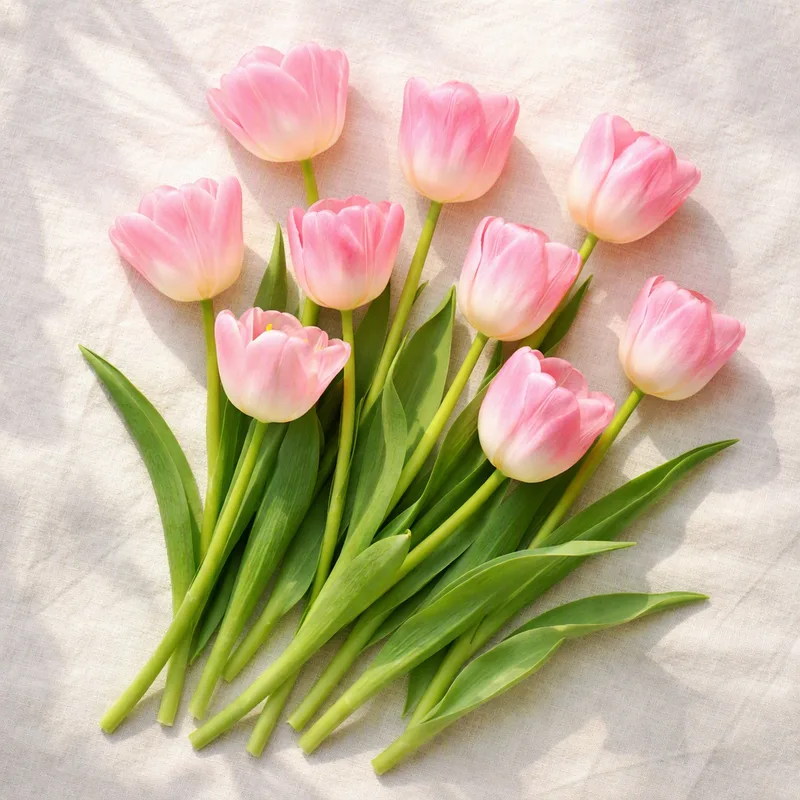
Pink tulips cover everything from nearly white blush through candy pink to magenta and rosy salmon. Some have two tones, with a darker flame up the middle. Shapes include:
- Single late tulips, tall and elegant, good for cutting.
- Double tulips, fuller and peony-like, with ruffled petals.
- Lily-flowered tulips, with pointed petals that curve outwards.
Pastel pinks pair well with grey foliage, while stronger shades look best with a single contrasting stem.
Where they grow
Bulbs need a cold winter to flower well. Gardeners in Tasmania, Canberra and Melbourne can plant in autumn and see bloom in September and October. Further north, chilling the bulbs in the fridge first gives a reasonable result for one season. Plant in full sun, in soil that drains freely.
Cut stems and pets
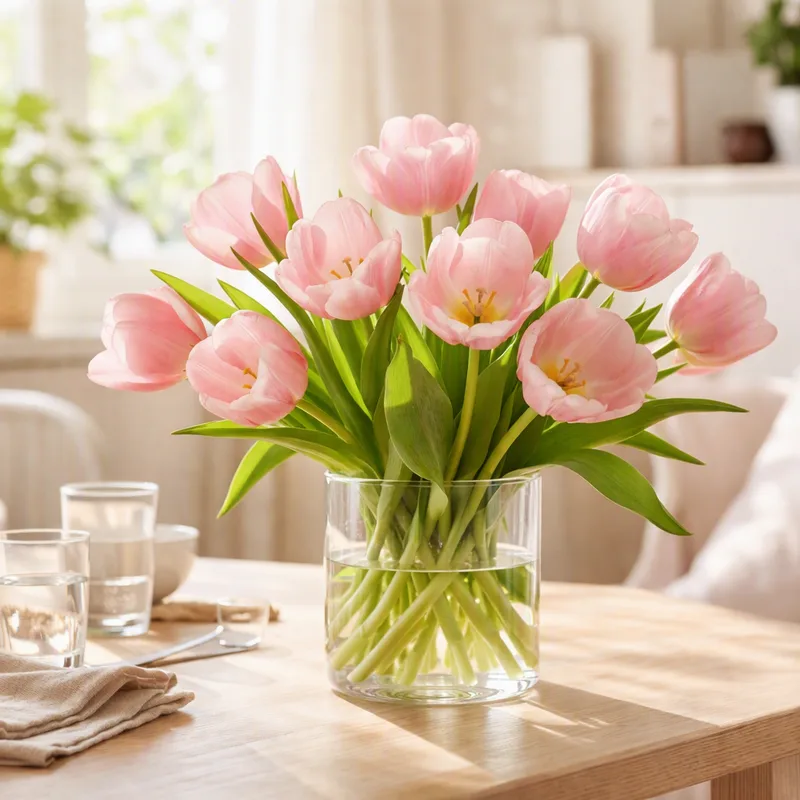
Pick stems when buds show colour. Give them cool, clean water, trim the bases on an angle and use a tall container. The heads often twist as they grow, and many people like that relaxed look.
Pet owners should know that tulips are listed by the ASPCA as toxic to dogs, cats and horses. The bulb has the highest concentration of the toxins. Keep it out of reach and ask your vet for advice if an animal has eaten some.