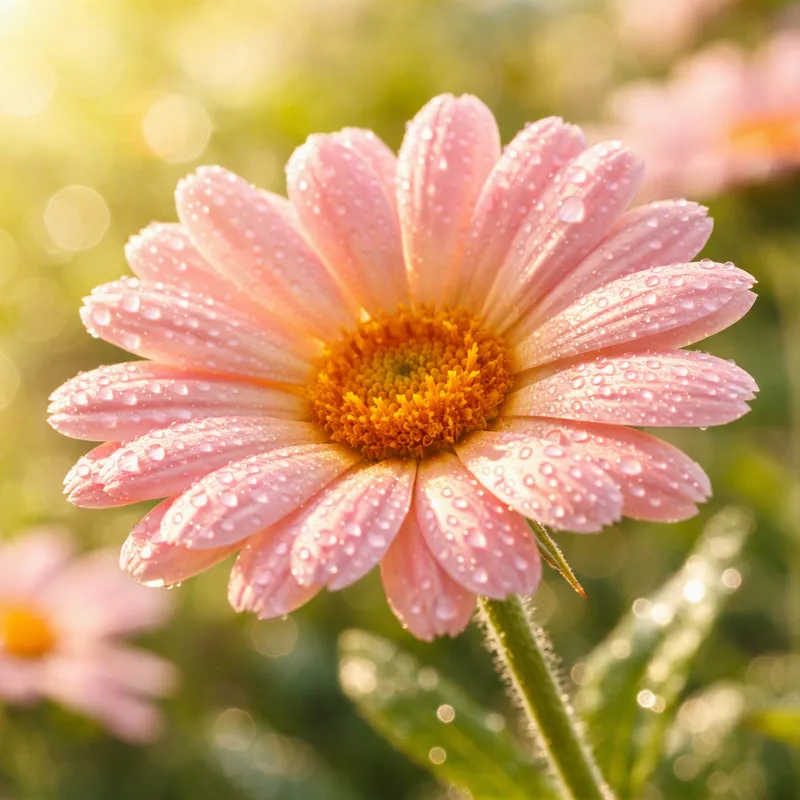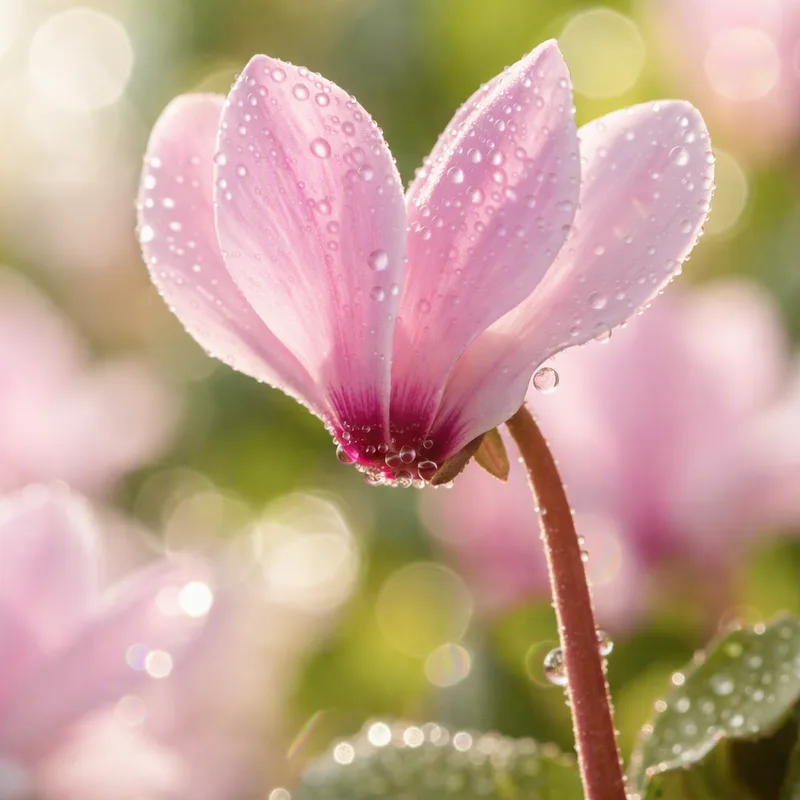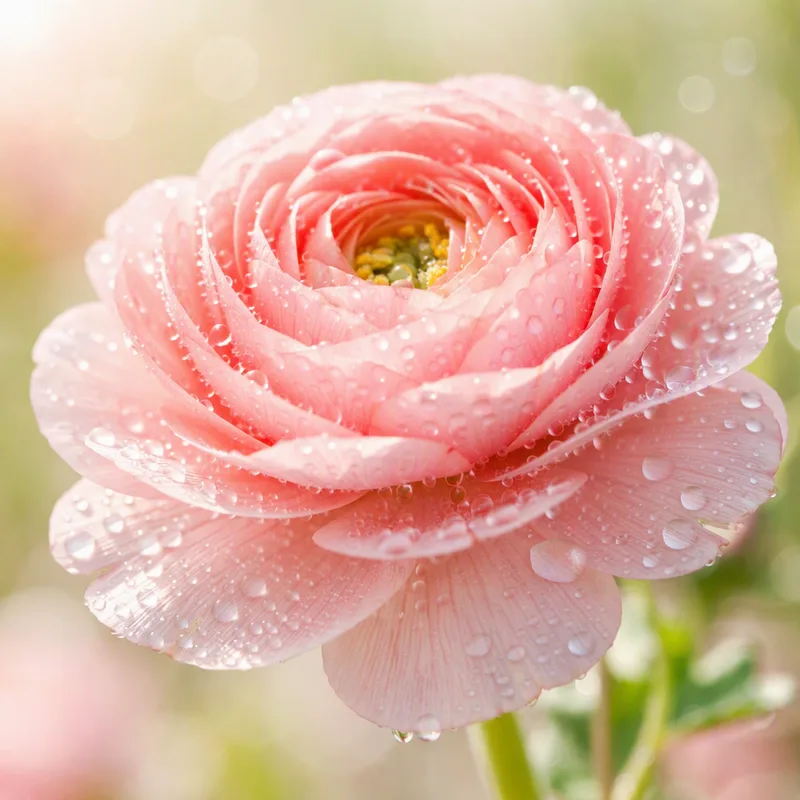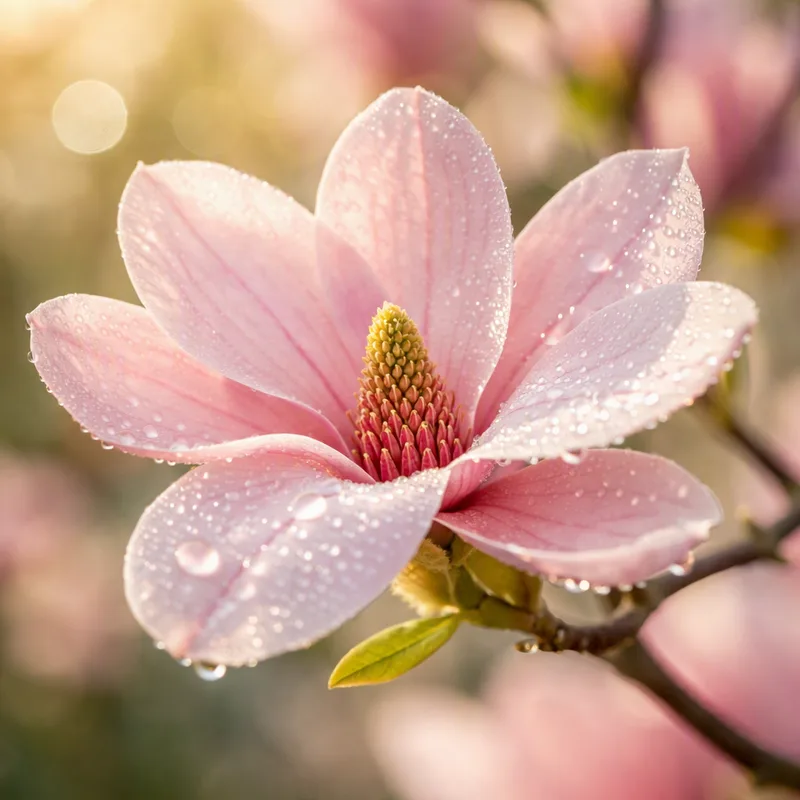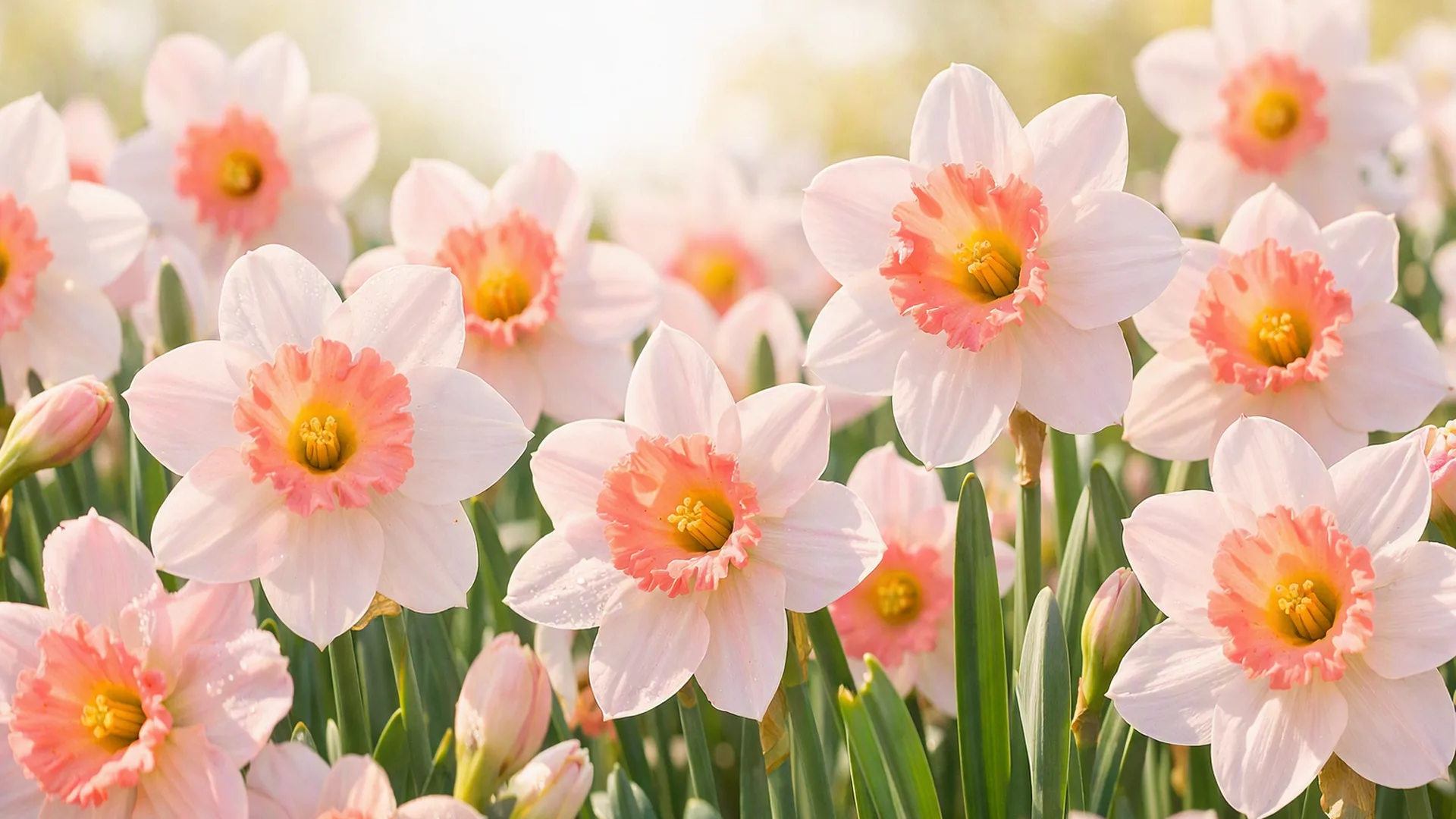
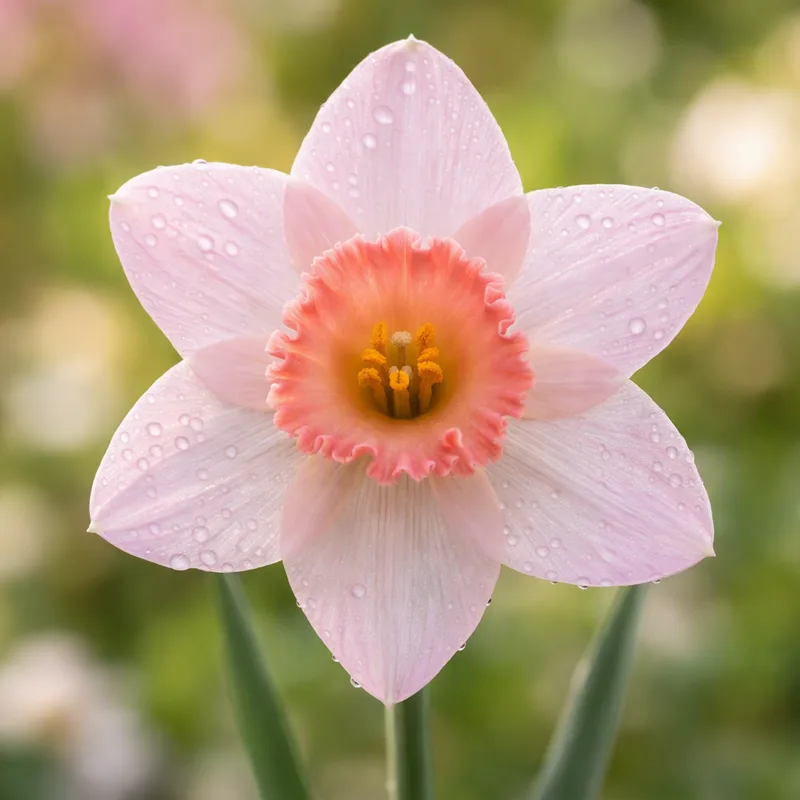
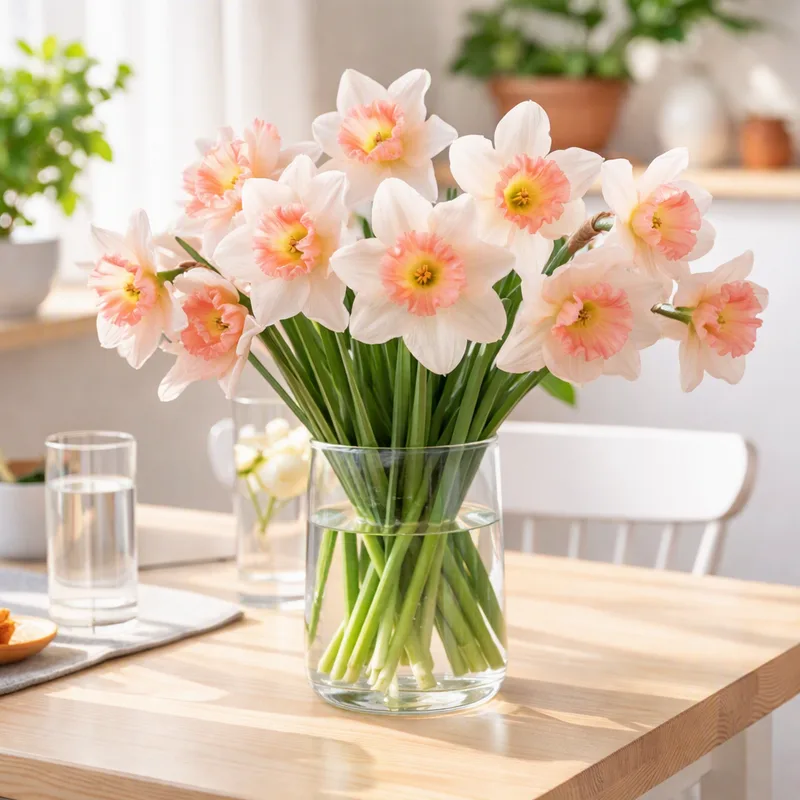
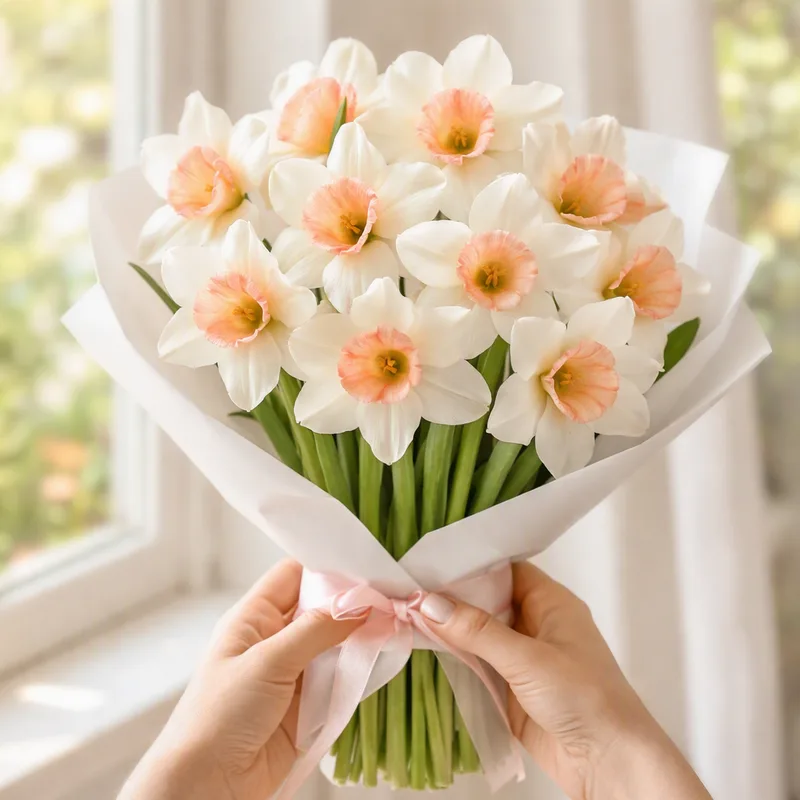
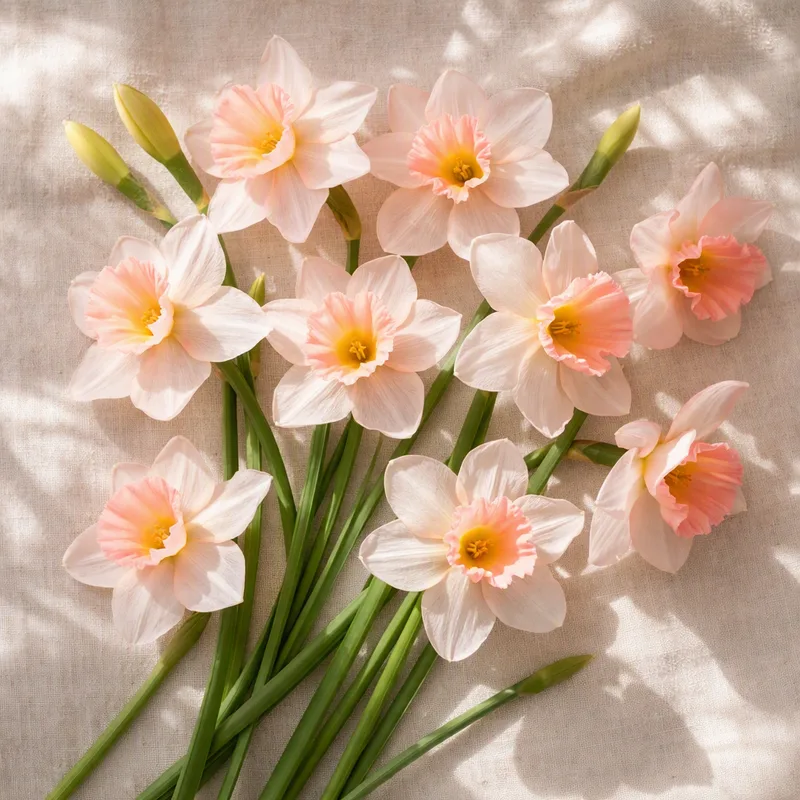
Wikipedia notes that garden daffodils can be white, yellow, orange or pink, with matching or contrasting colours in the tepals and the cup. Pink always means the cup or trumpet, not the outer petals, which are cream or white.
What the pink looks like
The cup of a pink daffodil may be apricot-pink, salmon, shell or soft rose. It is often most vivid when the flower first opens, then fades toward cream or buff as it ages. Strong sun speeds the fade, and cold nights deepen the colour. This makes the cup colour change from one weekend to the next.
Finding them
Look for the label pink cupped, or search bulb catalogues under split corona and large-cupped types, which include 'Salome' and 'Pink Charm'. Availability varies by year. In Australia pink daffodils are sold less widely than yellow ones, so order bulbs early in autumn.
Planting pink daffodils
- Plant between March and May, about 15 centimetres deep for large bulbs.
- Pick a spot that gets morning light and afternoon shade, which protects the pink in the cup.
- Like other daffodils, they want winter chill. Melbourne, Hobart and Canberra suit them. In Sydney and Perth, pre-chill the bulbs.
- Feed with a low-nitrogen fertiliser after flowering.
Companion plants for pink cups
Plant with white narcissus, grape hyacinths, or the silver leaves of lamb's ear. Pink cups look sweet beside pale blue.
Pink cups and pets
Daffodil bulbs are toxic to dogs, cats and horses according to the ASPCA. Lycorine is the main toxin. Keep pets away from freshly dug bulbs.