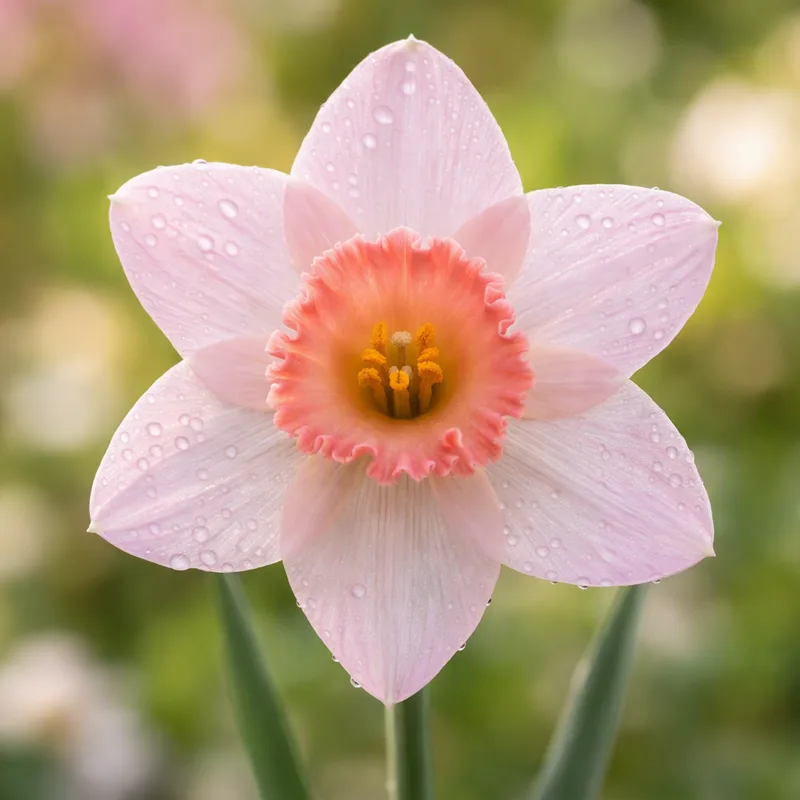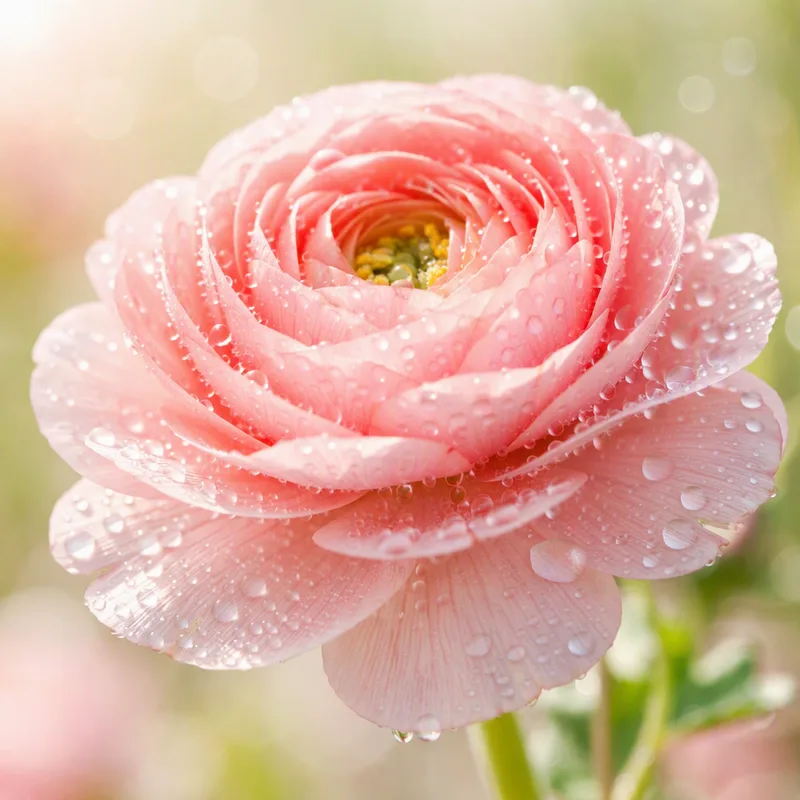

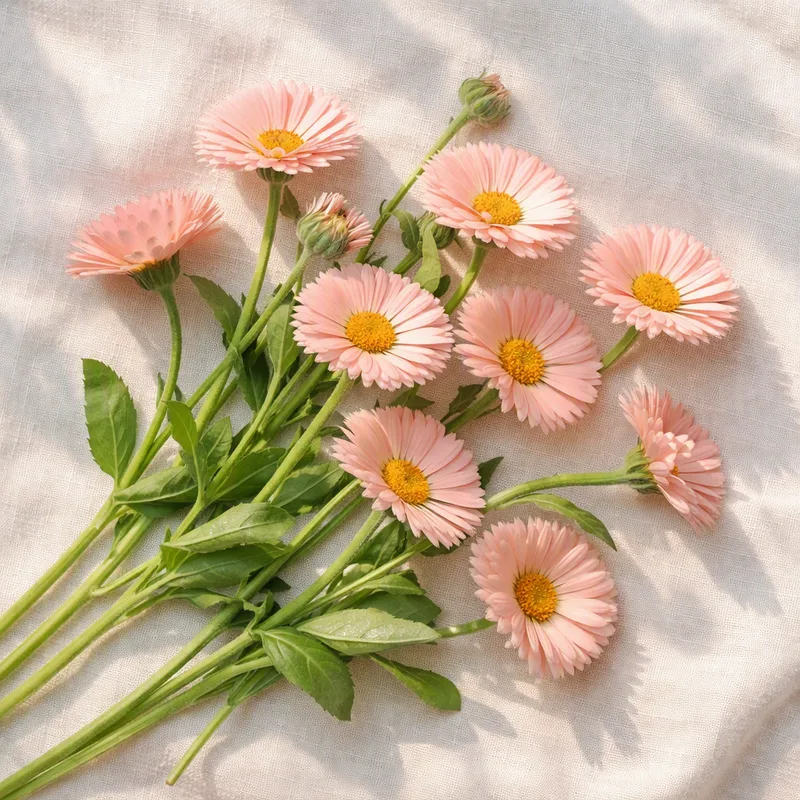
Peach, apricot and rose in pot marigolds
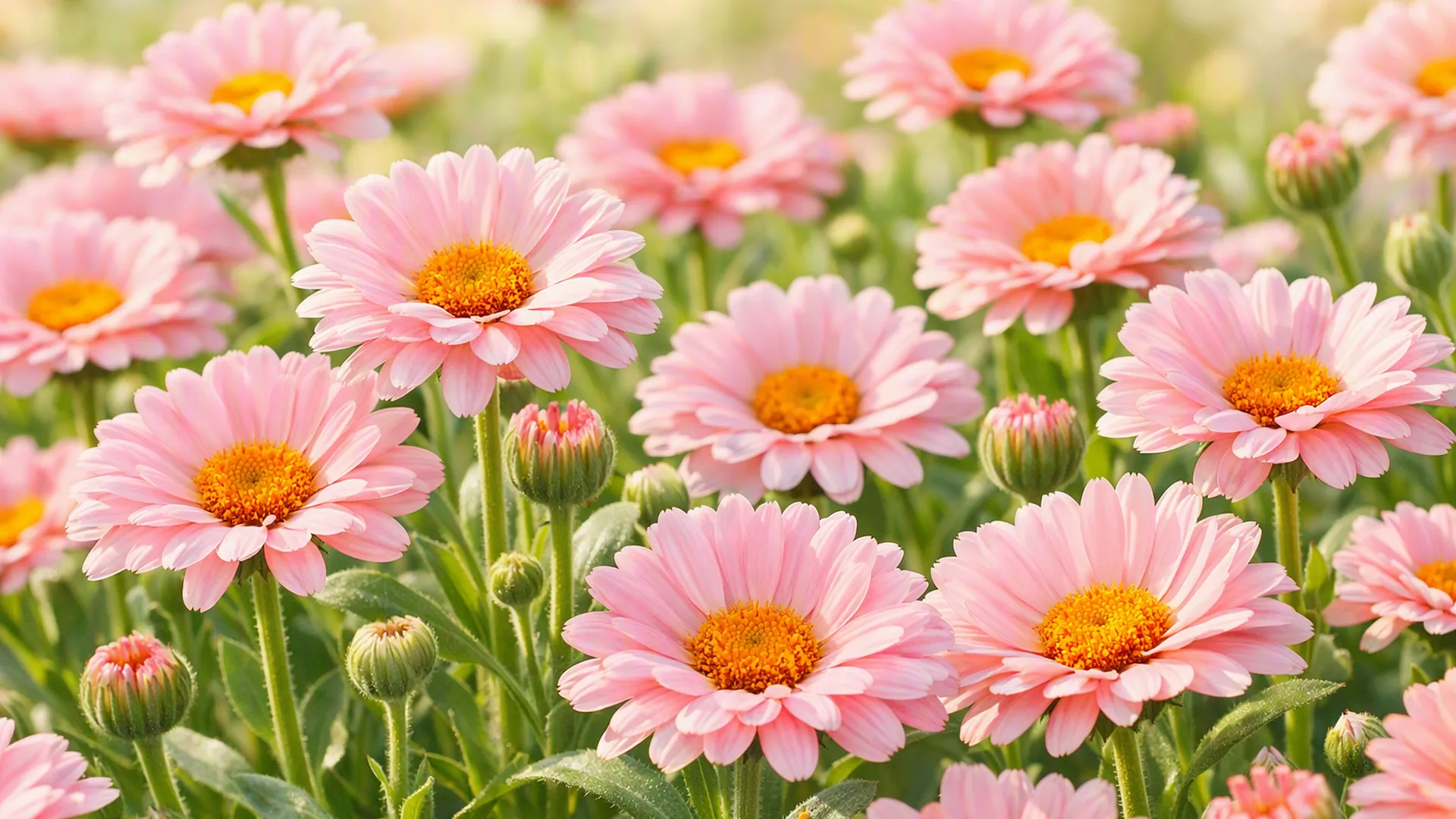
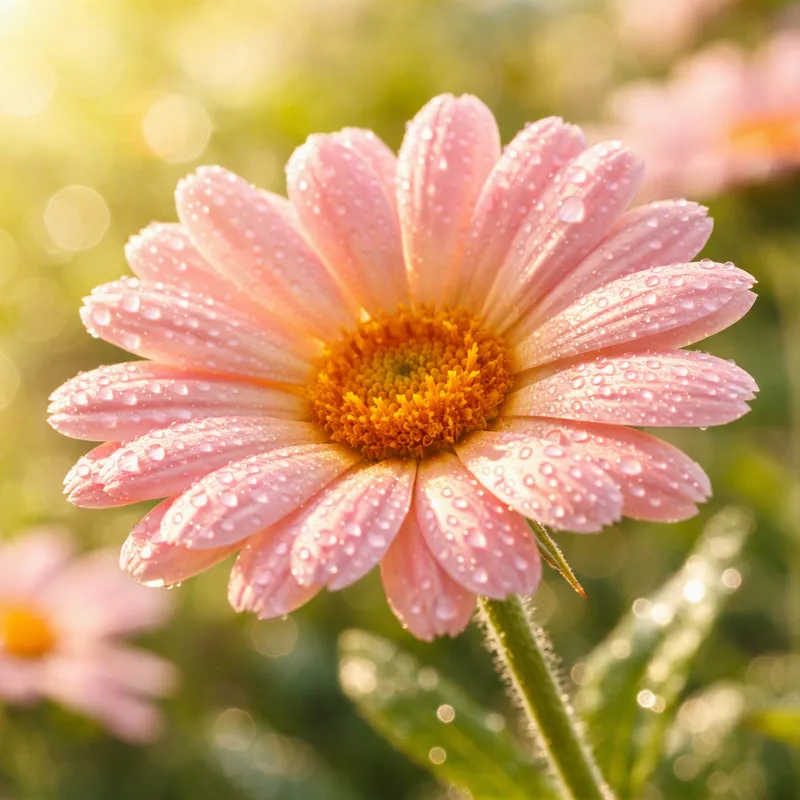
True pink calendula does not occur in the wild species, which is orange or yellow. Breeders have produced soft apricot, peach and salmon-pink flowers, often with a darker eye, and some fade to cream as they age. If you search for pink marigold, those peachy tones are the nearest match; gardeners wanting stronger pink usually look to other daisy-family flowers instead.
Colour and weather
Delicate shades suffer in strong sun and heat, which is hard on any pastel petal. This makes autumn sowing sensible across Australia, with flowering from winter through to early spring. Plants are best removed once summer heat arrives.
Sowing peachy-pink calendula
- Sow seed from March to May, pressed lightly under the soil.
- Space plants about 25 cm apart in a sunny spot.
- Pinch out spent blooms to prolong flowering.
- Water at the base to reduce mildew on leaves.
Mildew is a common problem on calendula in damp, still weather, so give plants air.
Vase and animals
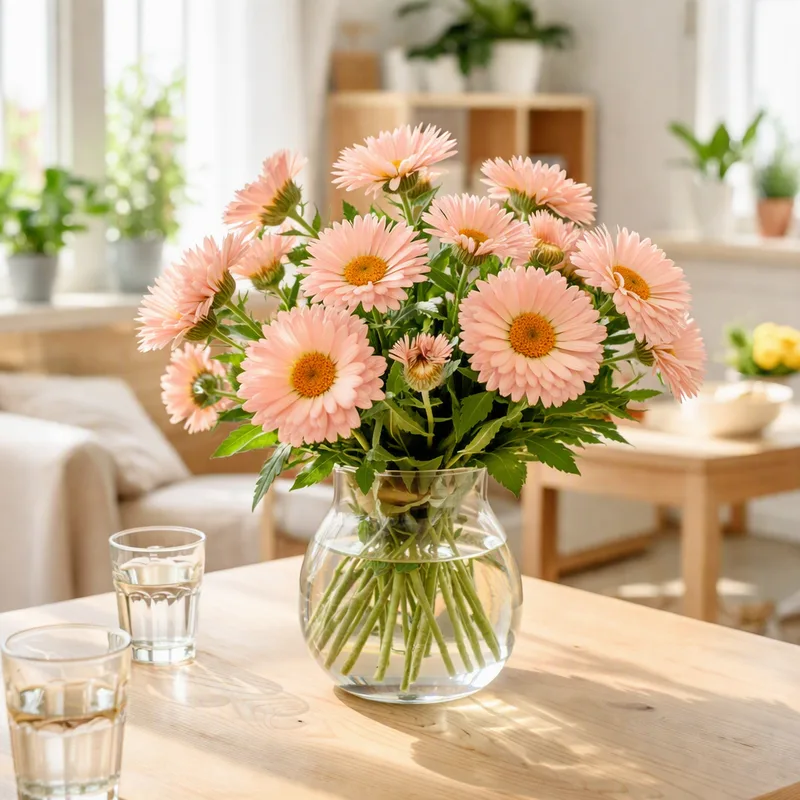
Cut when the flower is freshly open and strip the lower leaves. Stems should last five to eight days. Pale blooms look pretty with white stock or grey foliage.
Calendula officinalis is listed by the ASPCA as non-toxic to dogs and cats. The petals are edible, though garnish is best taken from plants that have not been sprayed.
Seed saved from your best pastel plants may not come true, so expect a mix of peach, apricot and orange in the next generation.