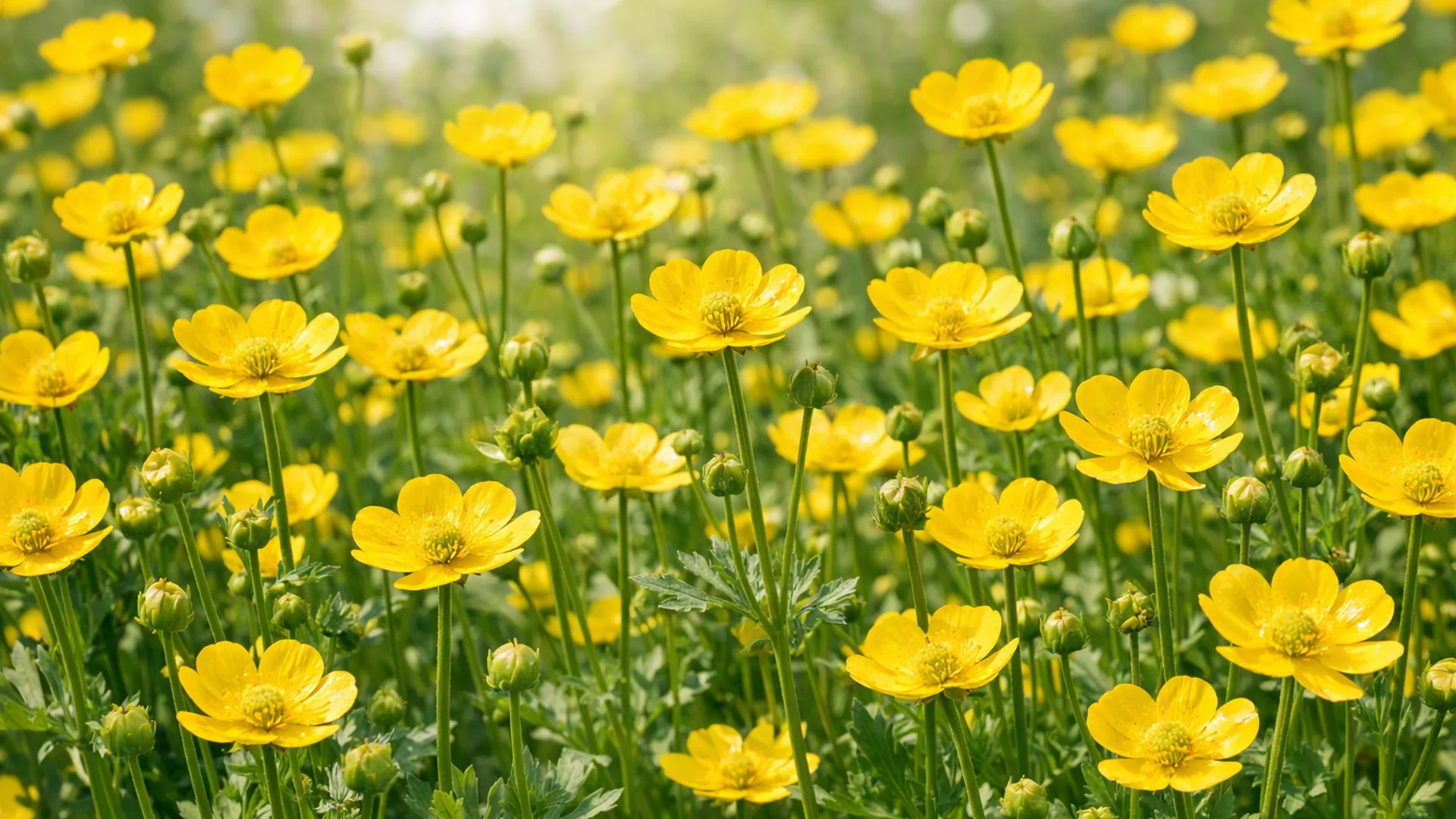
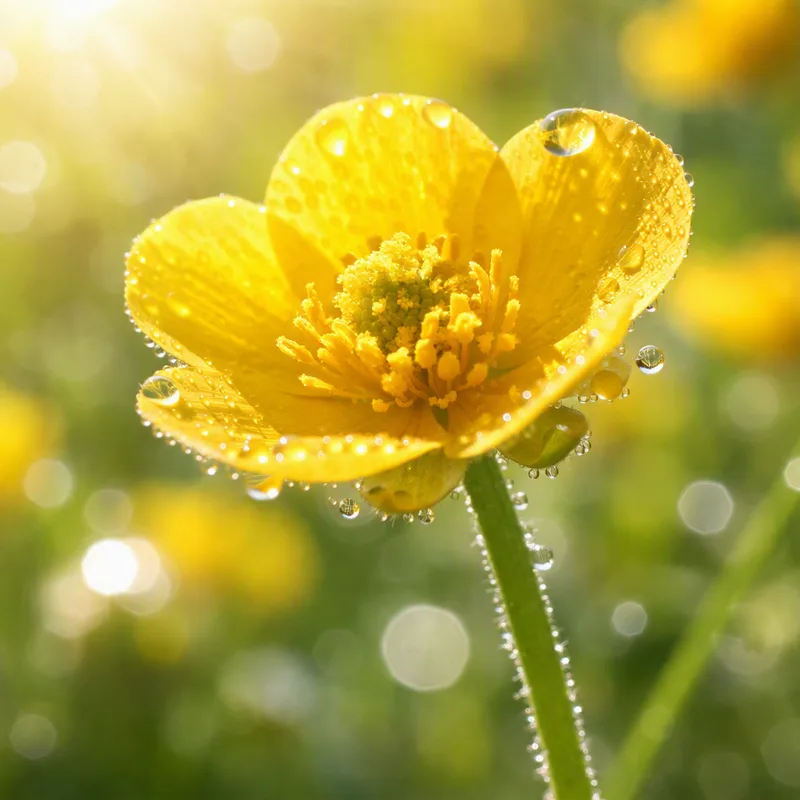

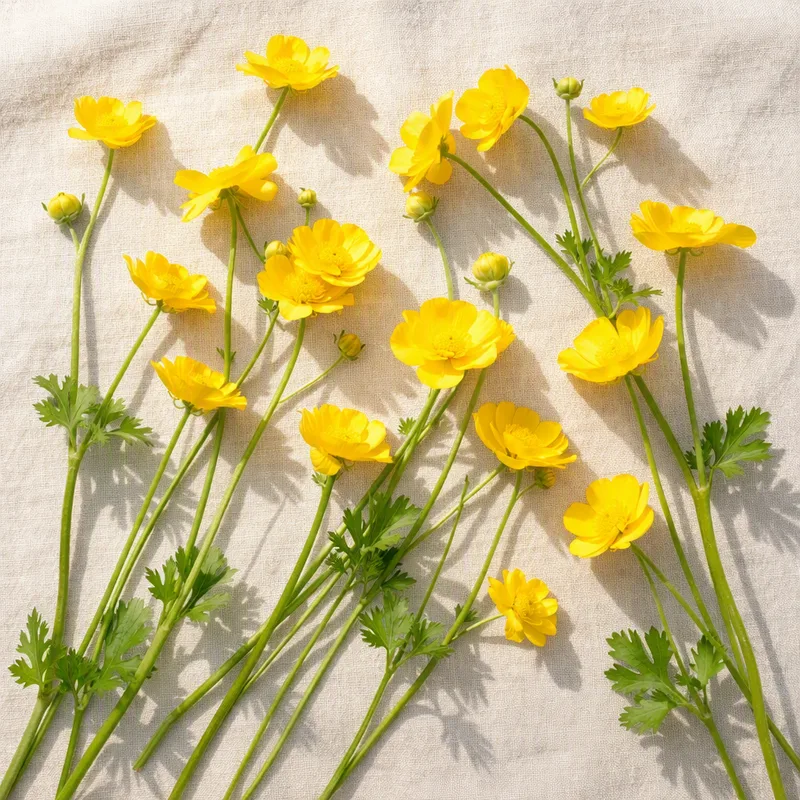
Ranunculus acris, the meadow buttercup, is a Eurasian perennial with cup-shaped, glossy yellow flowers on branching stems 30 to 70 cm tall. It grows in damp grassland and has been carried to many parts of the world. Wikipedia notes that, for the Australian plant known as common buttercup, you should look to Ranunculus lappaceus, a native species.
A wildflower or a weed?
Where it has naturalised, meadow buttercup is more weed than ornament. Across the Tasman it is a serious pasture weed in New Zealand, and in gardens it can colonise lawns and paths. In a cottage planting or a wildflower meadow, it is welcome. The double-flowered form 'Flore Pleno' is a tidier garden version. If you are unsure which buttercup is in your lawn, check your state's weed information before planting.
Why animals avoid it
The plant has an acrid taste and its juice irritates the mouth. Wikipedia describes it as semi-poisonous to livestock, causing blistering. Grazing animals usually leave it in the paddock for that reason.
A childhood game
Holding a buttercup beneath the chin to see whether it casts a yellow glow is a very old children's game, and the glossy petals do reflect light.
Do not chew it
Contact with the sap can irritate skin, and eating the plant causes mouth sores and stomach upset. Buttercup is toxic to dogs, cats and horses according to the ASPCA. Call your vet if an animal has eaten some.