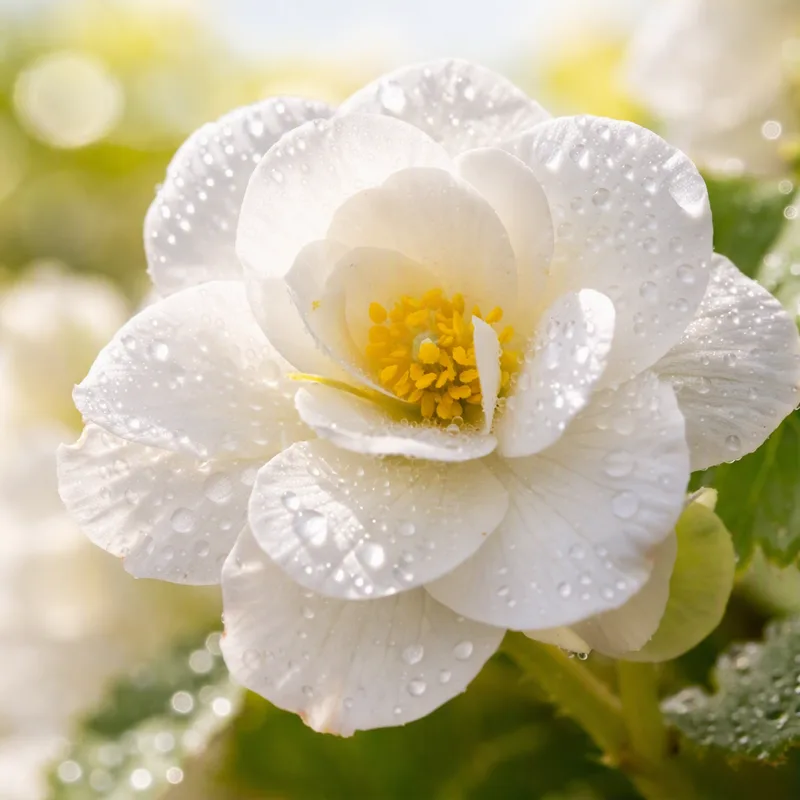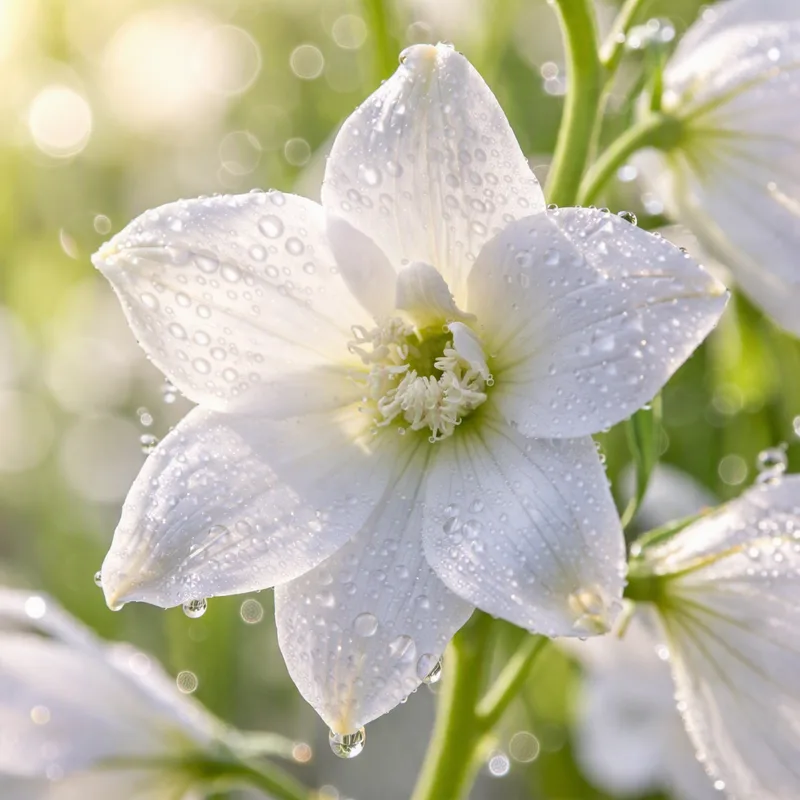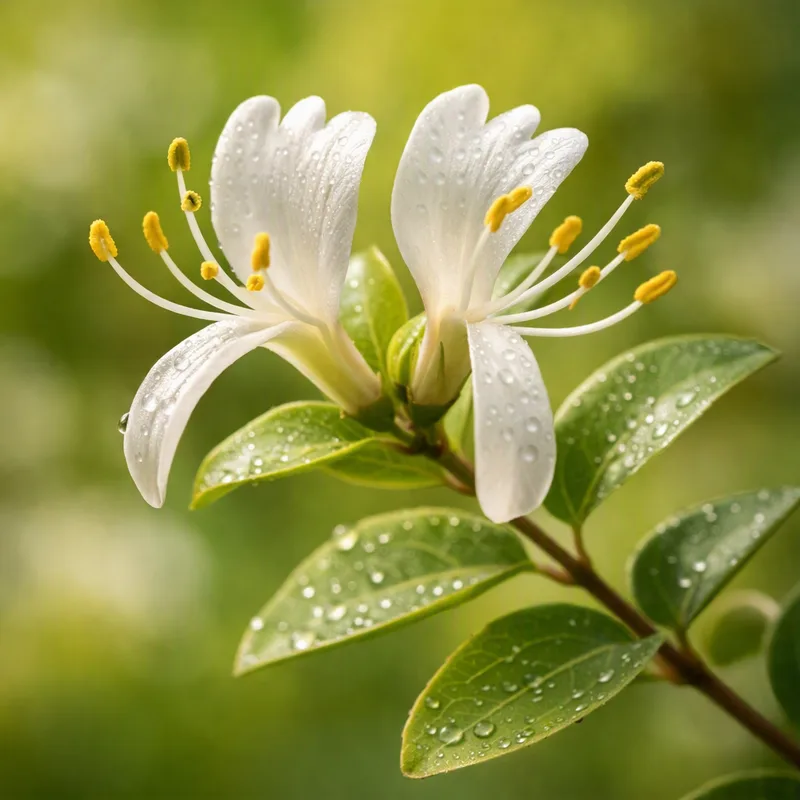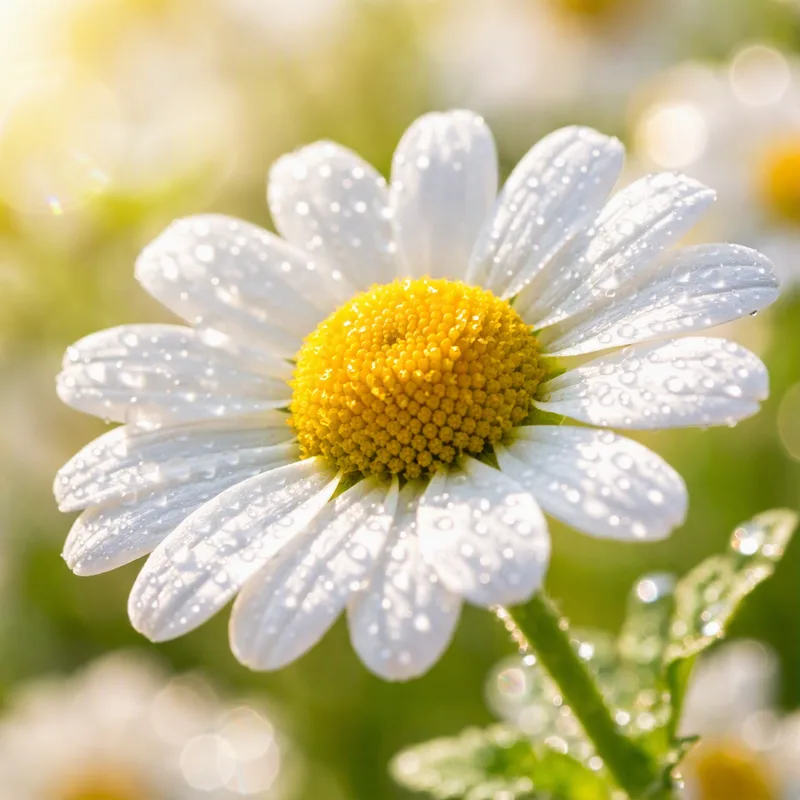
The white varieties
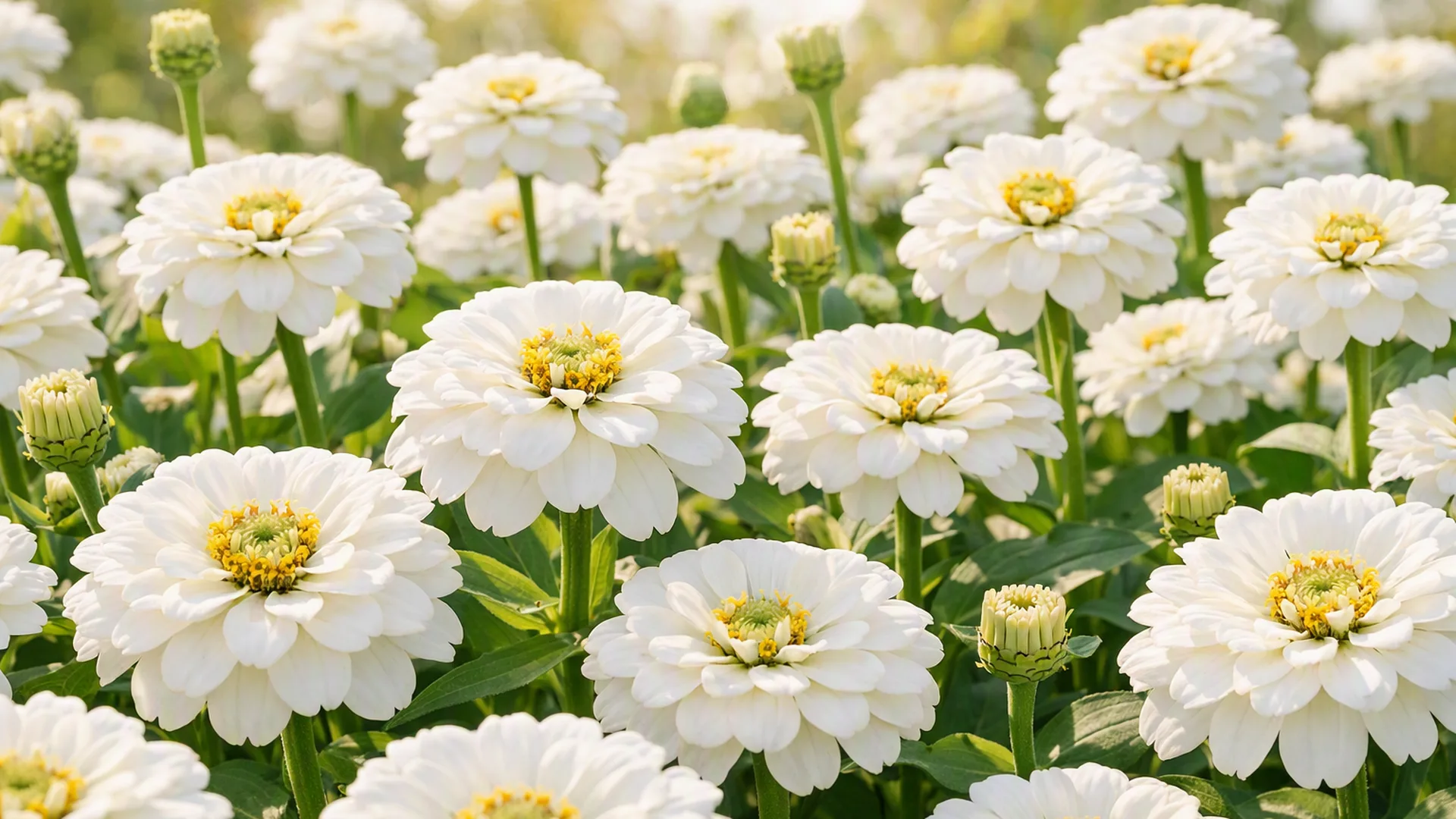
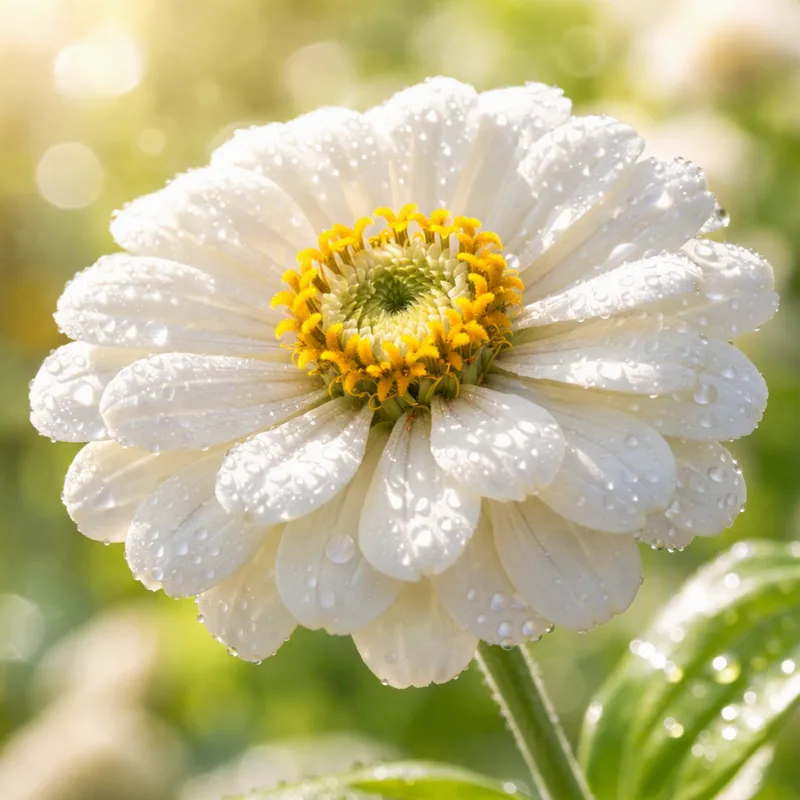
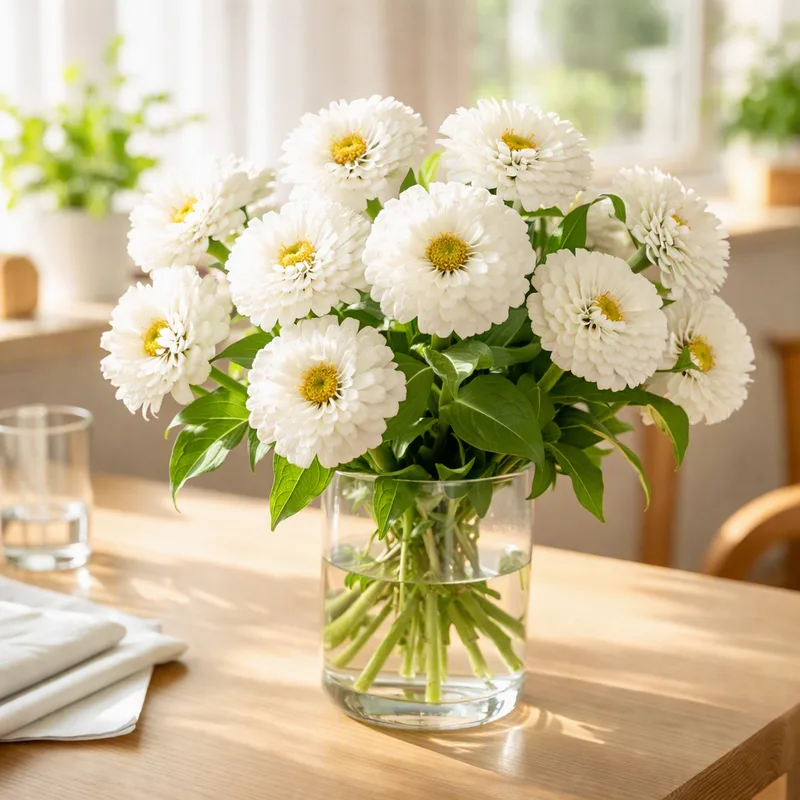
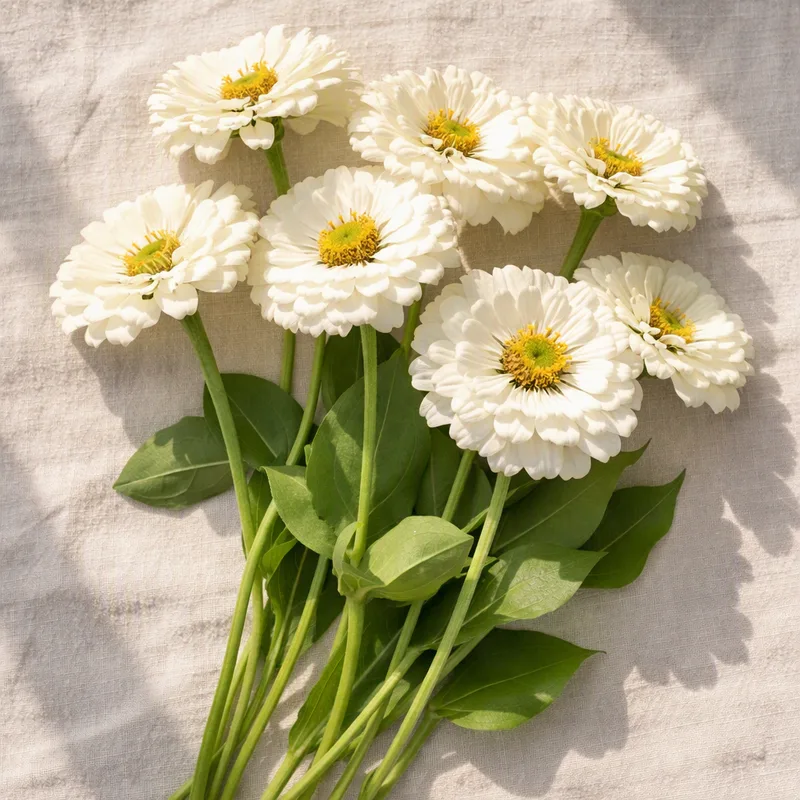
Zinnia elegans in the wild is purple; white forms come from selection. Varieties named in the Royal Horticultural Society's circle include 'Crystal White', 'Purity' and the 'Profusion White' series, which stays compact and tends to resist mildew better than older types. White zinnias often have a yellow or green eye, and the creamy shades are particularly useful with other flowers.
Meaning of a white zinnia
White zinnias are traditionally linked with goodness and purity, and zinnias in general with thoughts of absent friends. That makes them a fitting pick when you cannot be with someone in person.
Growing white zinnias at home
- Sow in spring once frost danger has passed. They grow best in warm, dry, frost-free areas.
- White petals show every blemish, so water at the roots rather than overhead.
- Space plants so air can move; mildew is more likely in humid coastal summers.
- Cut regularly for continuing flowers into autumn.
Bouquet use
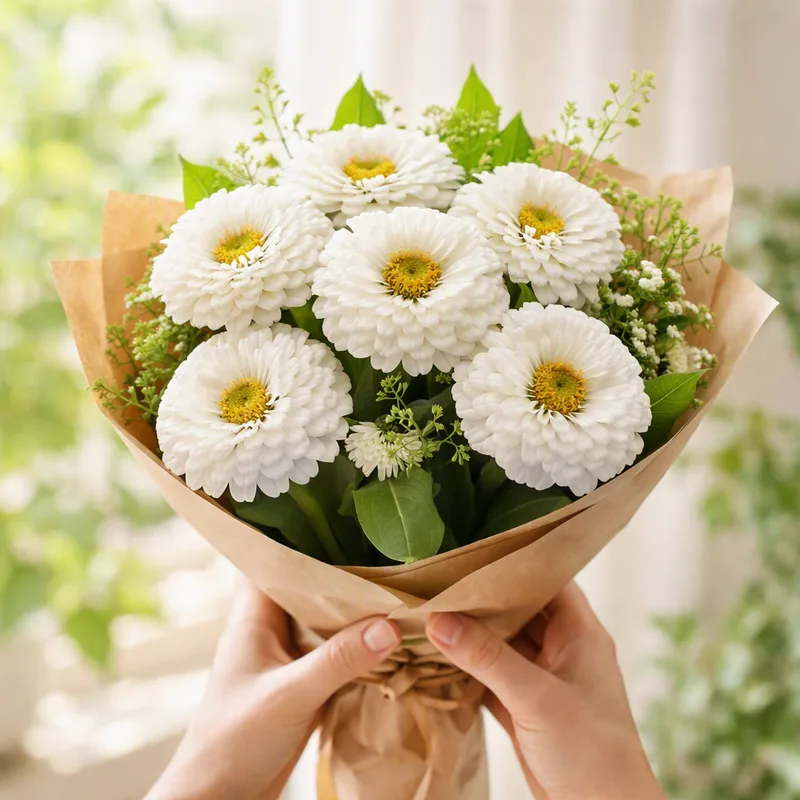
Seven to ten days is a fair expectation in the vase. White zinnia lasts well alongside green foliage, and works in a wedding posy in December or January when the plants are at their peak.
Keeping pets safe around white zinnias
The ASPCA's plant database puts the genus on its non-toxic side for dogs, cats and horses alike.
A final note on timing: in the cooler south, such as Hobart or the Tasmanian midlands, a sheltered, warm bed gives the best results, and seed started in small pots in early spring can be planted out in late October.