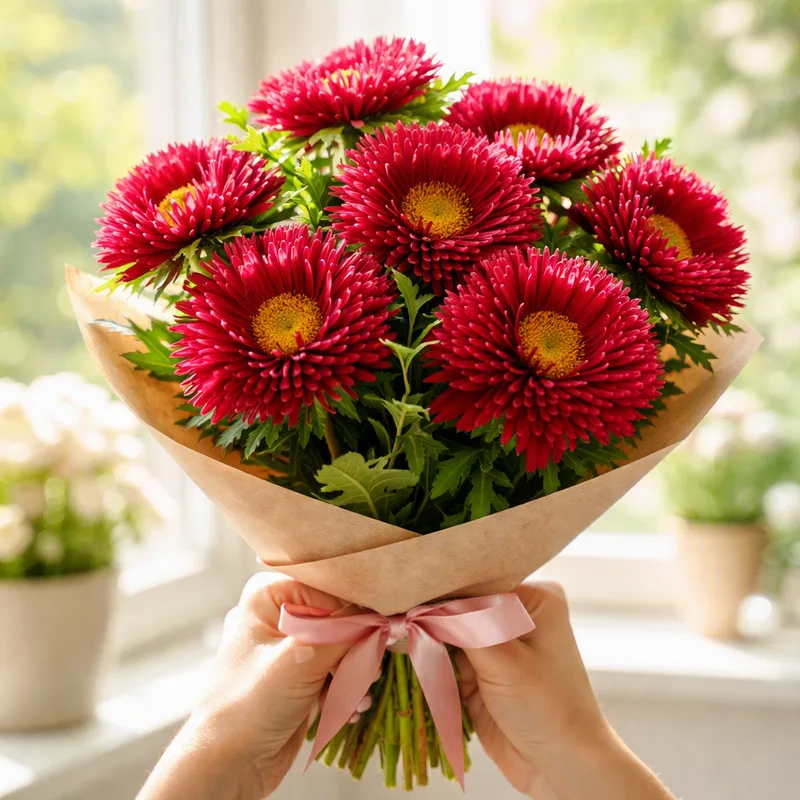
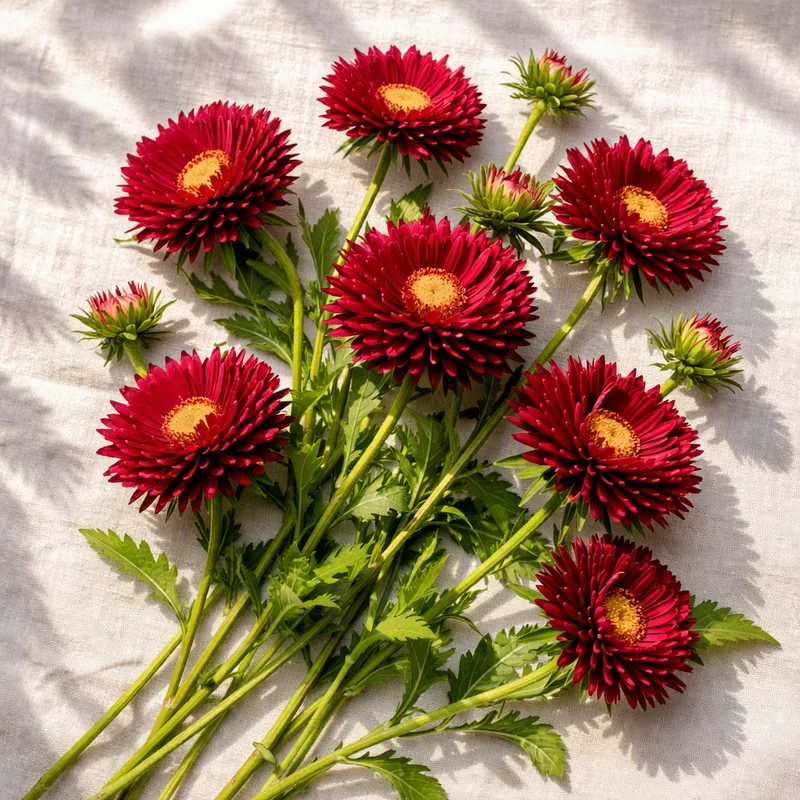
An annual with a long name
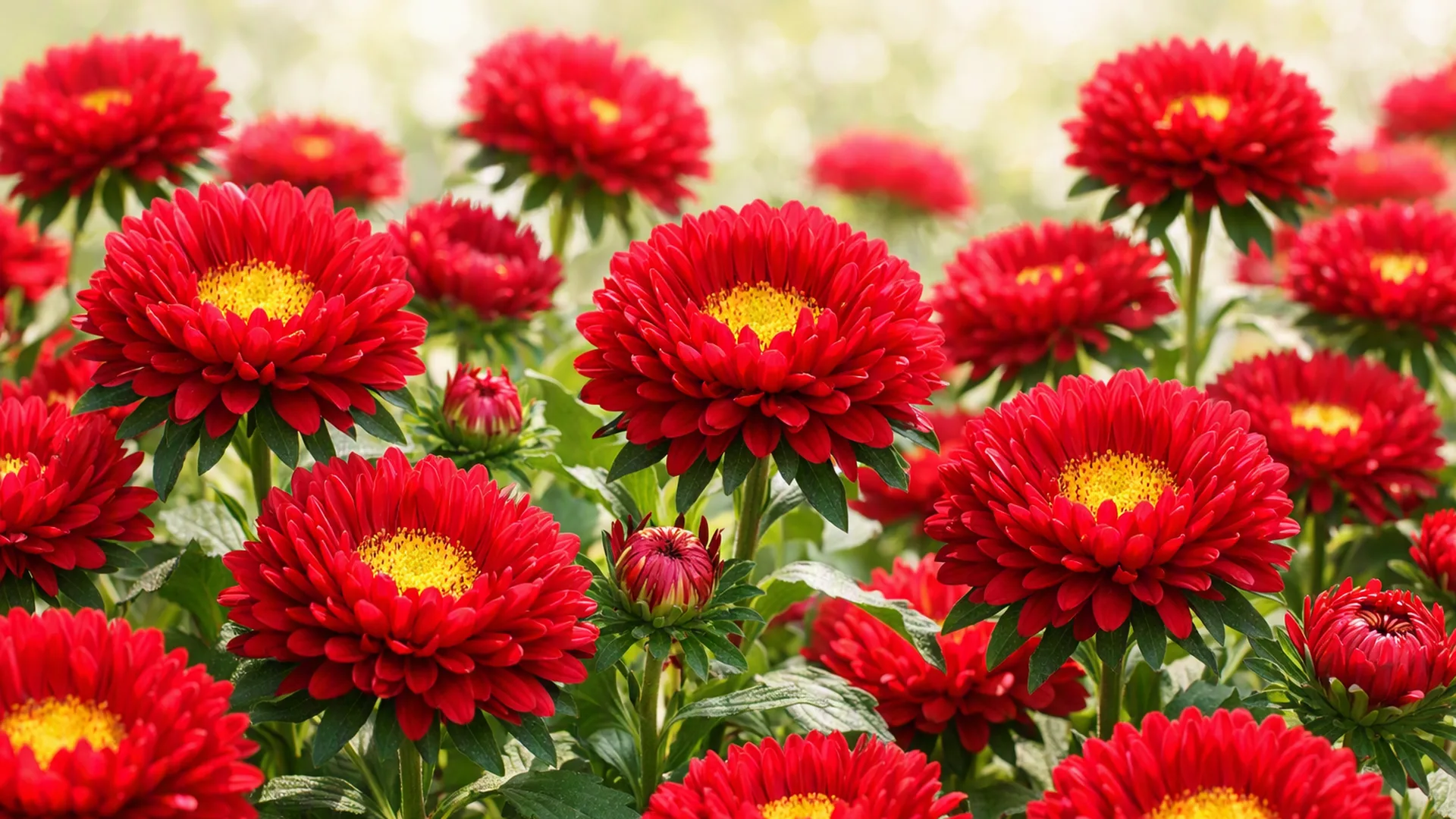
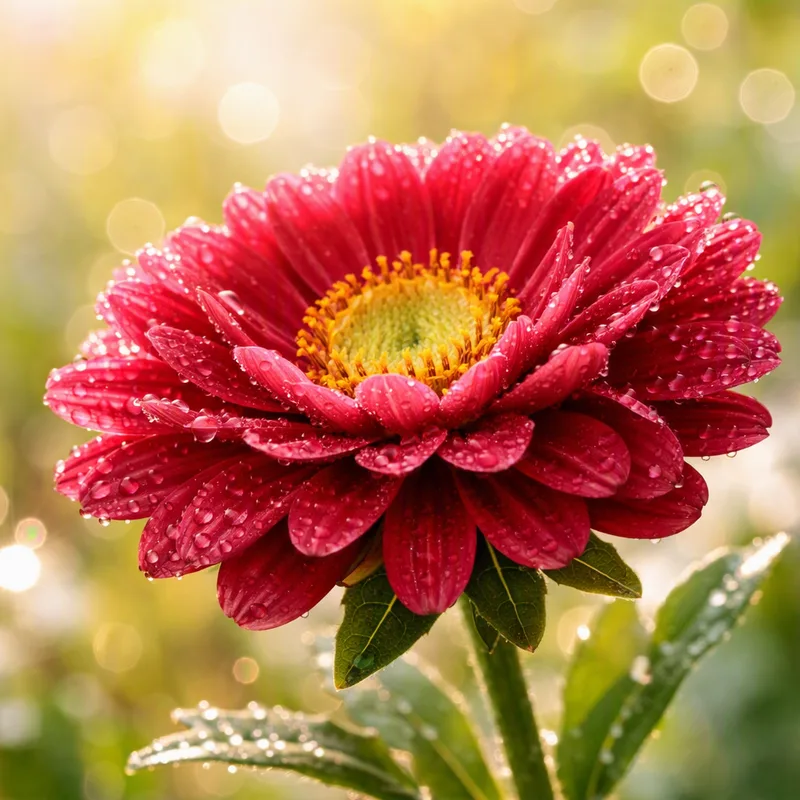
Callistephus chinensis comes from China and Korea, and the genus name joins Greek words for beautiful and crown. Being an annual, it grows, flowers and sets seed all within one season. Garden forms range from compact bedding types to tall cutting varieties on stems of 40 to 80 centimetres. Blooms are many-petalled and can be quilled, pompon or daisy-like. This is not the same plant as the perennial Michaelmas daisy, even though it shares the aster name.
Sowing and growing in the southern hemisphere
The calendar is the opposite of the northern one. Sow indoors or in a sheltered bed from late winter to spring, around August to October in most of temperate Australia, and plant out once frost has passed. Plants then flower from midsummer into autumn. In the tropical north, sow in the dry season, when humidity is lower, since heavy wet-season air invites disease.
- Full sun and rich, free-draining soil suit it best.
- Pinch out the tips of young plants to get more stems.
- Do not repeat asters in one bed year after year, because soil fungi that cause wilt build up.
Cut stems that last
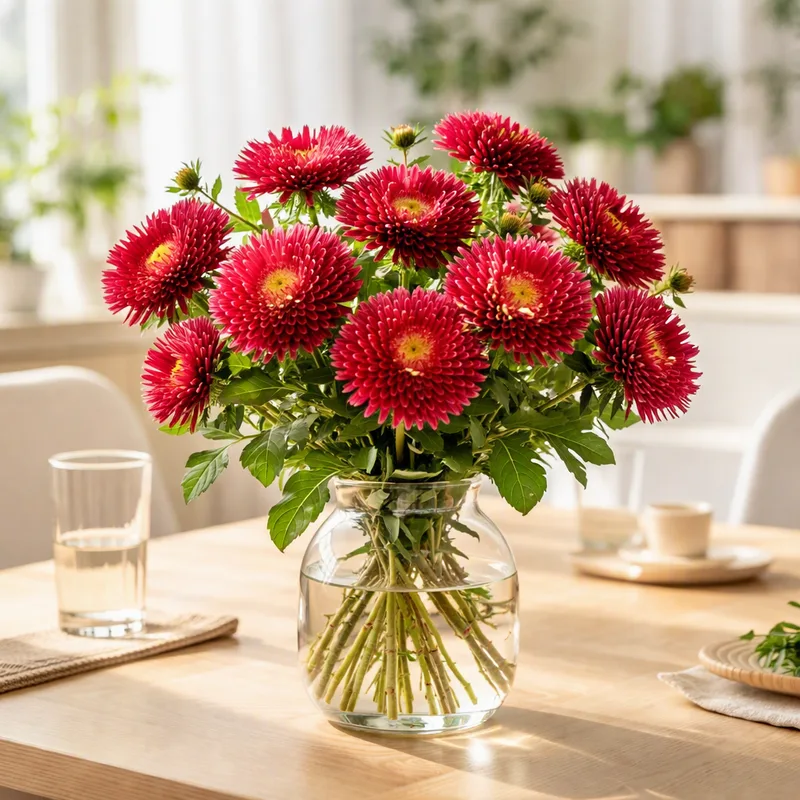
China asters hold up well in a vase, for roughly seven to ten days. Strip the lower leaves, recut the stems and keep the water clean. In an Australian summer, a cool room makes a big difference.
A safer choice for animals
The ASPCA rates aster as non-toxic for dogs, cats and horses, so a vase on the table is less of a worry than lilies or hyacinths would be.