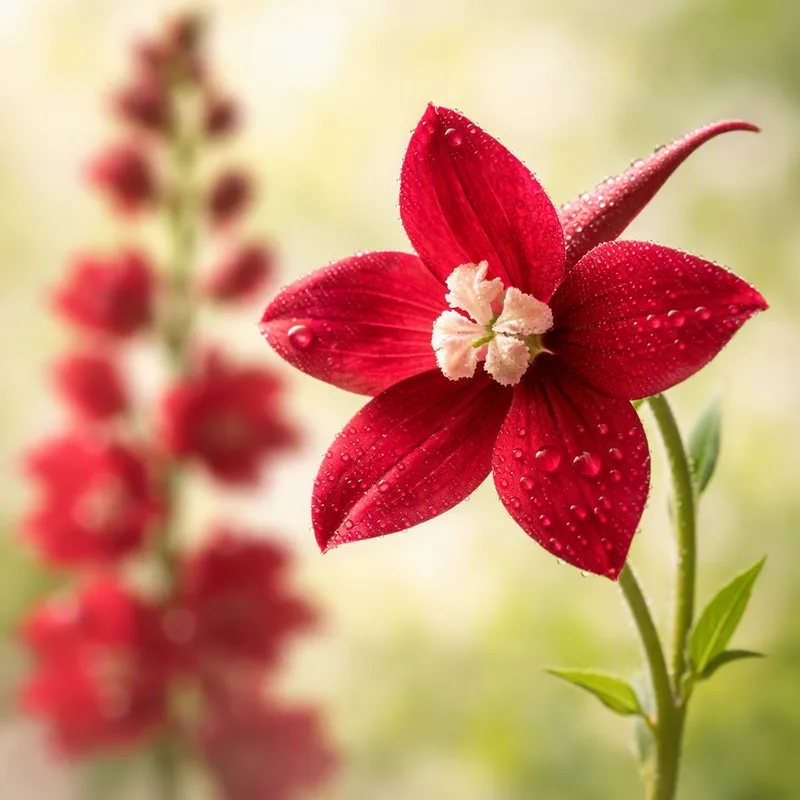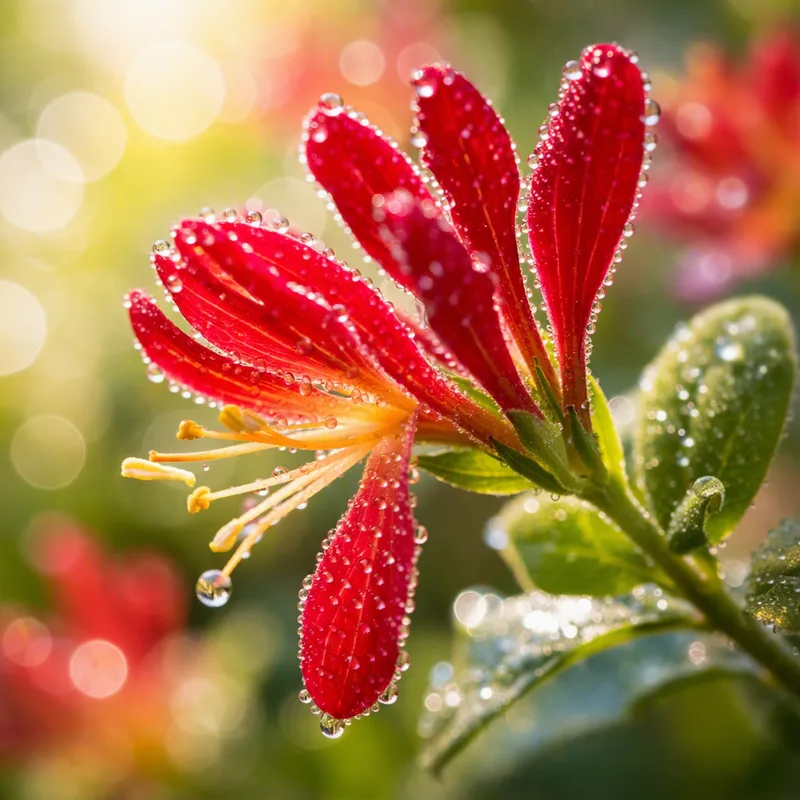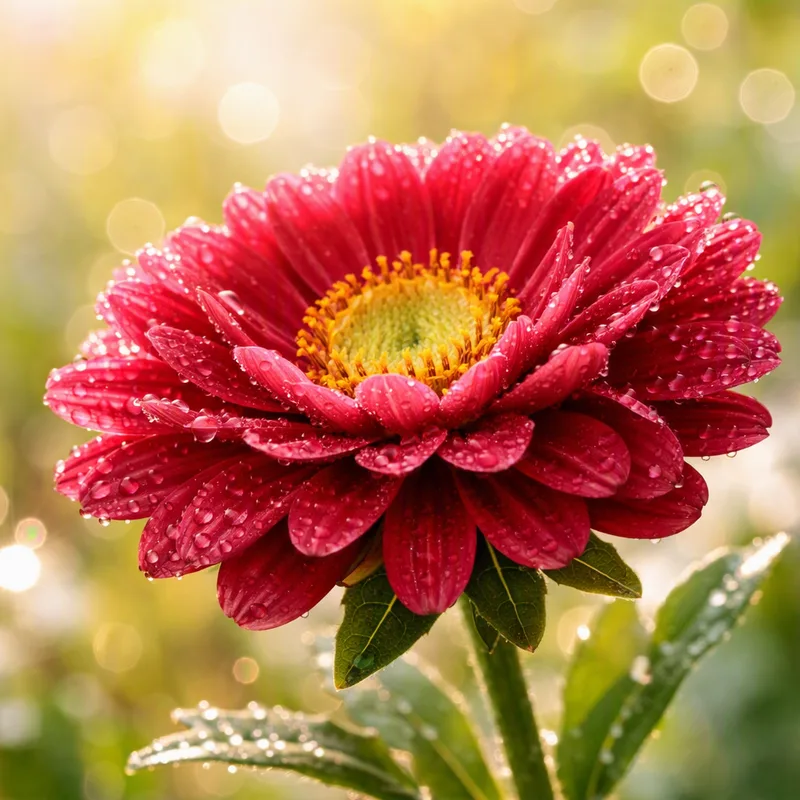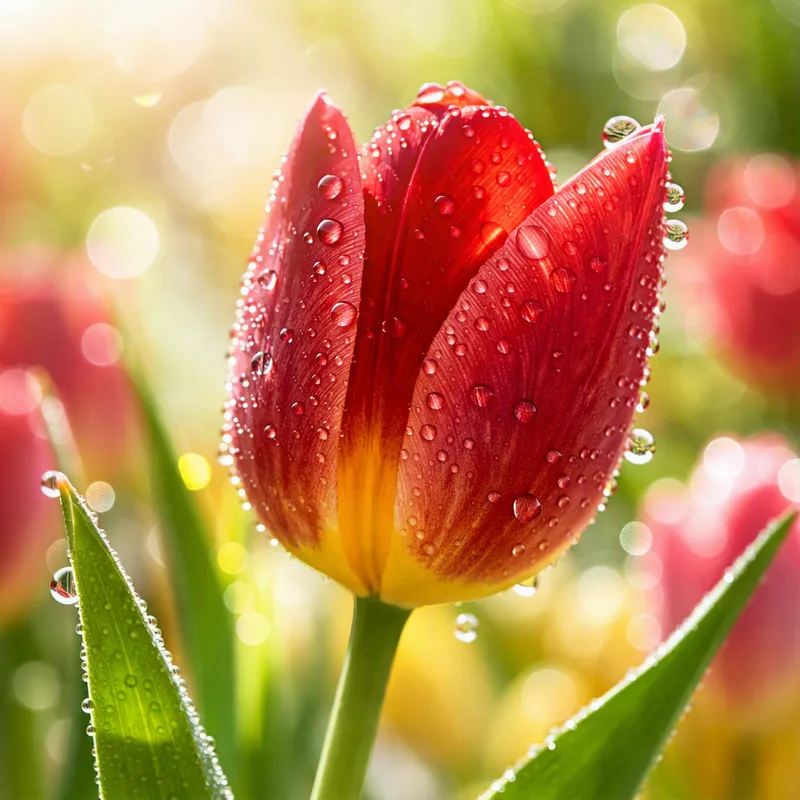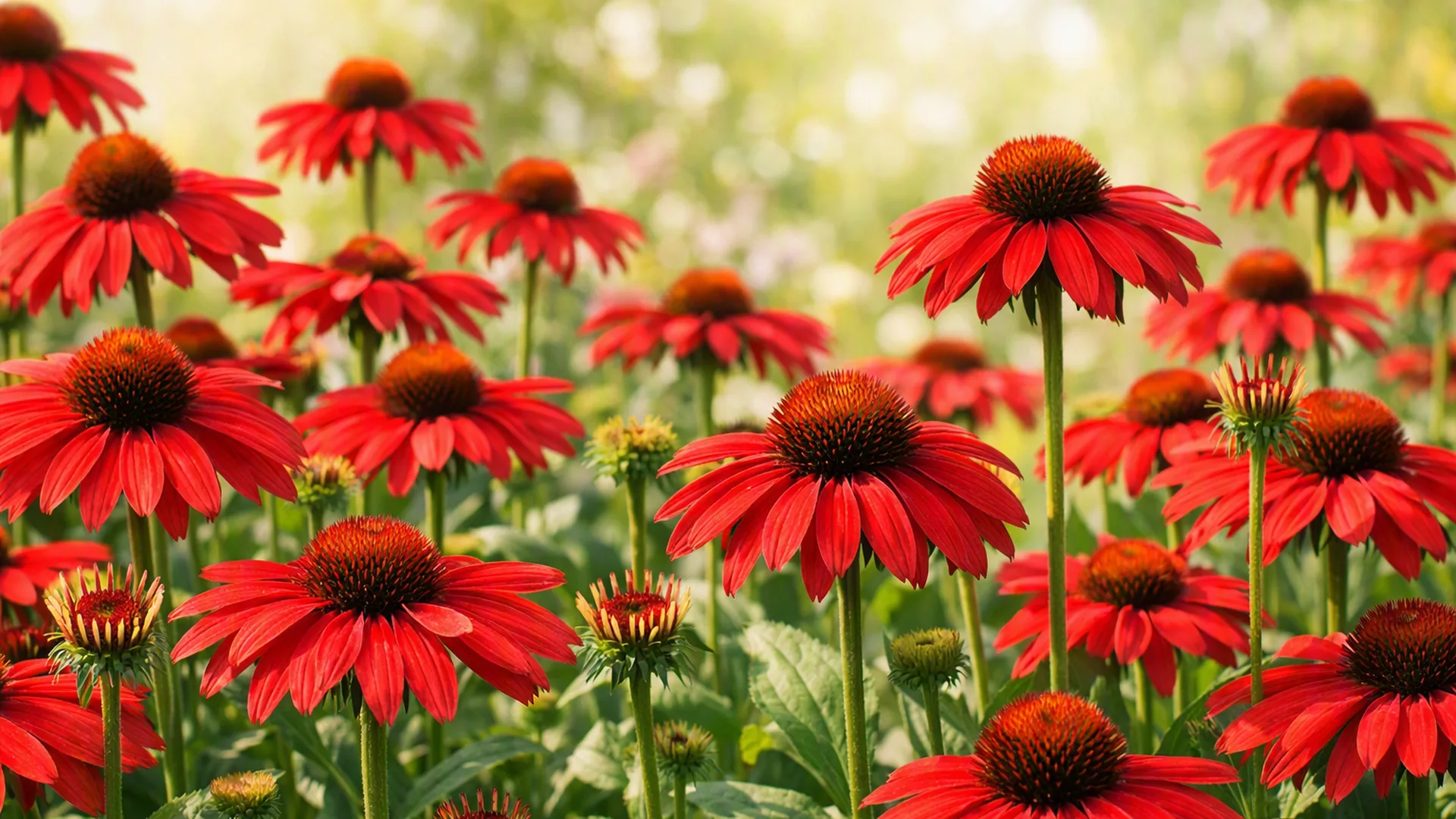
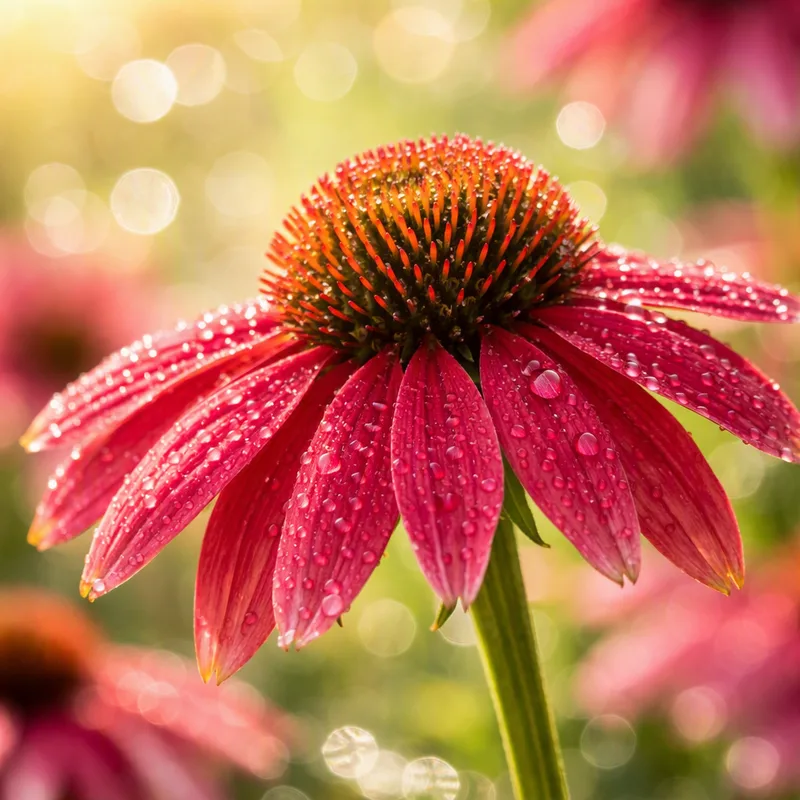

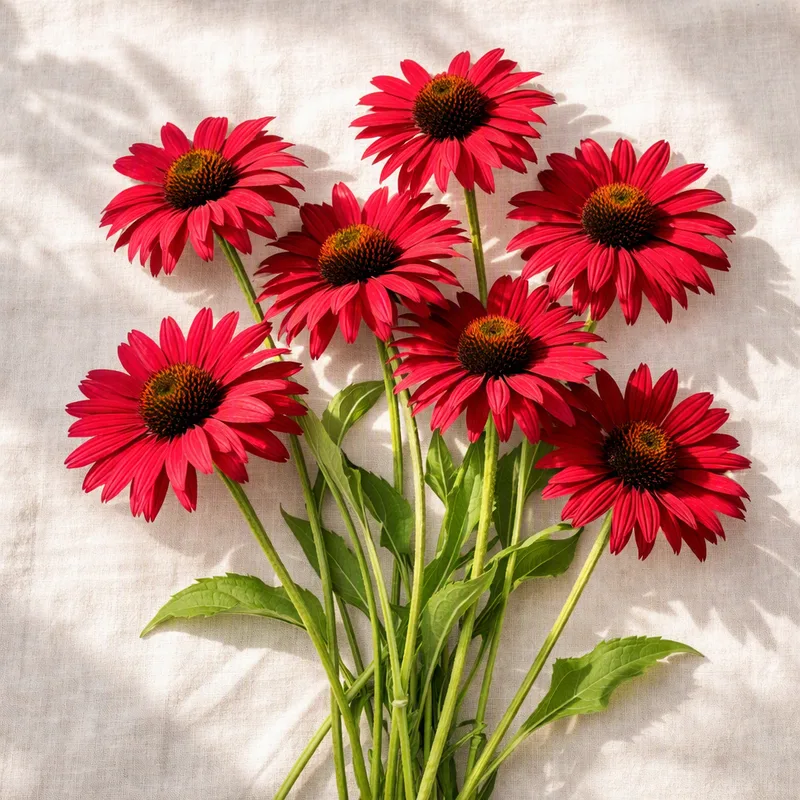
A true red coneflower is rare. The classic Echinacea purpurea has rose-purple petals, and the word red here usually describes the warmest end of the range: magenta-red, brick, coral and orange-red.
What sits in the red range
Breeding of Echinacea has widened the palette to include orange, coral and vivid raspberry cultivars. Some deep magenta selections look red against green foliage, and some orange cultivars show red tones as they open. In the language of flowers, coneflowers are linked with strength and health, and sources agree on little else.
A warm-colour planting
- Plant red-toned coneflowers with yellow rudbeckias and golden grasses.
- Combine with blue salvias for contrast.
- Use as a focal clump in a sunny cottage bed.
Looking after warm-toned plants
Coneflowers need full sun and well-drained soil. Newer coloured varieties can be less hardy than the standard purple ones, so keep soil on the dry side in winter and avoid heavy clay. In warm, humid places they may be short-lived. Water new plants deeply, then leave them to establish. Pick off spent heads if you want more flowers, or leave some for seed-eating birds.
Expect a change over time
Some red and orange selections fade or turn pink as they age. Fresh flowers in early summer are the most intense.
Cut stems and pets
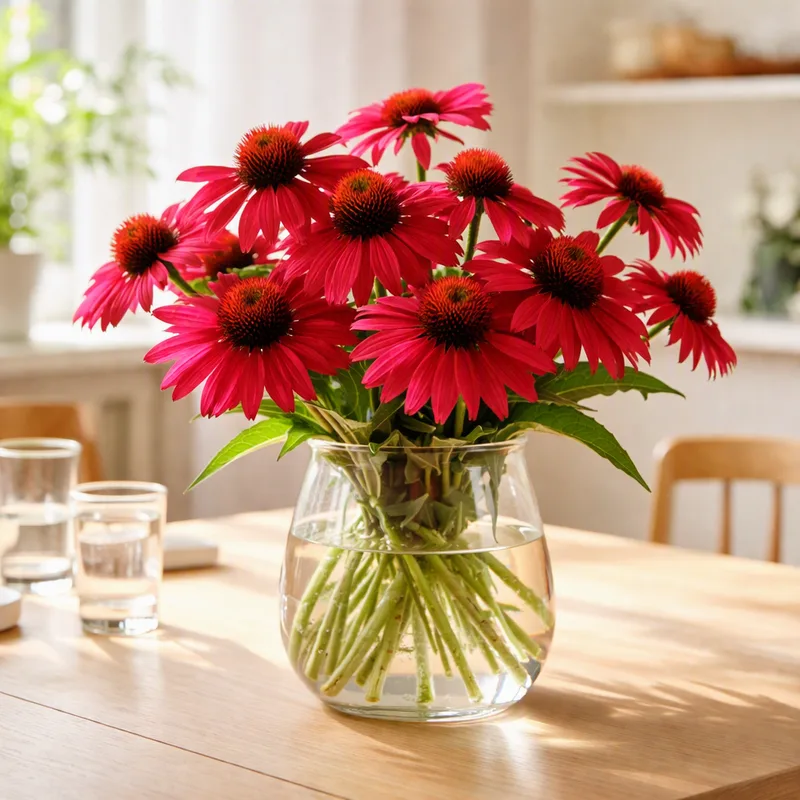
Stems last about seven to ten days in a vase. Echinacea purpurea is a plant the ASPCA classes as non-toxic for dogs and cats.