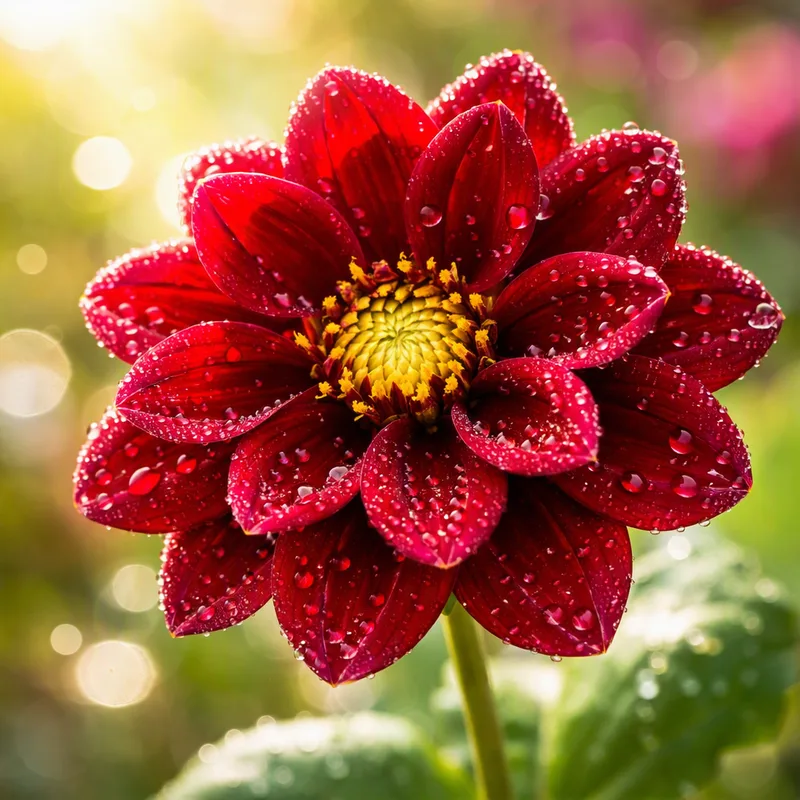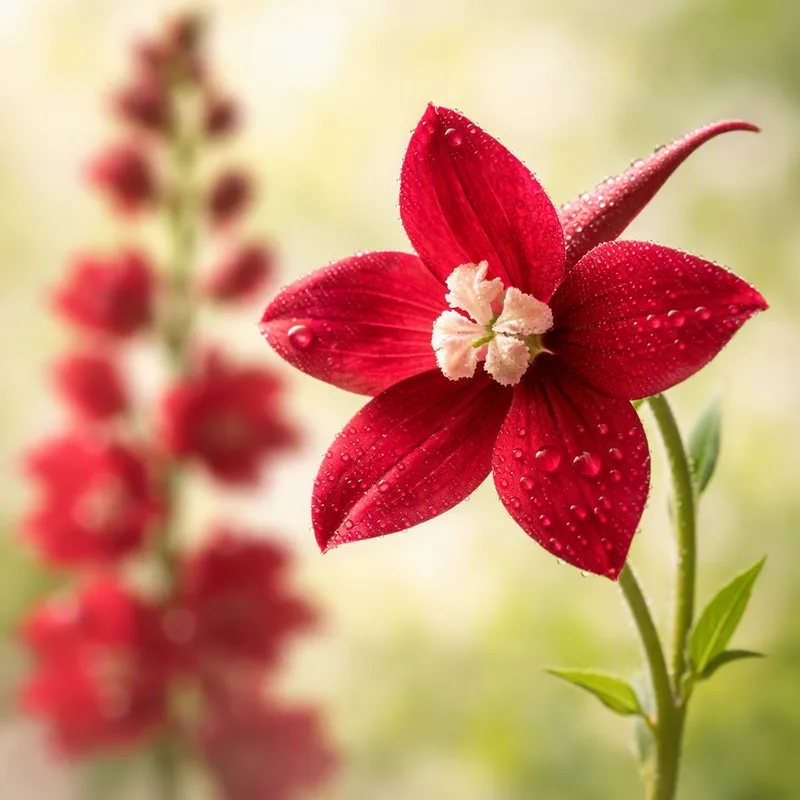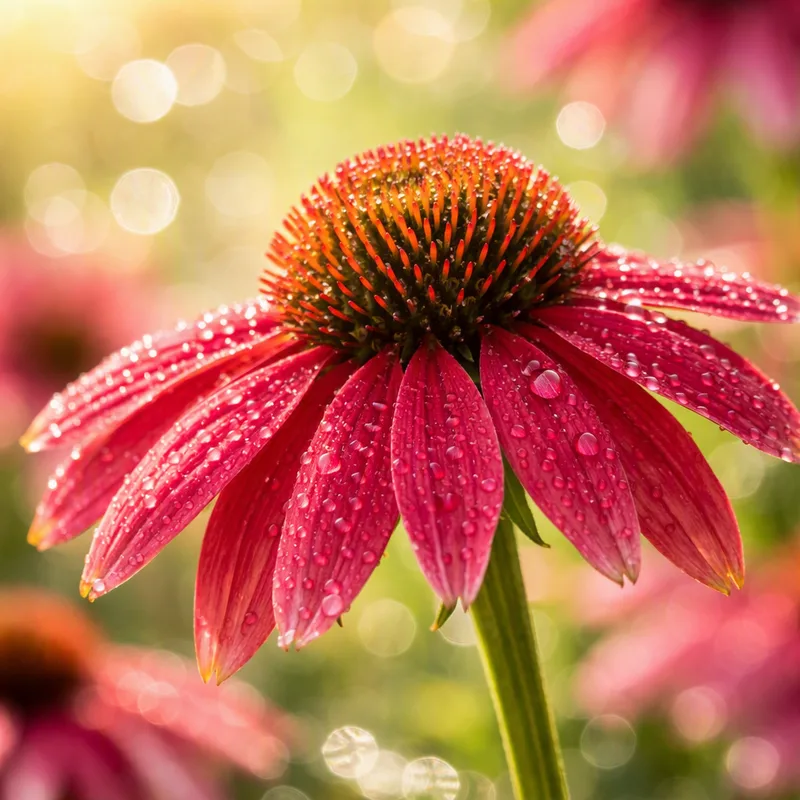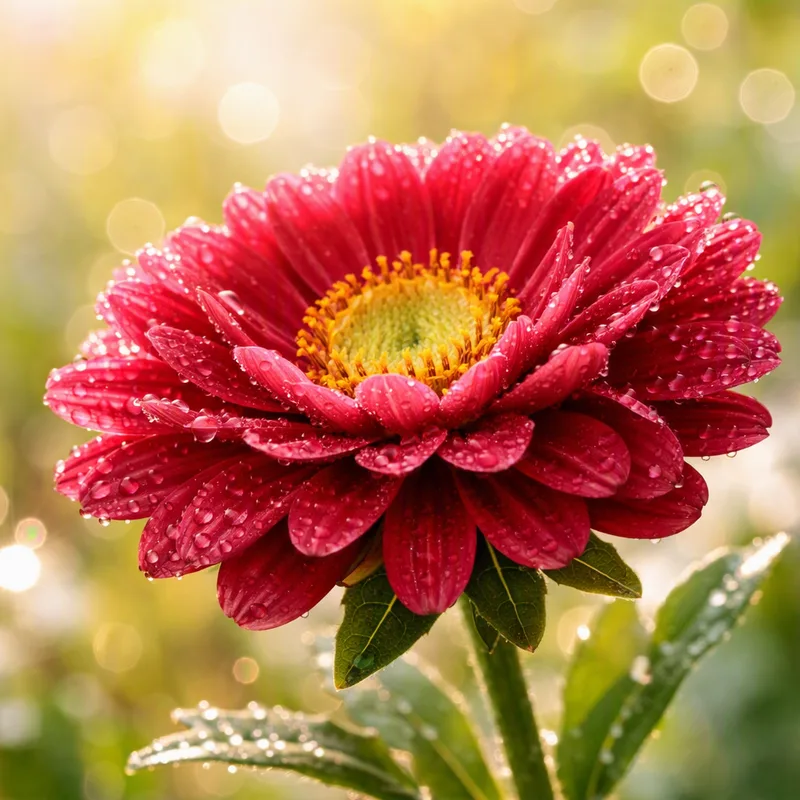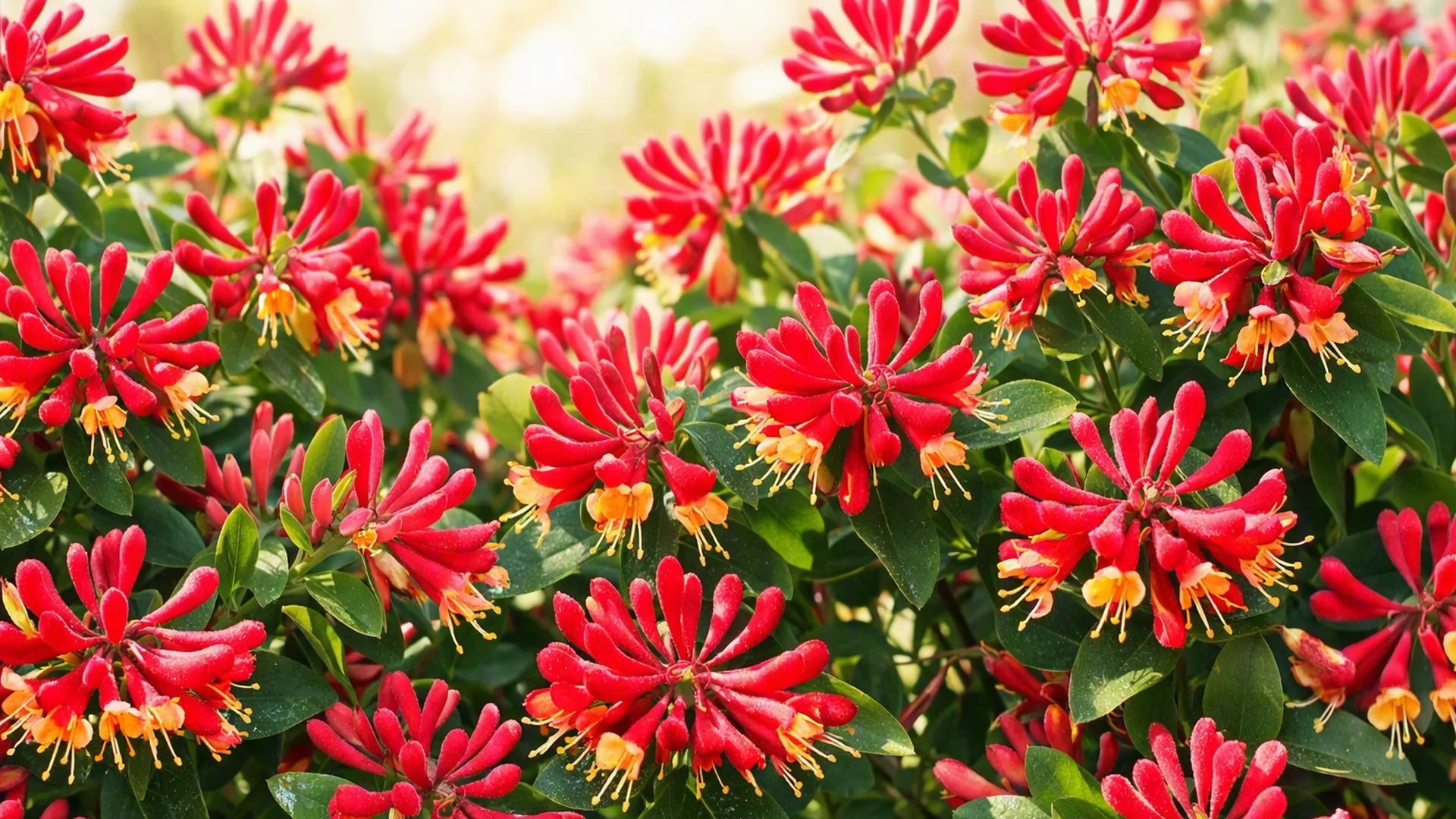
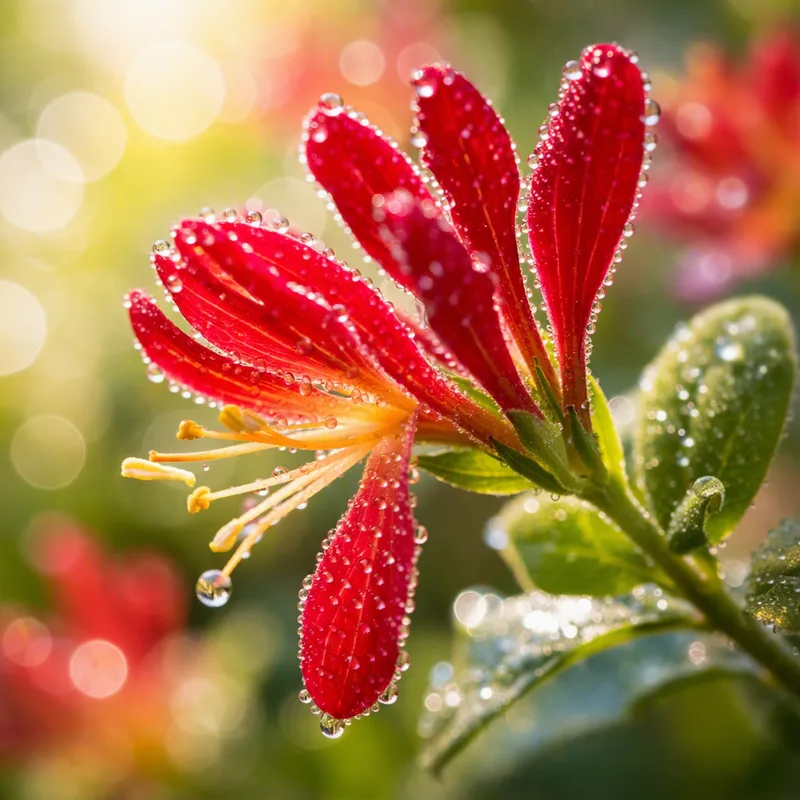
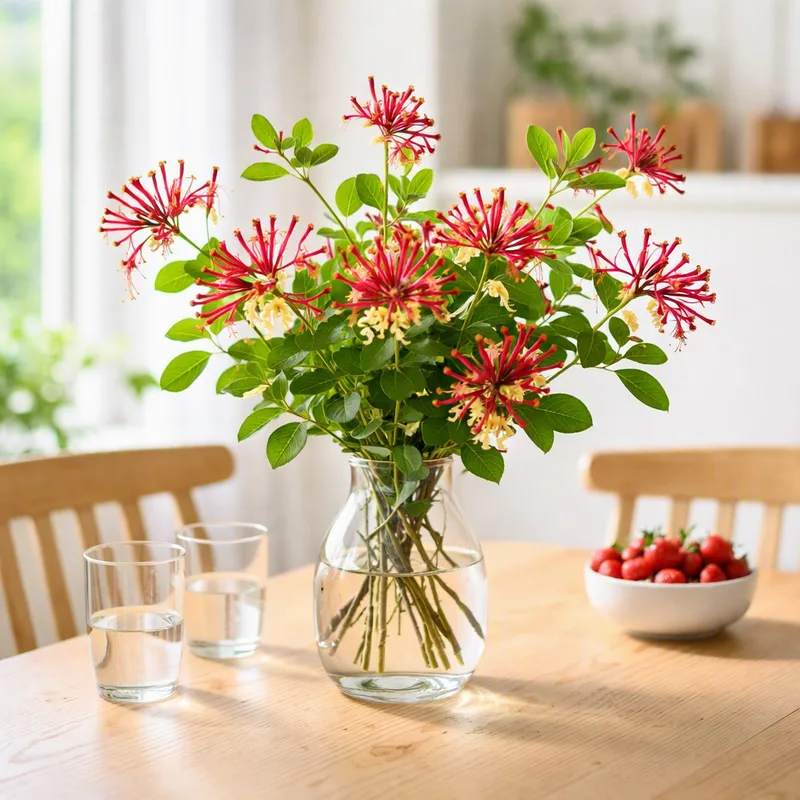
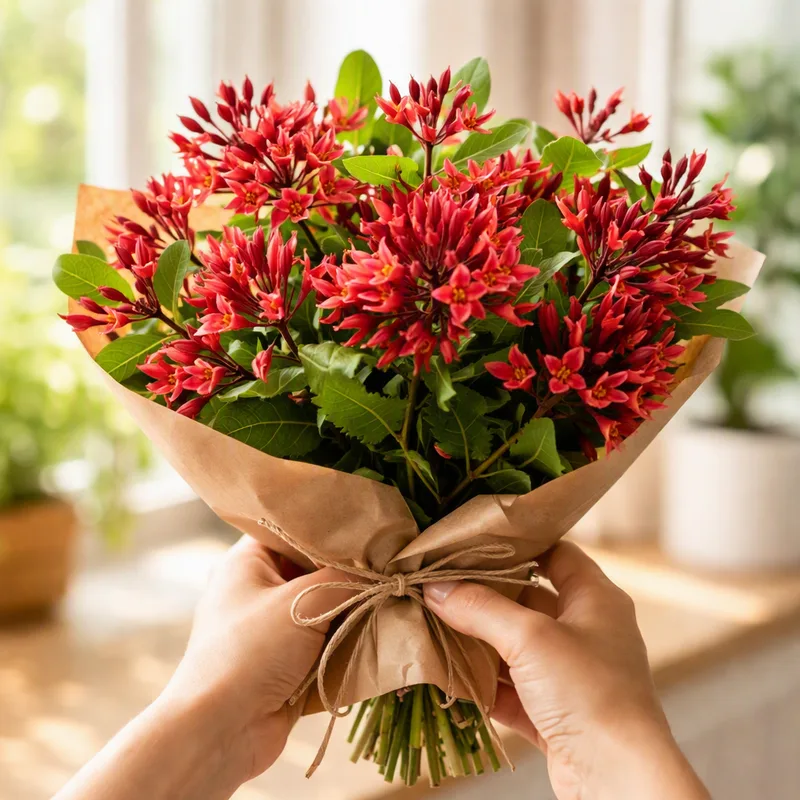
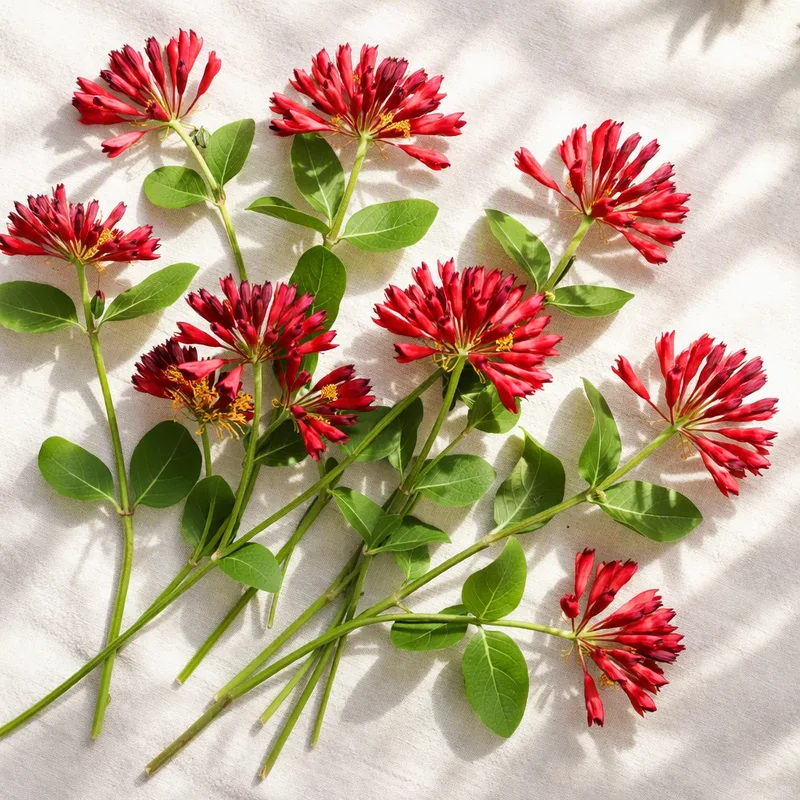
When someone says red honeysuckle they usually mean Lonicera sempervirens, the trumpet honeysuckle, native to eastern North America. Its flowers are narrow trumpets in coral-red to orange-red with a yellow throat, and unlike the white and cream honeysuckles it has little or no scent.
Showy, not fragrant
The appeal here is colour. Trumpet honeysuckle holds its colour in the sun and attracts nectar-feeding birds, which can be a pleasure in an Australian garden, since honeyeaters visit tubular flowers. Foliage is blue-green and semi-evergreen in mild areas.
Another red
Some garden honeysuckles have red-tinged or reddish-purple buds that open to cream or yellow, such as forms of the woodbine type. These carry a stronger scent, so you can choose between colour and perfume.
Care in Australia
- Position: full sun to part shade, with roots kept cool by mulch.
- Support: a trellis, wires or pergola post. The stems twine and need something to hold.
- Pruning: after flowering, thin out crowded growth. In spring, cut back damaged stems.
- Climate: best in temperate southern regions, tolerates the subtropical coast, and struggles in the tropical north.
A note on weeds
Do not confuse red types with Japanese honeysuckle, the escaped weed Weeds Australia lists as serious in southern Australia. If a plant has white or yellow flowers and rampant growth, do not plant it.
Fruit that should stay on the vine
Treat berries as inedible. For a person who has eaten honeysuckle berries, ring 13 11 26. For a pet, call a vet.