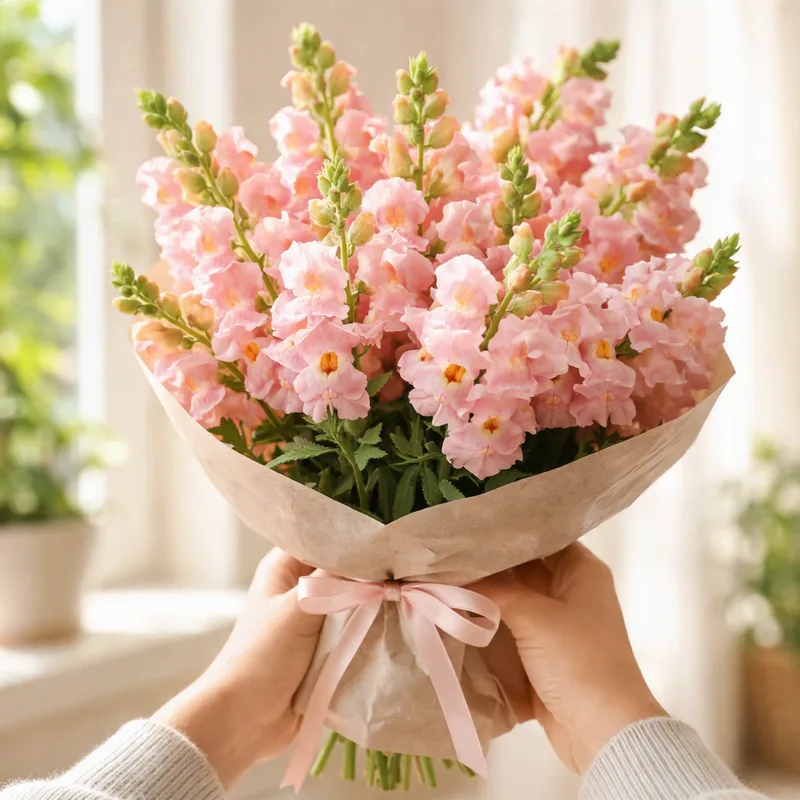
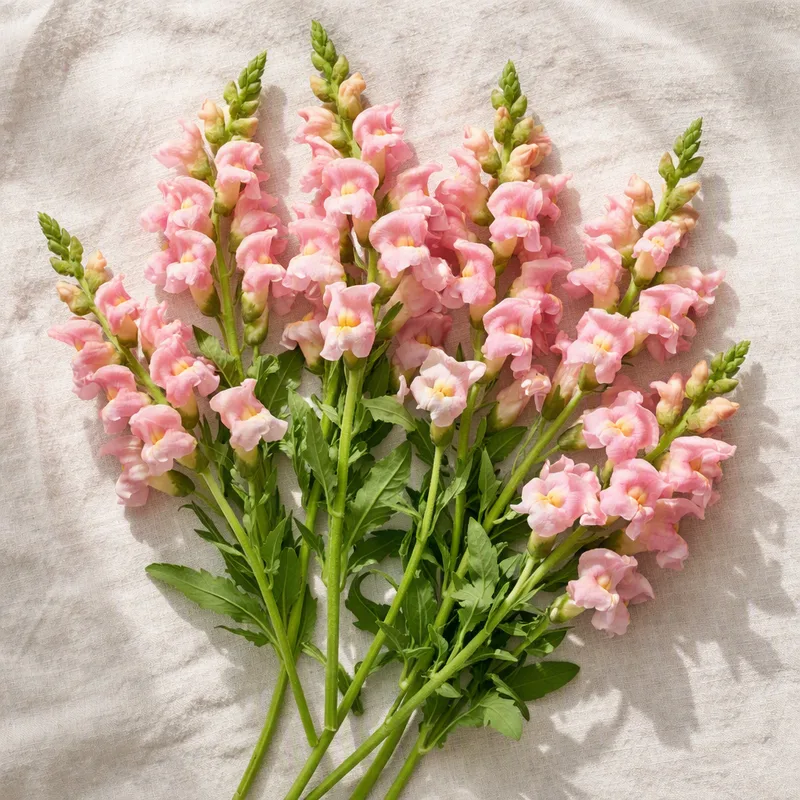
Nearest to the wild colour
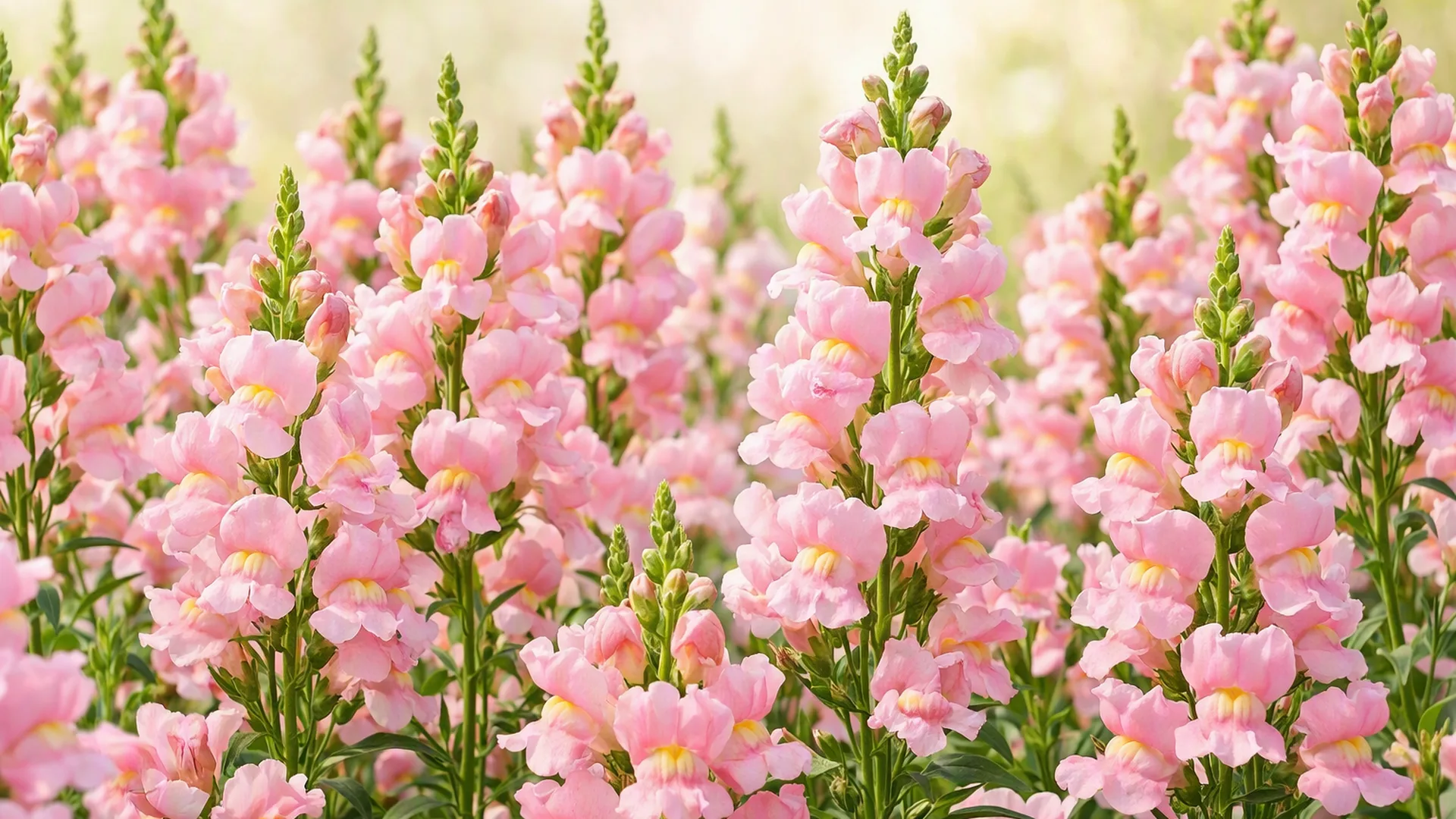
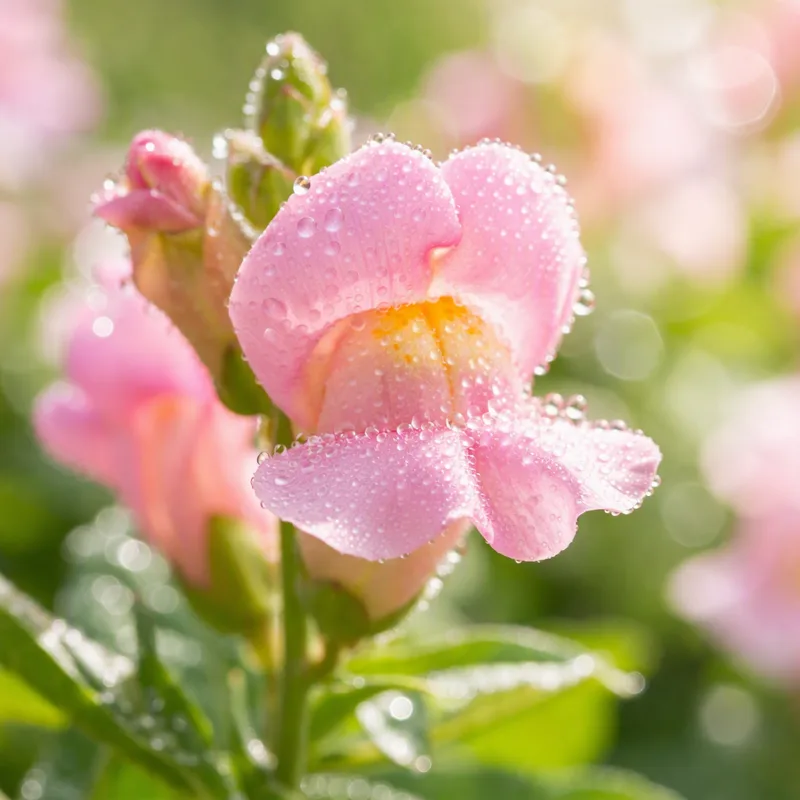
The wild snapdragon has pink to purplish flowers, so a pink snapdragon is the nearest to the plant's natural colour, even though garden varieties come in a much wider range. Shades go from pale blush to rose and vivid magenta, and some have a yellow-tinged throat.
Bouquets
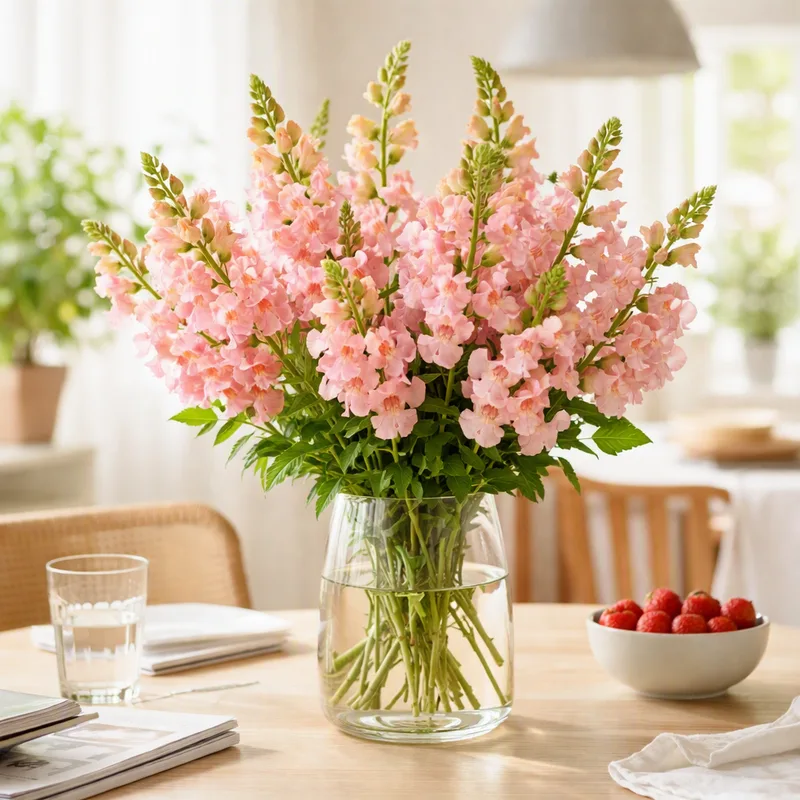
People searching for "snapdragon bouquet" are usually after tall pink spires in a mixed arrangement. A snapdragon gives height and a vertical line, which helps to balance round shapes such as roses or peonies. A good rule is to buy stems where the bottom third of the flowers are open and the tip is still in bud, and to snip an extra centimetre off the stem before putting it in water. Keep the vase away from ripening fruit, which gives off ethylene gas that can shorten the life of the flowers.
Sowing and transplanting
- Sow seed in autumn in trays, barely covered, because the seeds need light to germinate.
- Transplant when the seedlings are about 5 cm tall, spacing them 20 to 25 cm apart.
- Water at the base and give a liquid feed every few weeks.
- Deadhead to get another flush of flowers.
In subtropical Queensland, they flower in winter and spring. In Melbourne, plantings made in autumn will often bloom the following spring, and there is a second flush if you cut the first spikes back.
Snap flowers and children
Children enjoy squeezing the flower to make the mouth open, and since the plant is non-toxic it makes a safe garden choice. The ASPCA does not class snapdragon as poisonous to dogs, cats and horses.