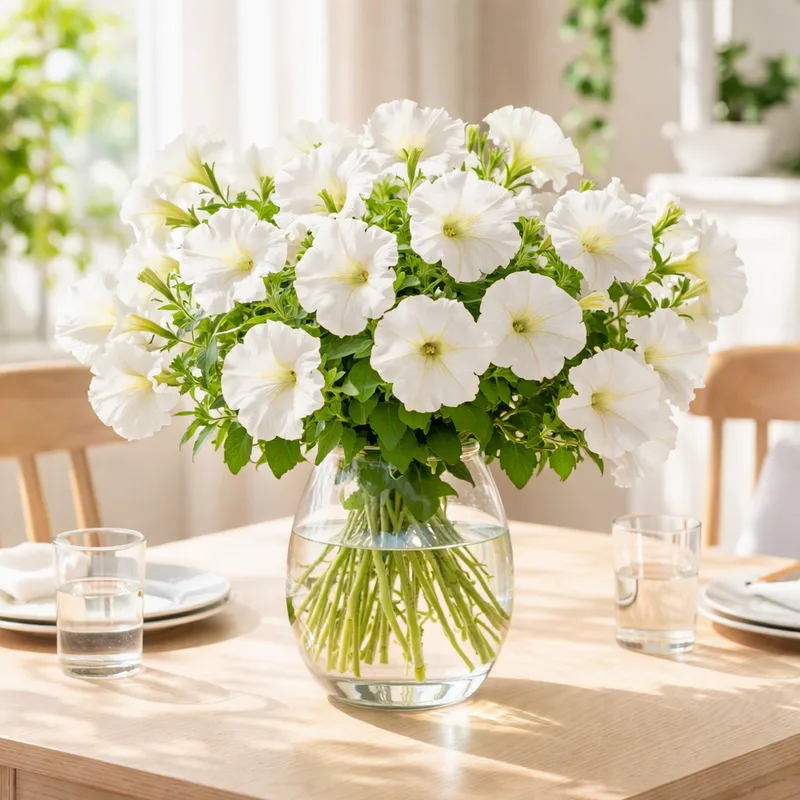
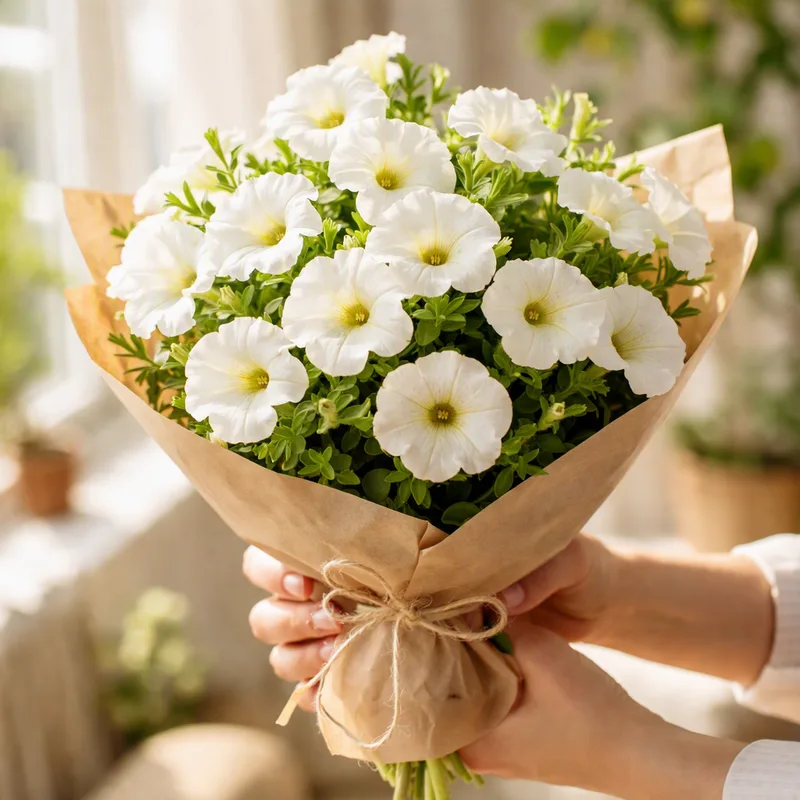
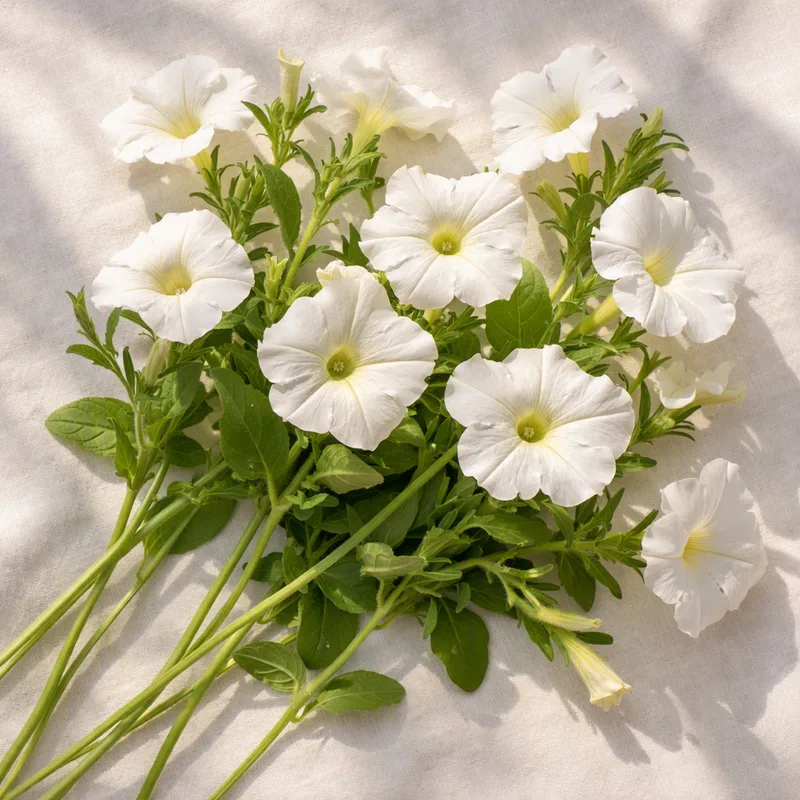
The white parent
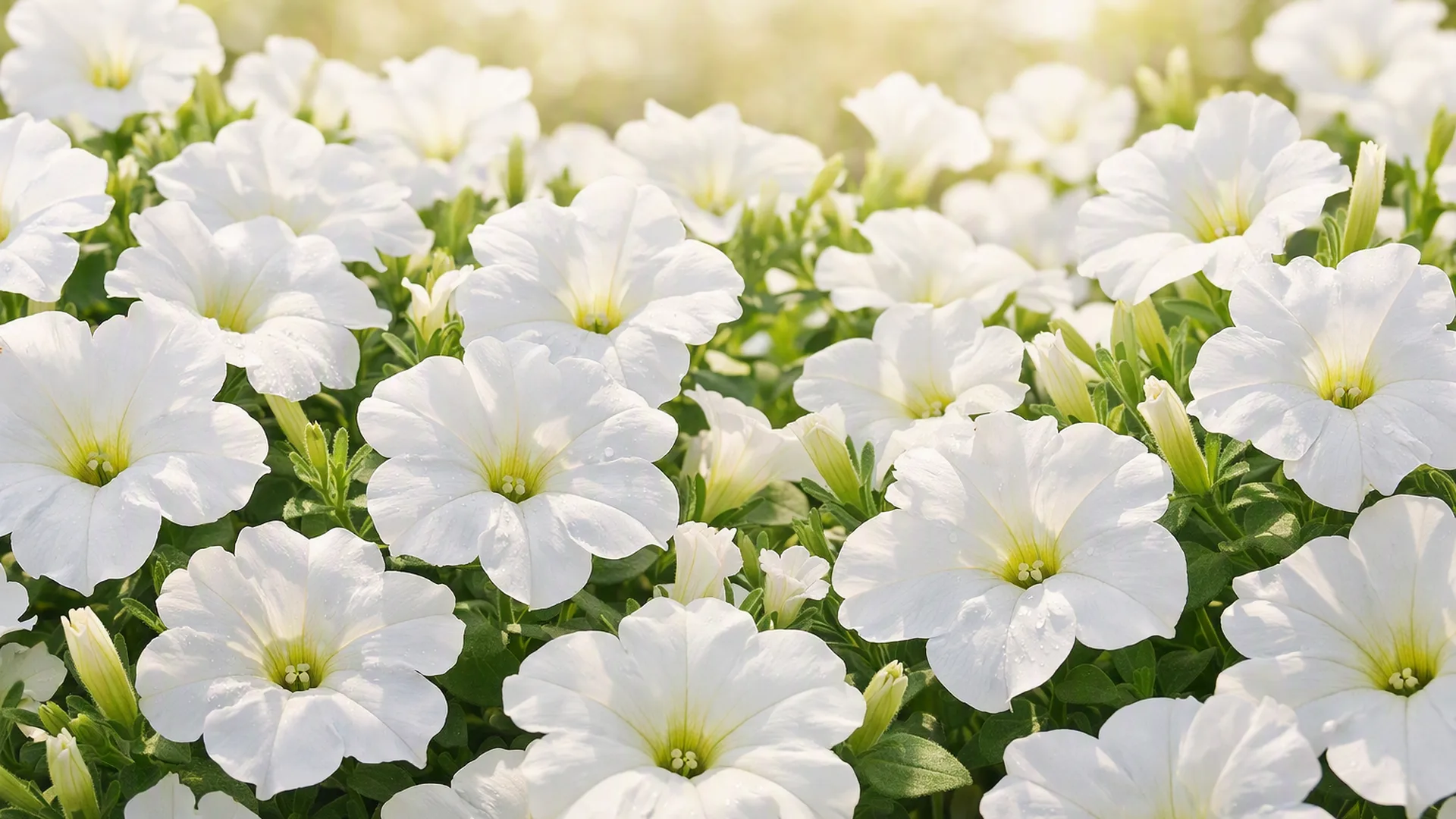
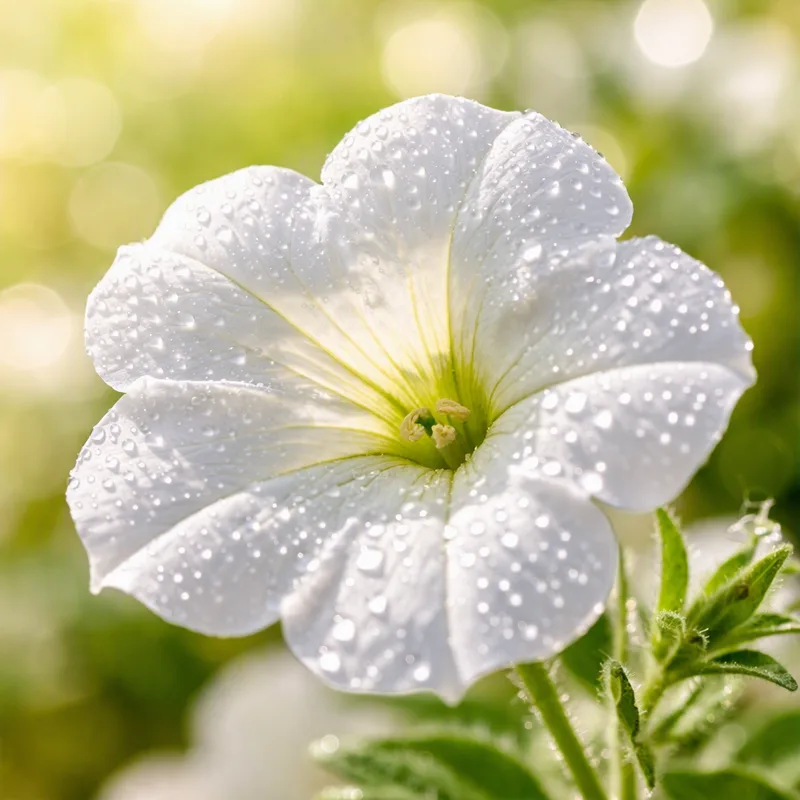
One of the two wild species behind garden petunias is Petunia axillaris, a white-flowered plant from southern South America. In its wild form, the flowers open to attract moths and release a sweet scent in the evening. Modern white hybrids vary: some keep a faint evening scent, others have almost none, and many are so heavily bred that the scent has been lost.
Searching for white plants
People looking for white petunia plants will find them in punnets, pots and hanging baskets. Choose compact plants with plenty of unopened buds rather than ones already covered in open blooms, because they settle in better. White works well in a moon-garden style bed, beside silver foliage, or in a pot at the front door where it shows up after dark.
Keeping white looking fresh
White petals are the first to show damage. Rain marks them, hot sun scorches them, and old flowers turn brown and slimy.
- Water the soil, not the flowers, and do it in the morning.
- Pick off dead blooms every few days, particularly after wet weather.
- Give a little afternoon shade when the temperature climbs above about 35 degrees.
- Feed regularly, because heavy flowering uses up nutrients.
Plants that sit well beside white
Blue lobelia or purple salvia gives white petunias a cool contrast, while silver dichondra spills nicely out of a basket next to them. In a Sydney or Melbourne bed, add some low-growing herbs to fill the edges. In humid Queensland, white petunias are best treated as a cool-season annual.
Nibbled leaves
The ASPCA's database puts petunias among the non-toxic plants for cats and dogs, so nibbled leaves are unlikely to cause serious harm.