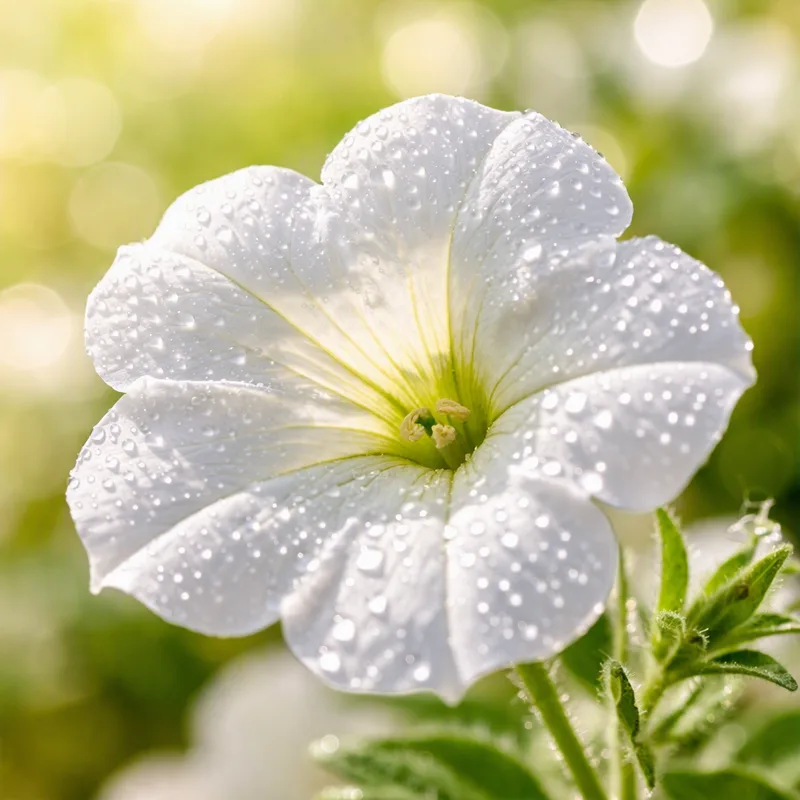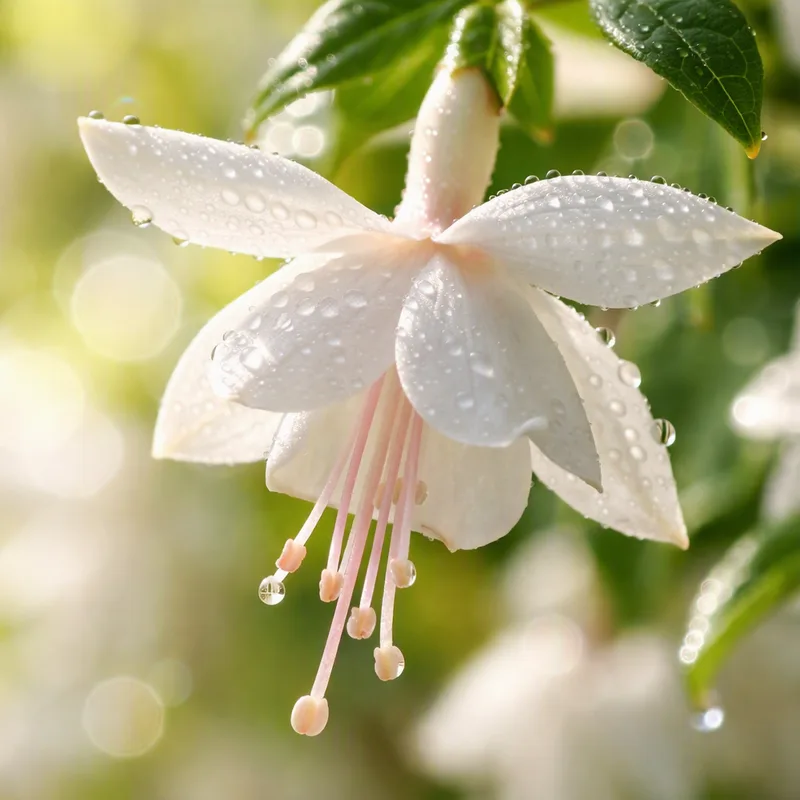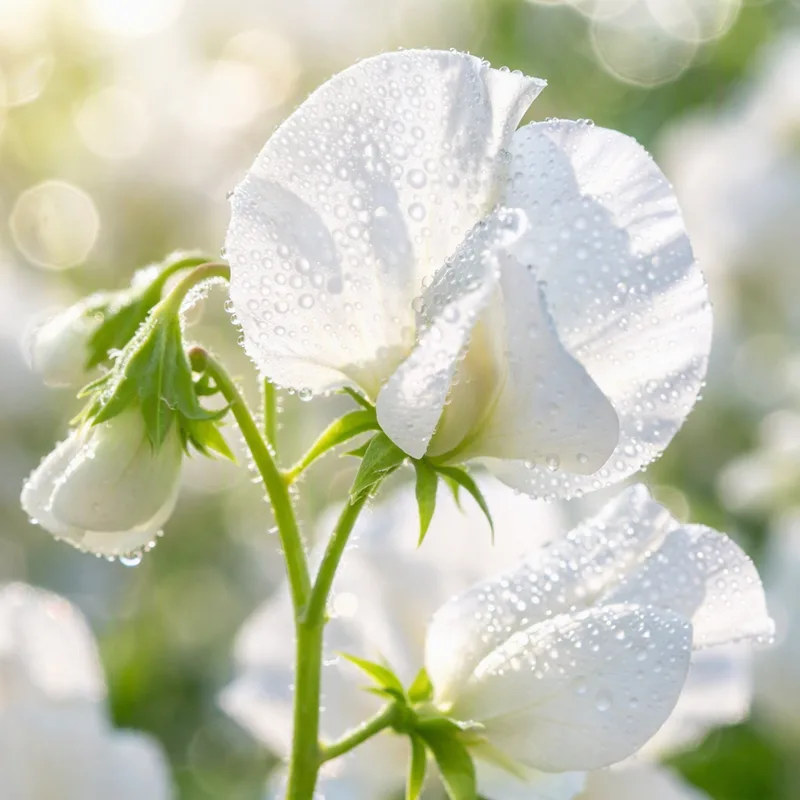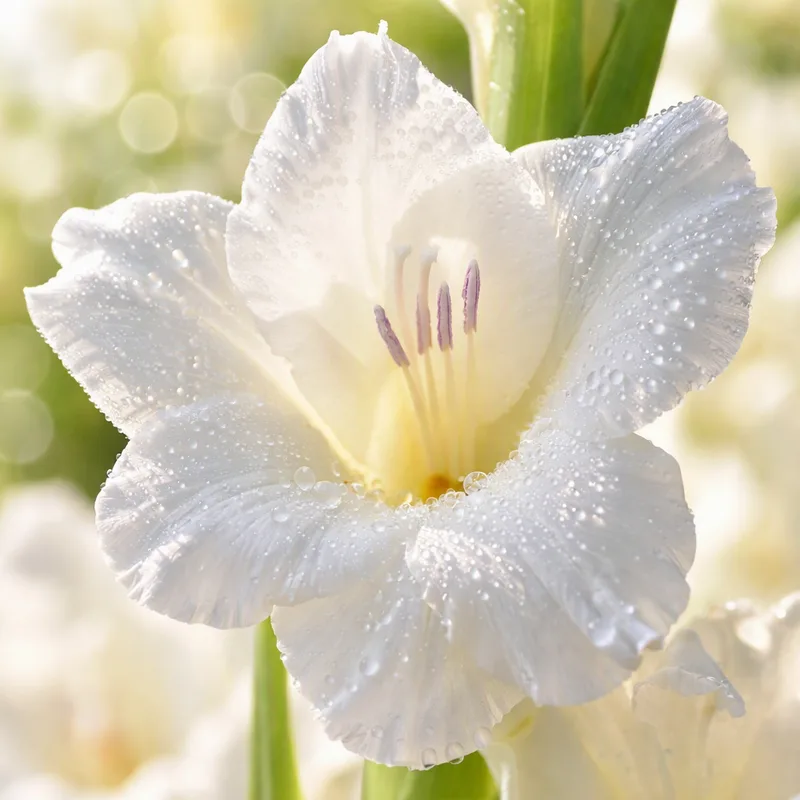
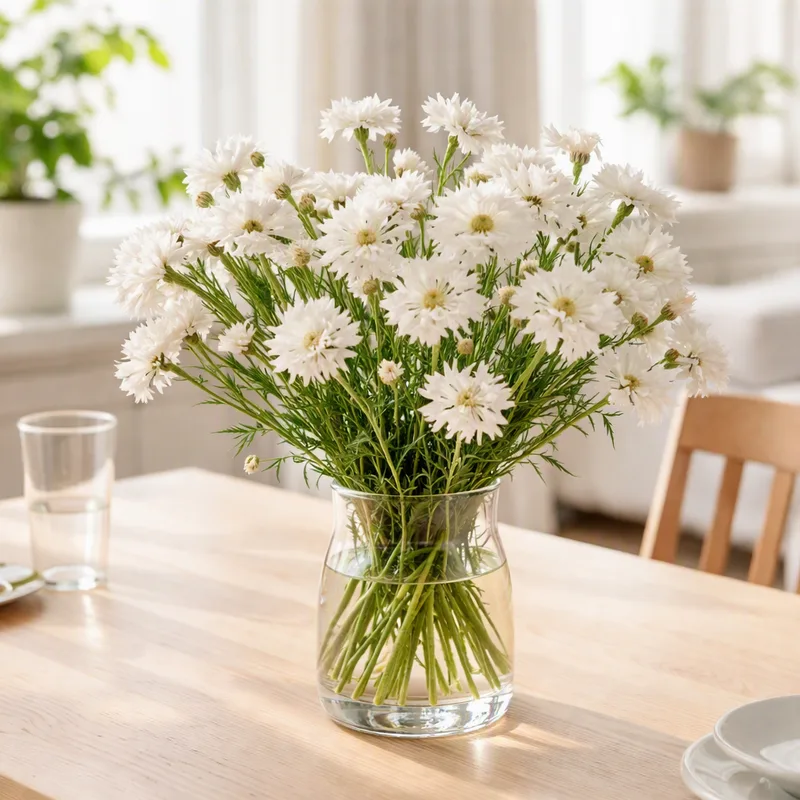

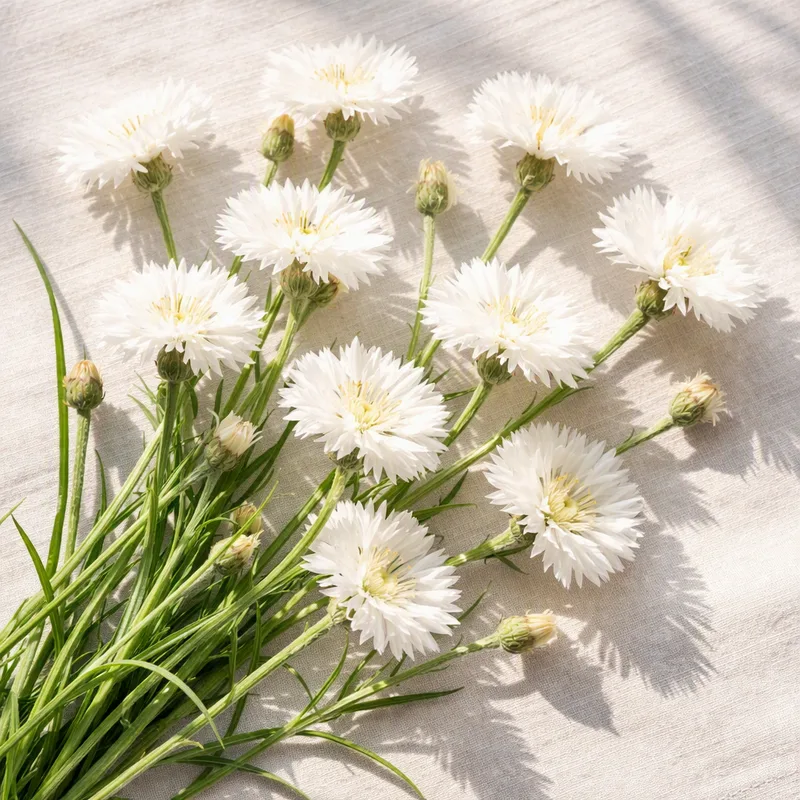
A pale form of a blue flower
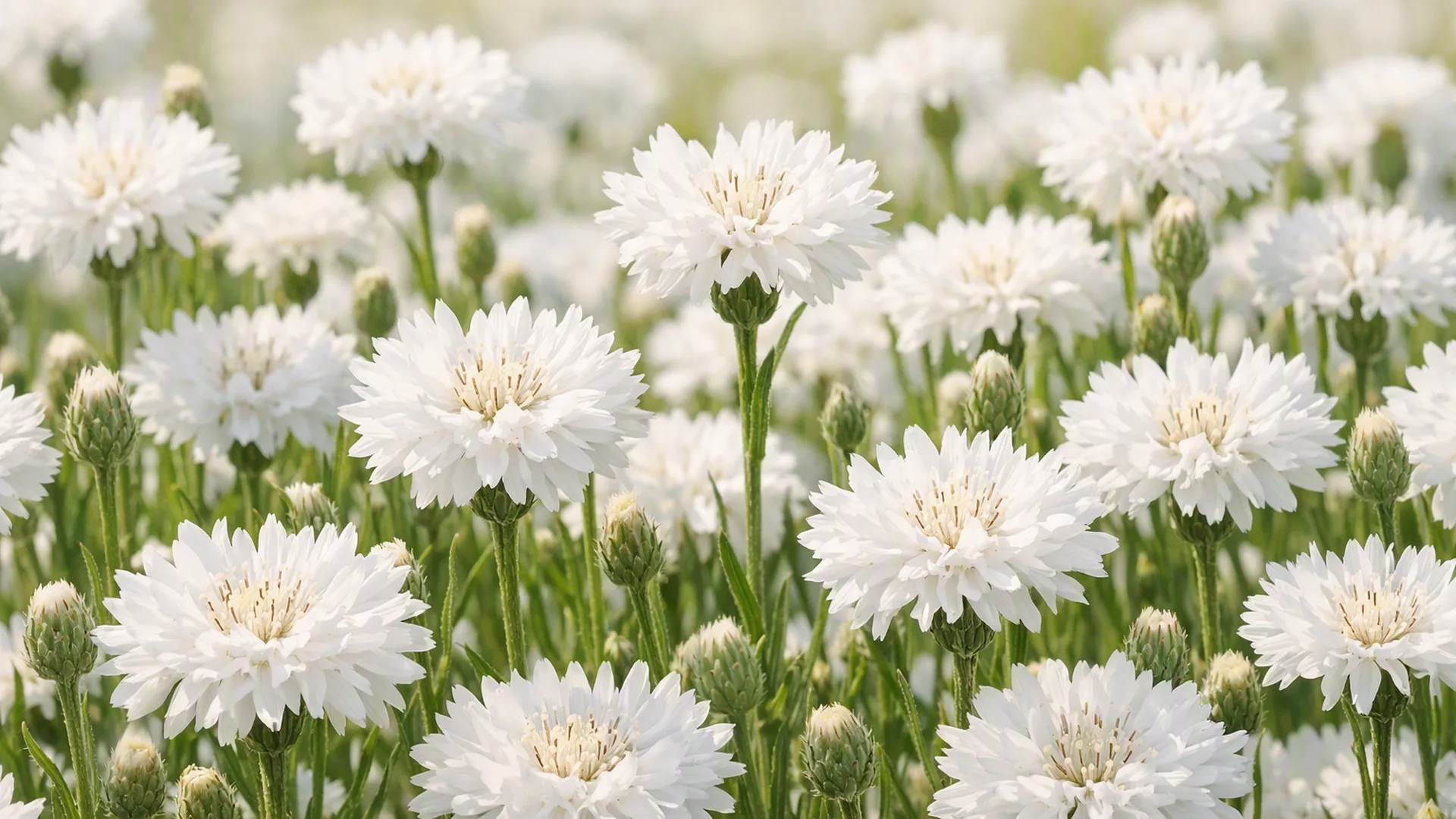
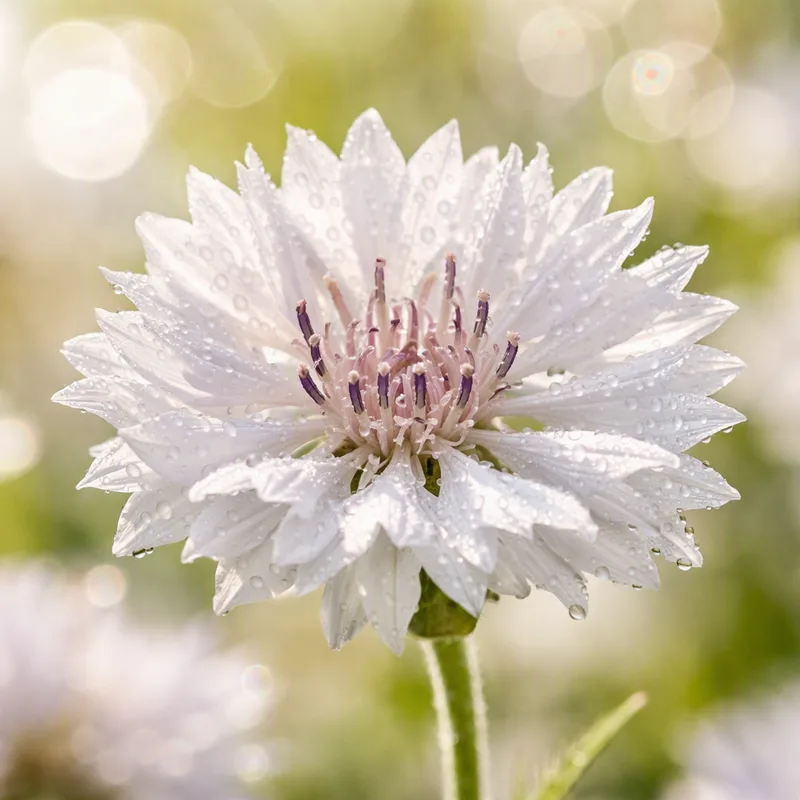
The wild cornflower is blue, so a white cornflower is a selection rather than the original. Cultivars of Centaurea cyanus exist in white, pink, lavender and a very dark maroon sold as black. Those pale forms have the same fringed, thistle-like heads as the classic, just in cream-white petals, often with a dusting of colour at the centre.
Growing white cornflowers
They are as tough as the blue forms. Sow seed straight into the garden, since seedlings dislike being moved.
- In temperate states, sow in autumn for spring flowers or in September for summer blooms.
- On the subtropical coast, sow in autumn and winter.
- Choose full sun, avoid heavy feeding and thin seedlings to about 20 cm apart.
- Remove spent flowers to keep new buds coming.
Plants reach roughly 40 to 90 cm. White flowers stand out well against dark foliage, and they keep a border looking fresh into the evening.
Putting white cornflowers in a bunch
White cornflower lets bolder colours do the talking. In a bunch it works with blue cornflowers, lavender and grey foliage for a cool palette, or with yellow calendula for a brighter one. Stems last about five to seven days. Remove lower leaves and re-cut the stems from time to time.
Household animals and white cornflowers
Cornflowers are rated non-toxic for dogs and cats by the ASPCA, which makes them easy company for animals.
In its native Europe the cornflower is endangered in the wild, mainly because of intensive farming and heavy herbicide use, so it is now seen more often in gardens than in crop fields.