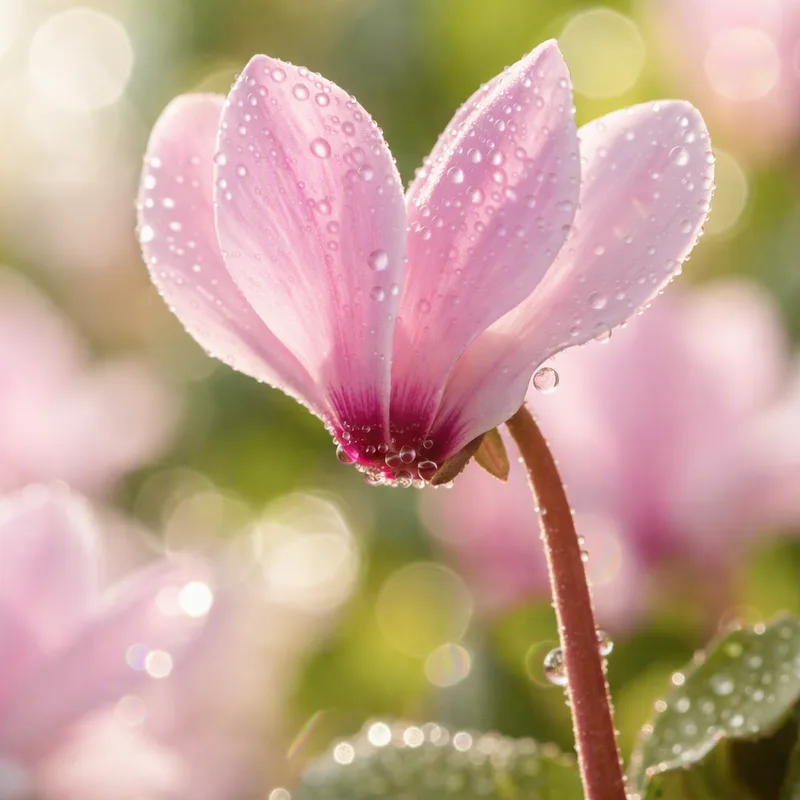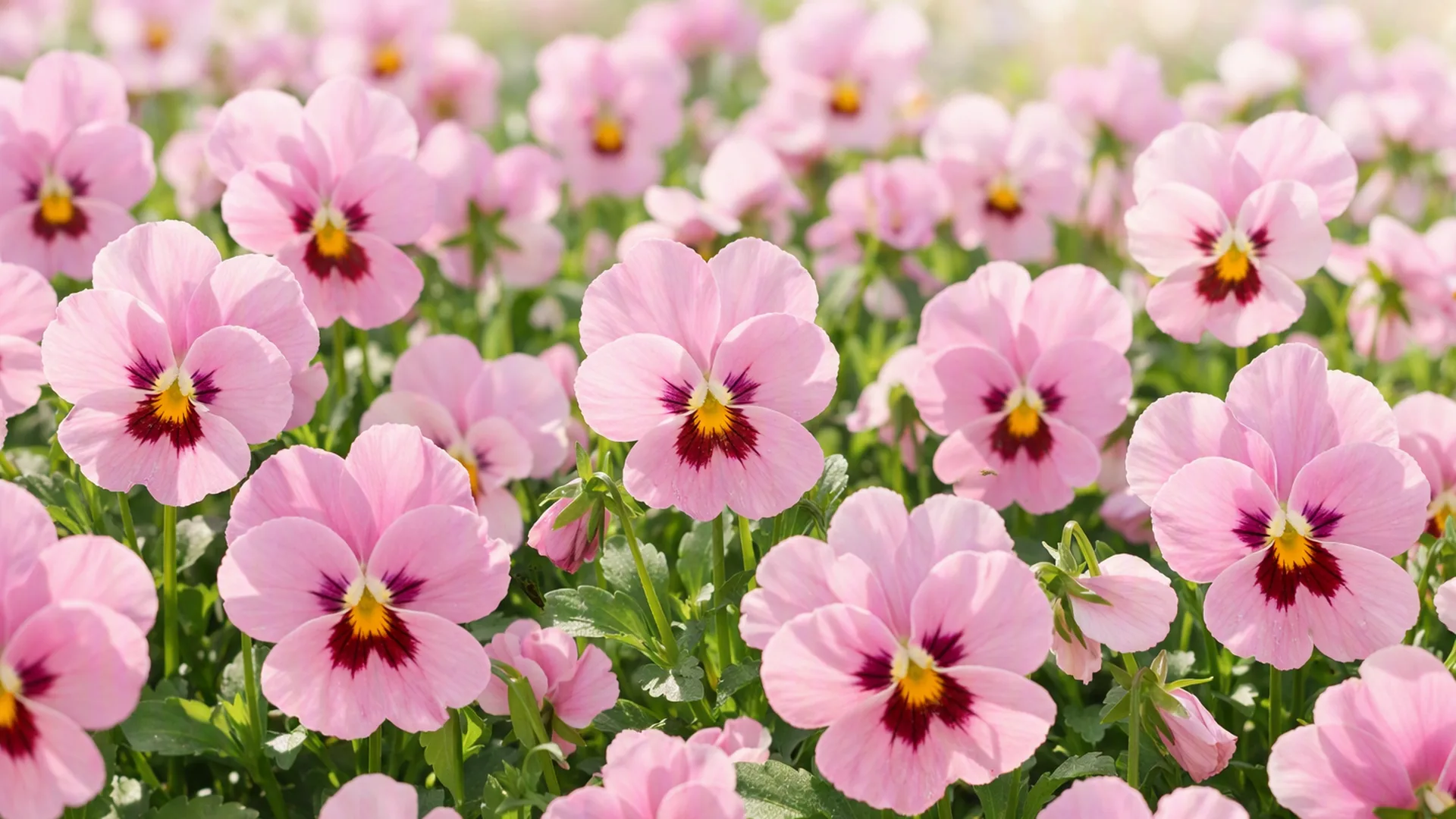
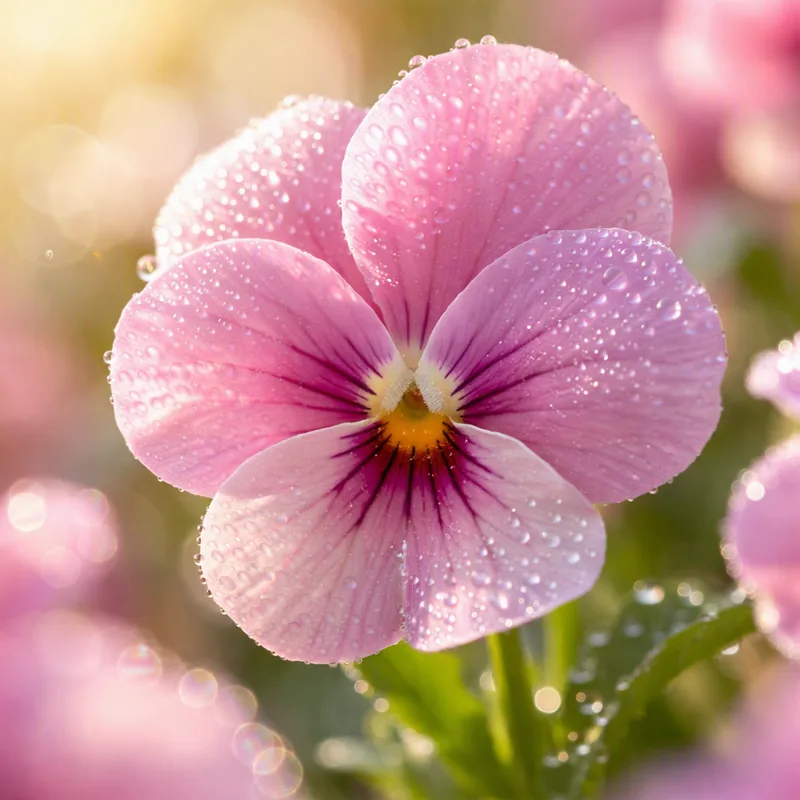
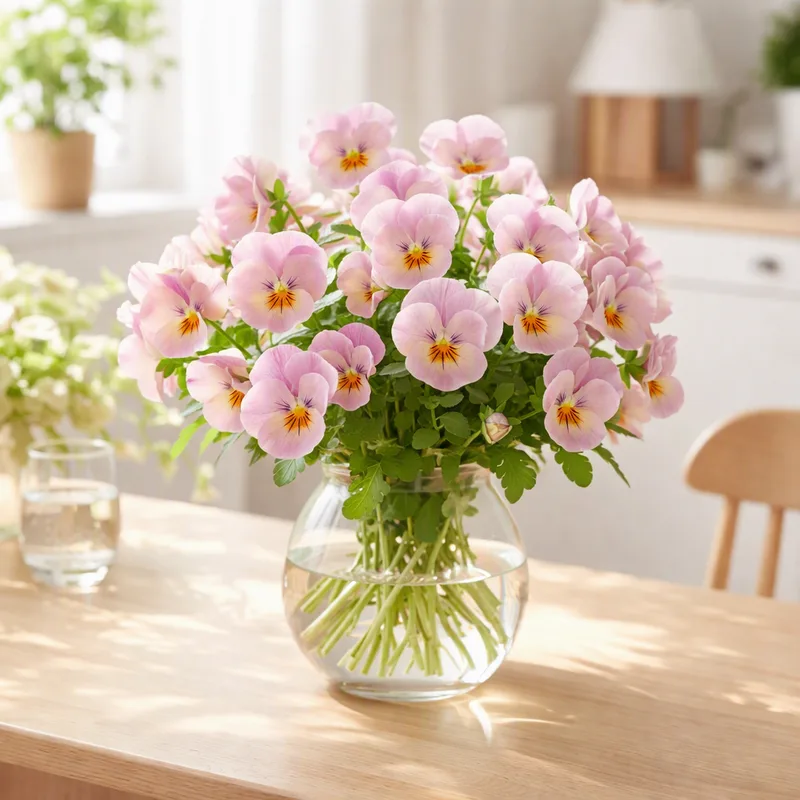
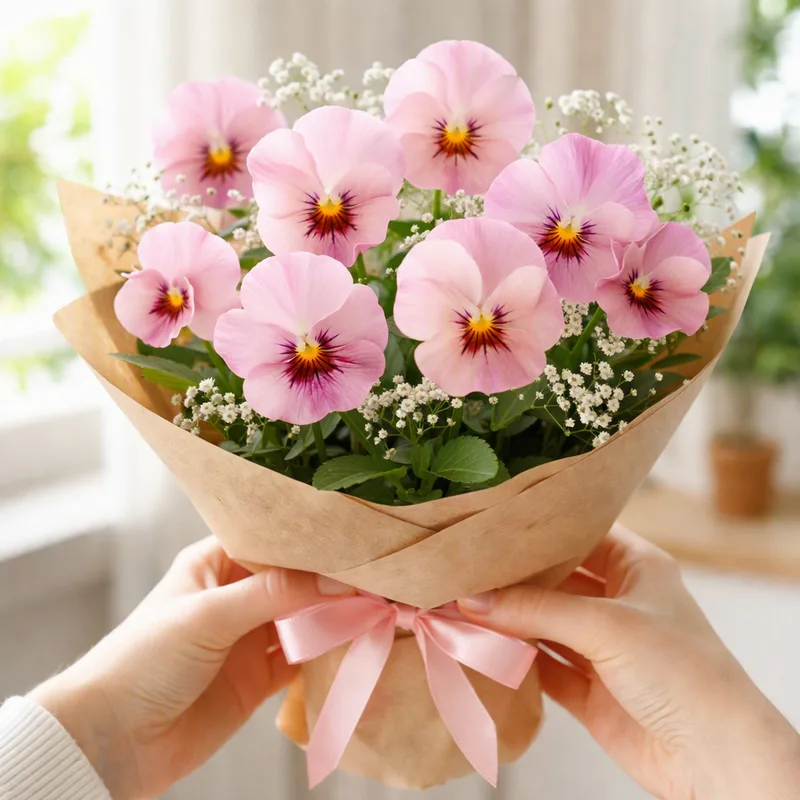
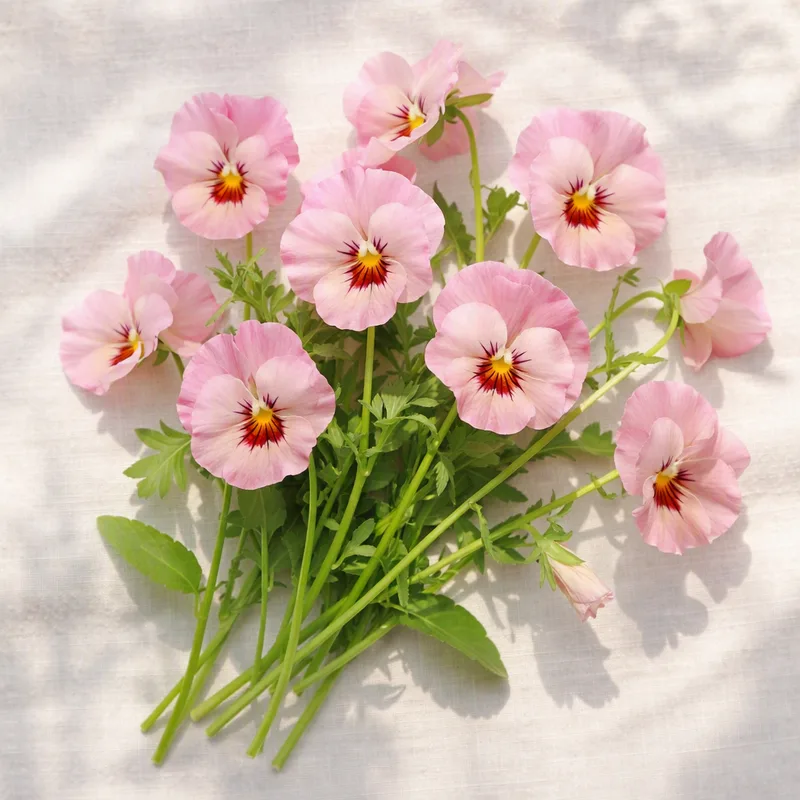
Pink pansies bring a softer look to the cool season. Shades run from pale blush through rose to a deep raspberry, and many carry a darker face or a golden throat. Some change slightly in tone as the flowers age, and the colour may fade in strong sun.
A soft-looking winter plant
Pink pansies stay compact, usually 10 to 25 centimetres tall, which makes them useful in the front of a border or in pots near a door. Combine pink with silver foliage or white alyssum for a gentle, cottage feel, or with purple violas for a deeper mix.
Practical planting
- Plant between March and May. In cool southern areas the earlier end of the range gives better root growth before winter.
- Use a fresh potting mix in containers, as old mix can harbour fungus.
- Water gently and avoid wetting the leaves late in the day.
- Add a slow-release fertiliser at planting and a liquid feed from midwinter.
Why pink pansies sulk in spring
Heat is the big issue. Once spring warms up, plants become leggy and flower less. Snails, slugs and aphids may cause damage, and powdery mildew appears on crowded plants. Pink flowers show chewing damage easily, so check them often.
Useful to know
Pansy flowers are edible if grown without chemicals. The related Johnny jump up is listed by the ASPCA as non-toxic to pets, though chewing any plant can still upset a stomach.
In the language of flowers, pansies stand for thoughts of someone.