Natural or tinted pink
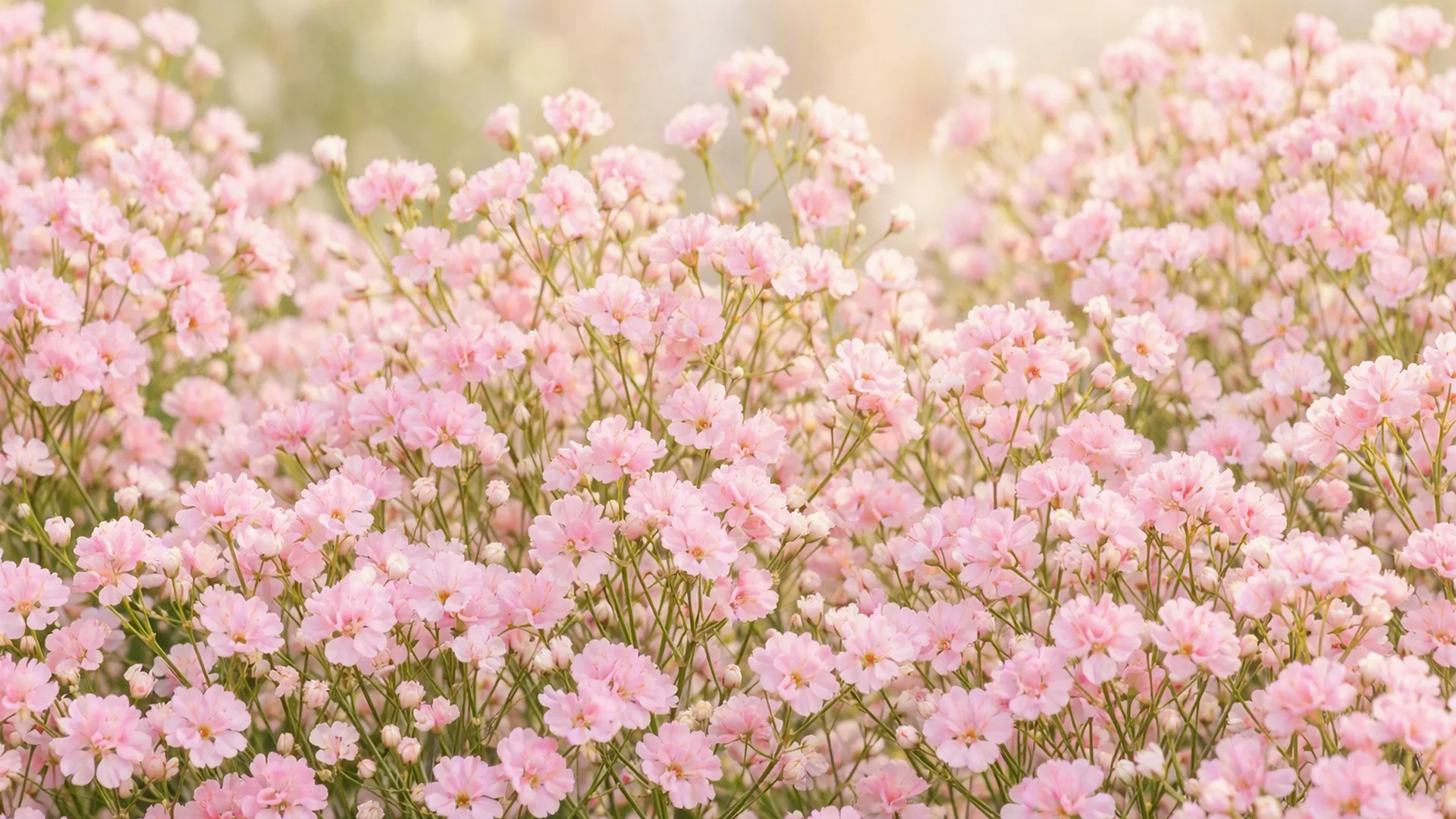
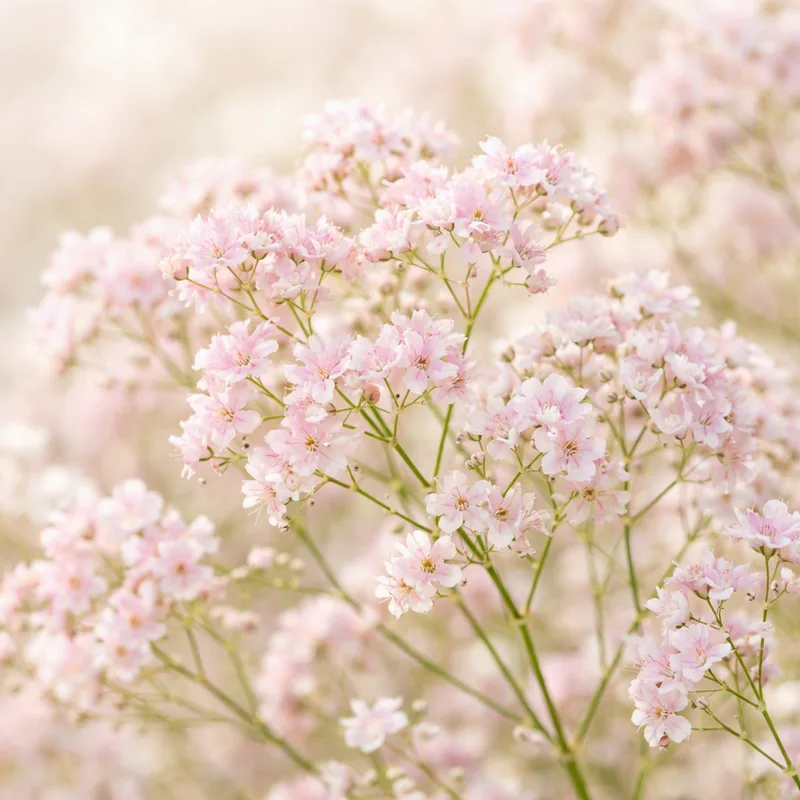
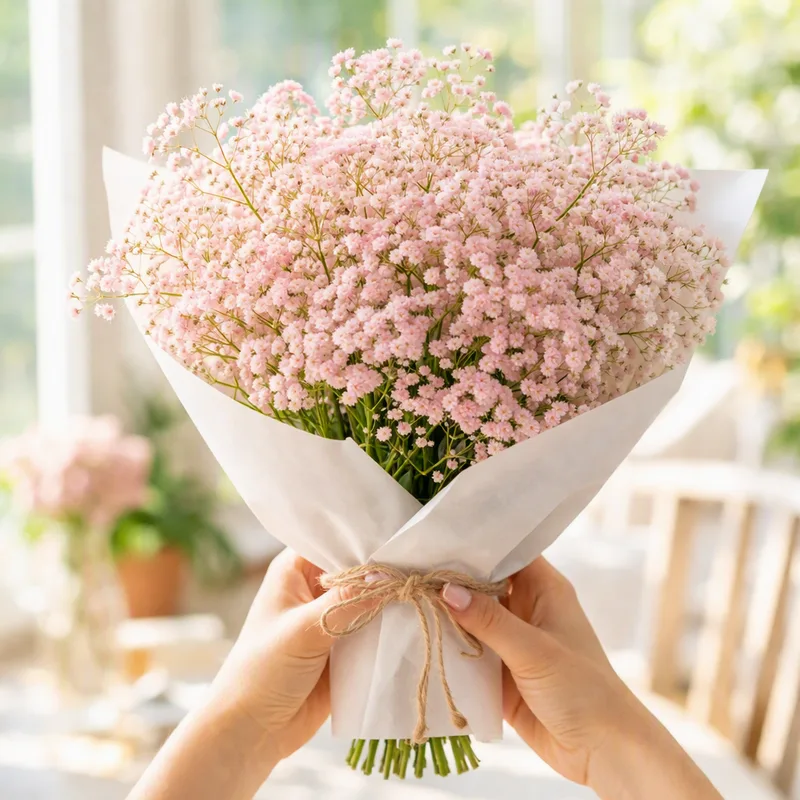
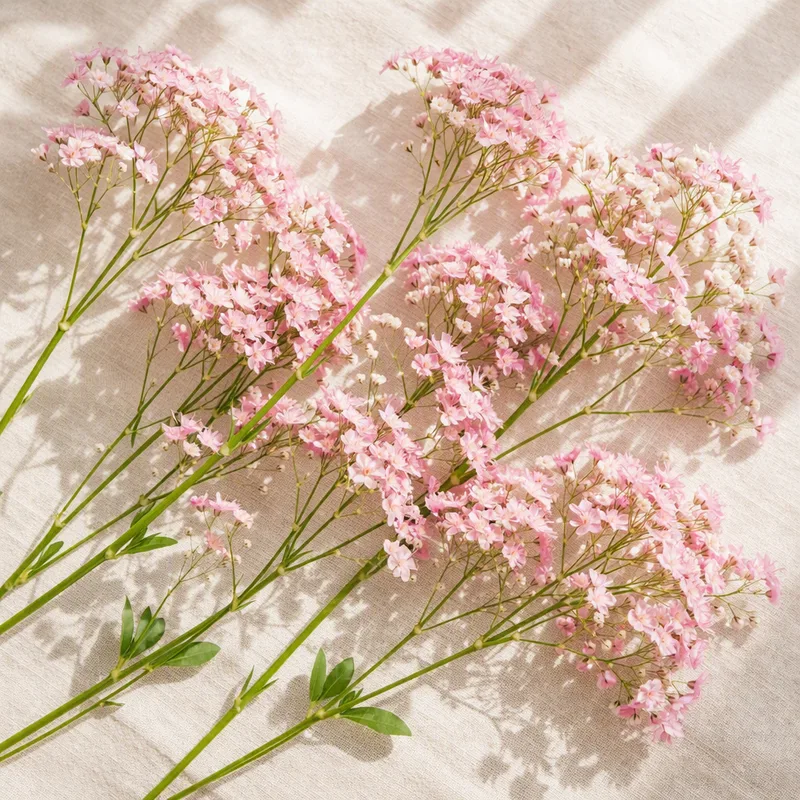
Wild Gypsophila paniculata is white. Natural pink forms exist, such as 'Rosenschleier', a pale pink double that has won the Royal Horticultural Society's Award of Garden Merit. Some pink bunches in shops are tinted, though, so expect small differences in depth from stem to stem and ask if you want the natural kind.
What to do with it
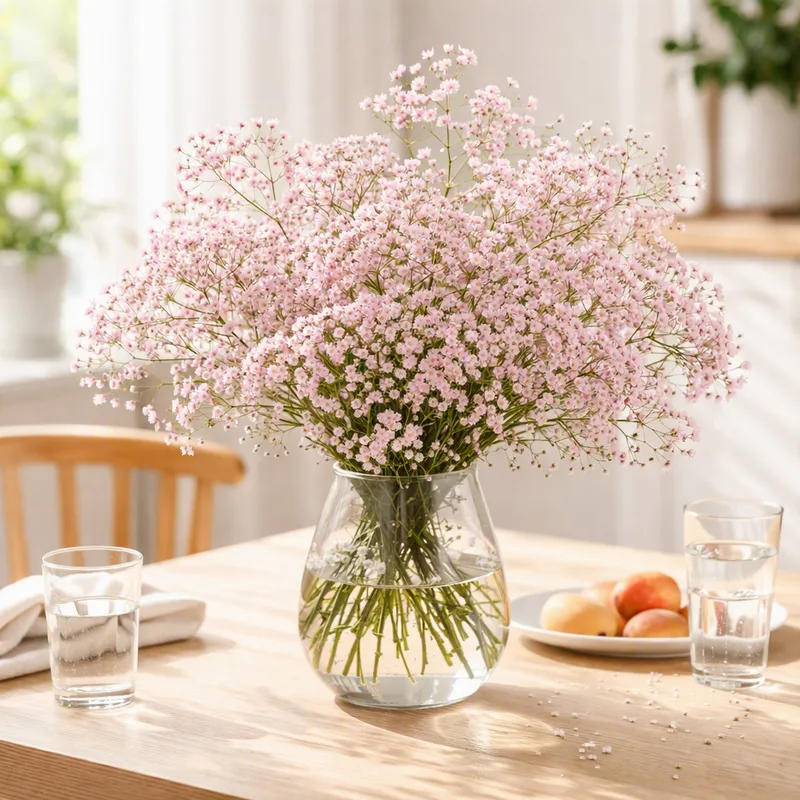
The airy flower heads work as a veil behind roses or dahlias, in a pink and cream palette. Used alone in a jar they make a casual centrepiece for a spring garden party. In the language of flowers baby's breath traditionally means innocence, and pink adds tenderness.
Care for cut stems
- Remove the lower leaves and cut the base on an angle.
- Keep it in cool water out of direct sun.
- Change the water often, as the fine stems clog easily.
- Expect around one to two weeks. Hang a bunch upside down in a dry place when fresh flowers fade.
Everyday care for pink baby's breath
Plant in full sun in a bed of free-draining soil. The plant grows about a metre tall and wide, so give it space. Spring planting suits cool areas; in mild coastal cities autumn works too.
Keeping pets safe around pink baby's breath
The ASPCA lists baby's breath (Gypsophila elegans) as non-toxic to dogs, cats and horses, but notes that mild vomiting or diarrhoea can follow if eaten. Handling Gypsophila paniculata may irritate sensitive skin.