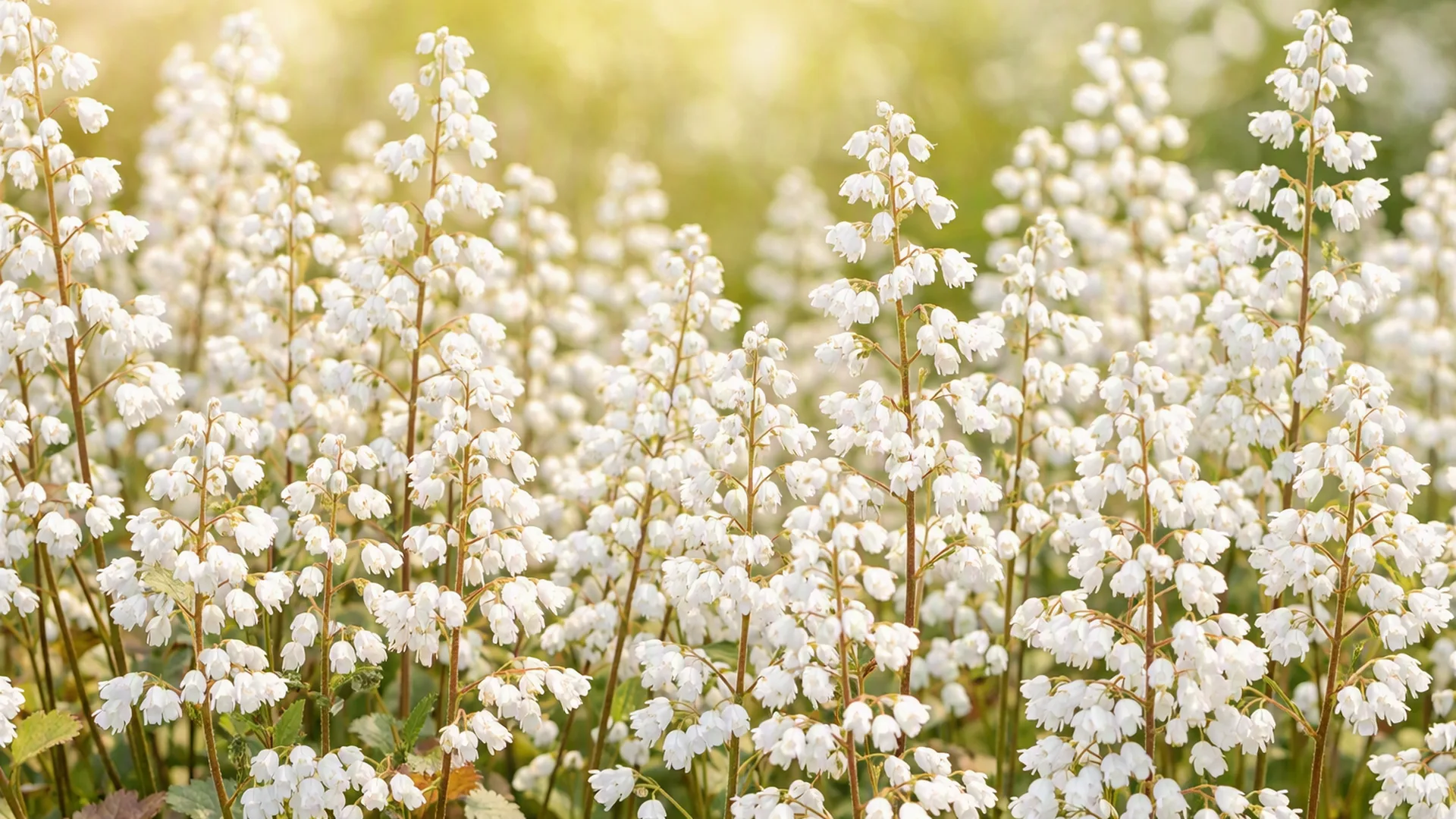
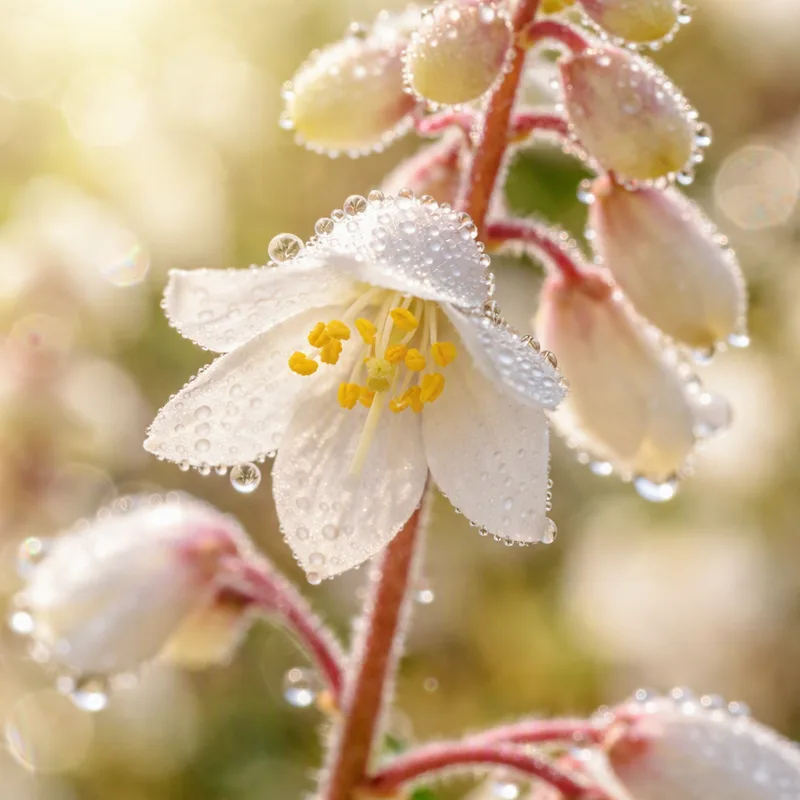
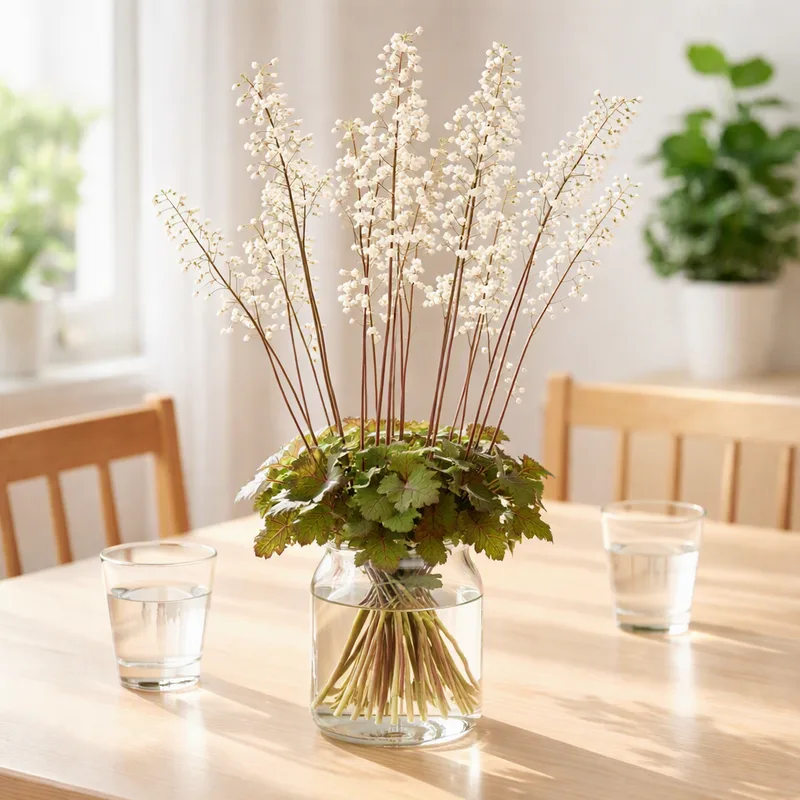
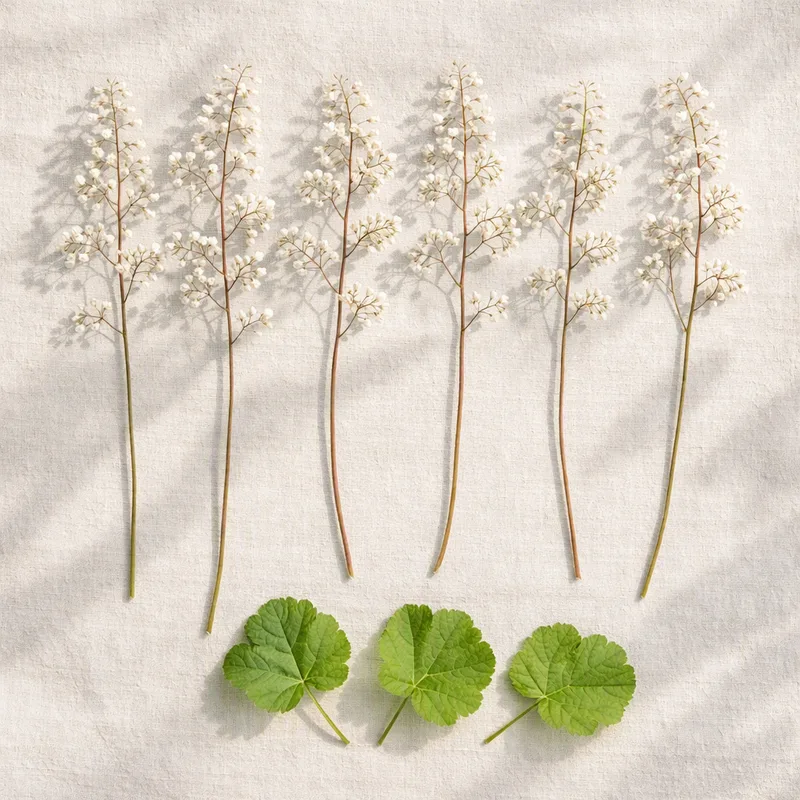
Coral bells are Heuchera, a North American genus named after the German botanist Johann Heinrich von Heucher. The leaves are the main attraction: they come in lime, caramel, burgundy, near-black and silver-marbled shades, forming a neat mound that looks good all year. In spring and early summer, thin stems carry tiny bell-shaped flowers, which is where the common name comes from.
Where they suit Australian gardens
Heuchera like cool, moist, shaded positions and free-draining soil. They do best in Melbourne, Tasmania, the Dandenongs, the Blue Mountains and the Adelaide Hills. In hot, humid places such as Brisbane or Cairns, the crown tends to rot in wet summers, so grow them in pots with gritty mix and keep them out of afternoon sun. Planting in autumn lets roots settle before summer heat.
Looking after a clump
- Give them morning sun and afternoon shade. Purple and bronze leaves colour more strongly with extra light.
- Keep the crown at soil level. If it rises out of the ground over the years, lift the clump and replant it deeper.
- Divide old plants every three or four years in autumn.
- Trim the old flower stems and remove tatty leaves in late winter.
In bouquets and borders
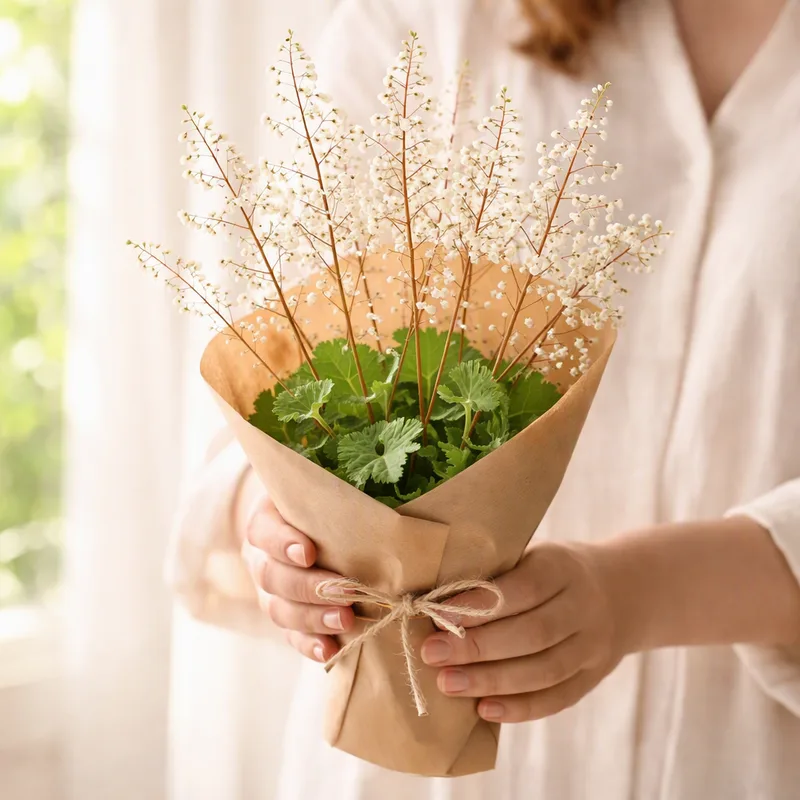
The foliage is a handy filler in posies and mixed bunches, since the leaves hold up well in water for several days. In the garden, they are good edging along a path or beneath taller shrubs.
Kind to the household dog
Pet-safe, according to the ASPCA, which classes coral bells as non-toxic for dogs, cats and horses. Even so, a pet that eats a lot of any plant may get a loose stomach.