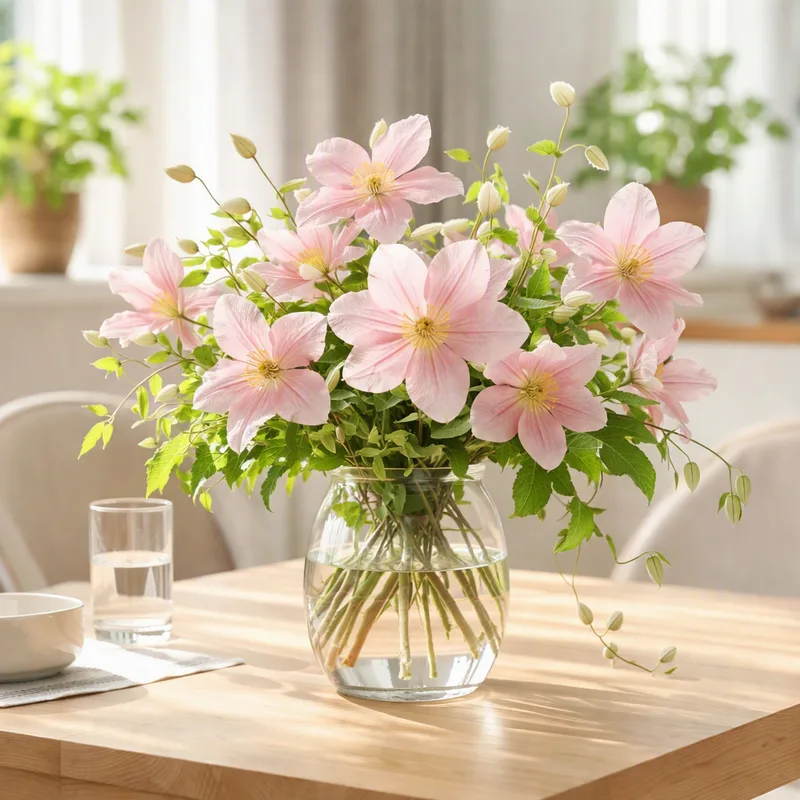
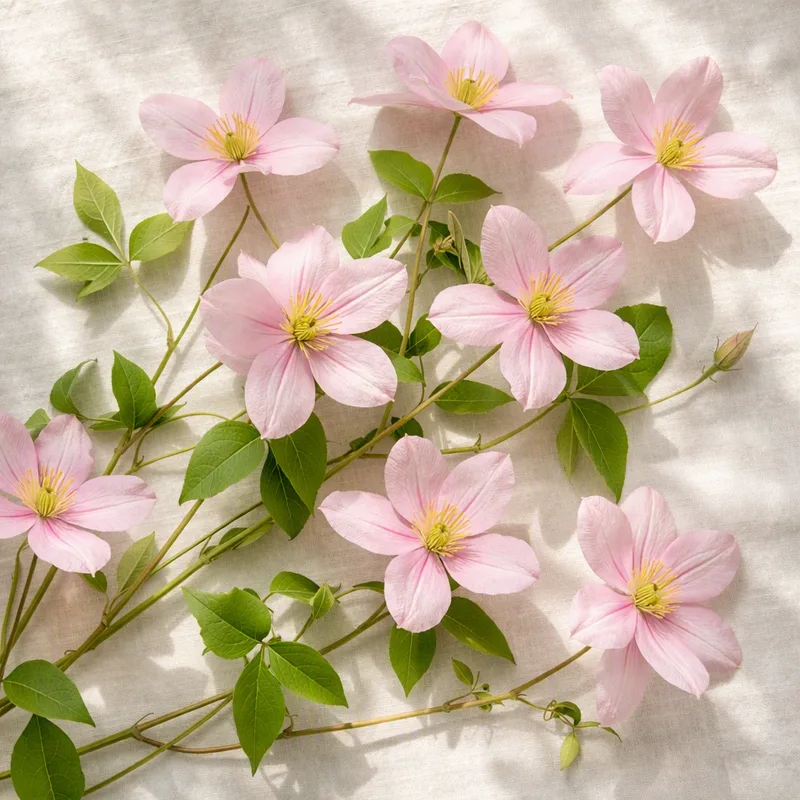
A climber with leaf-stalk grip
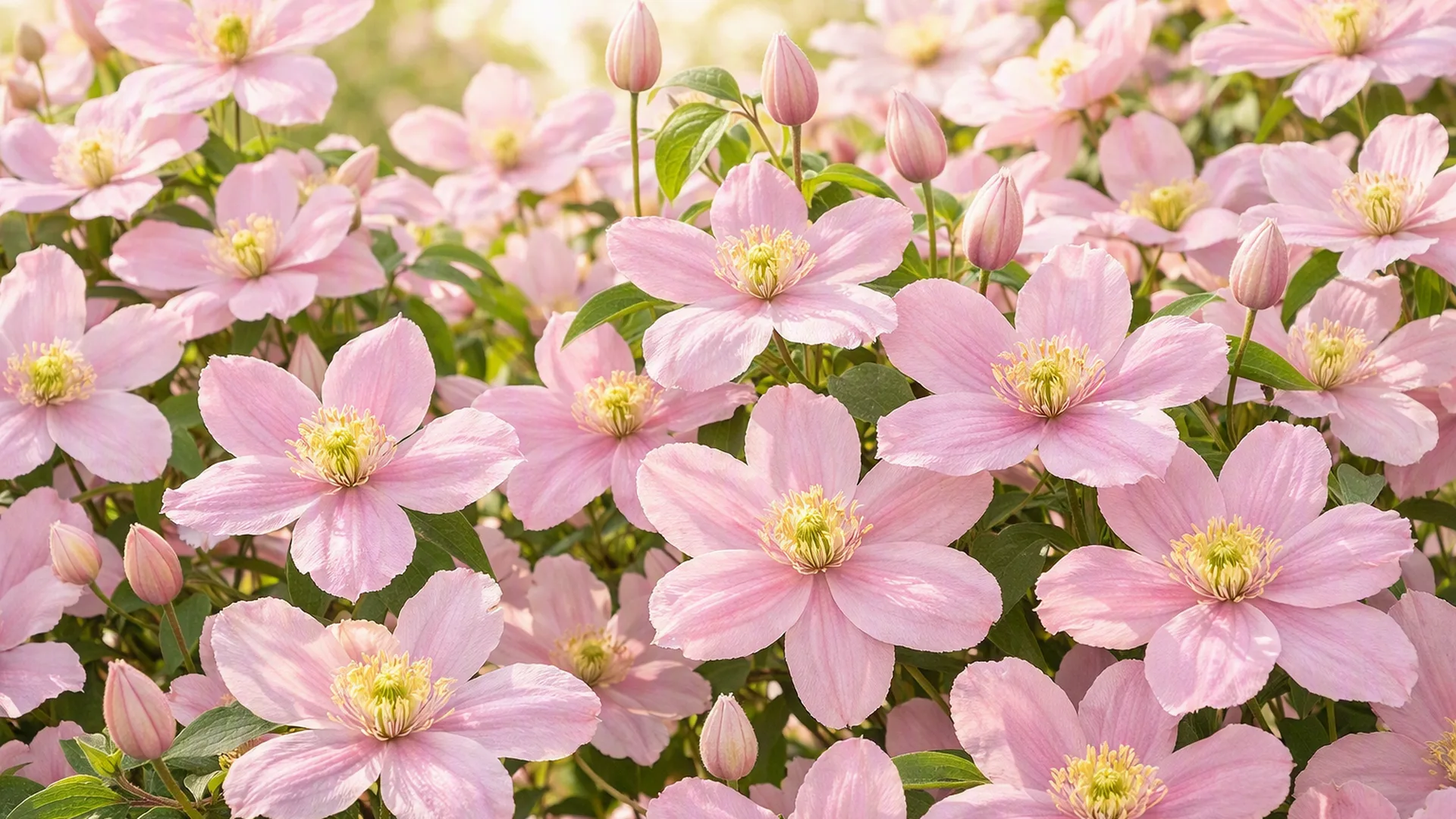
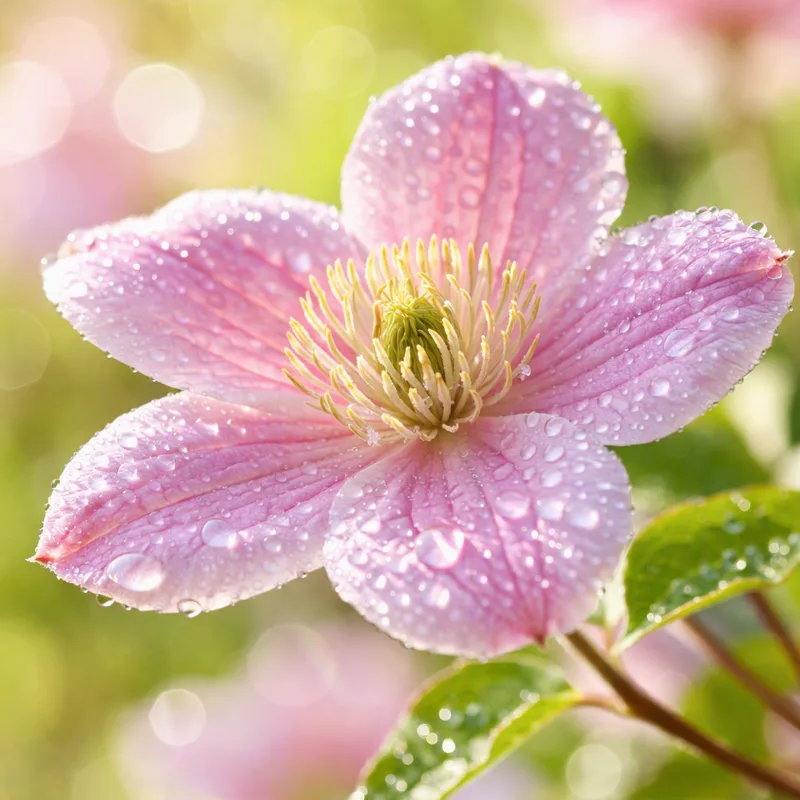
Clematis climbs by twisting its leaf stalks around supports, so it needs wires, a trellis or a shrub to scramble through. The genus has around 300 species and countless hybrids, from large-flowered garden types to small-flowered vines.
Australia has its own clematis
Native species such as Clematis aristata, often called old man's beard or traveller's joy, grow in eastern Australia and carry white star-shaped flowers followed by feathery seed heads. Be careful not to confuse it with the European Clematis vitalba, which is a declared weed in parts of the country and should never be planted.
Pruning by group, southern style
- Group 1 (early, small-flowered types): tidy after flowering in spring.
- Group 2 (large-flowered hybrids): trim lightly in late winter, around August.
- Group 3 (late summer flowerers): cut hard in late winter.
Keep the roots cool
Clematis likes its head in the sun and its roots in cool, moist soil. Mulch well and plant a little deeper than the pot level. In subtropical and tropical areas, they often struggle, while cool-temperate gardens suit them best.
When choosing a plant, check the label for the pruning group, because that decides when to cut. If it is missing, ask the nursery. The silky, feathery seed heads of many species extend interest after flowering, so leave them until you prune.
Irritant sap and animals
The ASPCA lists clematis as toxic to dogs, cats and horses, because of the irritant protoanemonin. Signs include drooling, vomiting and diarrhoea.