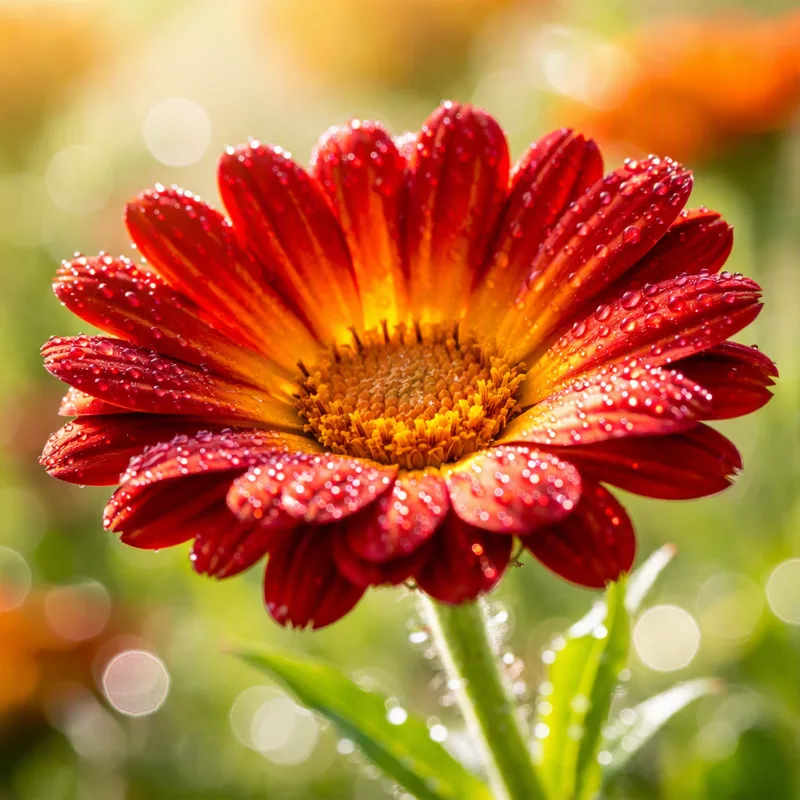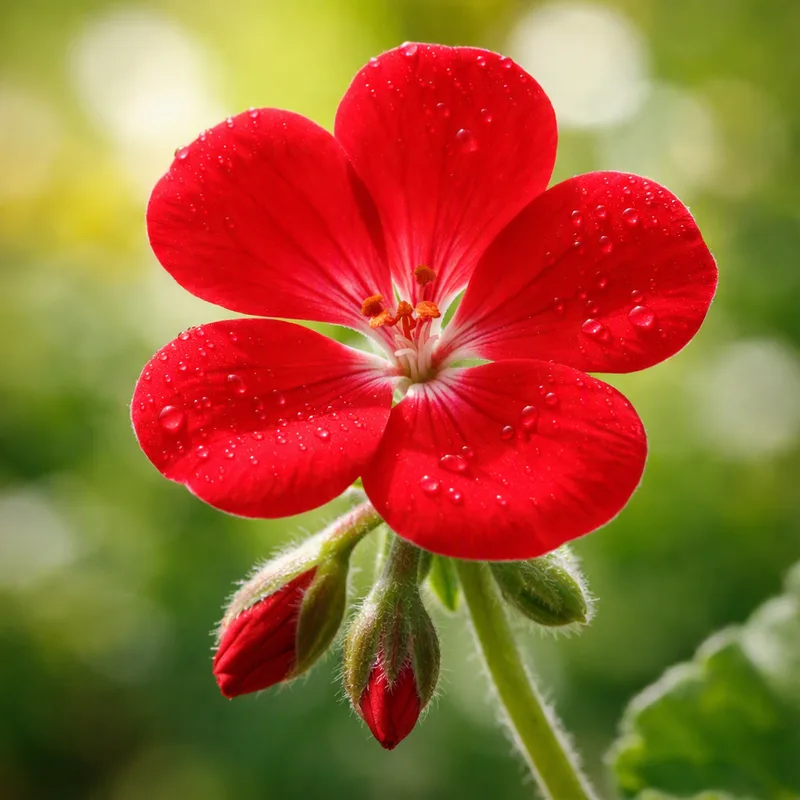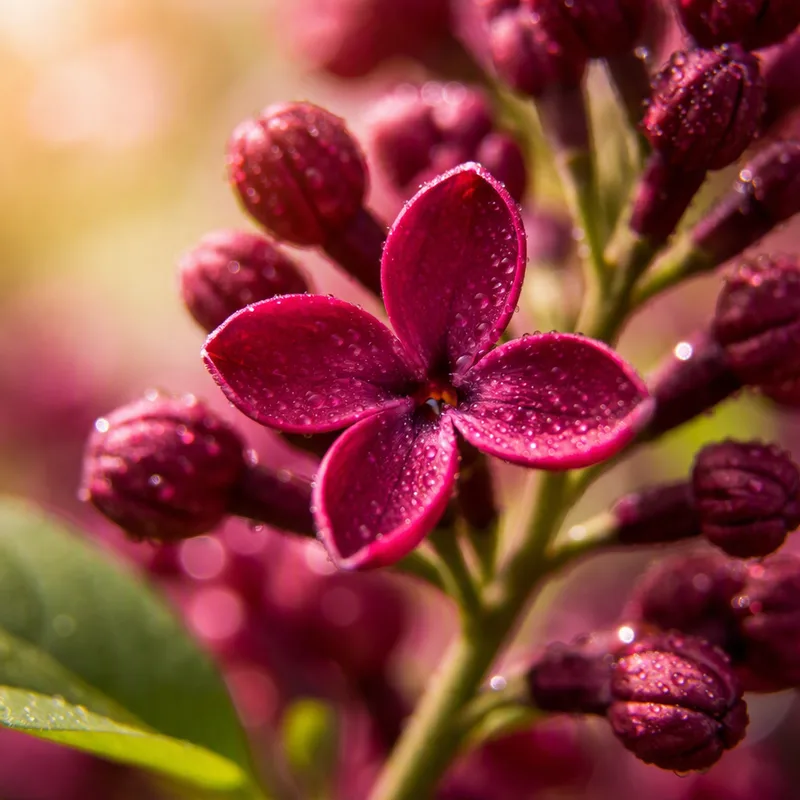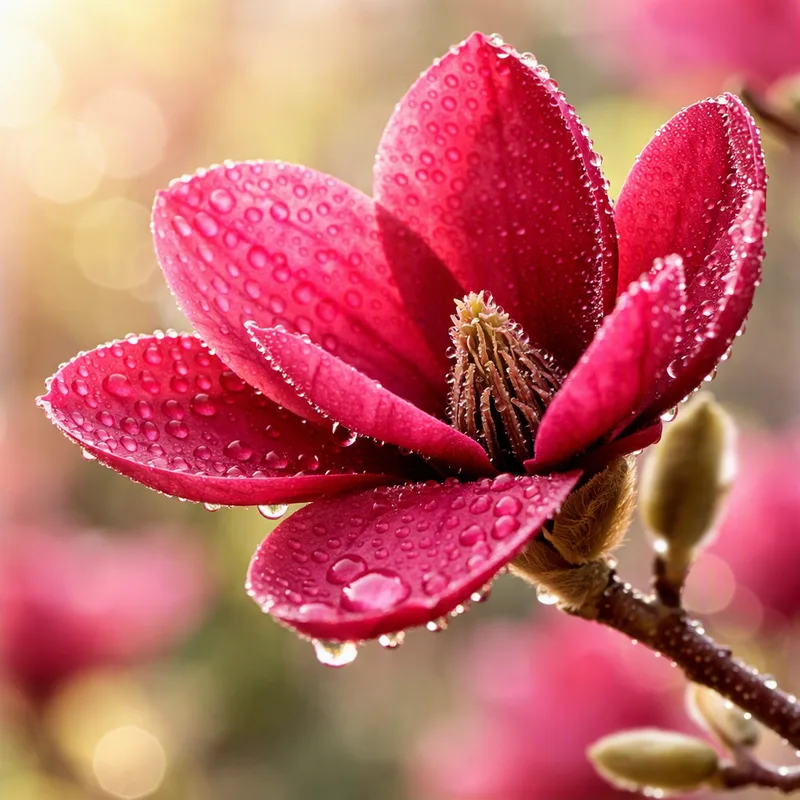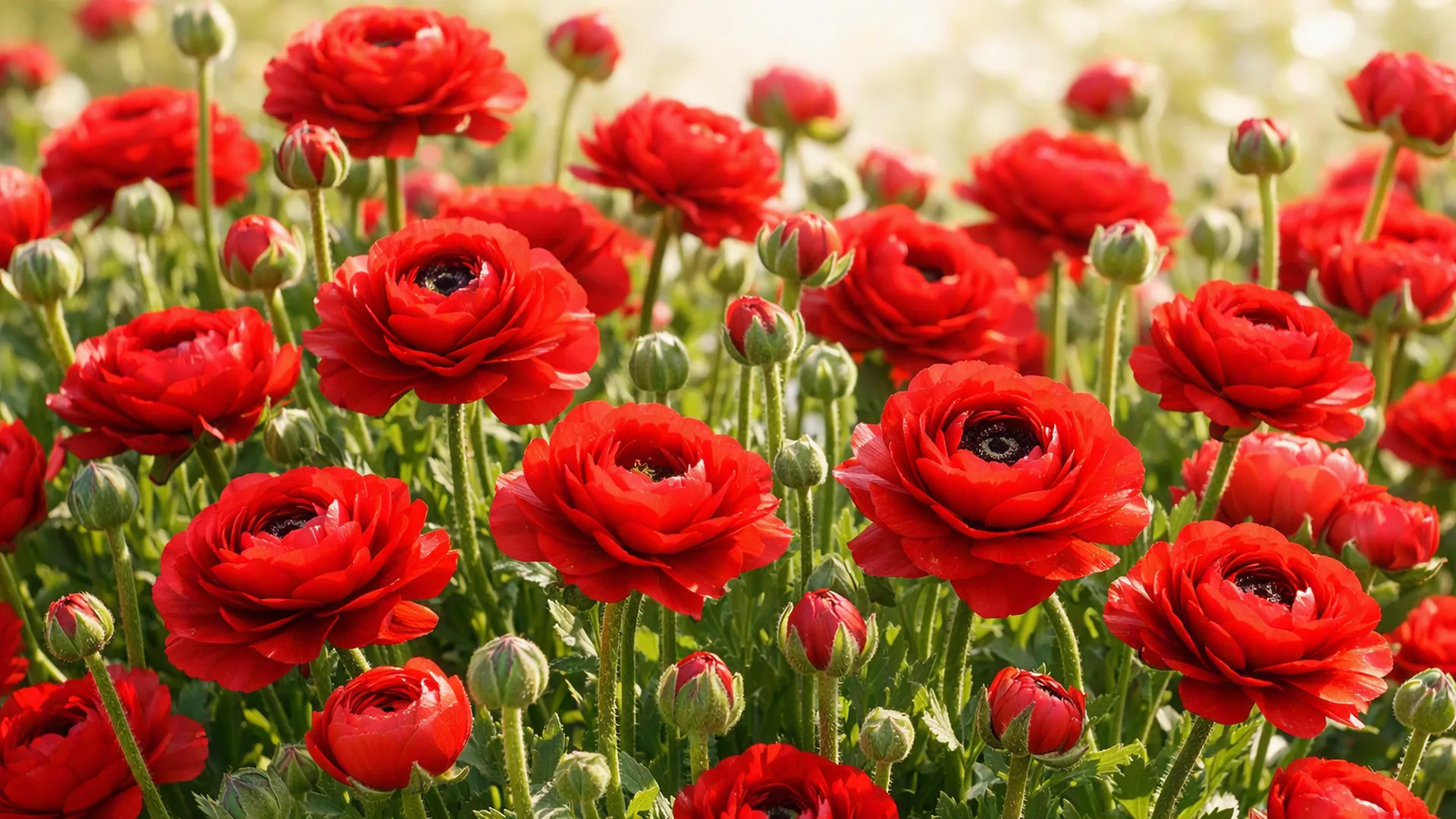
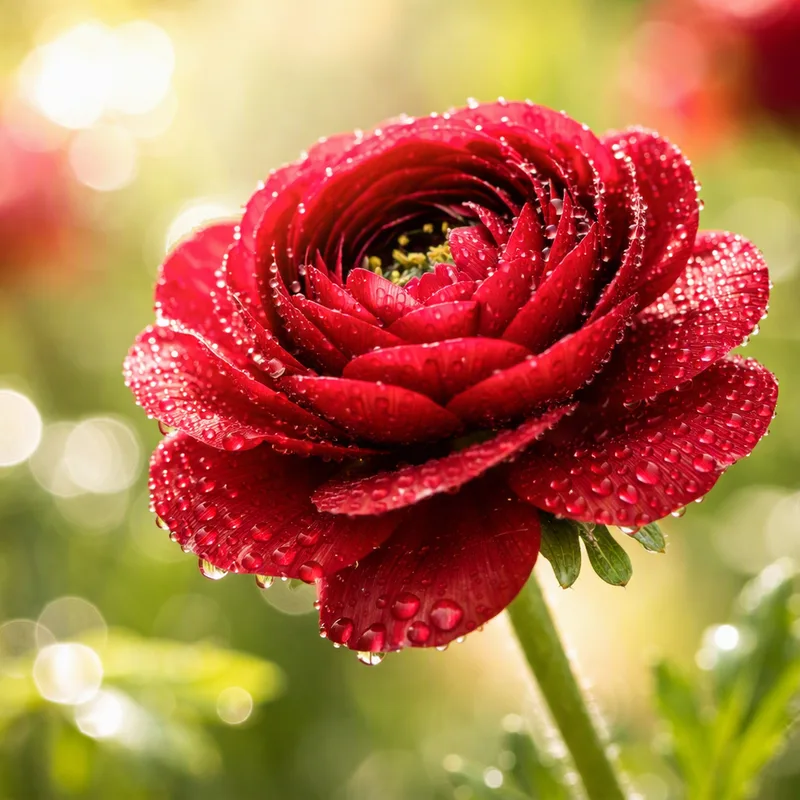
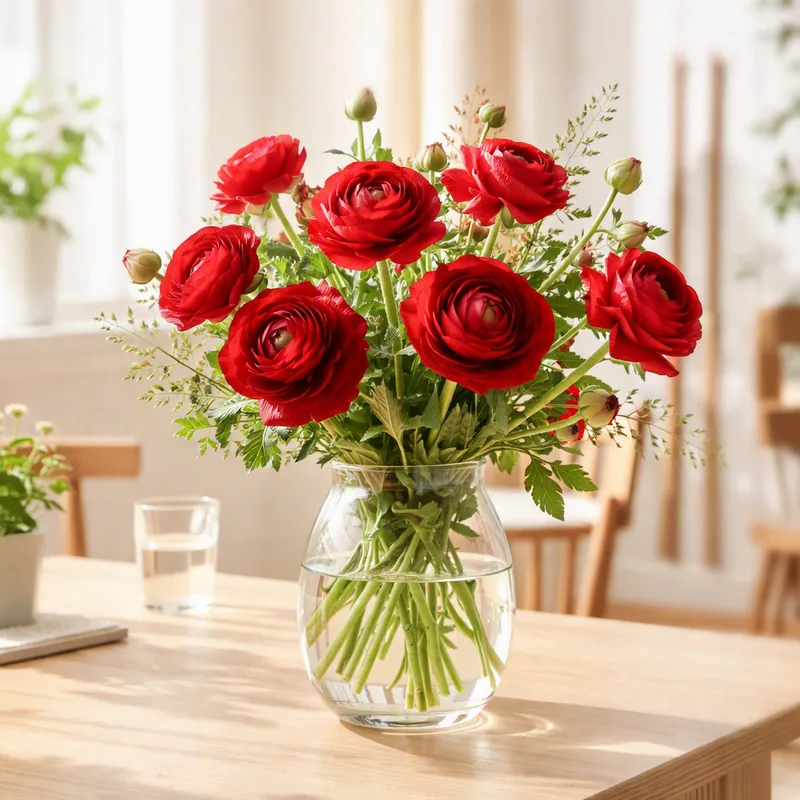

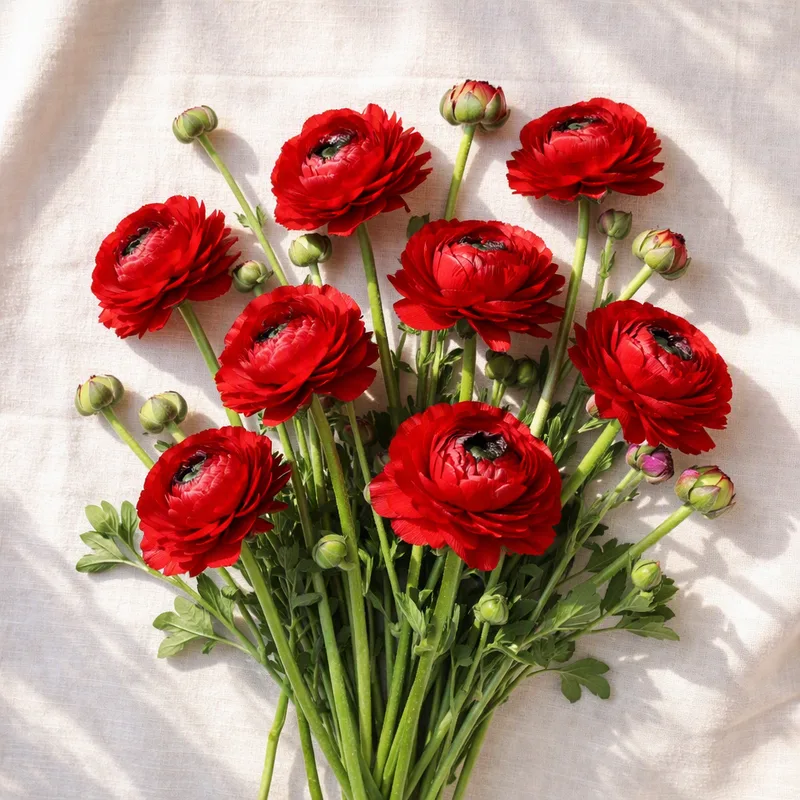
Red is a common colour in the ranunculus family, from bright scarlet to wine and a dark burgundy that almost looks black at the centre. The wild Persian buttercup has red forms across its Mediterranean range, so the colour is not just a florist's invention.
What burgundy and red say
In the language of flowers, ranunculus is traditionally linked with radiance and charm. A deep red or burgundy bunch adds warmth to that message, which is why people search for what burgundy ranunculus mean. Flowering in Australia peaks in spring, from September to November, which is when the biggest blooms appear.
Feeding the tubers
- Give a potassium-rich liquid feed every two weeks while buds are forming.
- Remove spent flowers promptly to encourage more.
- Cut back foliage only after it has yellowed and the tubers have had time to recharge.
- Keep the soil moist but never soggy.
Ranunculus like cool nights and sun, so they flourish in Melbourne, Adelaide, Perth and Tasmania. In warm, humid conditions they decline fast.
Dark reds in arrangements
Cut stems when the buds are soft. Recut under water, keep them cool, and change the water every couple of days. Dark reds often look better with white or cream flowers, which keeps the display light.
Why the sap irritates
Buttercup relatives contain ranunculin, which becomes an irritant when the plant is chewed. The ASPCA classes them as toxic for dogs, cats and horses. Signs include drooling, mouth irritation and stomach upset, so keep stems out of reach and call a vet if your pet has bitten them.