A look at the reds
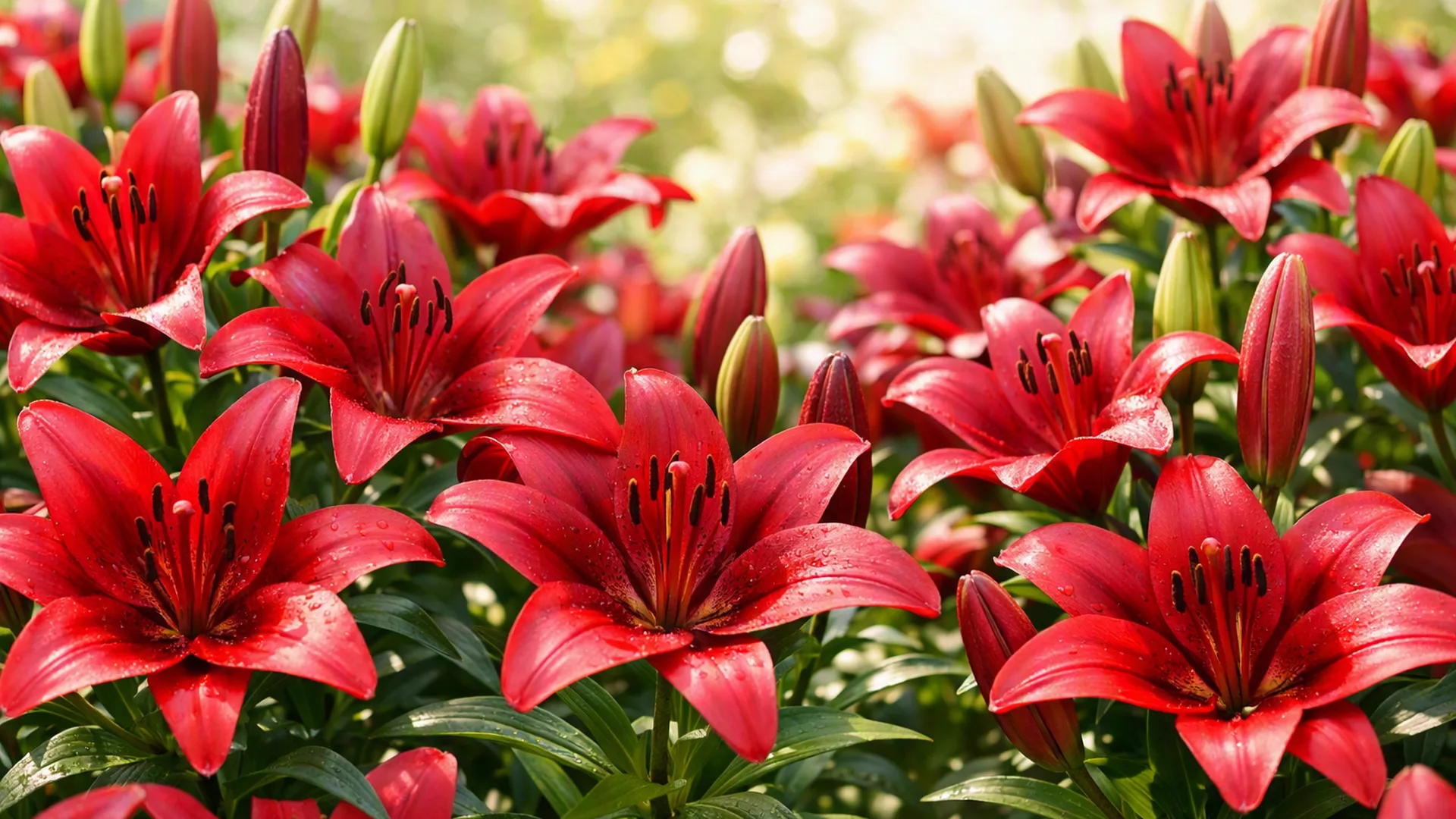
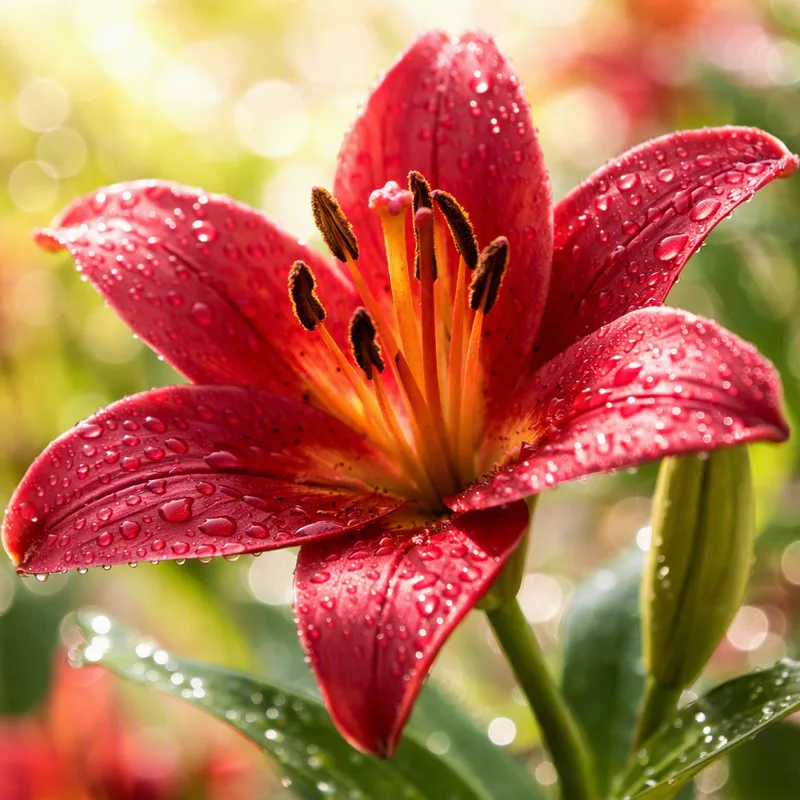
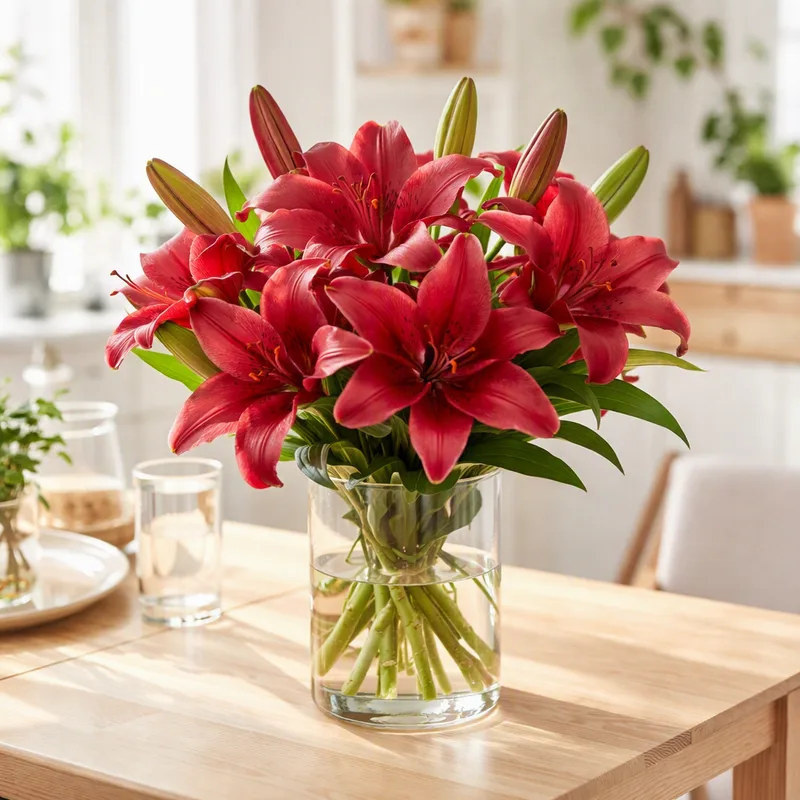
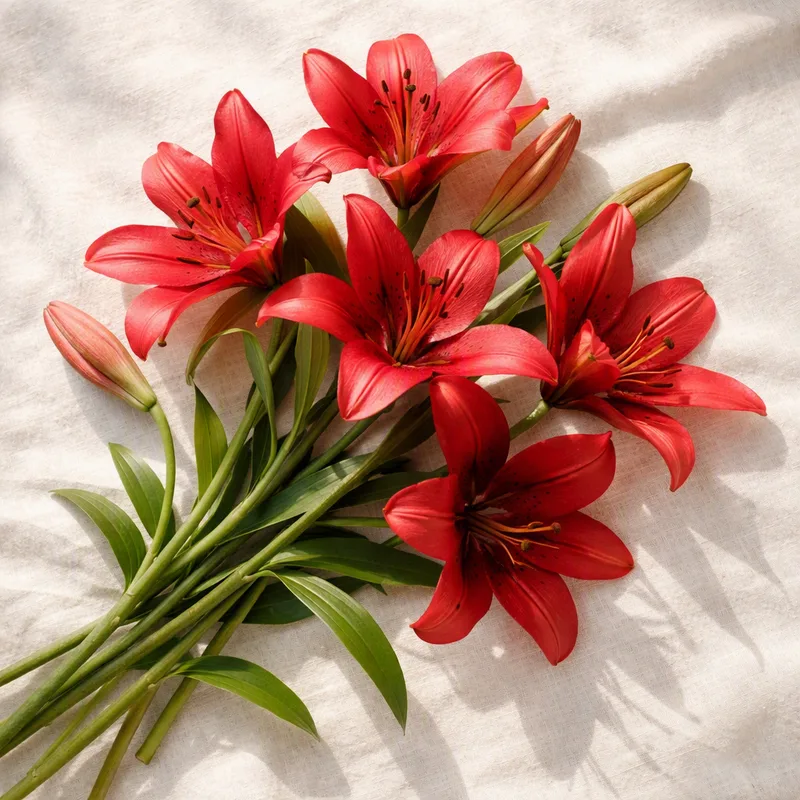
Red in lilies ranges from scarlet through to deep crimson that is almost black-red. Most of it comes from Asiatic hybrids, which are upright, unscented and flower early, and from Oriental hybrids with a sweet, strong scent. There are also red tones in Lilium bulbiferum, a wild European species often shown in an orange-red form. A "red lily" in a Melbourne nursery will nearly always be one of these hybrids.
Passion and pride
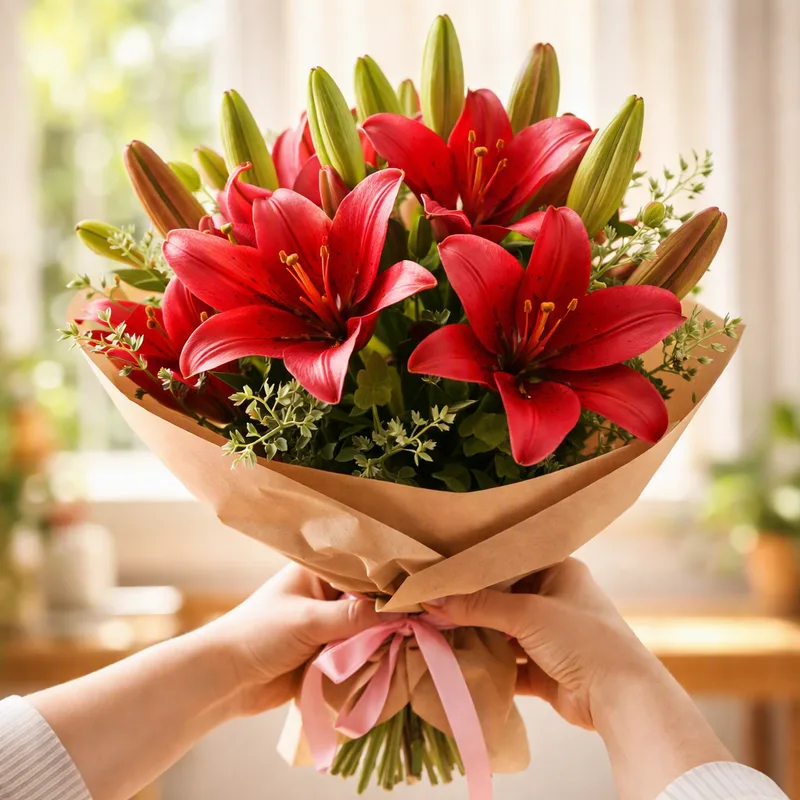
Red flowers carry romantic weight. In the language of flowers red lilies are linked to passion, which is why people search for what red lilies mean. They sit well beside red roses at Valentine's Day, and because lily season peaks around Christmas, red lilies are also popular in festive displays during a southern hemisphere summer.
Growing red lilies the Australian way
- Plant the bulbs in autumn or winter, about three times as deep as they are tall.
- Provide full morning sun and mulch to keep the roots cool.
- Stake taller Asiatic types in windy gardens.
- Cut spent flowers off, but leave the green stem and leaves until they fade.
Reds can scorch in extreme heat. In inland areas, afternoon shade helps the colour last.
Pet safety around red lilies
Every Lilium, red ones included, is listed by the ASPCA as toxic to cats, with kidney failure as the serious result. The same entry lists dogs and horses as non-toxic. Do not leave cut stems where a cat can reach them.
Keeping red lilies fresh indoors
Pick stems with the lowest bud showing colour and remove the lower leaves. Clip the pollen-laden anthers off and the red petals will stay clean. Fresh water every few days helps them last about a week.