Why it turns red
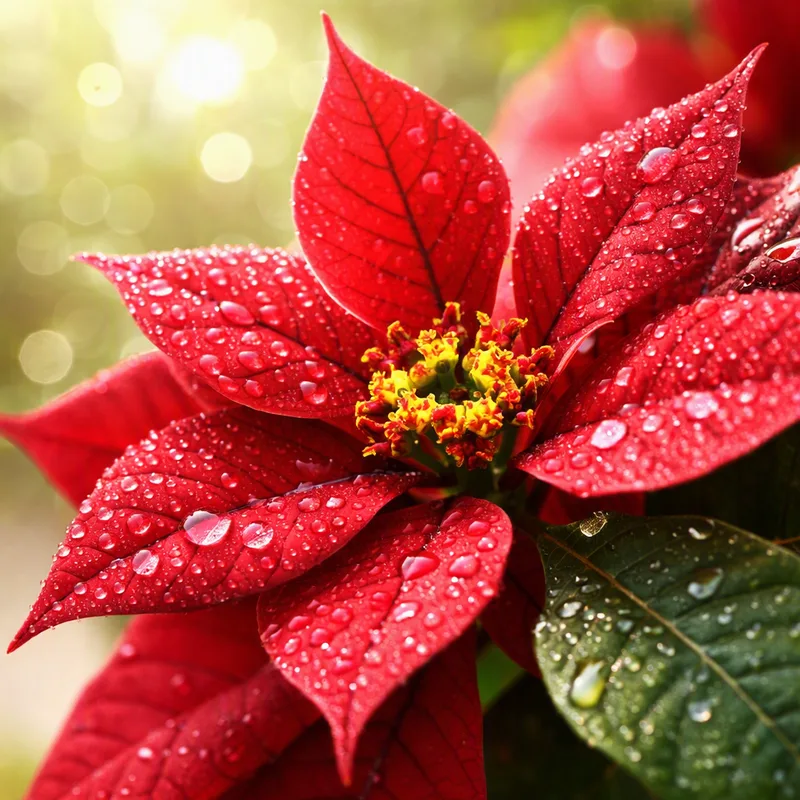
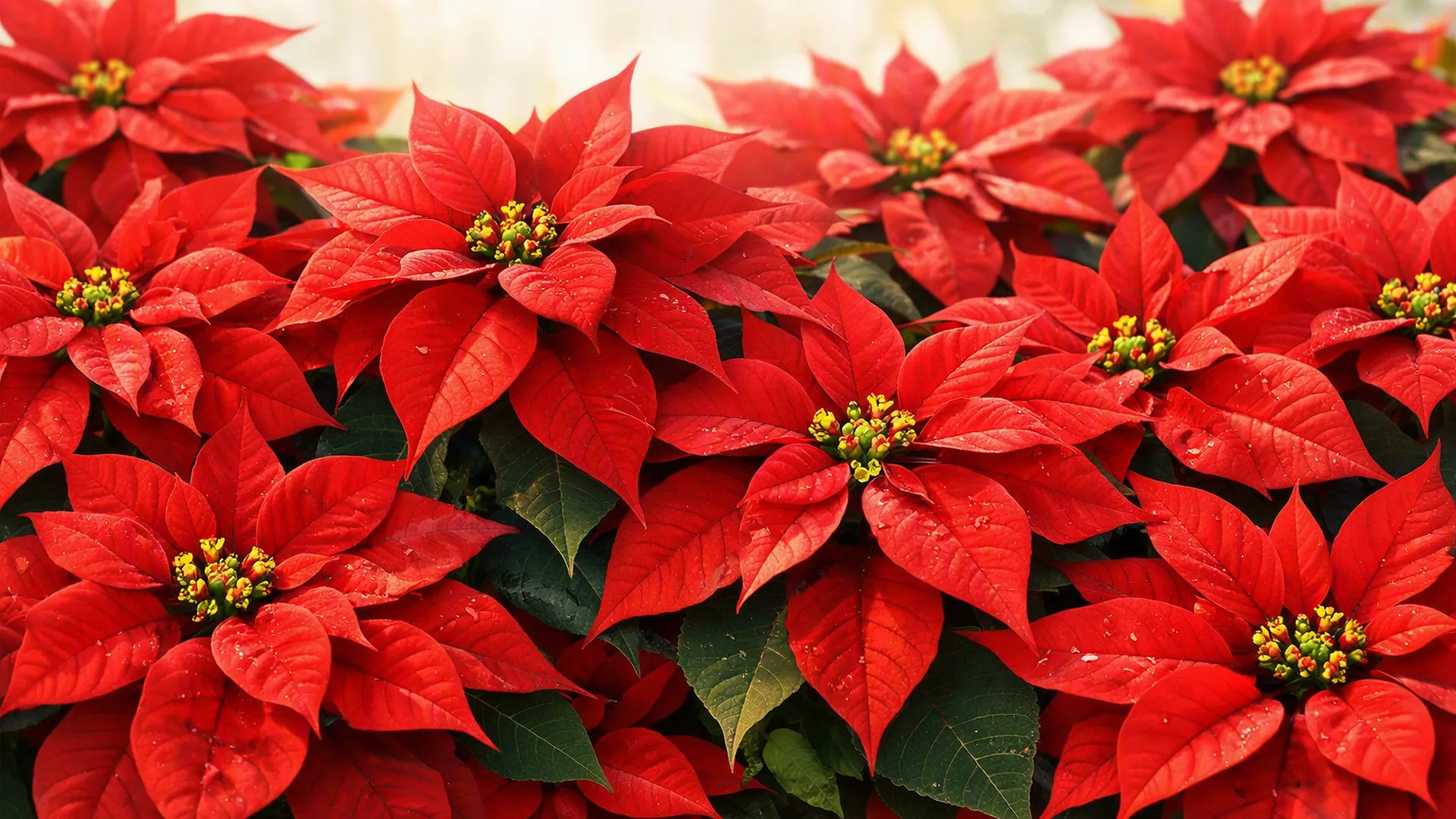
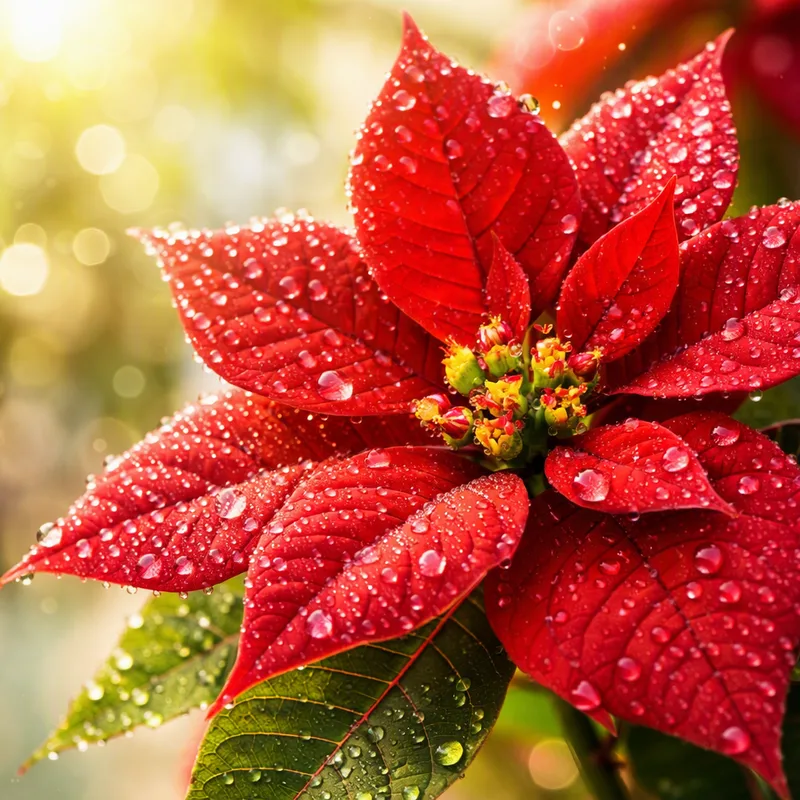
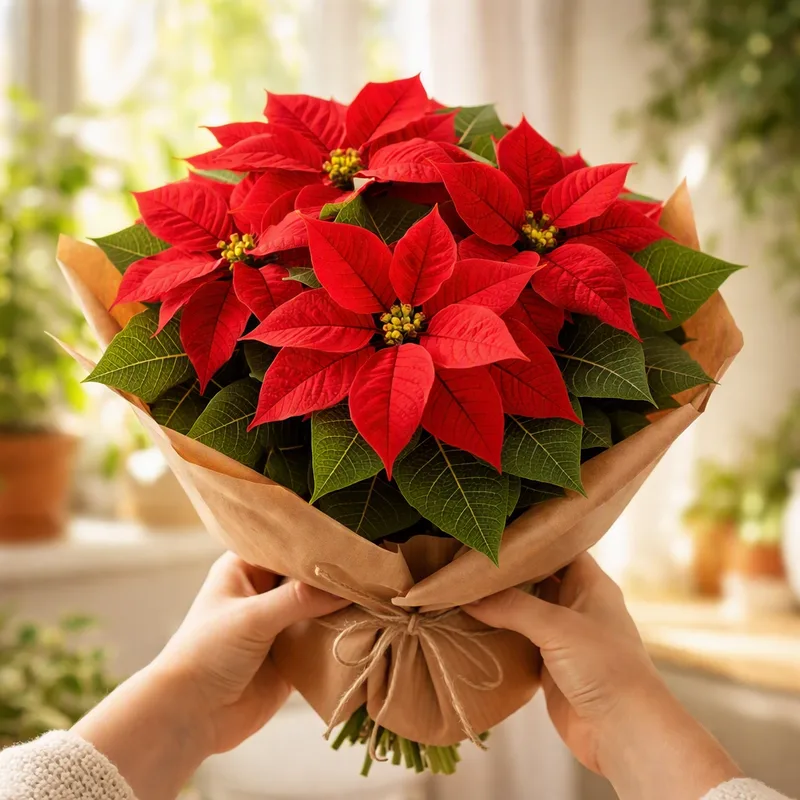
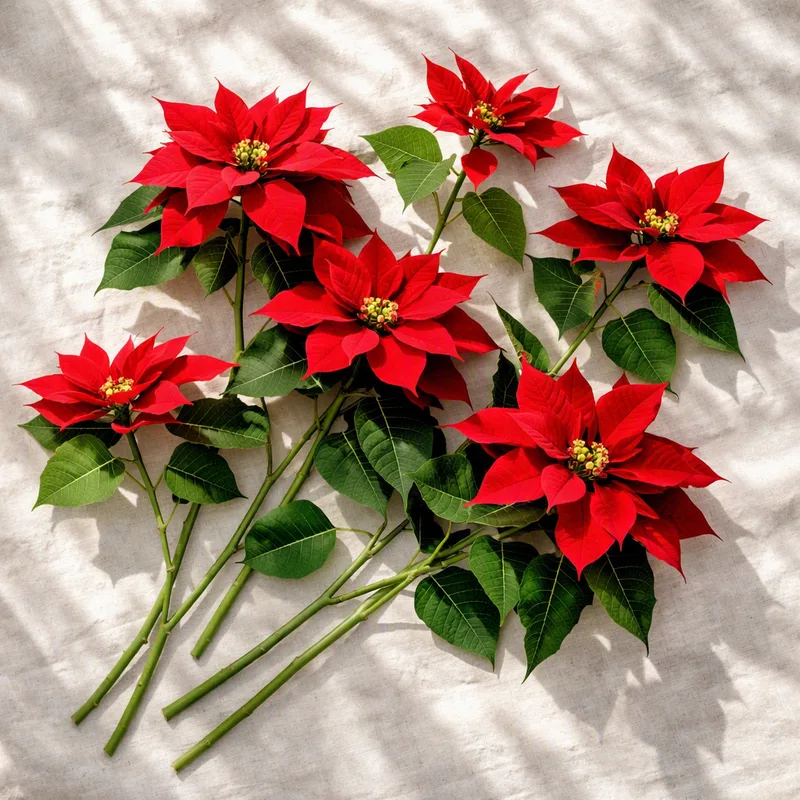
Wild Euphorbia pulcherrima, native to Mexico, has red bracts, so the red forms are the original and also the most common. The colour appears when the plant has weeks of long nights: about fourteen hours of darkness over six to eight weeks, combined with bright days. A street lamp or a lit window can stop the change, so this is why growers control the light so closely.
Red and the summer Christmas
For most Australians December means hot weather, so a red poinsettia has to cope with conditions it was never bred for. Tropical Mexico has plenty of sun, but a pot that cooks on a sunny balcony is another matter.
- Keep it in bright, indirect light inside, away from windows that catch the afternoon sun.
- Do not leave it in a parked car, even briefly.
- Water when the surface dries out, and empty the saucer.
- Hold off feeding while the bracts are showing.
Once the bracts fade
Once the bracts fade, some gardeners cut the stems back in autumn and move the plant outdoors in a warm sheltered spot, where it will grow into a shrub if there is no frost. In spring, repot it. To bring back red bracts, give it long nights from about March, which is autumn here, by covering it from late afternoon until morning.
What the sap can do
The sap can irritate skin and mouth. The ASPCA rates poinsettia as an irritant for dogs, cats and horses, with a mild course in most cases. Keep it out of reach, and call a vet if a pet has eaten leaves.