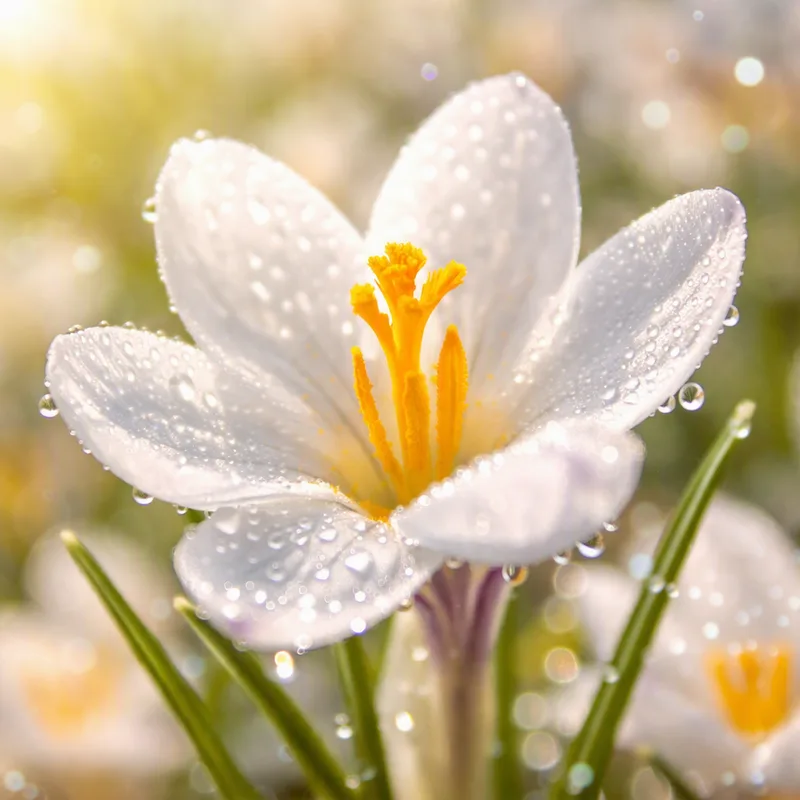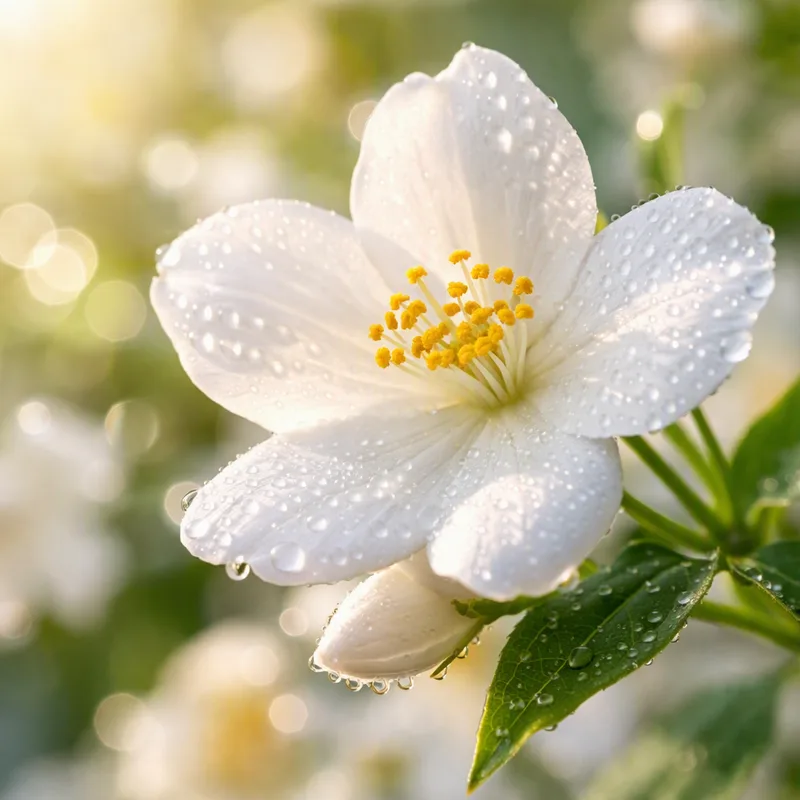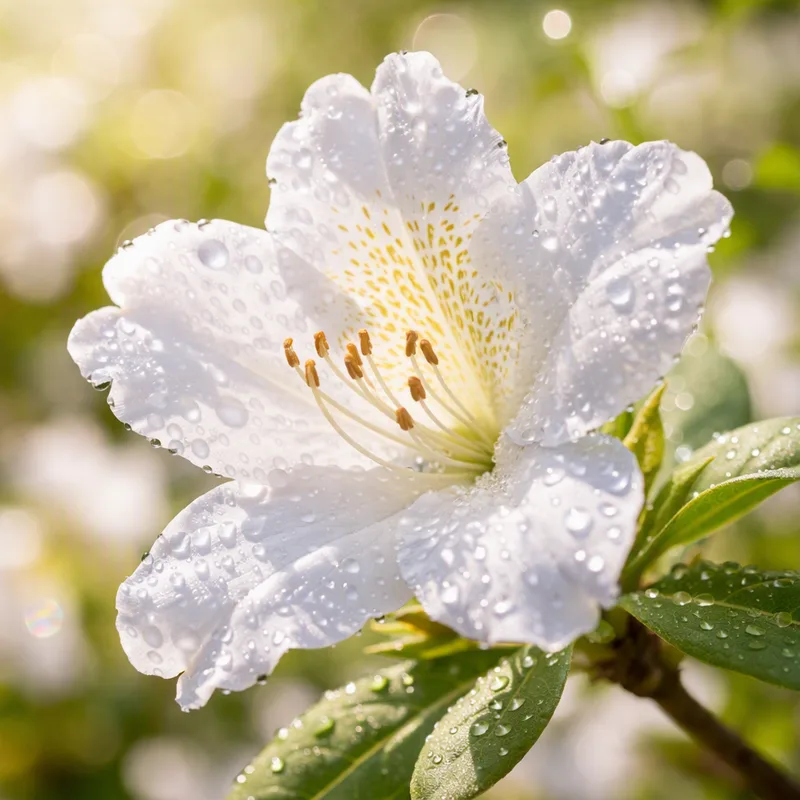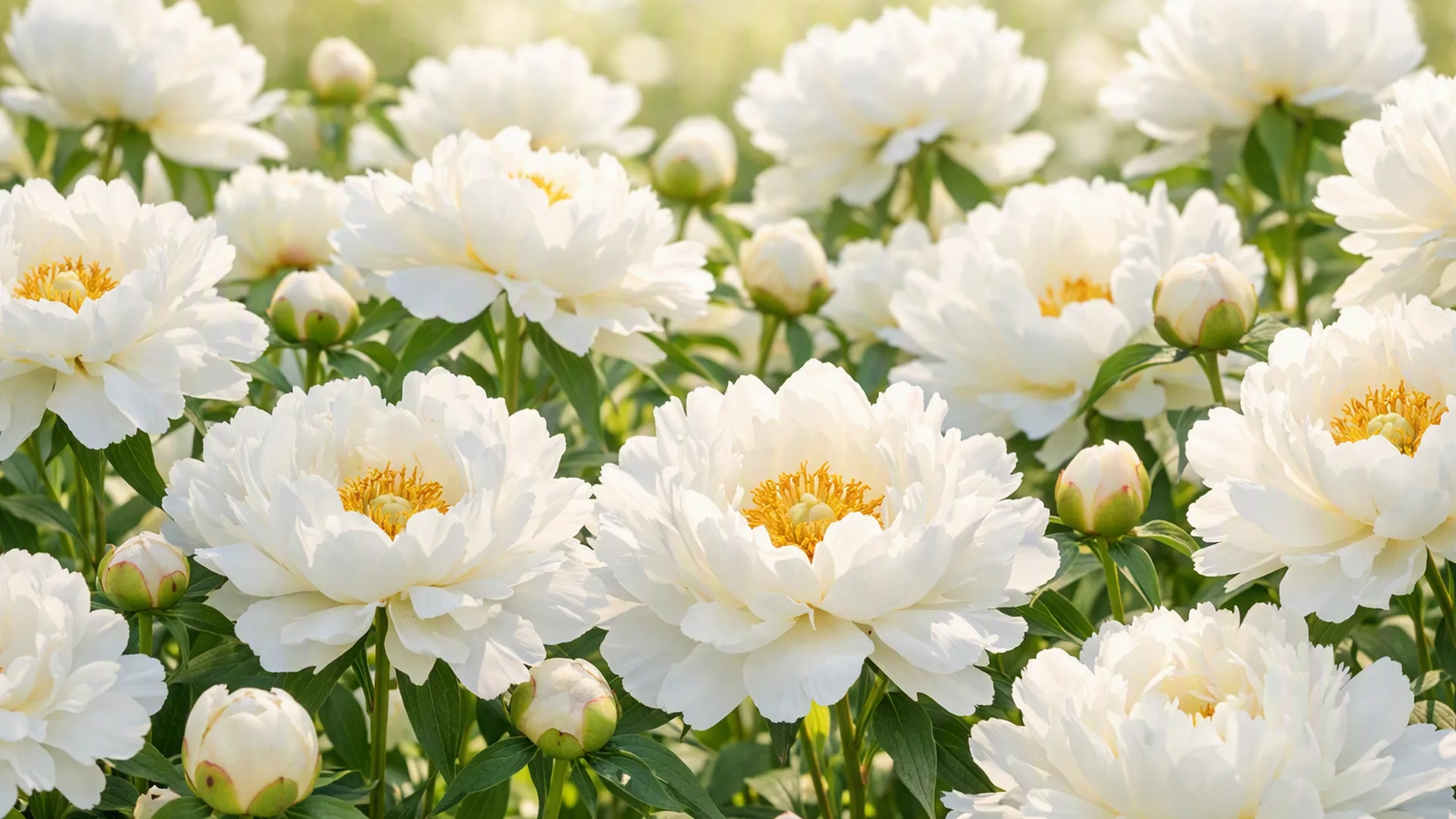
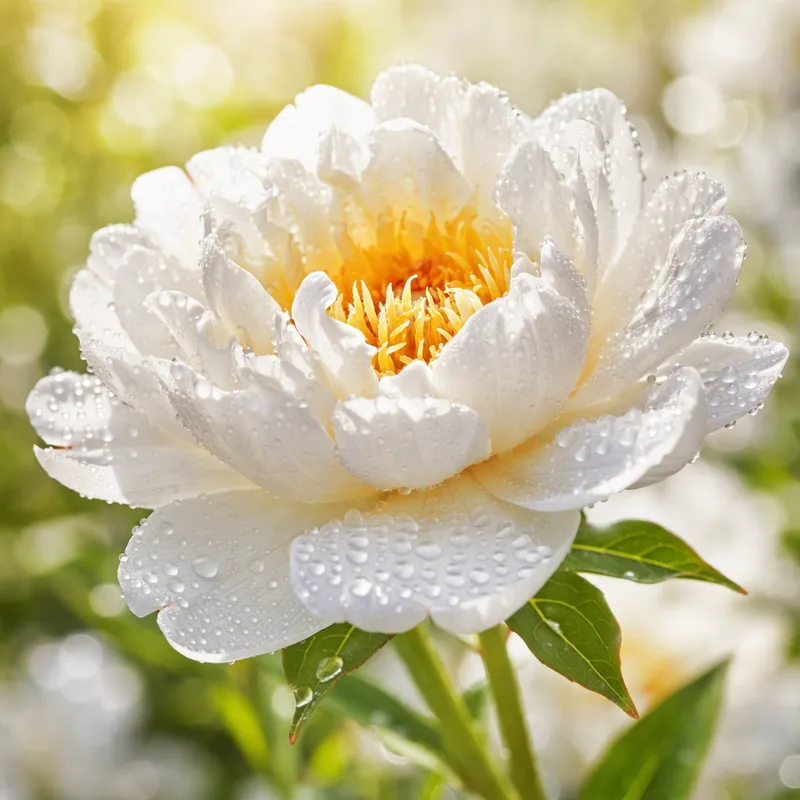
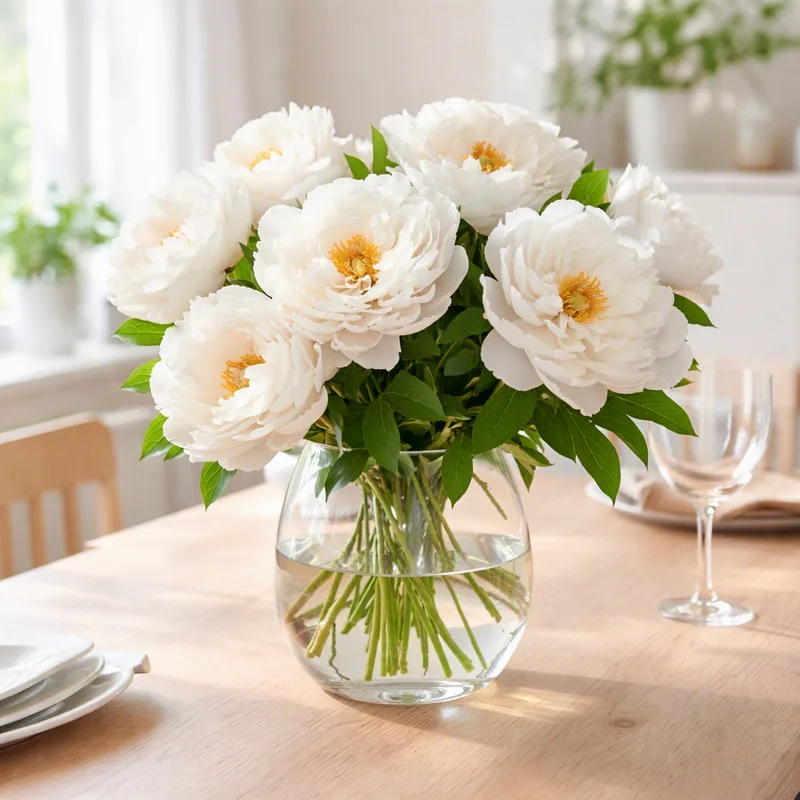
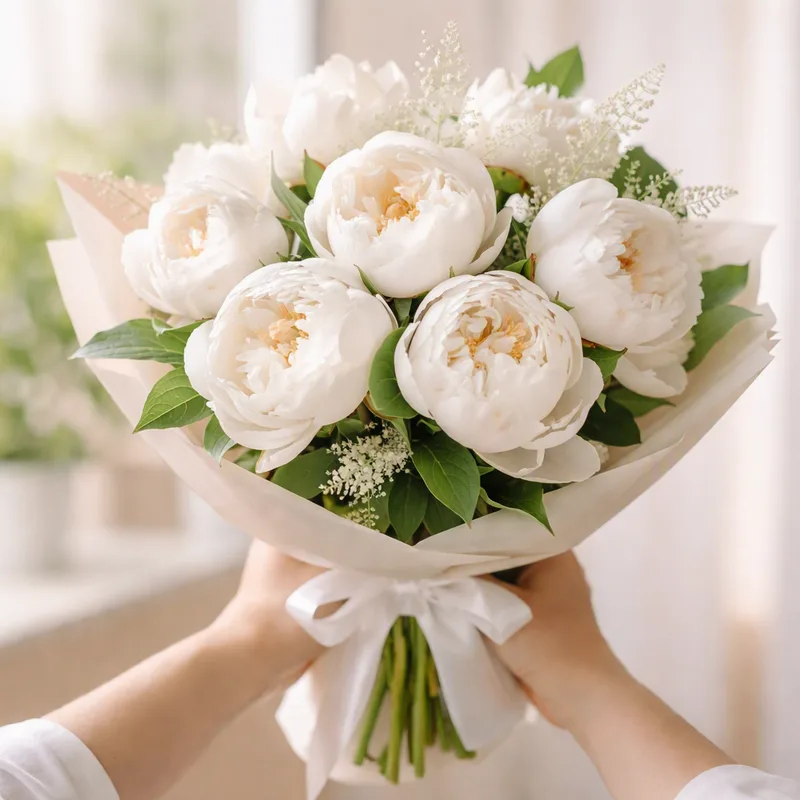
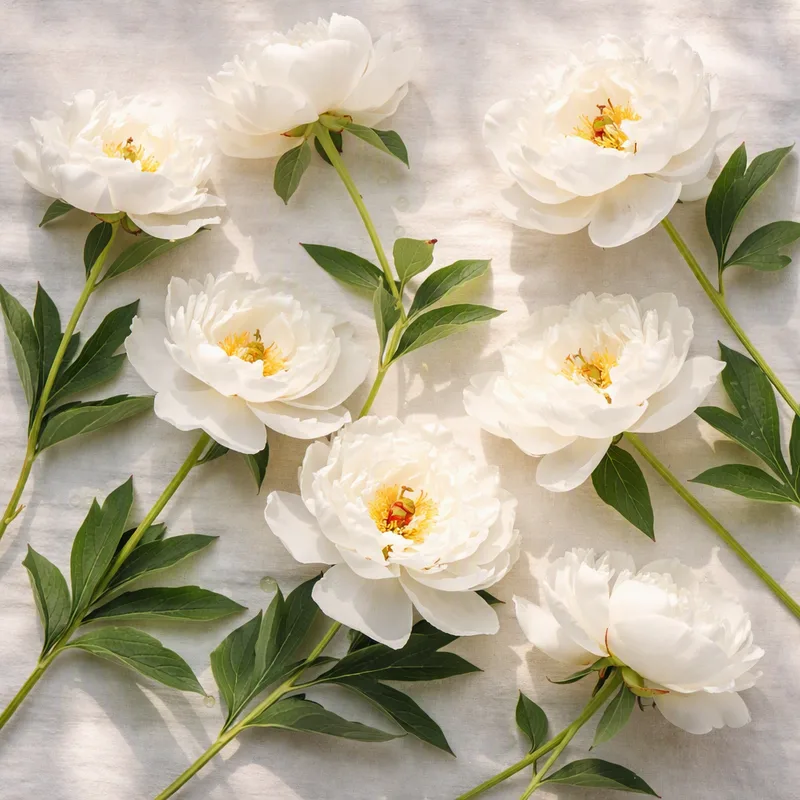
A white peony is the one most people picture in a wedding bouquet: heavy, rounded, softly scented and almost luminous in low light. Some whites are pure, many are cream at the centre, and a few carry a splash of crimson deep in the heart.
Old-fashioned whites
- 'Festiva Maxima' is an old, large double, white with the odd crimson fleck.
- 'Duchesse de Nemours' is a scented double, creamy white with a faint sulphur tint.
- Single and Japanese forms show off their golden stamens, which makes them look lighter and more modern.
Garden-centre stock and florists' cuts do not always carry cultivar names, so look at the flower form rather than hunting for a particular label.
Spring rain and pale petals
White shows every mark. Rain in late spring spots the petals and can bruise open double flowers, so a spot with some shelter helps. Cut stems also brown at the edges if they sit in warm rooms, so keep a vase cool and out of direct sun. Late spring in Australia, roughly October and November, is the main flowering season, and herbaceous peonies need a cold winter to flower at all. That makes white peonies most dependable in Tasmania, the Victorian highlands and the Canberra area.
Why white says wedding
In the language of flowers, peonies are traditionally linked with romance, honour and good fortune, and white ones are often associated with new beginnings. That is why you see them at weddings in the milder southern states.
Mind your pets
White or not, the plant is toxic to dogs and cats according to the ASPCA. The paeonol it contains can cause vomiting and diarrhoea. Keep a vase of cut stems out of reach and speak to your vet if a nibble happens.