White flowers, sweet air
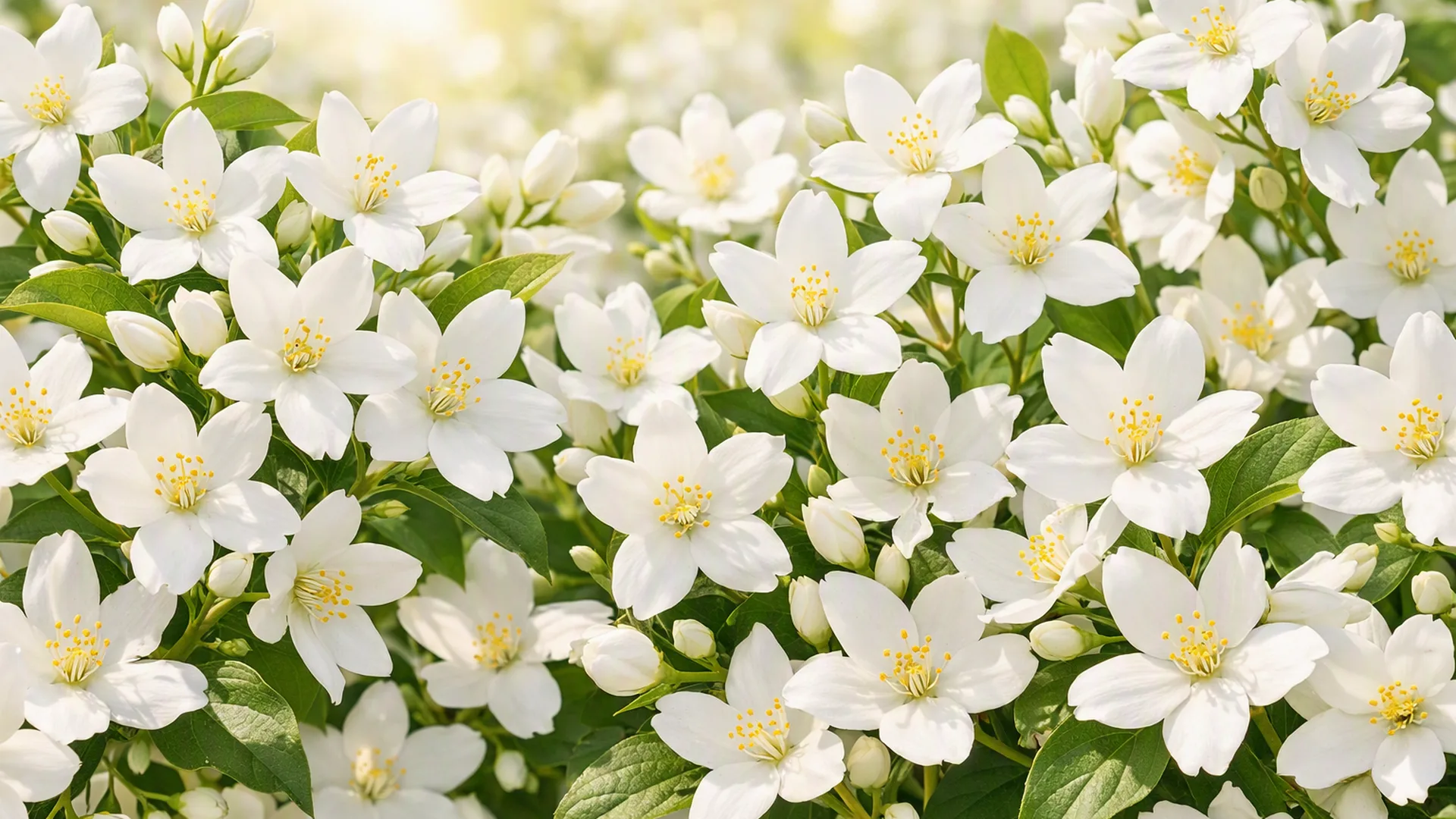
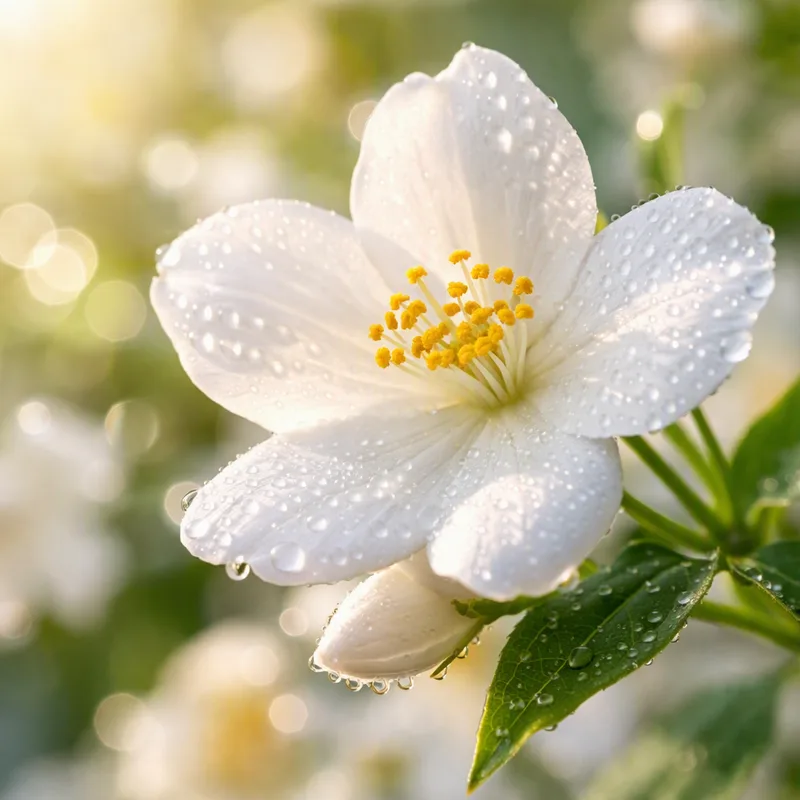
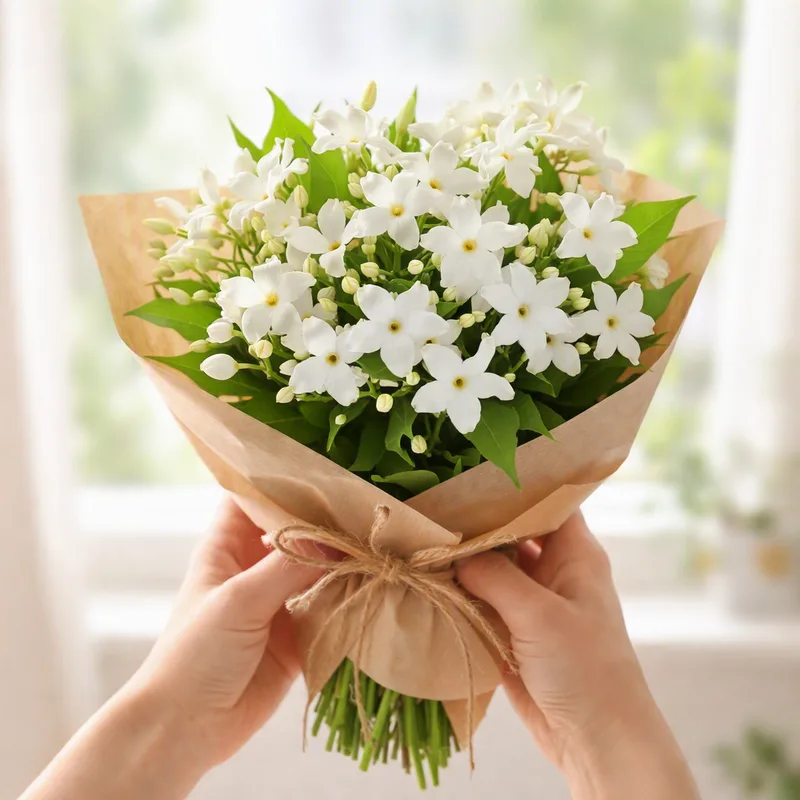
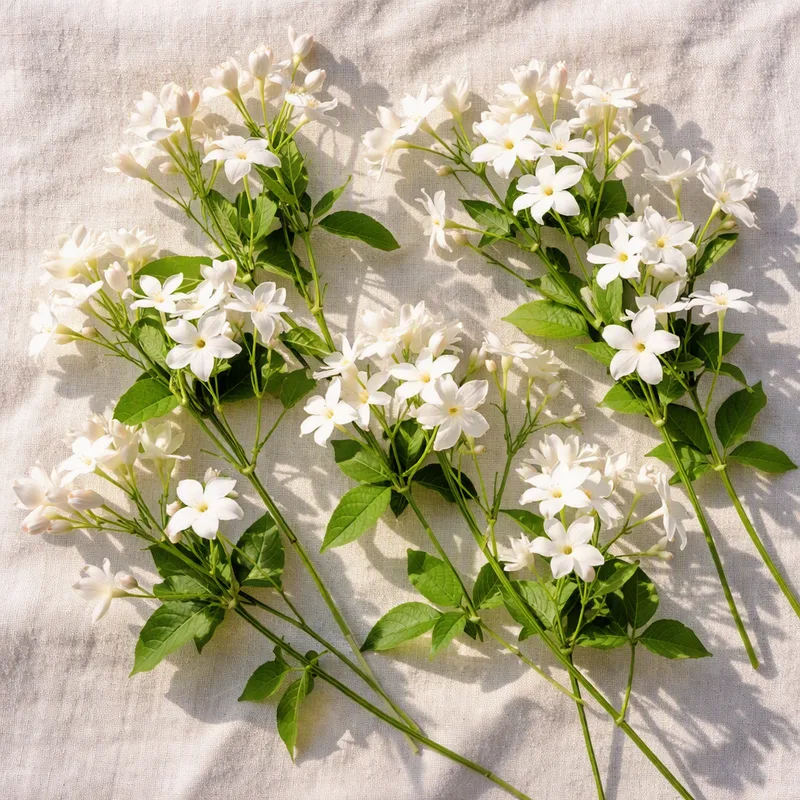
When people search for white jasmine flowers they are usually after Jasminum polyanthum or the true common jasmine, Jasminum officinale. Both bear small white blooms and a heavy fragrance. Officinale is deciduous and flowers in summer, whereas polyanthum is evergreen and opens in the cooler months from late winter. The two flowering windows mean you can have jasmine perfume for much of the year.
Meanings and uses
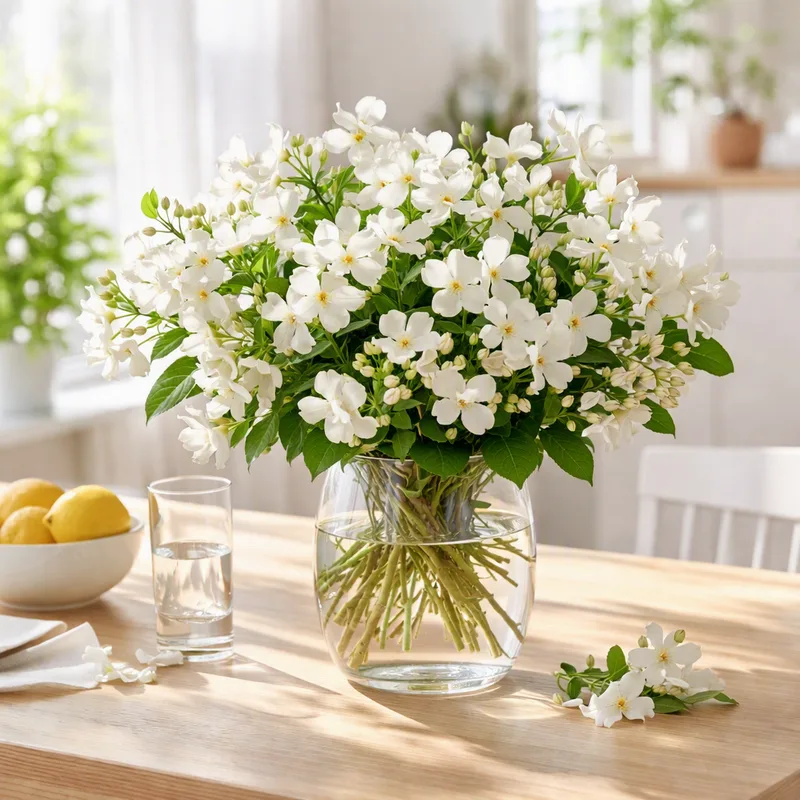
Jasmine is traditionally linked to grace, purity and sweet love. White jasmine often appears in wedding arches, in hair and in posies. In many Asian cultures it is strung into garlands, and the flowers are also used to scent tea.
Growing white jasmine the Australian way
- Plant it against a warm, sunny wall or fence with a frame to twine around.
- It tolerates most soils but resents waterlogging.
- Prune after flowering to remove tangles.
- The perfume is strongest on warm evenings.
Pink jasmine is naturalised in Australia and often regarded as invasive, so do not plant it by a reserve or creek line. Choose officinale or a non-spreading climber if you live next to bush.
Not a jasmine at all
Star jasmine (Trachelospermum) is a close look-alike with white pinwheel flowers, yet it belongs to another genus. Carolina jessamine (Gelsemium sempervirens) is yellow and its toxic alkaloids make it unsafe to eat.
Pot culture
White jasmine can live in a large pot, particularly in cooler gardens. Use free-draining mix, water well in summer and move it out of cold winds.