
Which white lilies are there?
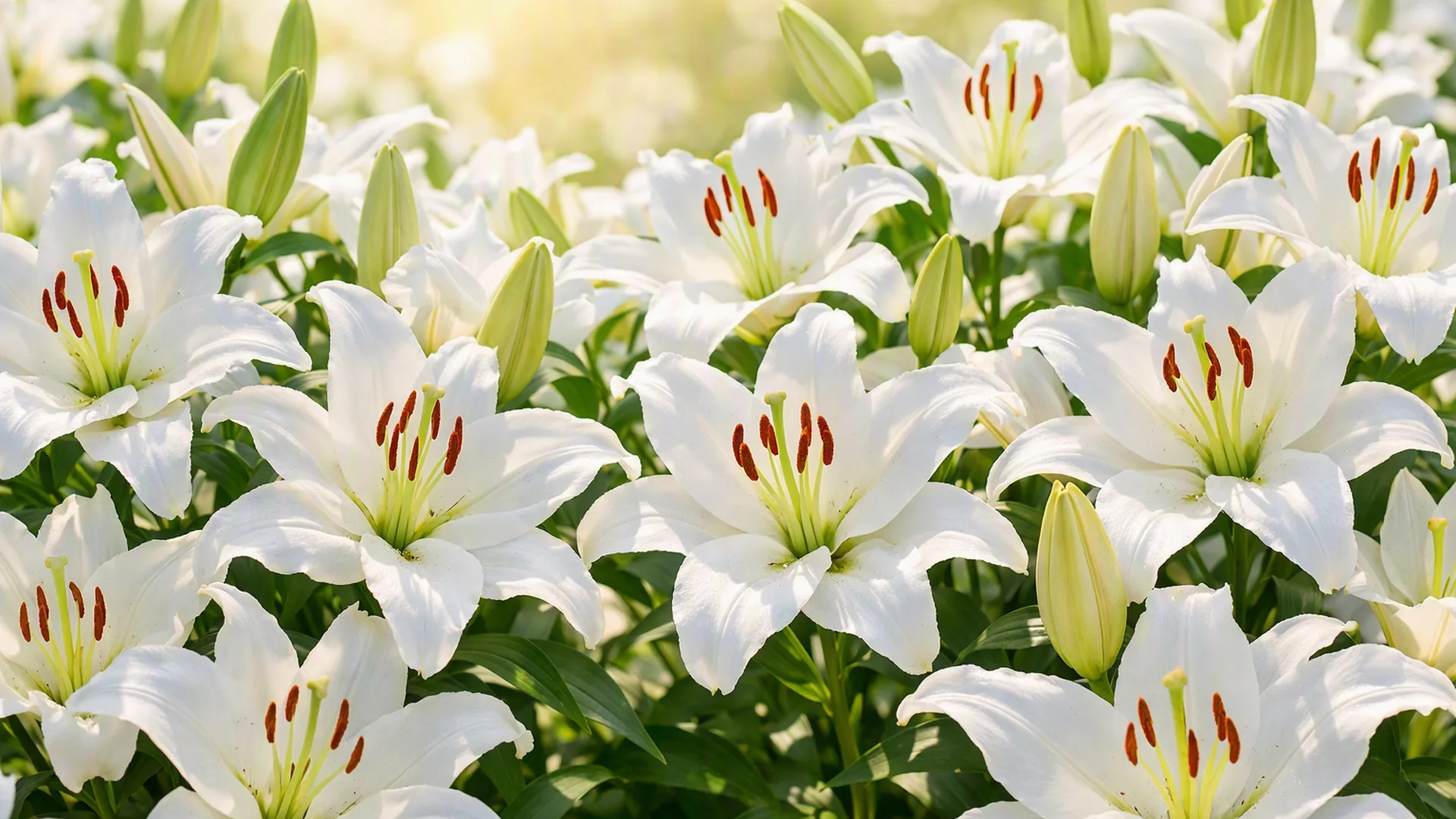
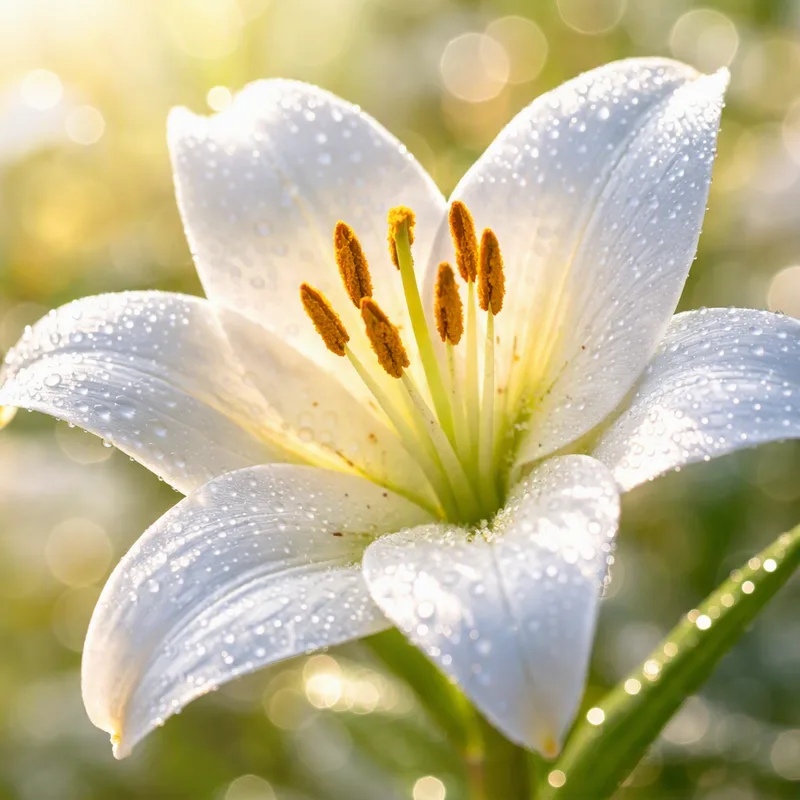
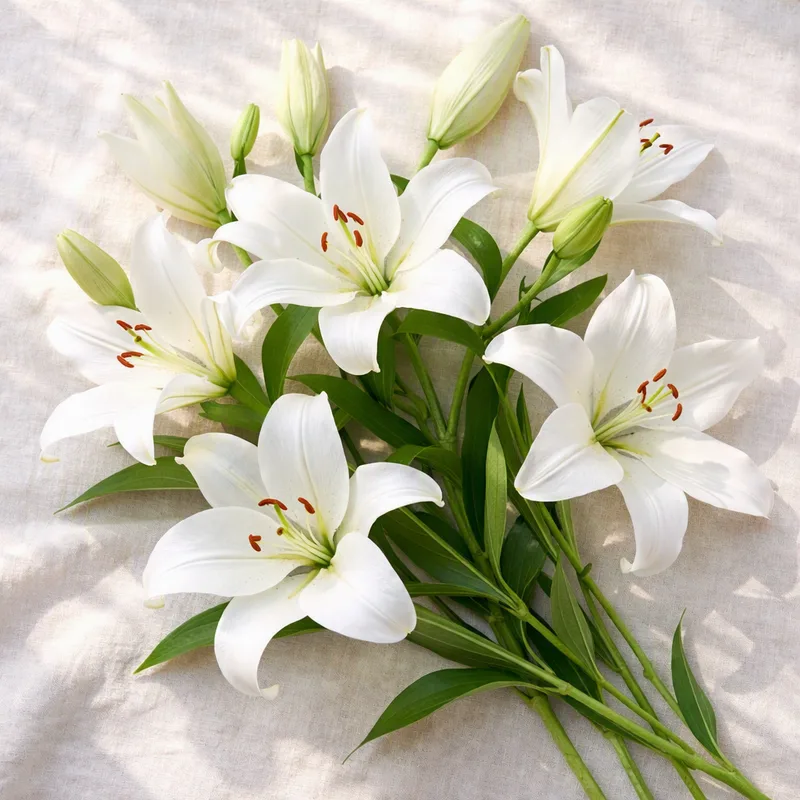
Two white lilies are often confused. The Madonna lily (Lilium candidum) comes from the eastern Mediterranean and has been grown for centuries. The Easter lily (Lilium longiflorum) is a long, pure white trumpet native to southern Japan. Both are true lilies, and the white Oriental hybrids with thick, waxy petals and a heavy fragrance fall into the same group.
Why white?
In the language of flowers a white lily traditionally symbolises purity and renewal. That is why it appears in bridal bouquets and in condolence arrangements, and it goes with almost every other colour. Photographers love it because a white flower holds detail in bright Australian light.
Planting and timing
Because our seasons are reversed, Madonna lilies are planted in late summer to early autumn and the blooms come in the warmest months, from about November to January. Other white types are planted from April to July. They like cool, mulched roots and a bright position.
- Cooler regions such as Tasmania, the Victorian highlands and the tablelands do best.
- In humid coastal gardens, good air movement helps prevent fungal leaf spots.
- Warm, dry gardens in Perth and Adelaide need extra watering through the summer.
Pet safety around white lilies
People often search "is white lily poisonous". For cats, yes: the ASPCA lists the Lilium genus as toxic to cats, with kidney failure as the outcome, while dogs and horses are non-toxic. Keep vases out of reach and see a vet urgently if a cat has chewed any part.
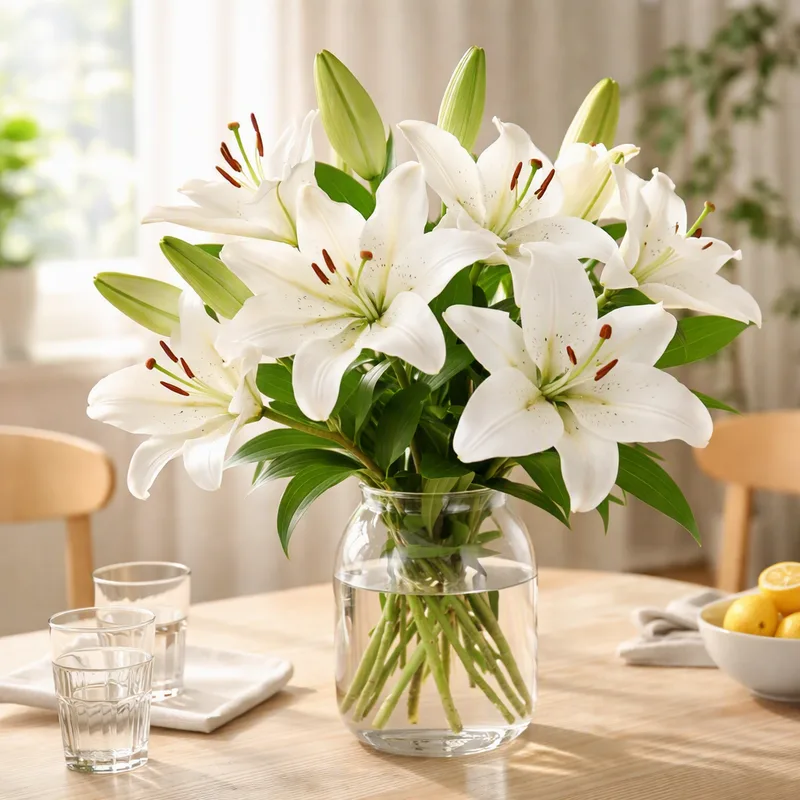
Keeping white lilies fresh indoors
Choose stems where the lowest buds are only just showing colour. Trim the anthers early to keep the petals clean.