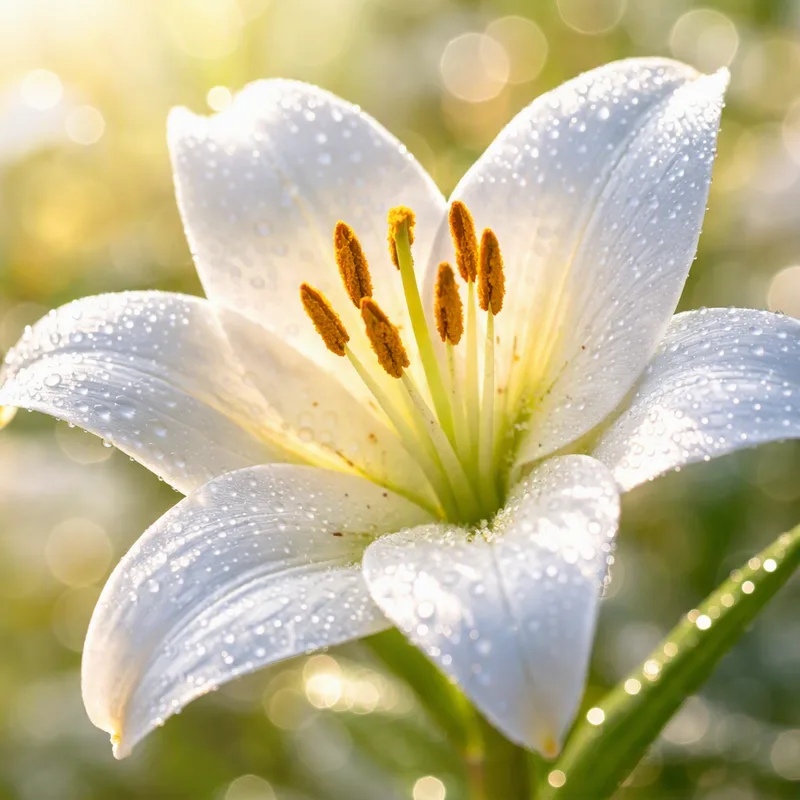

Pure white and nearly white
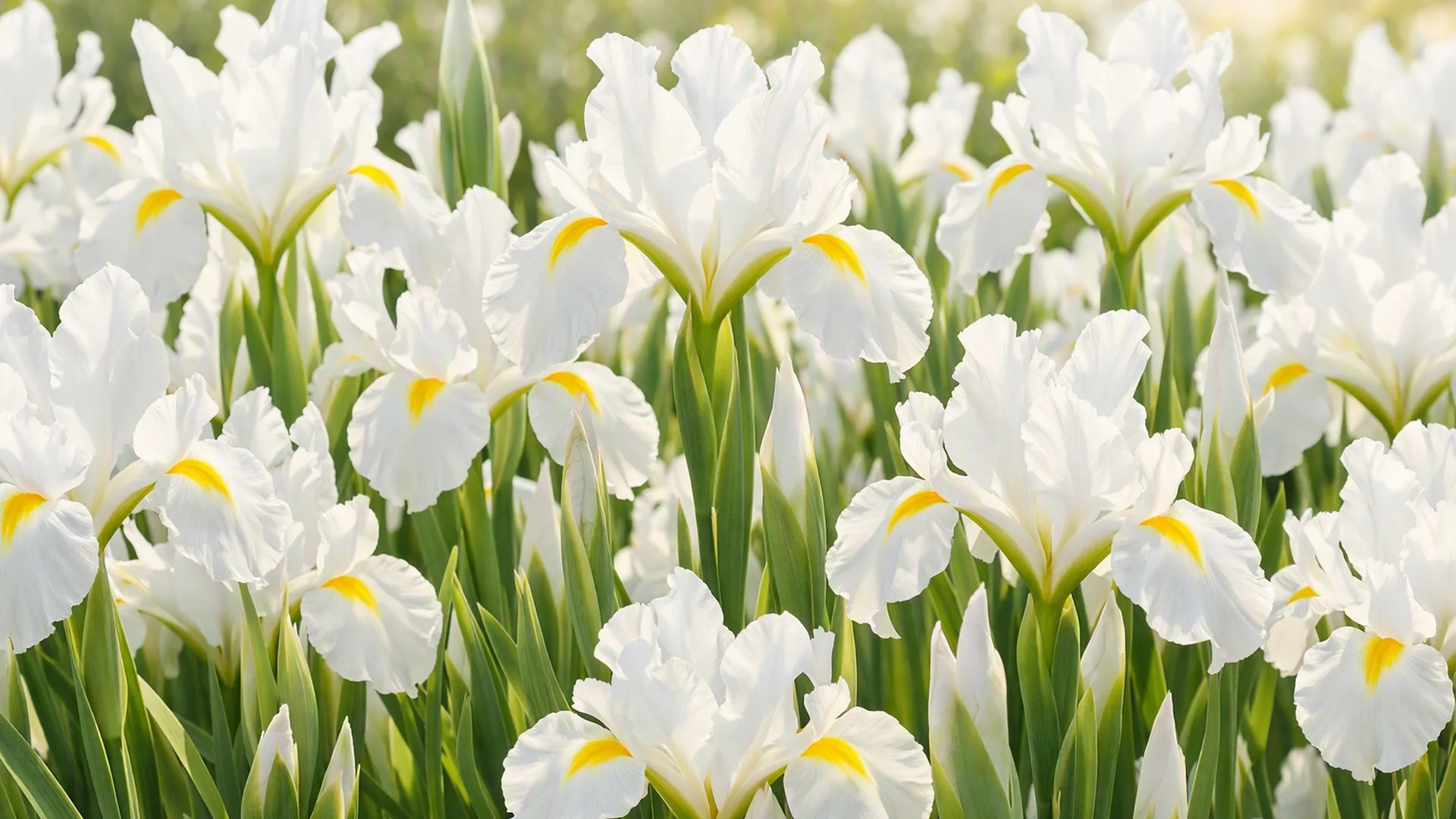
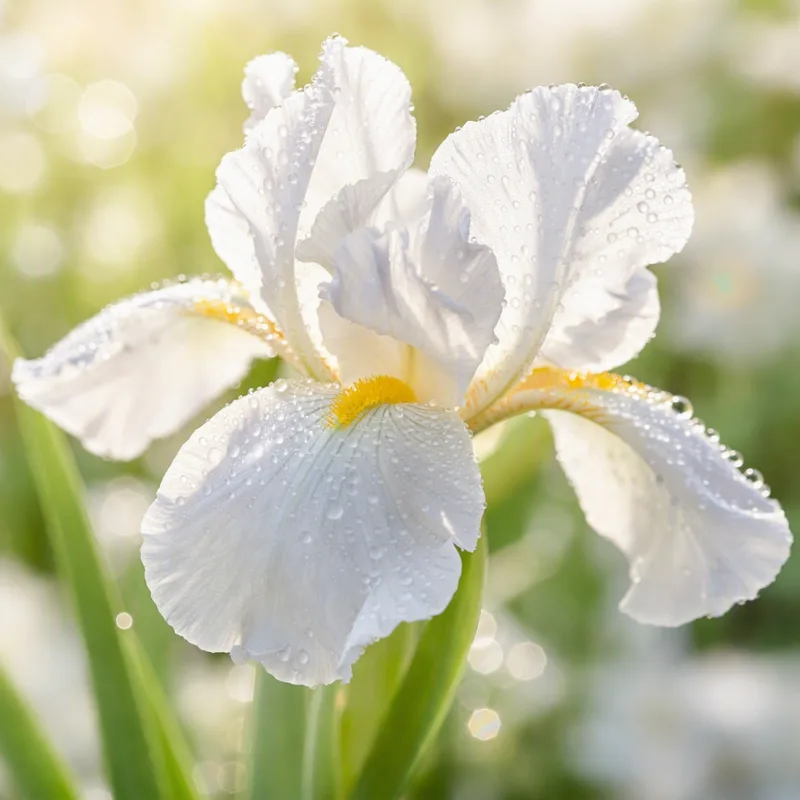
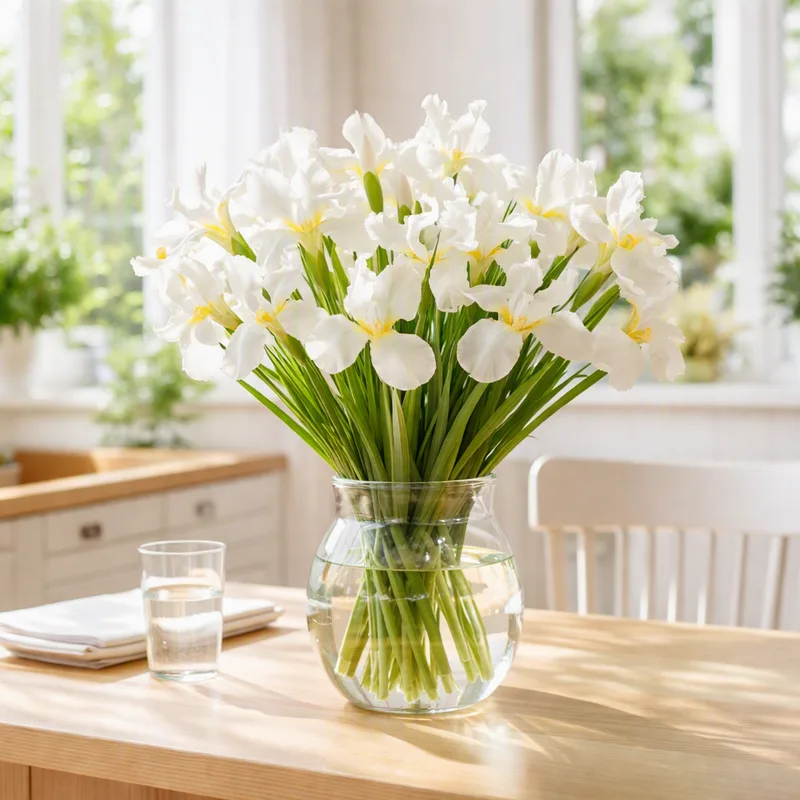
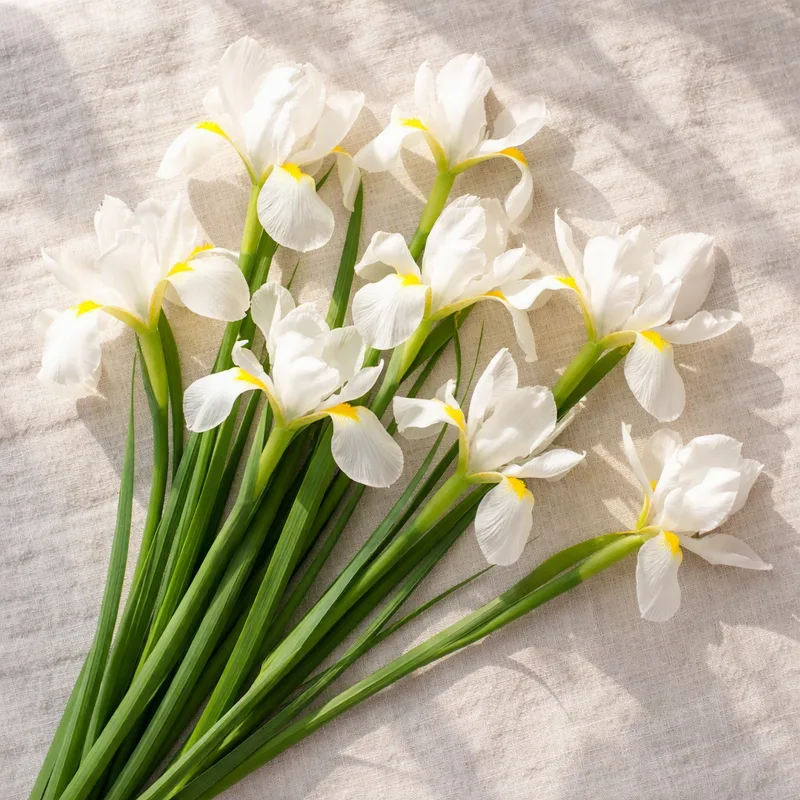
True white irises exist in every main group. Bearded irises have pure white forms, Dutch irises include white cut-flower varieties with a yellow blaze on the falls, and Japanese irises come in white too. Many of the best have a faint yellow or lilac tint at the throat.
How white irises are used
White irises suit the white garden idea, where one colour and a variety of textures create calm. They also pair with deep blue or purple varieties for contrast, which is a classic combination in a spring border. In bouquets, white Dutch irises are a common choice for weddings and sympathy arrangements.
Hints for good results
- Choose a sunny, well-drained spot; bearded irises rot in wet shade.
- Plant rhizomes so their tops sit at soil level.
- Remove spent flowers and cut the stem at the base.
- Divide clumps every three to four years, after flowering.
- Keep the white clean by protecting buds from heavy rain.
Timing in the southern year
Expect flowers from September to November in most of southern Australia, and slightly earlier in warmer areas. The orris root used in perfume traditionally came from certain white-flowered irises, including Iris germanica 'Florentina'.
White irises and household animals
Irises are marked by the ASPCA as hazardous for dogs, cats and horses. The rhizomes carry the most, and the signs are drooling, vomiting and diarrhoea.