


The florist's anemone
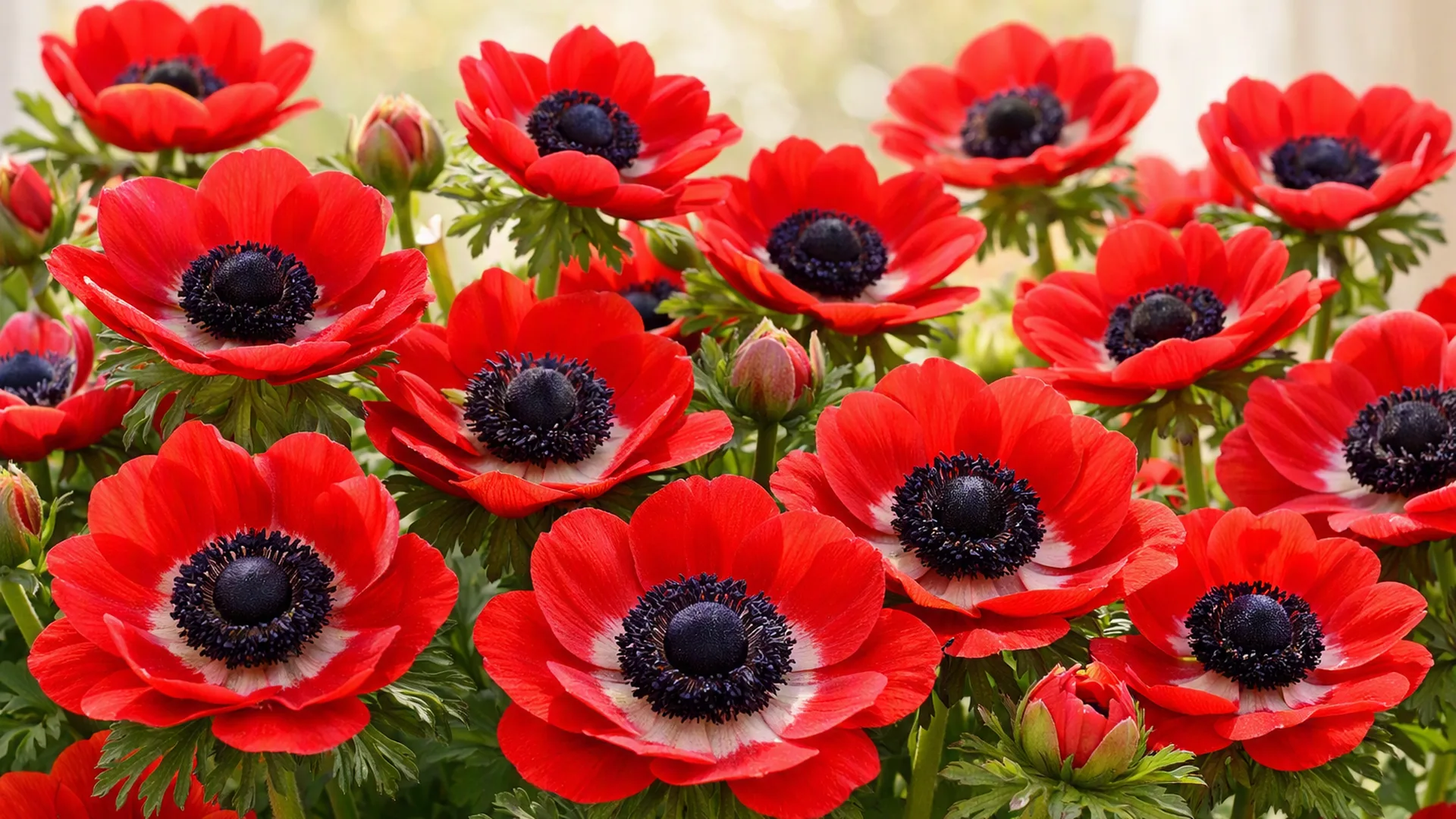
Most anemones in a bunch are Anemone coronaria, the poppy anemone. It is a tuberous perennial from the Mediterranean region, growing 20 to 40 centimetres tall. It belongs to the buttercup family, which explains the glossy petals and the feathery leaves. The central ring of dark stamens is its signature feature.
Planting in the southern hemisphere
The tubers look like small, dry, shrivelled knots. They are best soaked in water for a few hours, then planted claw-side down in autumn, from March to May, about 5 centimetres deep. Plants flower from late winter into spring, roughly July to October.
- They like cool weather and thrive in Melbourne, Hobart, Adelaide and Canberra.
- In Sydney, expect a shorter flush.
- Brisbane and the tropics are generally too warm, so use them as an annual at best.
- Soil must drain well, since wet tubers rot.
Wild cousins
Japanese anemones, Anemone hupehensis, are a different group that blooms in late summer and autumn on taller stems. Wood anemones form carpets in cool shade.
Keeping anemones fresh indoors
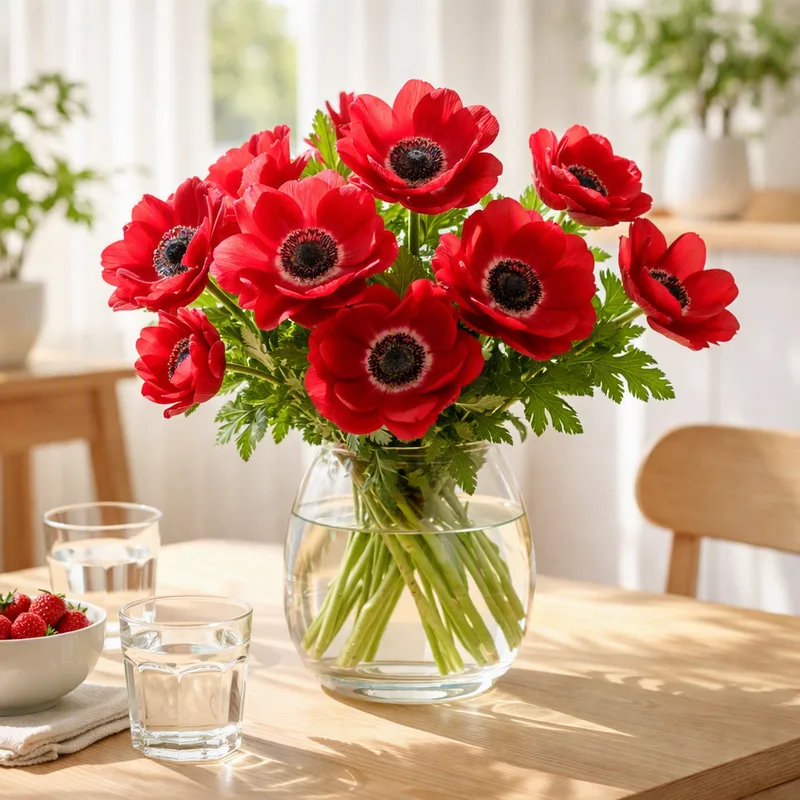
Poppy anemones last roughly five to eight days in a vase. They close at night and open in the light, and the stems keep growing and curving, so rearrange them now and then. A tight bunch in a small vase looks best.
Pet safety around anemones
Plants in the buttercup family contain irritant substances. Keep anemones away from curious cats and dogs, and see a vet if one has chewed the plant.