


A buttercup relative from cold woods
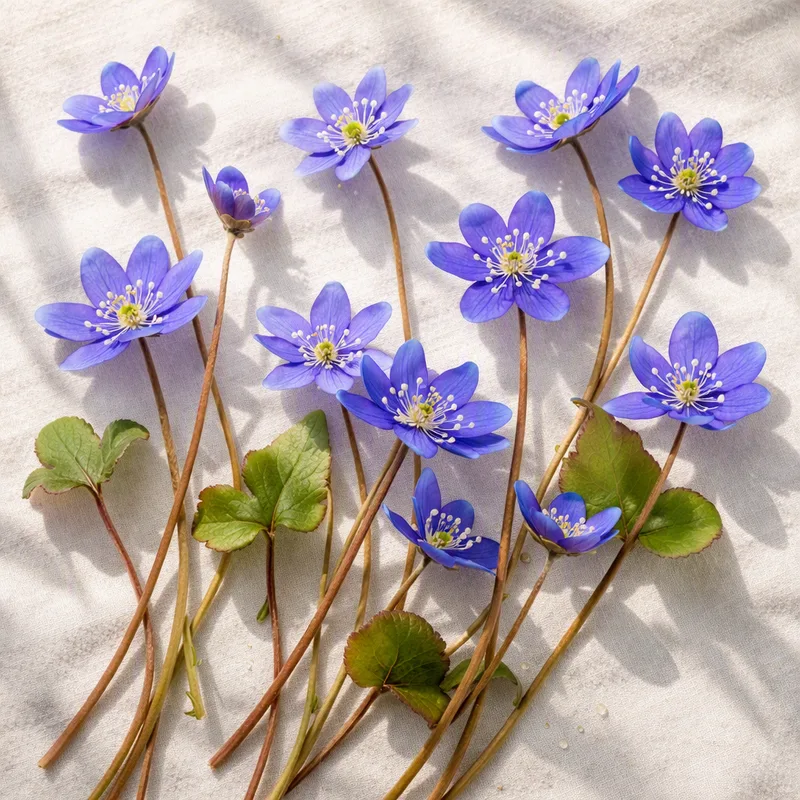
Hepatica nobilis is a small perennial of Europe, Asia and North America that flowers in late winter or early spring. It belongs to the buttercup family, Ranunculaceae, alongside anemones and clematis. Plants are only 5 to 15 cm tall. The blue, violet or sometimes white and pink flowers rise before the new leaves, which gives them space to be seen on the forest floor.
Behind the name liverleaf
The three-lobed, leathery leaves resemble a liver, and the name comes from the Greek word for liver. Old herbal doctrine suggested that a plant shaped like an organ could treat it, but no benefit has been shown. Liverworts, the primitive non-flowering plants, are also named for the same reason, so do not confuse the two.
In an Australian garden
Hepatica is rare in Australia. It needs a chilly winter and a cool, moist summer, so it is only likely to succeed in places such as Tasmania, the Victorian ranges or the Southern Tablelands. It prefers humus-rich soil in light shade and does not like heat. In Sydney, Perth or Brisbane, it would struggle, and it does not suit the tropics at all. It is not a cut flower, and the blooms close in dull light and fade quickly in a vase.
Poisonous when fresh
Like many buttercup-family plants, hepatica contains irritant substances. Eating it can cause mouth and stomach upset, and the sap may irritate skin. In case of a poisoning call the Poisons Information Centre on 13 11 26, or a vet for an animal.