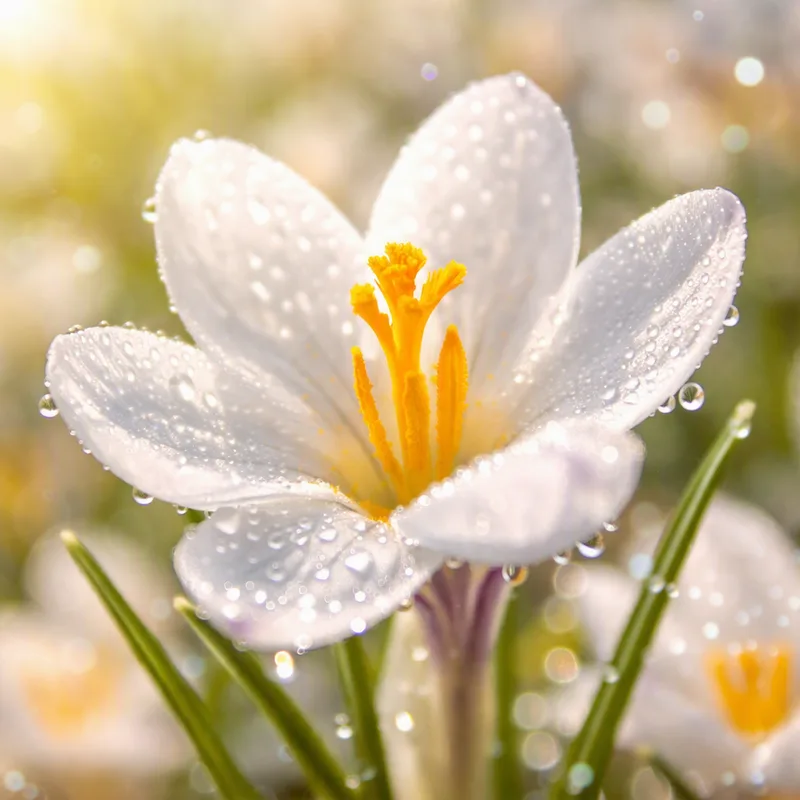



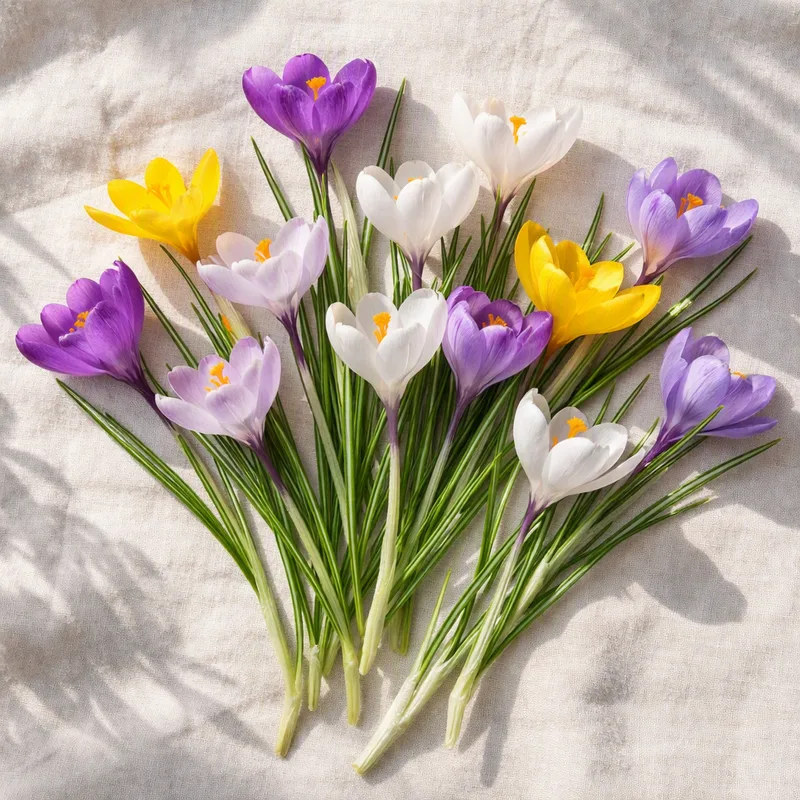
Crocus is a genus of about 100 species in the iris family, grown from corms. They are low plants whose flowers open on very short stems, close at night and in overcast weather, and then go dormant after flowering. Wikipedia notes that different species flower in autumn, winter or spring. The most famous autumn type, Crocus sativus, is the source of saffron.
Where crocuses suit
They are native from the Mediterranean to Central Asia, and they want cold winters and dry summers. In Australia they are happiest in Tasmania, Melbourne, Canberra, the Adelaide Hills and other cool areas, where they flower in August and September. In Sydney, Perth and Brisbane they struggle unless corms are chilled for several weeks before planting. Tropical gardens are not a match.
Planting corms
- Plant in autumn, March to May, about 8 centimetres deep.
- Choose full sun and very free-draining soil; wet summers rot dormant corms.
- Plant 30 or more in a drift or naturalised in a lawn that is not mown until the leaves yellow.
- Do not water them over the dormant summer months.
Do not mix up crocus and colchicum
Colchicum, called autumn crocus, looks similar but belongs to a different family and is far more dangerous. It produces colchicine, which is poisonous to people and animals. True crocuses are in the iris family. When buying corms in autumn, check the label carefully.
Crocus corms and curious animals
Spring crocus can upset a dog's or cat's stomach if eaten. Autumn-flowering Colchicum is a more serious risk. Contact a vet if a pet has dug up and eaten any corm.