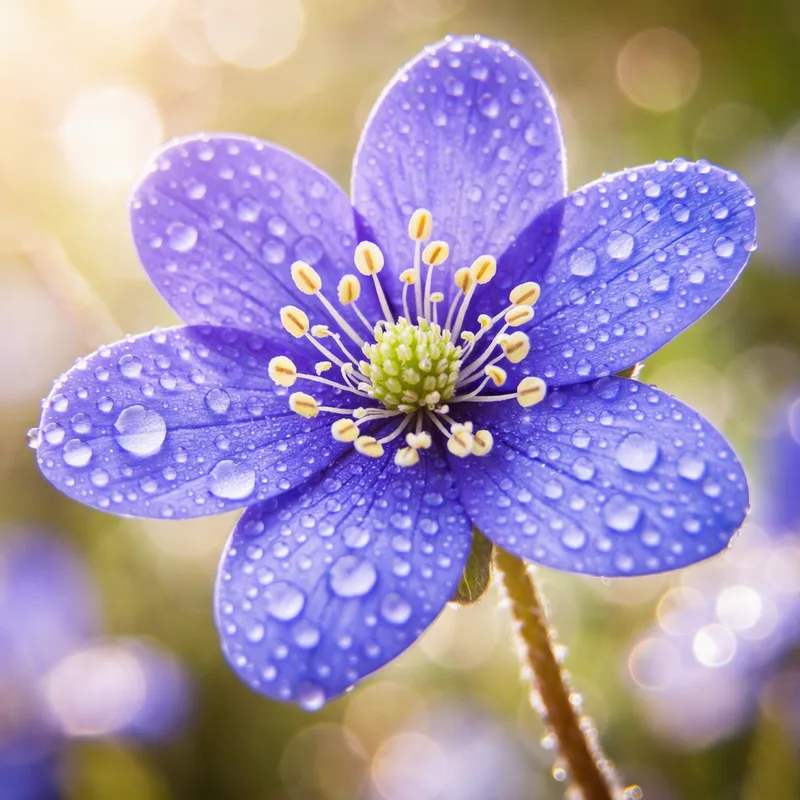
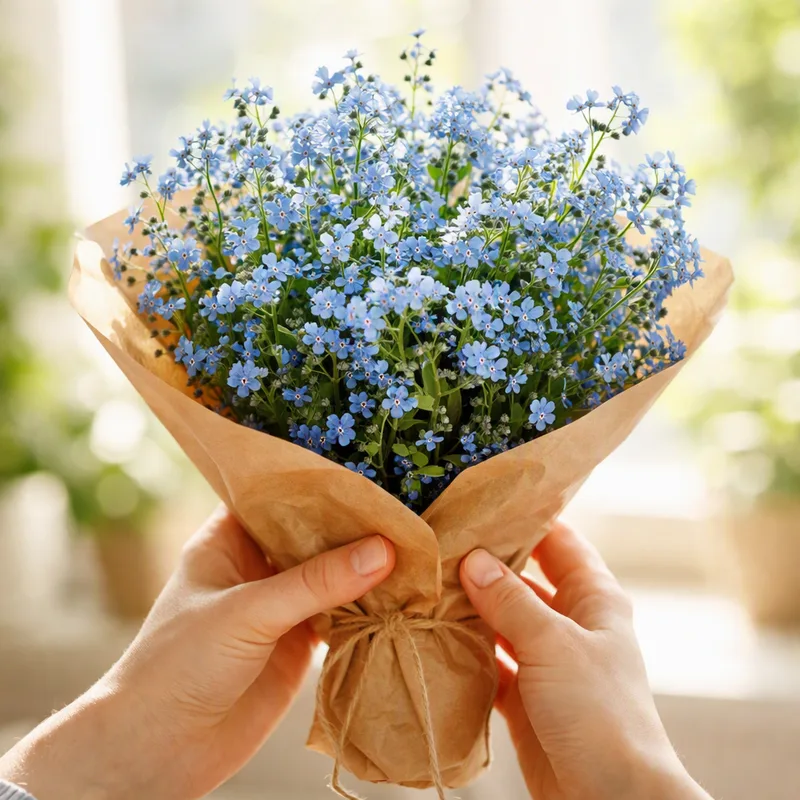
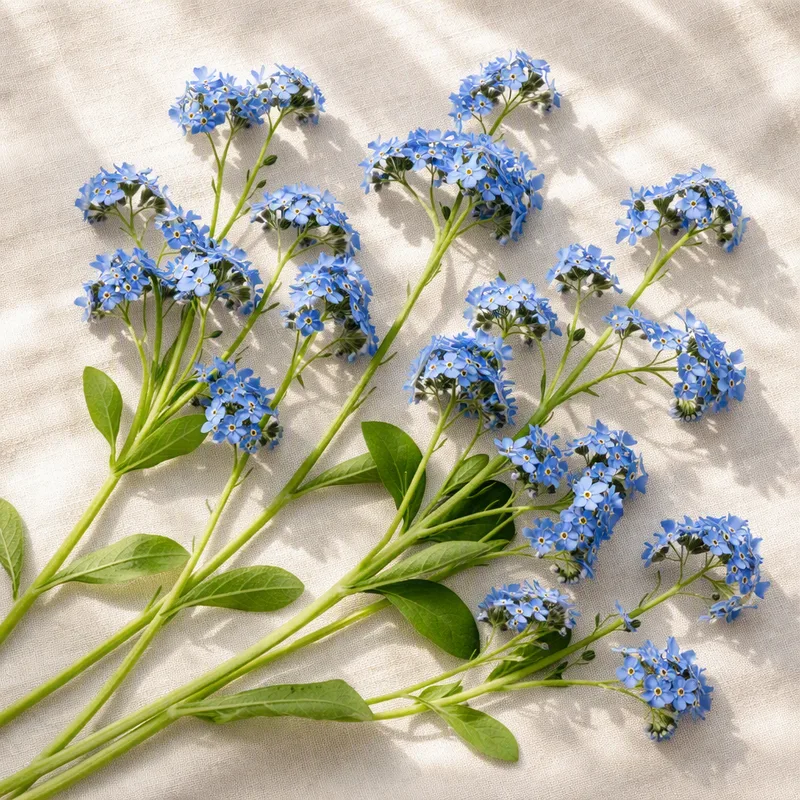
Tiny blue flowers
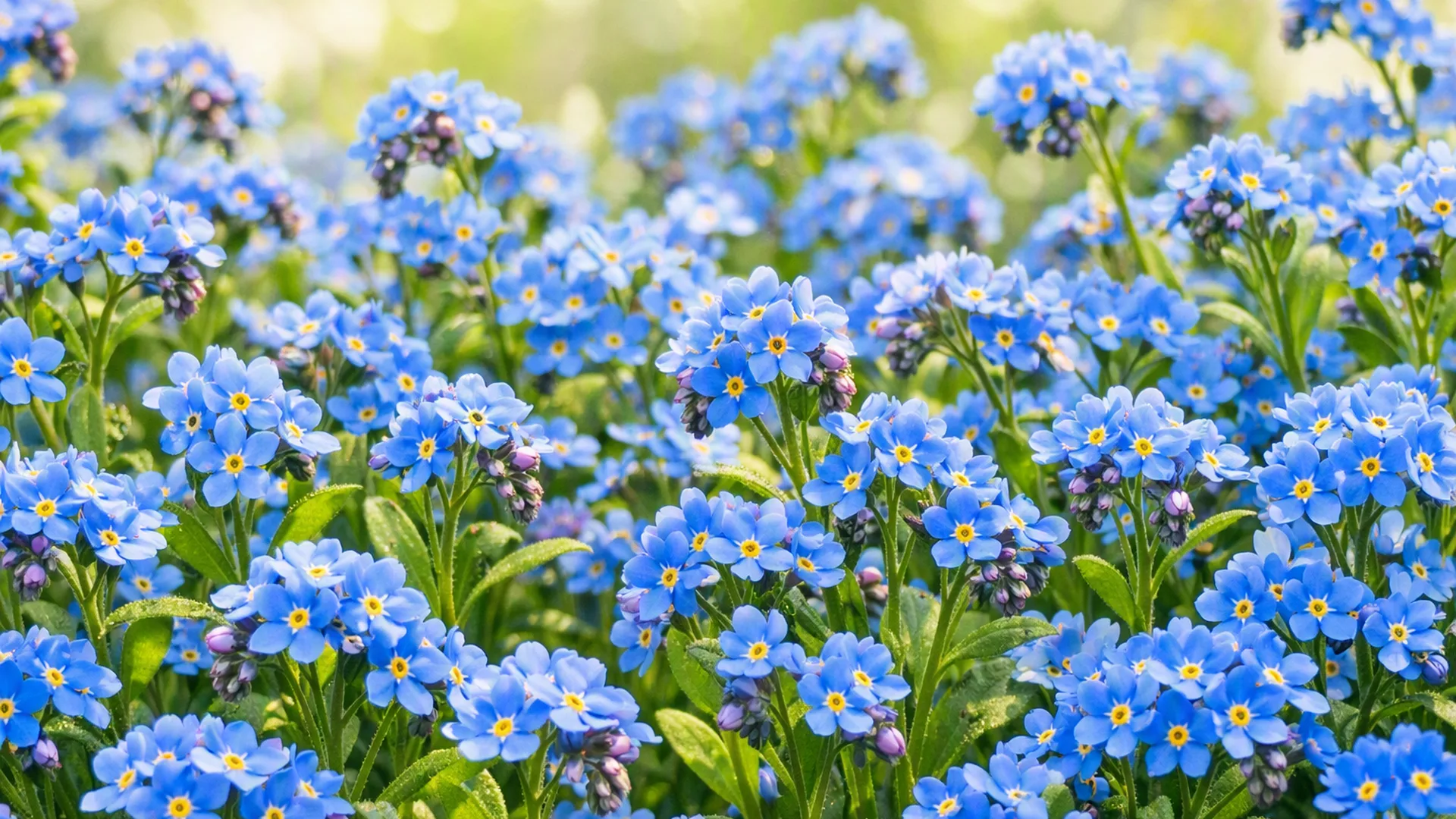
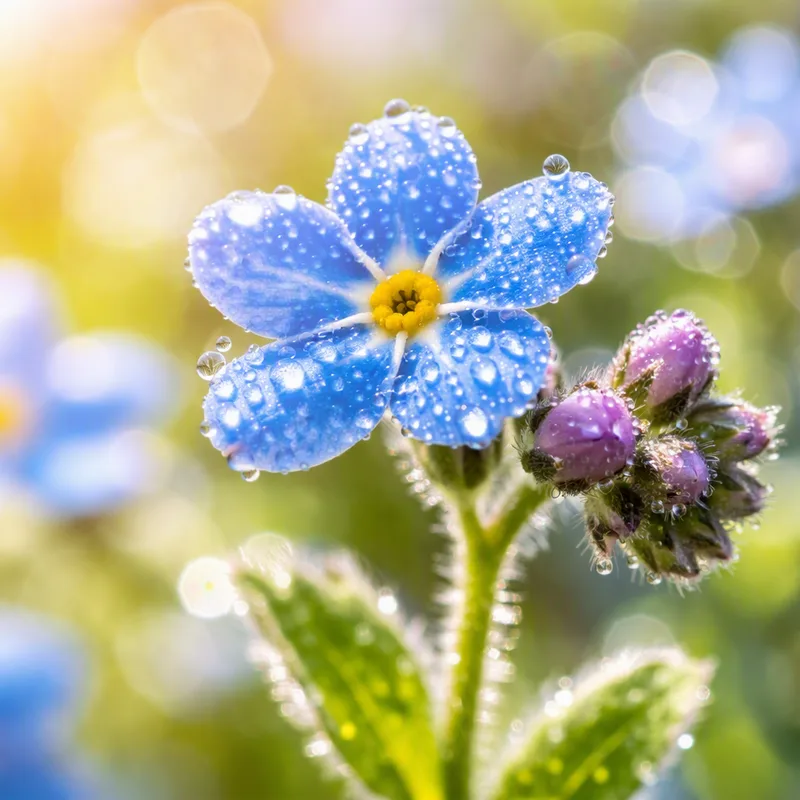
Forget-me-not is the common name of Myosotis, a genus of small herbs found across Europe, Asia and the Americas. The garden favourite is Myosotis sylvatica, the woodland forget-me-not, which makes a low mound 15 to 30 centimetres high covered in sky-blue flowers with a yellow centre. Interestingly, the lineage of Myosotis found in New Zealand and Australia is a southern group in the same genus, so a few native species do exist here.
When they flower
In our reversed seasons, forget-me-nots bloom from late winter through spring, about August to November. They are usually grown as biennials: seed sown in late summer or autumn flowers the next spring, and the plant then self-seeds quietly.
- Prefer part shade and moist, cool soil.
- Scatter seed where you want a drift of blue.
- Pair with tulips, bluebells or Japanese maples.
- Pull out extras after flowering to avoid a takeover.
Climate
They do best in Melbourne, Hobart, Canberra and the highlands, and are happy in Adelaide's hills. In Sydney they are a cool-season annual, and in the subtropics or the tropical north they tend to die in the heat, so they are not a sound choice there.
What forget-me-nots traditionally say
Forget-me-nots traditionally symbolise true love and remembrance. The flower is a symbol of remembrance in several countries and appears in commemorations around 11 November, for example in Newfoundland and Labrador.
Keeping forget-me-nots fresh indoors
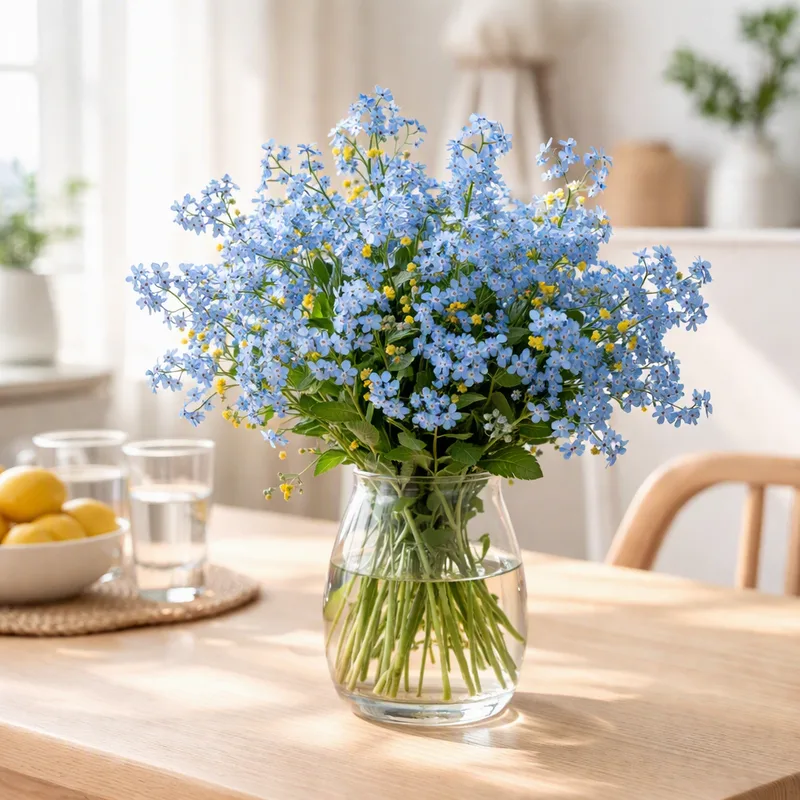
A small posy of forget-me-nots is a charming way to say "think of me", but the stems are short and the flowers are delicate. Forget-me-nots are not known as a poisonous plant, though pets should not be encouraged to chew any garden flower.