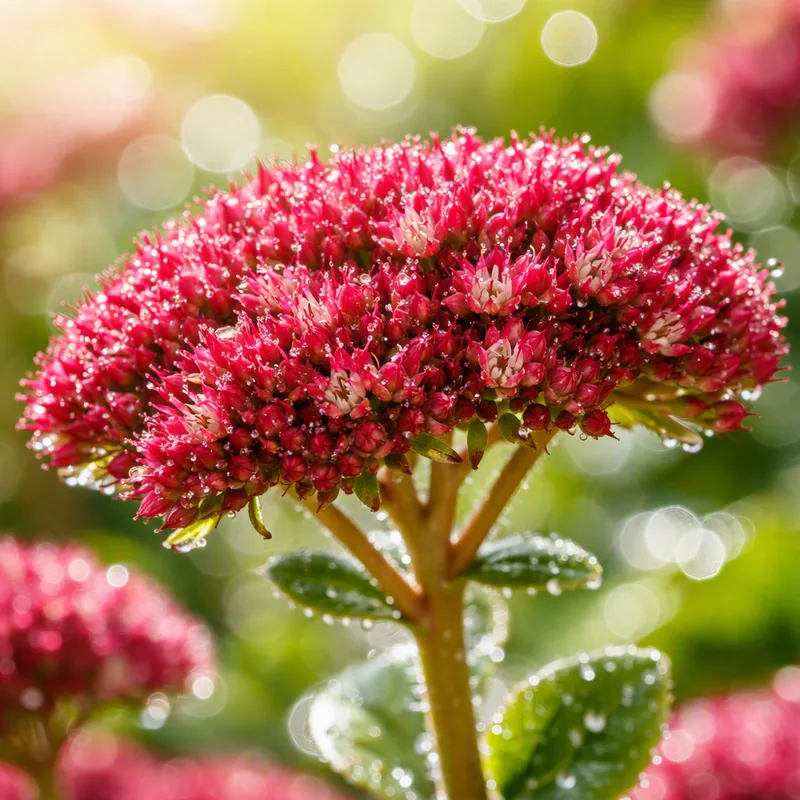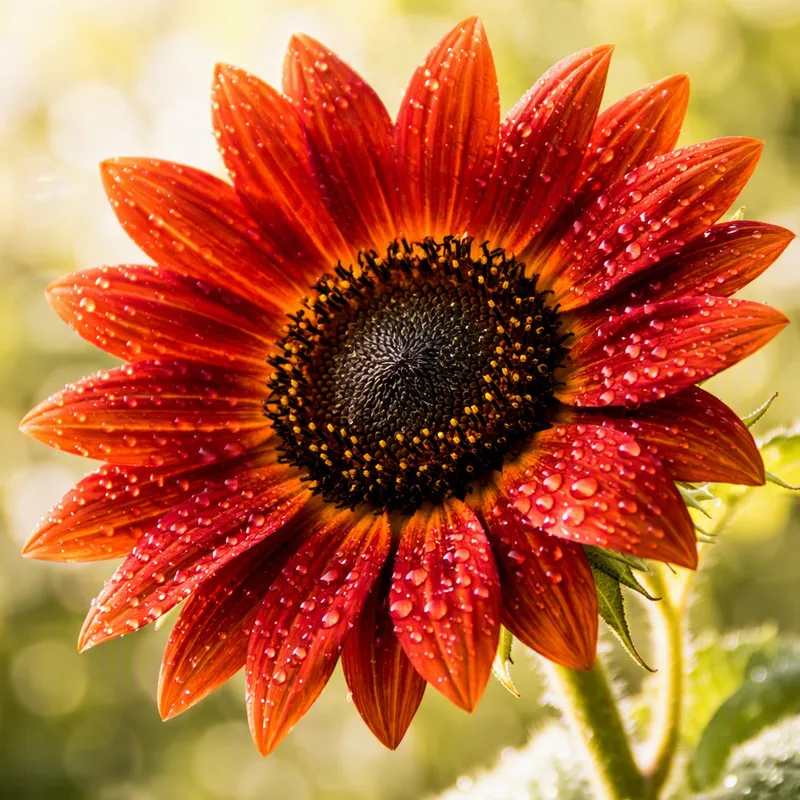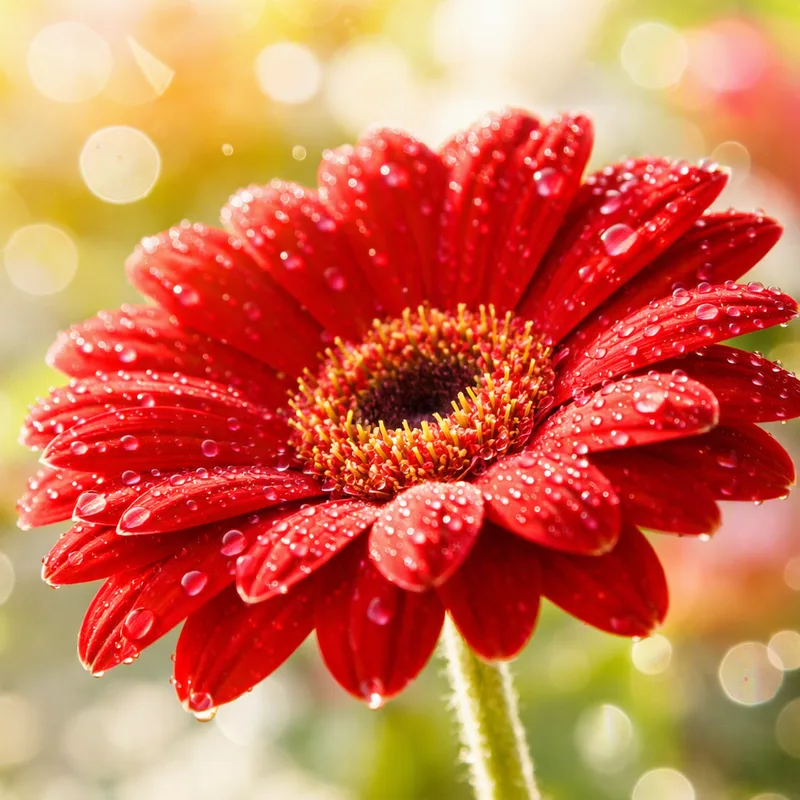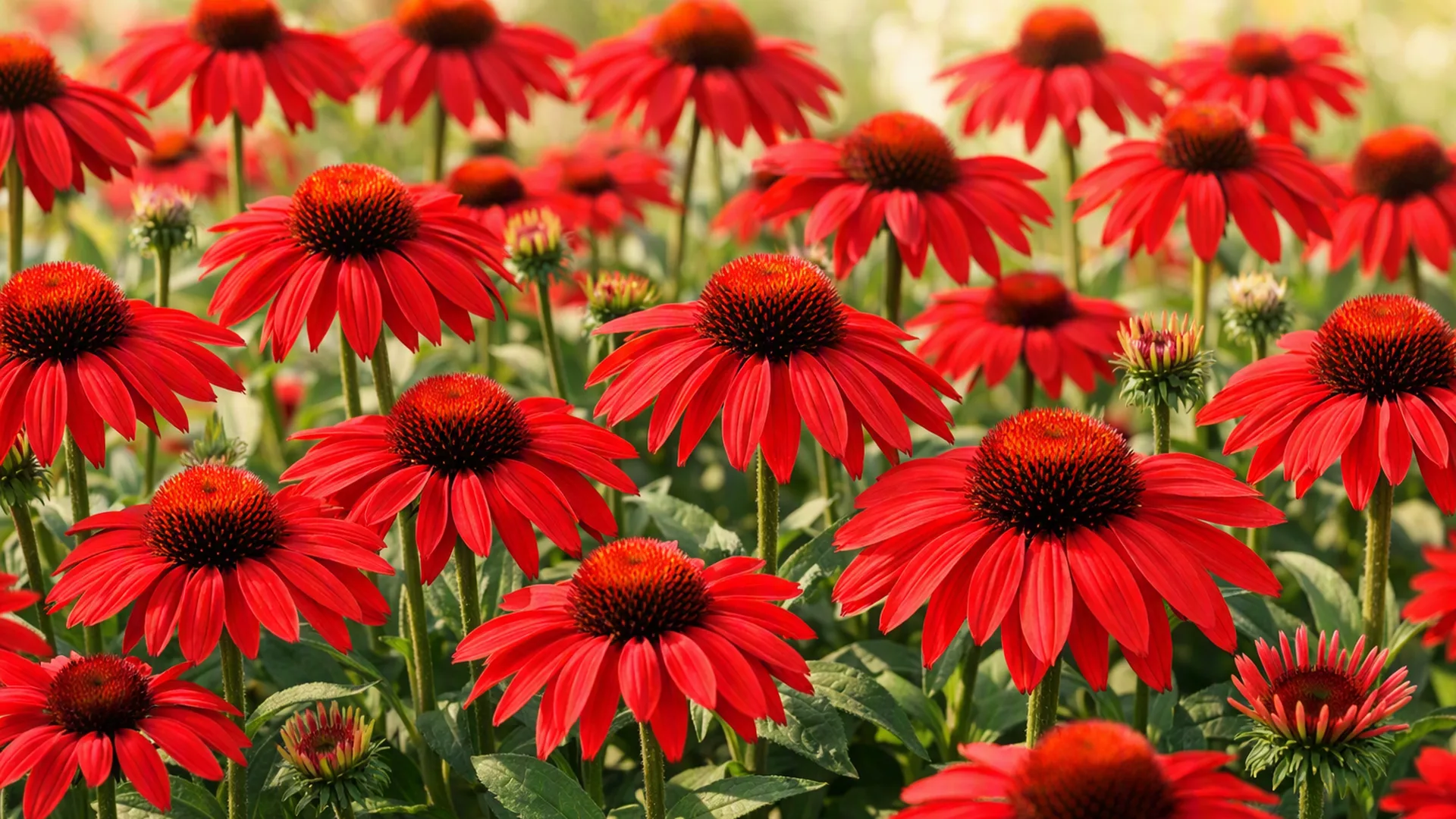
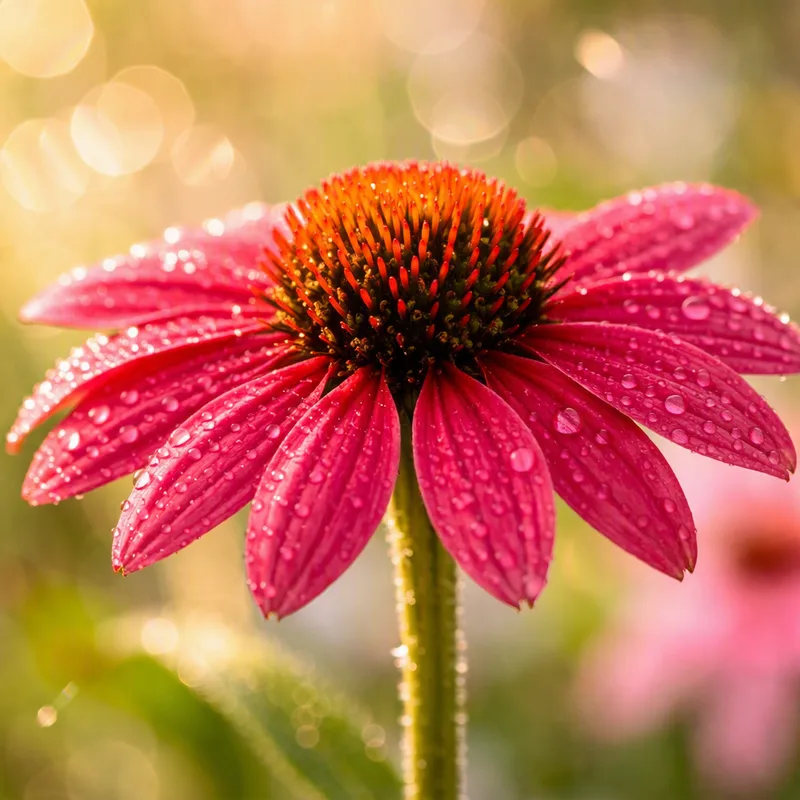
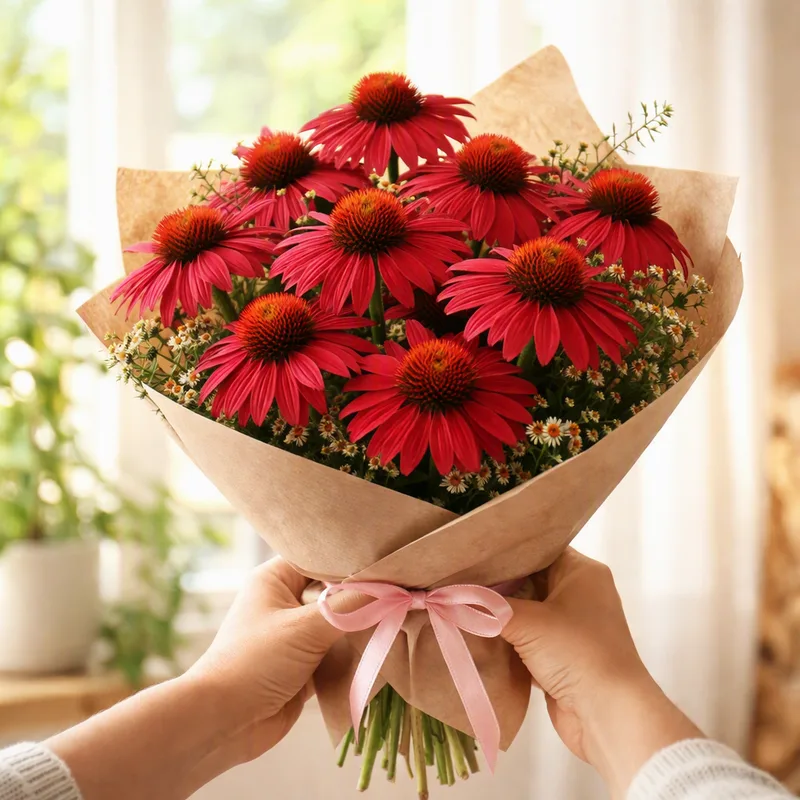
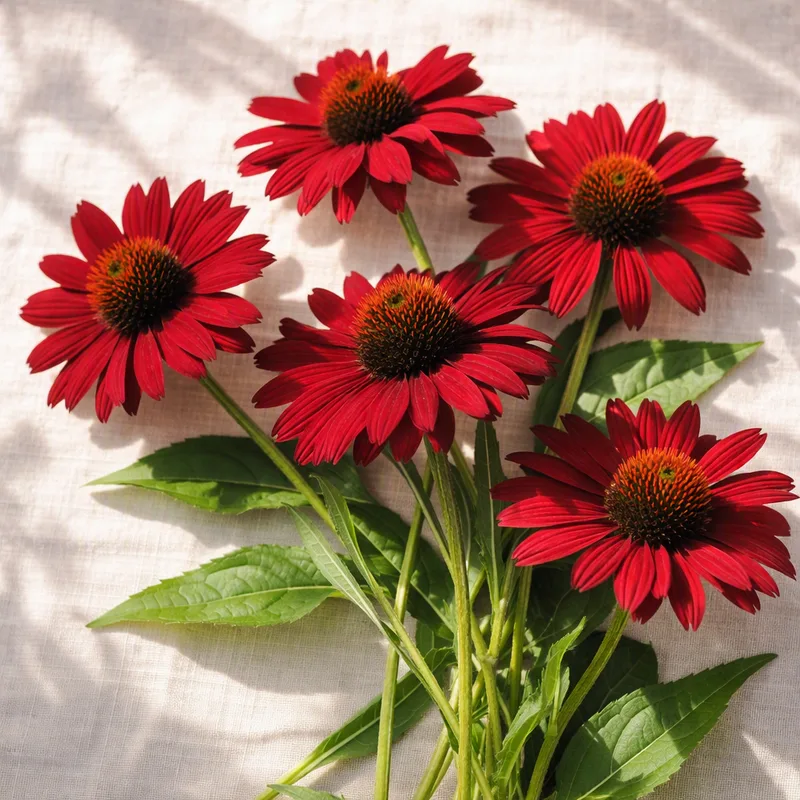
Echinacea purpurea is called purple coneflower, not red coneflower. It is native to the eastern United States and parts of Ontario, and its home is dry open woodland, prairie and barrens. Plants grow up to about 120 centimetres tall, with a domed, spiky centre that gives the genus its name: Echinacea comes from the Greek for spiny one, after sea urchins.
What the flower looks like
The central cone is made of small yellow-orange florets. Around it is a ring of drooping petals, usually rose-purple. The species epithet purpurea means reddish-purple. Breeders have added white, orange, yellow, coral and double types in recent decades.
A good fit for Australian gardens
Echinacea likes full sun and free-draining soil, and once established it copes with dry spells. It flowers from late spring to autumn, so in the south that means about November to April. Plants die back in winter in cold areas and shoot again in spring.
- Temperate and cool regions: strong performer. Plant in spring.
- Humid subtropical coast: possible, but drainage is essential or crowns rot.
- Tropical north: unreliable.
Leave the seed heads standing into autumn. Birds, particularly finches, enjoy the seed, and the cones make a strong silhouette in winter.
Cutting coneflowers for the house
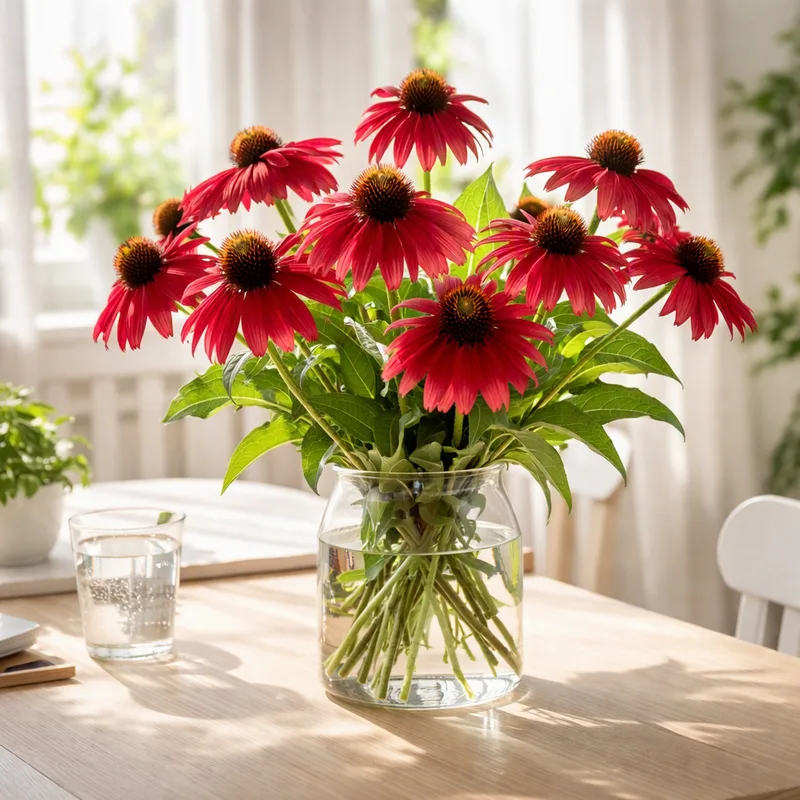
Cut when the petals are fully open and expect seven to ten days. The central cone can stay attractive even after the petals fall.
Pets and herbal products
The plant is listed as non-toxic by the ASPCA. Herbal echinacea supplements are a separate matter; ask a pharmacist or doctor before using them.