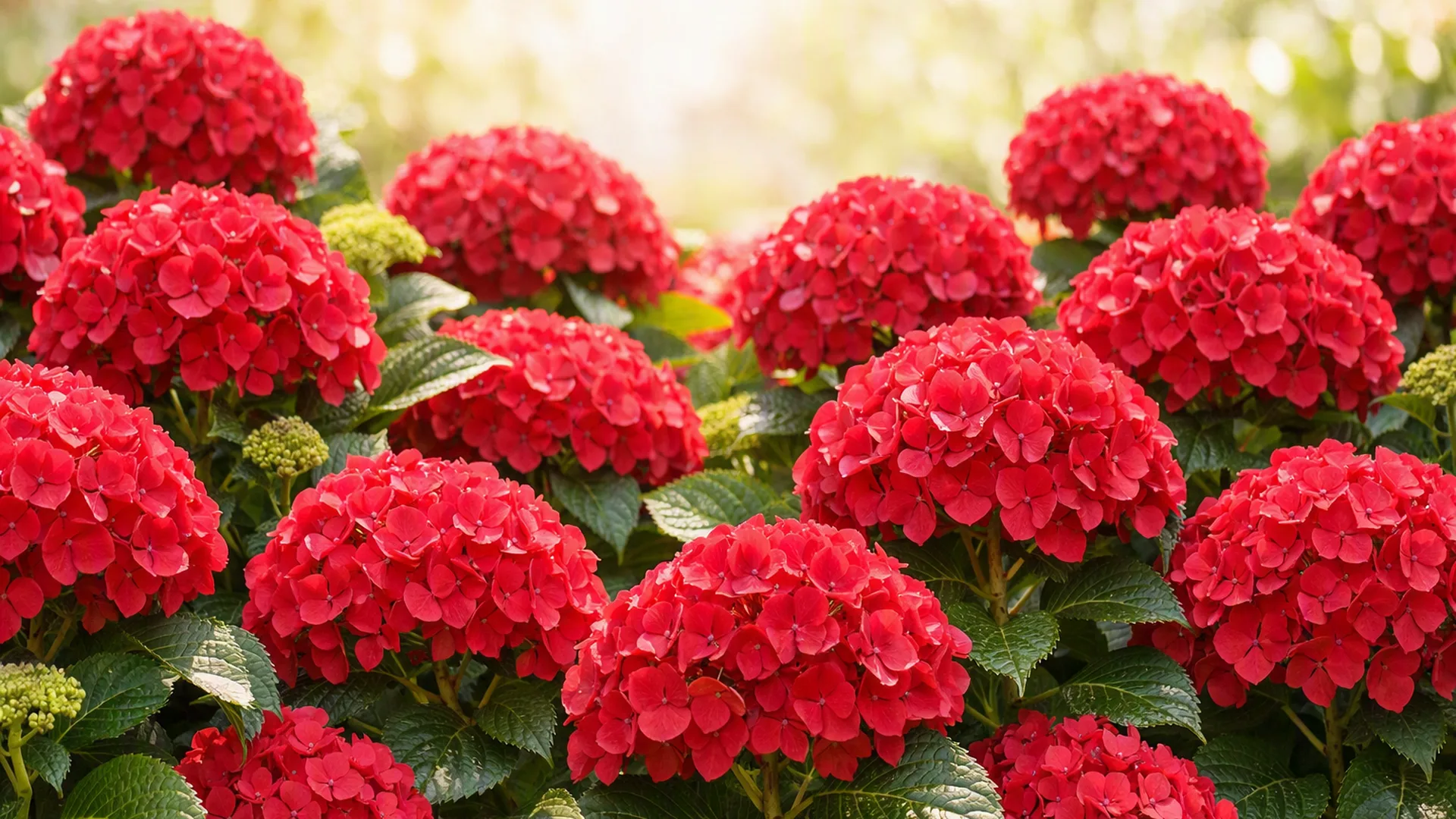
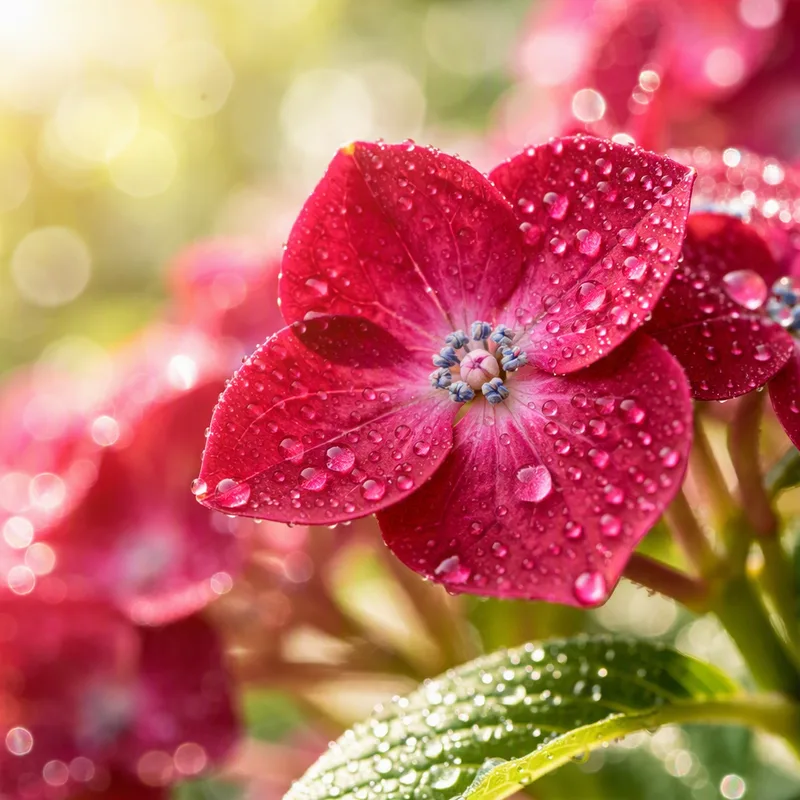
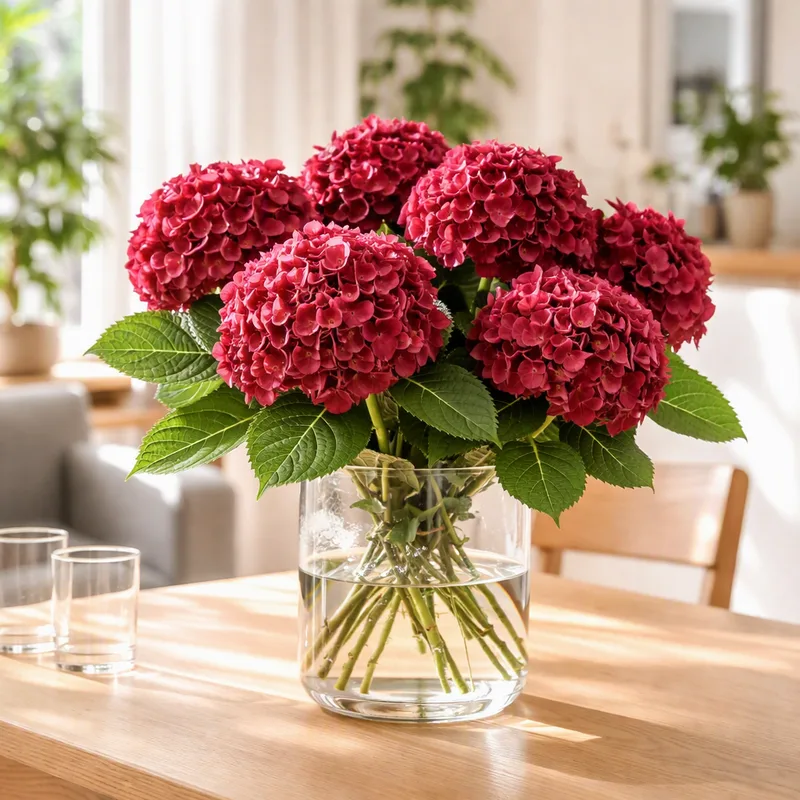
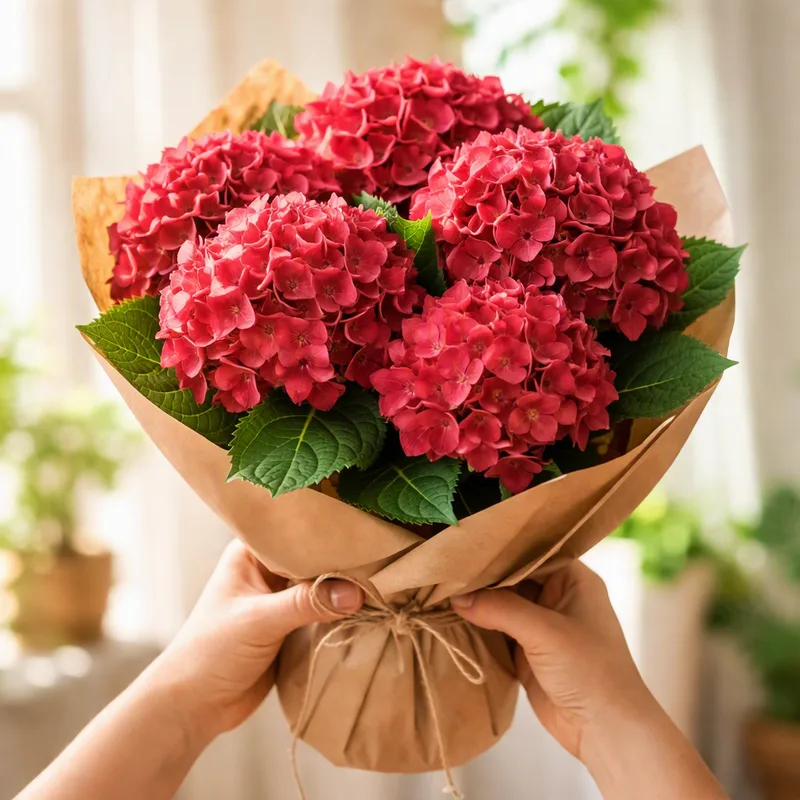
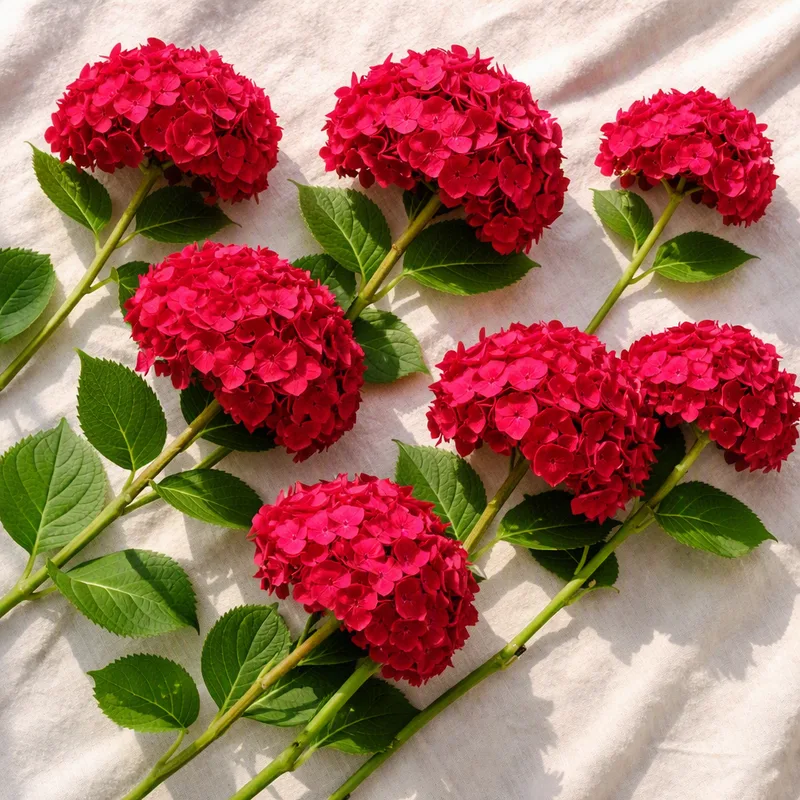
A truly red hydrangea is more a matter of degree than a separate colour. The red mopheads are deep pink to crimson varieties, and they show their best shade in alkaline soil. Wikipedia notes that an alkaline soil above pH 7 produces pink or even red flowers, while acid soil pushes the same plant towards blue.
How red keeps its depth
- Choose a variety bred for deep colour, such as 'Alpenglühen', and grow it in neutral to alkaline soil.
- Add garden lime or dolomite if your soil is acid. Keep aluminium products away from the plant.
- Watch for purple. A red variety in slightly acid ground will drift to a muddy purple instead.
- Container growers can use a lime-rich potting mix to hold the colour.
Autumn reds
Many hydrangeas, including pink and white ones, finish the season in antique shades of burgundy, green and copper as the heads age. That autumn colour appears from about March, so even a pale plant may end up looking red-toned before the leaves drop.
Meaning and use
Red hydrangeas are traditionally linked with heartfelt emotion in the language of flowers, while the plant in general has been tied to gratitude and abundance. They make bold hedges and bold vases alike.
Siting a red mophead
Rich soil, steady moisture and shelter from hot afternoon sun are all it takes. Cool-temperate gardens in Victoria and Tasmania suit them best.
Cyanogenic glycoside warning
In ASPCA terms, hydrangea is toxic for dogs, cats and horses. It contains a cyanogenic glycoside, and chewing can cause vomiting and tiredness. Ask your vet for advice if an animal has eaten some.