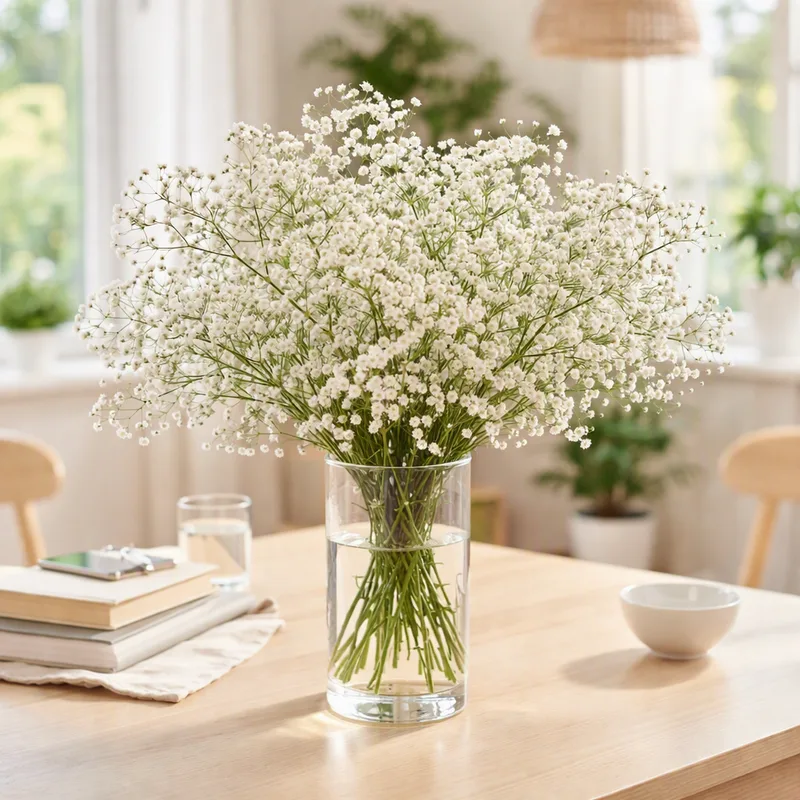

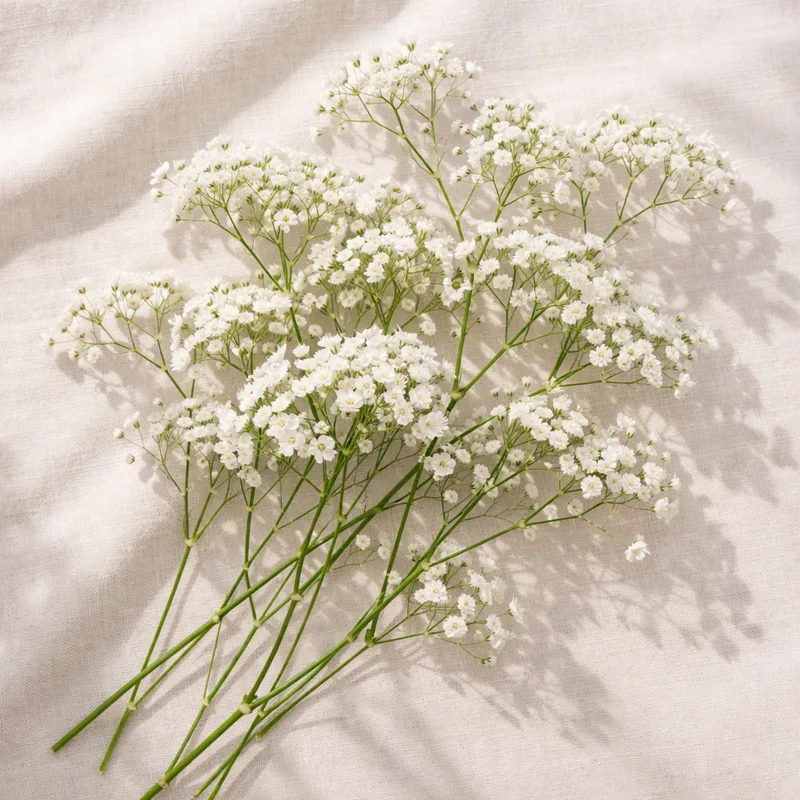
The white cloud
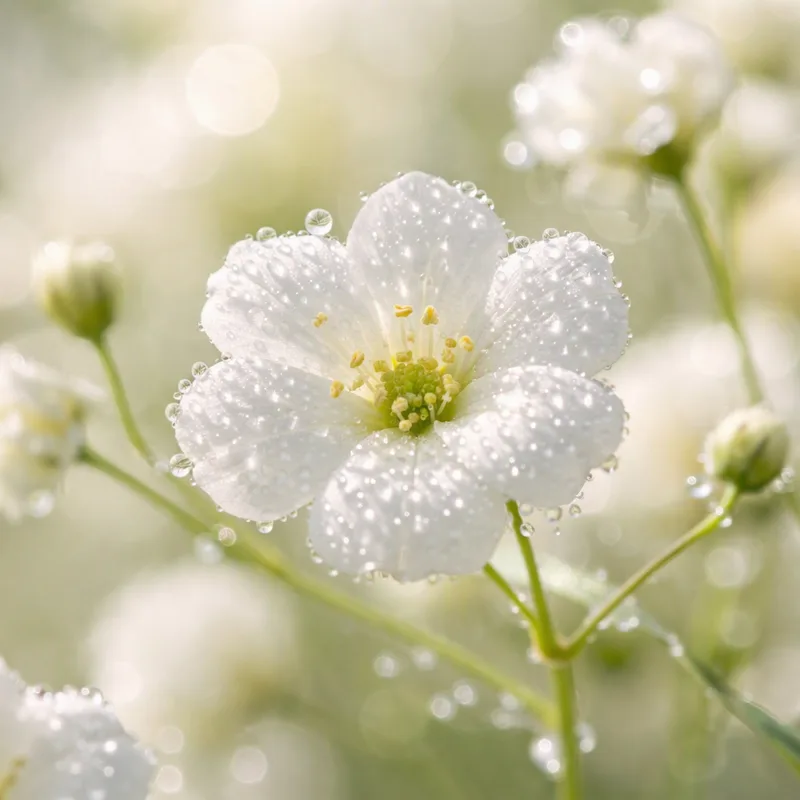
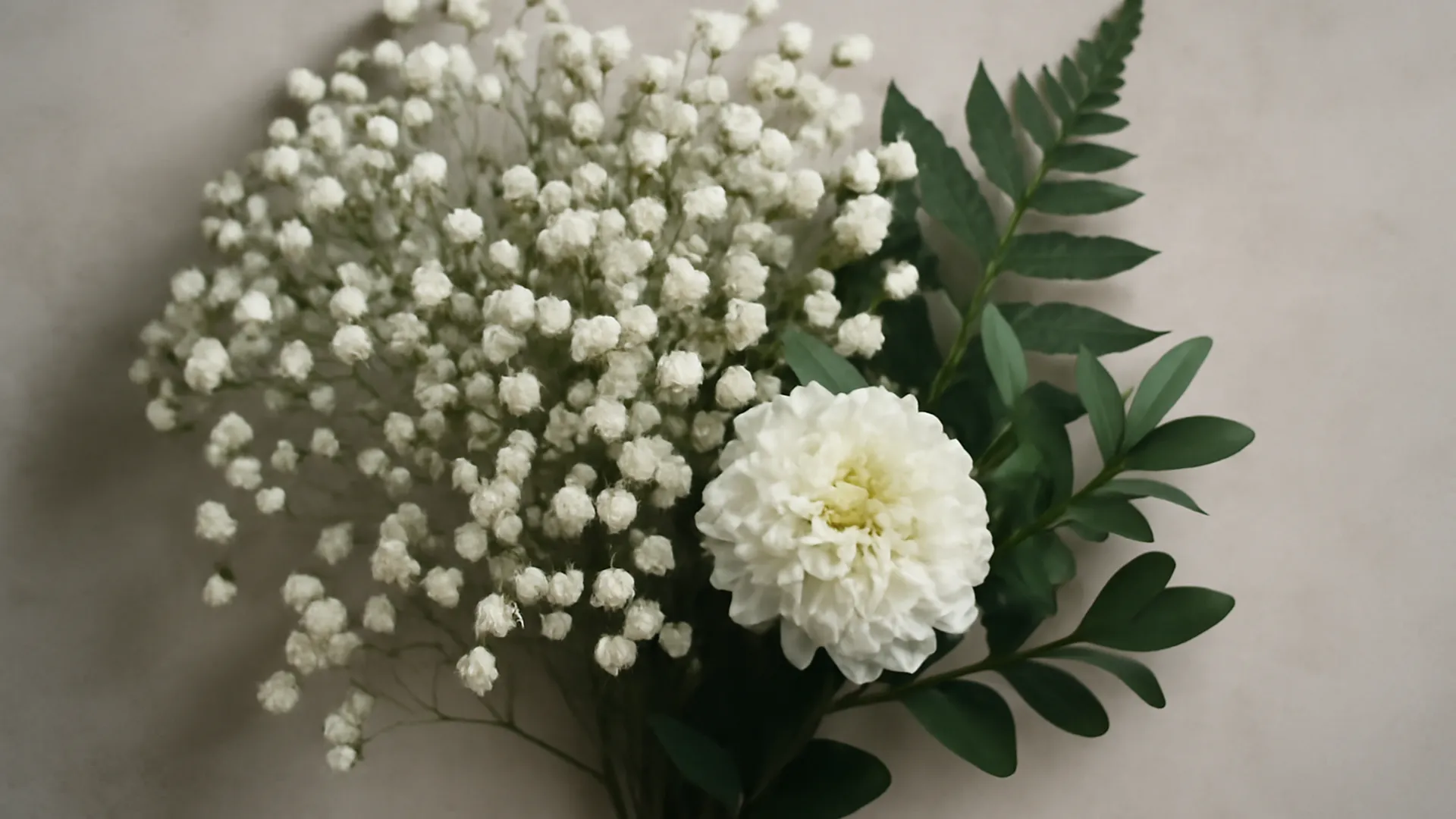
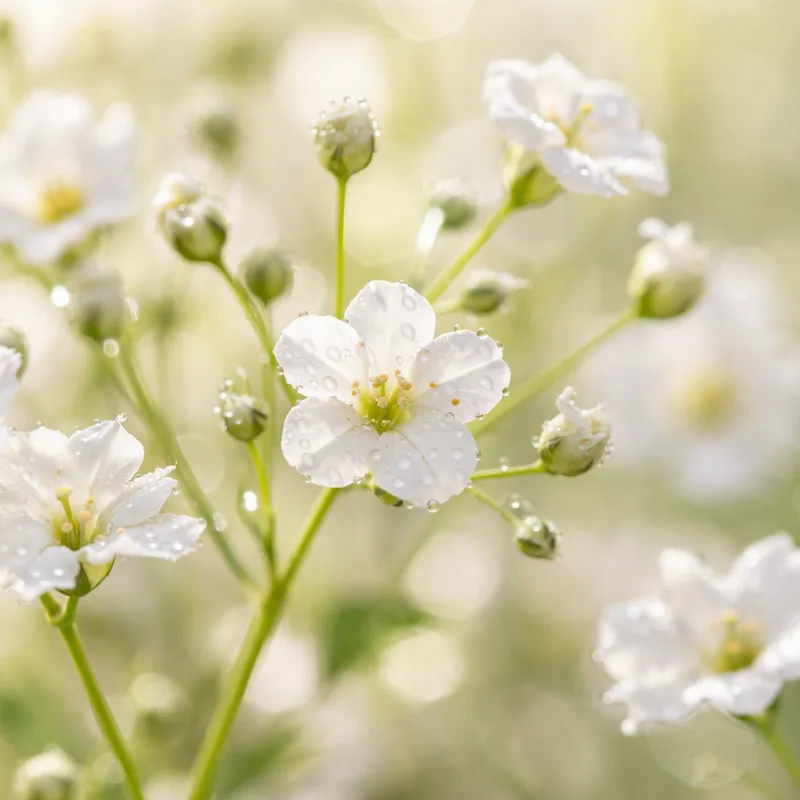
Gypsophila paniculata carries masses of tiny white flowers on thin, branching stems, which is where the common names 'baby's breath' and 'babies breath' come from. White is the natural flower colour, and nearly all of the plant's use in floristry rests on it. 'Rosenschleier' is a pink double, which only shows how much white remains the norm.
At a wedding
White gypsophila is widely used in Australian bridal work, from hair wreaths to table runners. Weddings in spring fall between September and November. Traditionally white flowers speak of purity, and baby's breath in particular of innocence and everlasting love.
Keeping stems fresh
1. Recut the base at an angle and stand in clean, cool water. 2. Remove any foliage below the waterline. 3. Keep out of direct sun and away from fruit, which gives off ethylene. 4. Change the water every two days. 5. Expect one to two weeks.
Everyday care for white baby's breath
It likes full sun and well-drained soil, and it thrives in neutral to alkaline ground. The plant spreads to as much as a metre wide, so allow room. Cut it back after the first flush for more.
Cautions
Wikipedia lists contact dermatitis as a possible effect of handling Gypsophila paniculata. The ASPCA lists baby's breath (Gypsophila elegans) as non-toxic to pets, with mild stomach upset possible.
As a cut flower, one large bunch in a plain glass jar looks more striking than lots of small sprigs. Trim the bottom of the stems after a few days if the water turns cloudy, and top up with fresh water as the level drops.