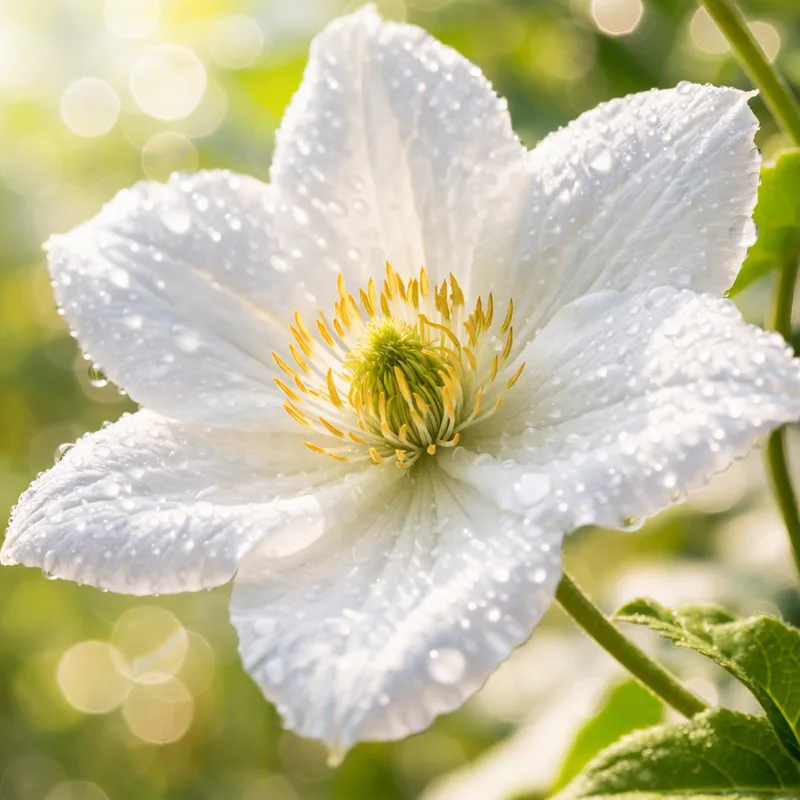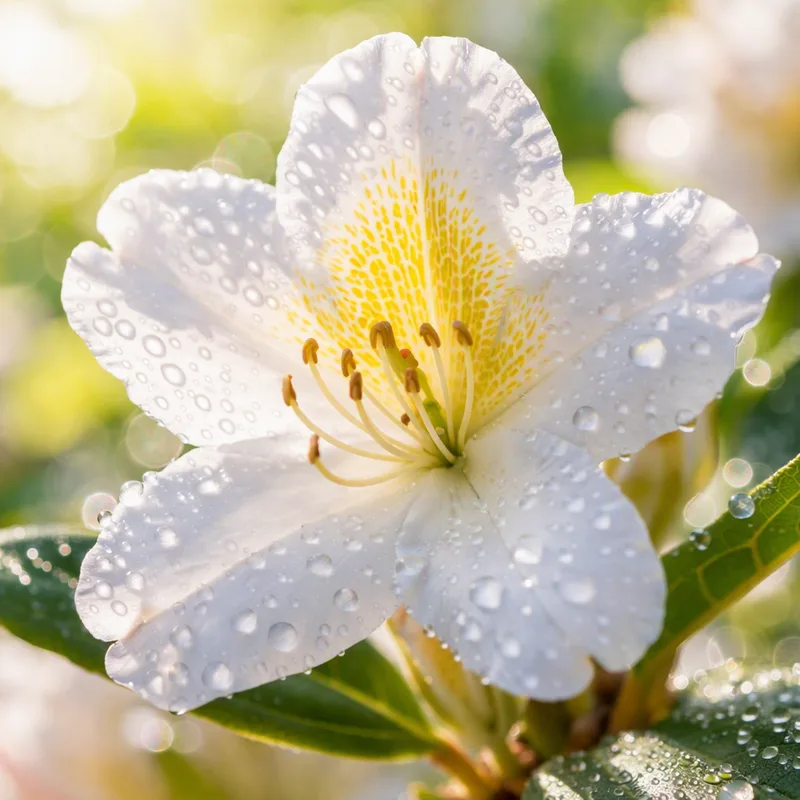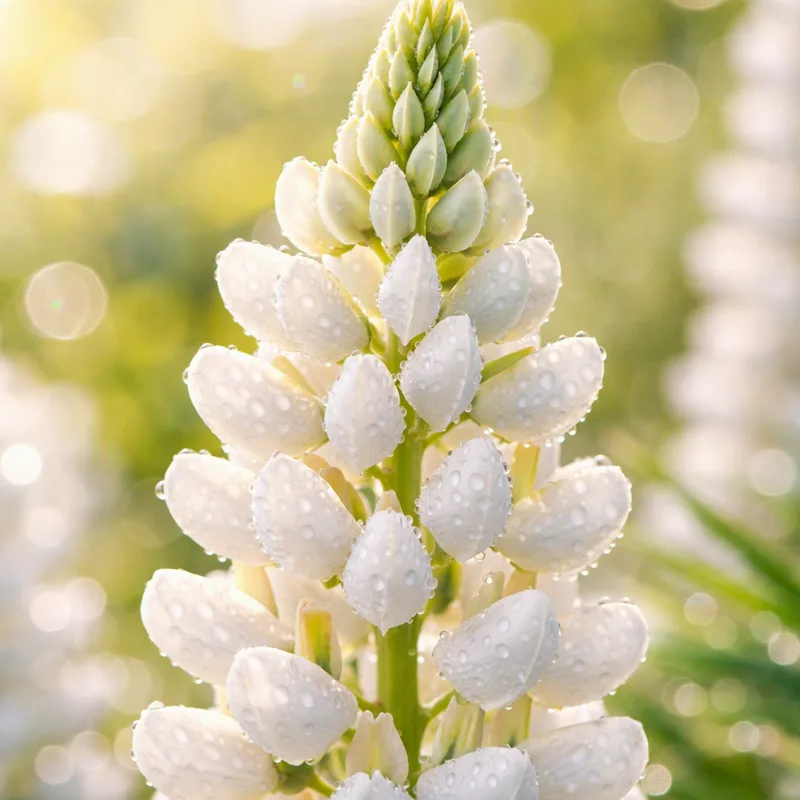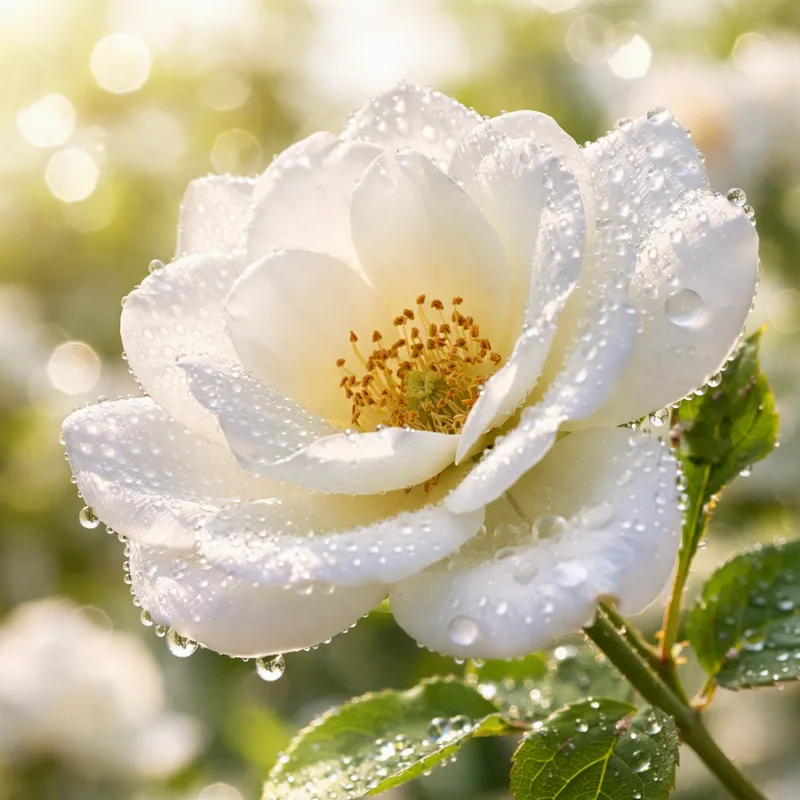
A neutral that works everywhere
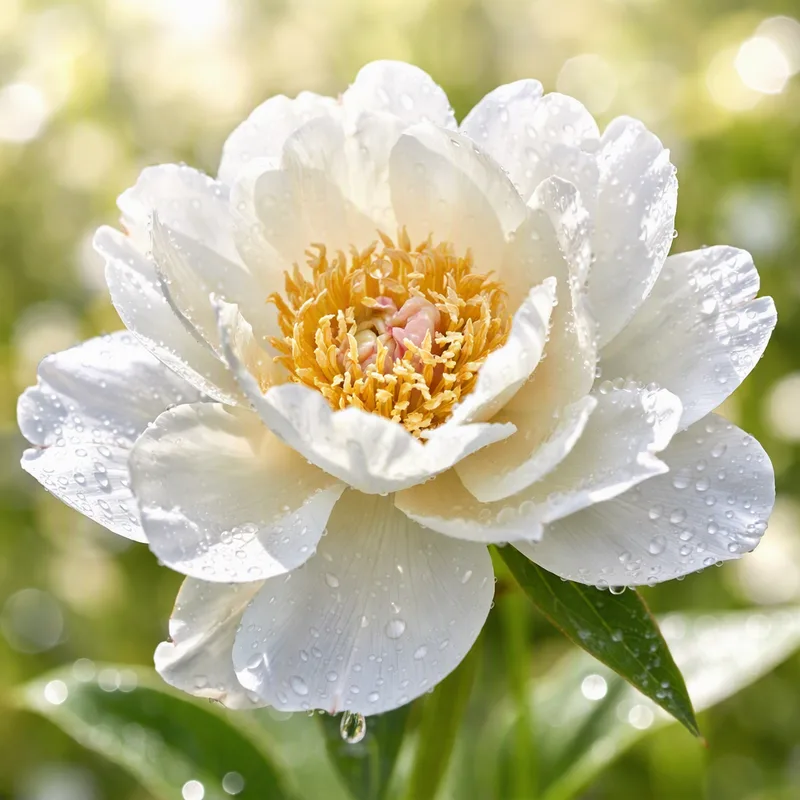
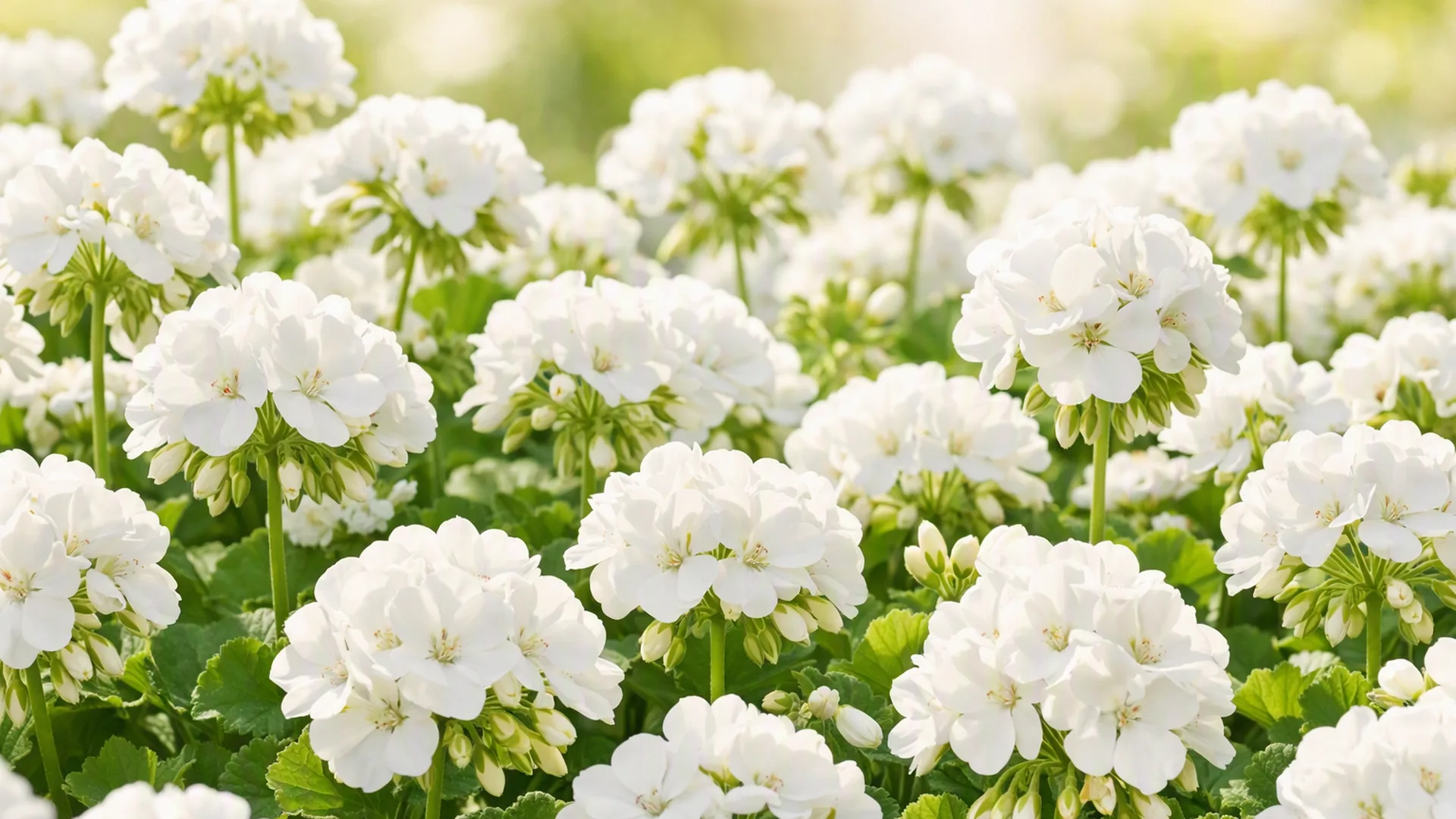
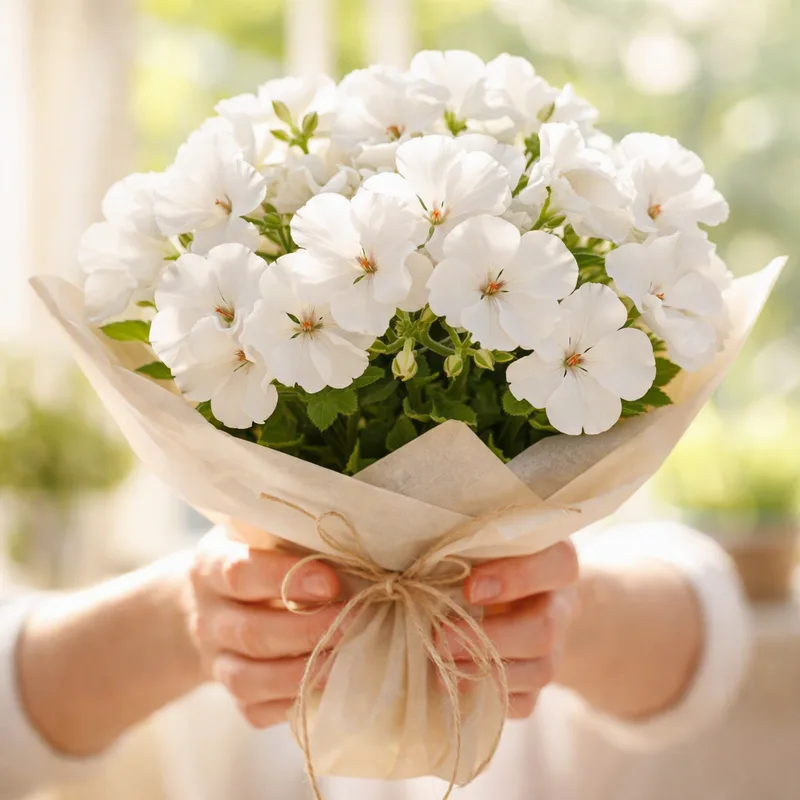
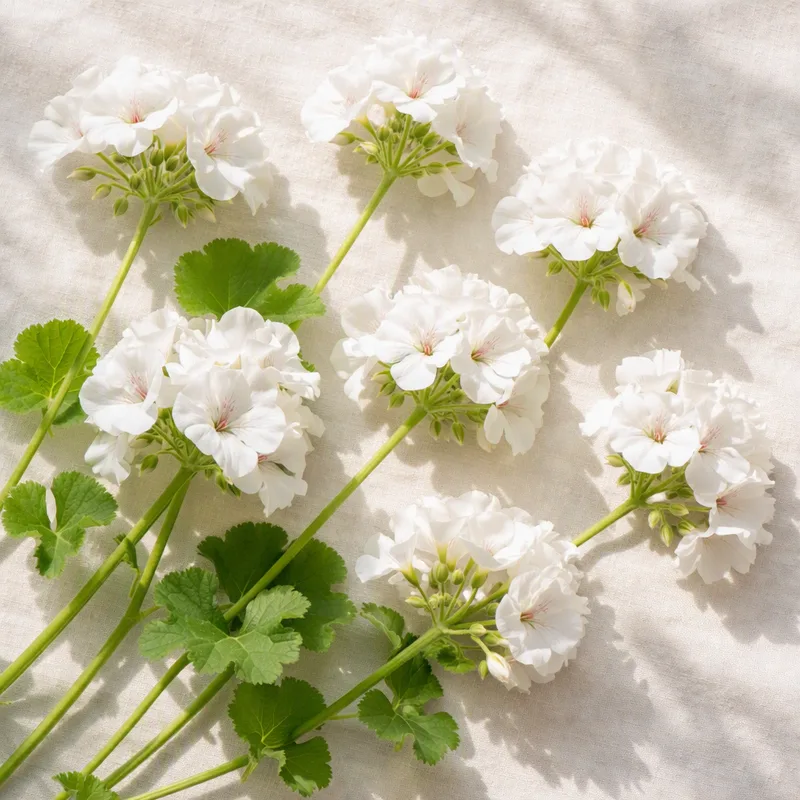
A white pelargonium fits into almost any colour scheme. Placed in a terracotta pot beside a blue front door or tucked among green foliage, it makes a calm, clean statement. White is also popular for formal planting, where a repeated pot at steps or gates keeps the look consistent.
The meaning question
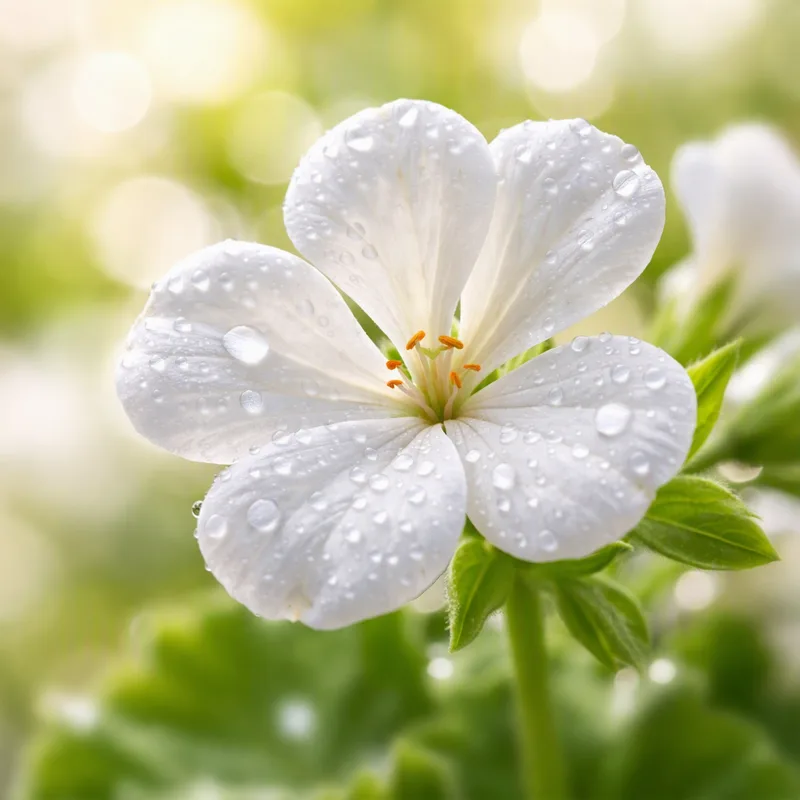
Searchers often ask what a white geranium stands for. Flower dictionaries are not consistent about pelargoniums, and most simply link white blooms with purity, a common idea for white flowers as a group. Treat any single meaning with caution.
Keeping white flowers clean
- Remove old flower heads to prevent brown petals from spoiling the display.
- Water the soil, not the blooms, since wet petals mark easily.
- Avoid afternoon sun on a west-facing wall in Perth and Adelaide summers, which scorches white petals.
- Watch for rust, which shows as brown spots under leaves in humid weather.
- Feed with a flowering fertiliser every month in spring and summer.
Climate cues
Ivy-leaved whites cascade from baskets in Melbourne and Sydney, while zonal whites suit pots in Canberra, though frosts mean they should be moved to shelter in July. In the subtropics, pelargoniums flower mainly in the cooler, drier months.
White pelargoniums and curious animals
Pelargoniums contain aromatic oils, and the ASPCA records vomiting, loss of appetite and dermatitis in dogs, cats and horses. A vet can advise if an animal has eaten some.