
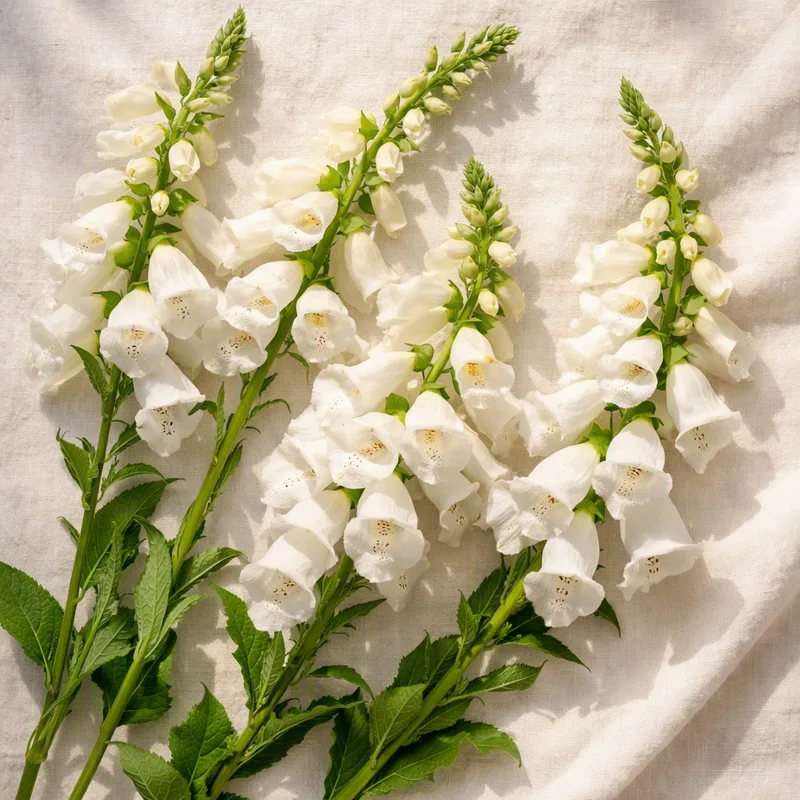
Spires that glow at dusk
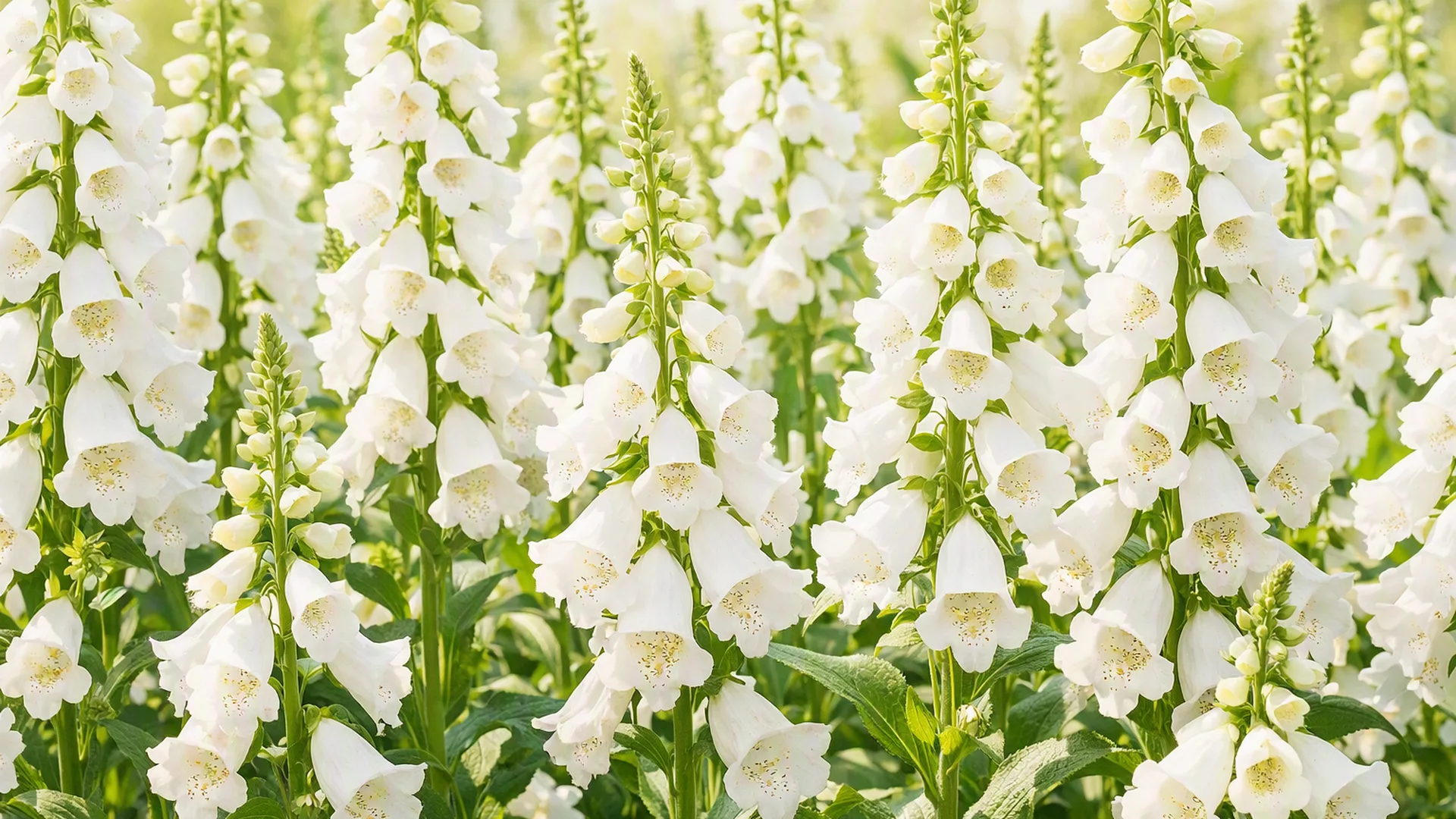
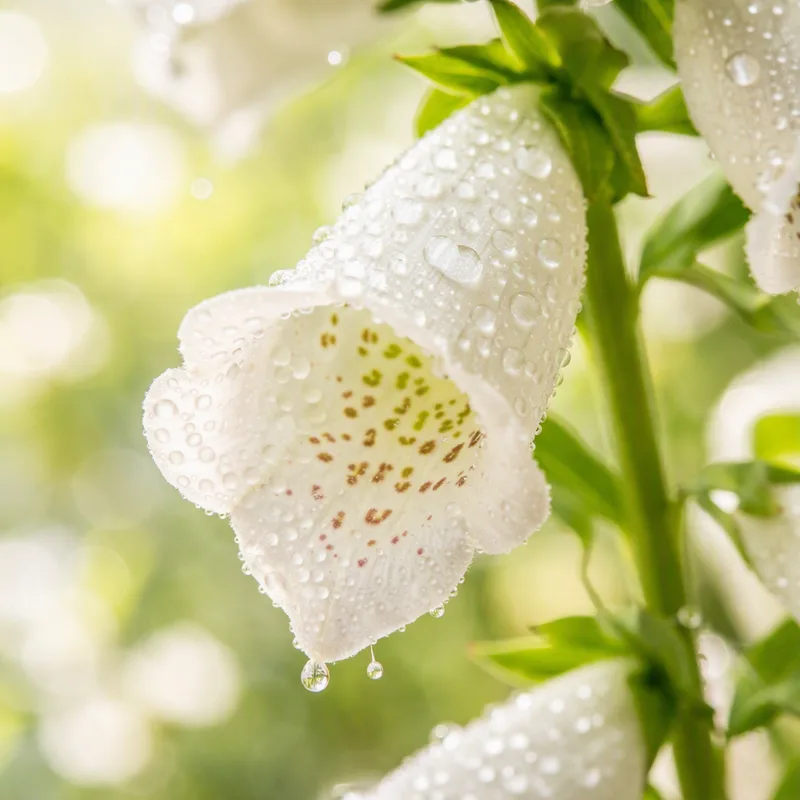
The white form of Digitalis purpurea, often sold as the Alba type, has creamy bells that sometimes show a few maroon freckles in the throat, though many are clean white inside. The pale spires catch even a little evening light, which is why gardeners love them in shaded borders and moon gardens. Like the purple type, it is a biennial and flowers in its second year.
An unfair old reputation
In Victorian flower dictionaries foxglove stood for insincerity, an unfair reputation for a plant that is simply beautiful. White foxglove is also sometimes read as purity, which is why it appears in woodland-themed weddings.
Making them thrive
White foxgloves need cool air, moisture and part shade.
- Cool-climate gardens in Tasmania, Victoria and the Canberra area suit them best.
- Sow seed on the surface in summer, then transplant seedlings in autumn.
- Plants flower the following spring and early summer.
- Cut off spent spikes before seed sets if you do not want volunteers.
Seeds from white plants usually produce a mix of whites and purples, so rogue off the purple ones if you want to keep the white strain pure. Self-seeding can become a problem in the bush; foxglove is an established weed in parts of Tasmania according to Wikipedia, so check your local council or state weed page.
Danger
All parts of the foxglove contain cardiac glycosides. The ASPCA rates the plant as toxic for dogs, cats and horses. If a child has swallowed any, call 13 11 26 straight away.