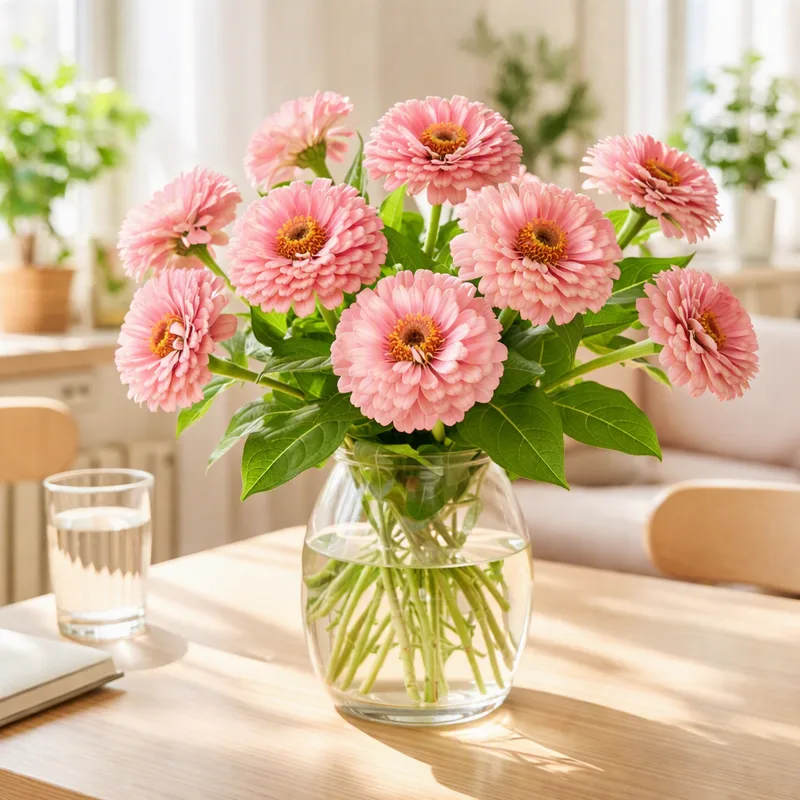
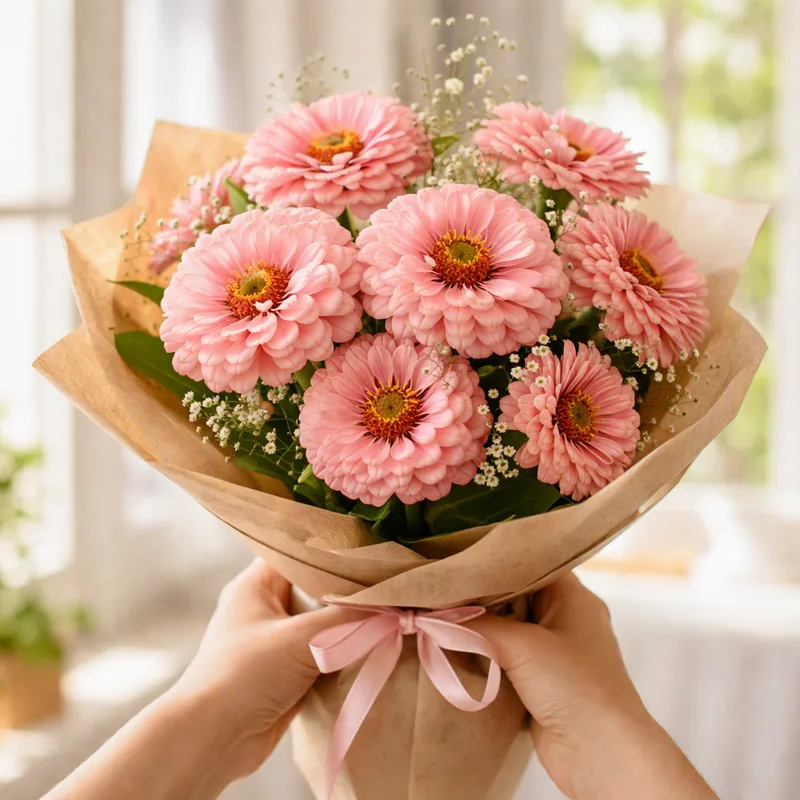
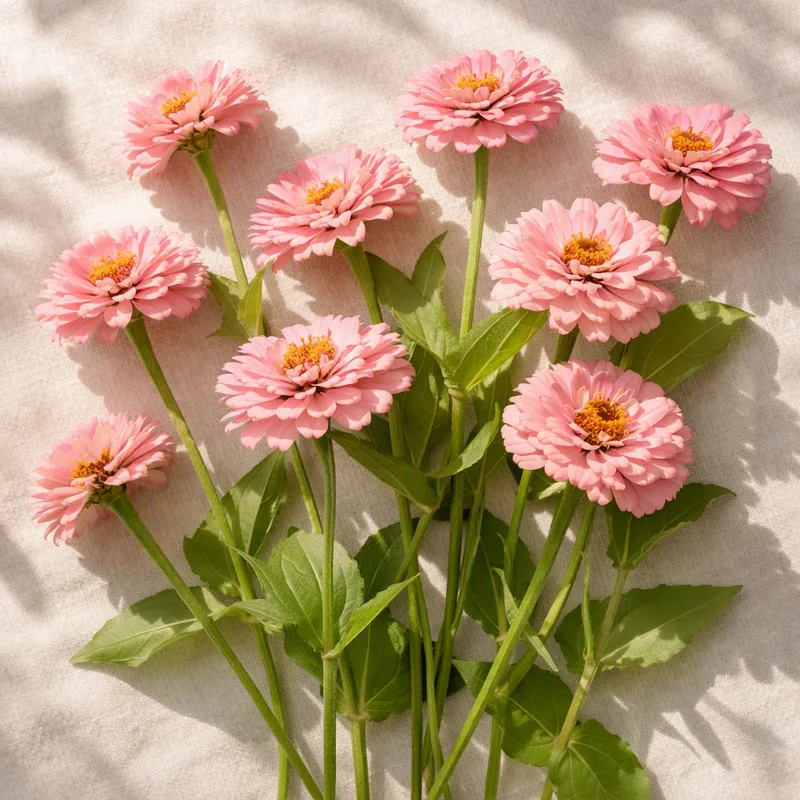
Everyday care for pink zinnias
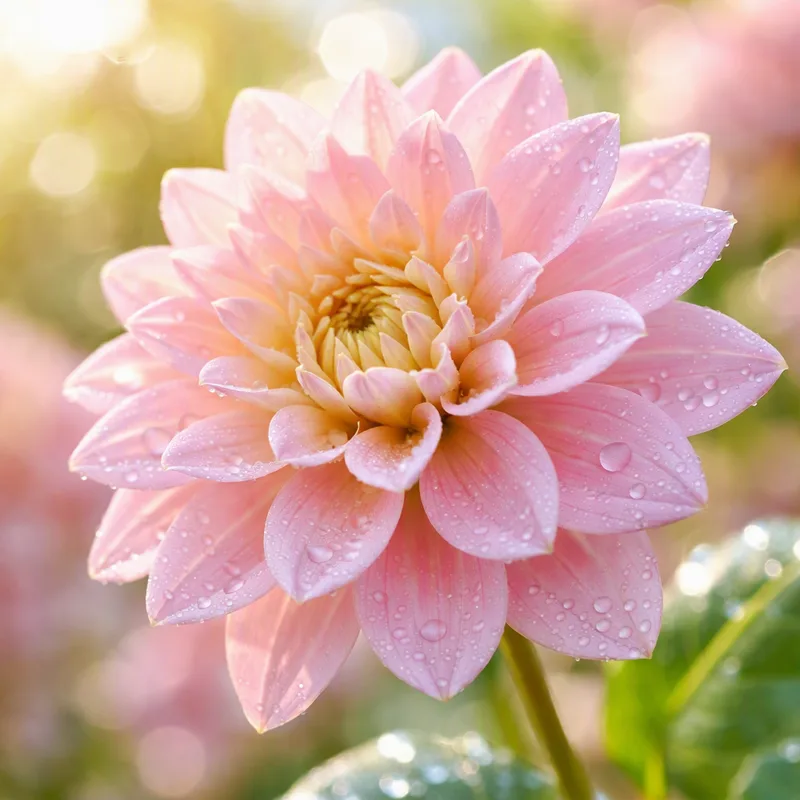
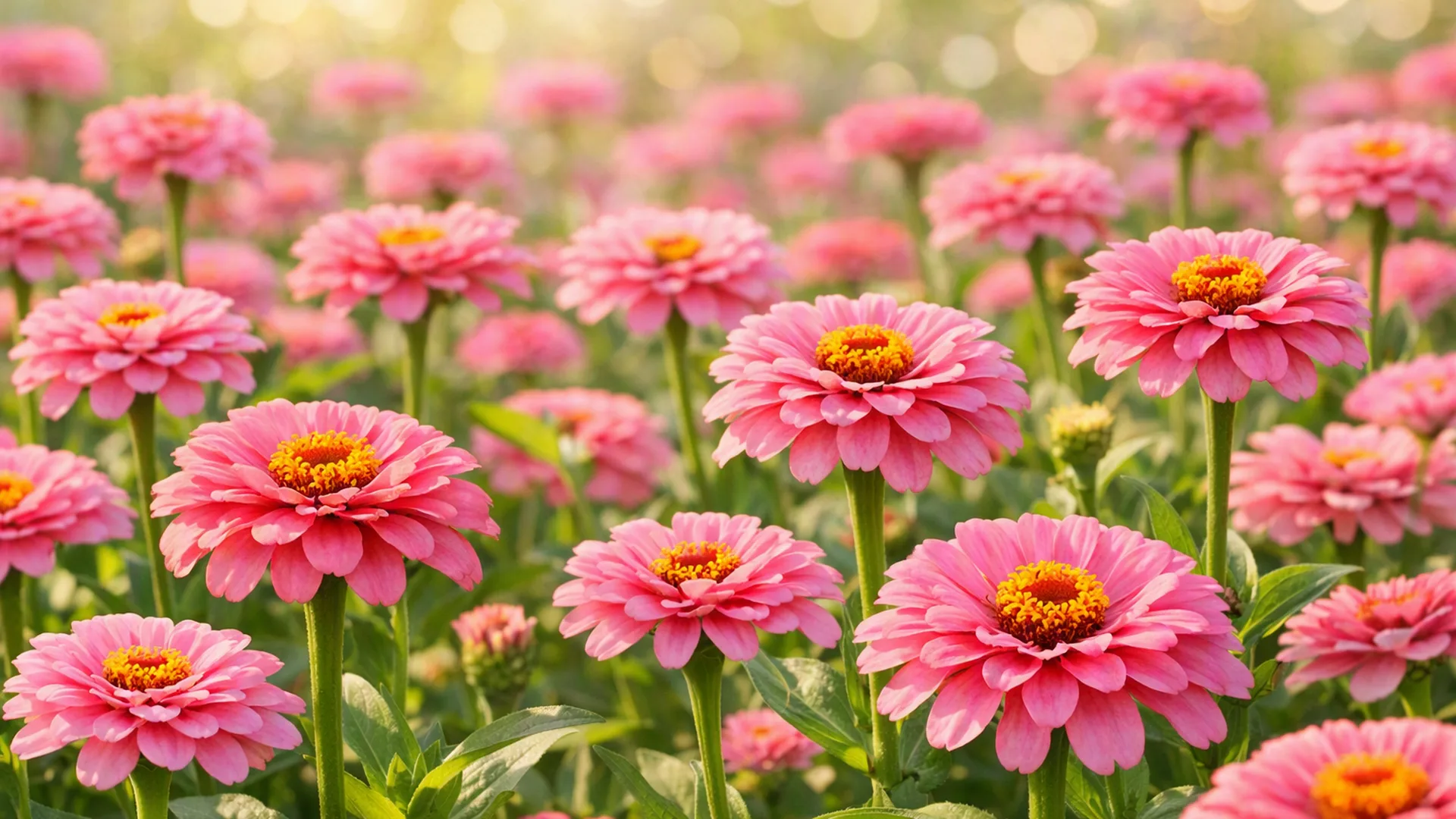
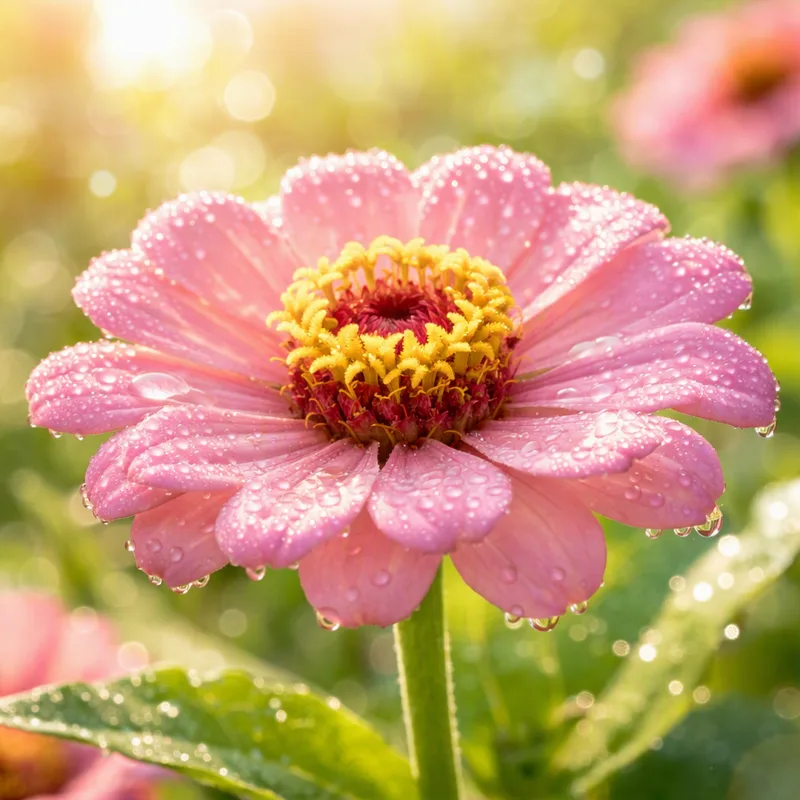
The flower colours of Zinnia elegans cover white and cream through pink, red and purple, and also green, yellow, apricot, orange, salmon and bronze. Pinks run from pale to bright, and some are bicoloured or speckled. The plants are annuals, so each year starts with fresh seed.
Planning around the seasons
Seasons are reversed in the south. Sow in spring, from September to November, when the soil is warm and frost is over. Flowers then appear through summer and into autumn. In Melbourne and Hobart wait until October to be safe; in Brisbane and the north you can start earlier.
Looking after pink zinnias
- Full sun and well-drained loam.
- Direct sowing, because they resent transplanting.
- Space for airflow to avoid powdery mildew.
- Regular picking, which triggers more buds.
Cut stems of pink zinnias
The vase life is around seven to ten days. Pink zinnias suit simple jugs, either on their own or with greenery. They do not have a noticeable scent.
Pink and its meaning
Pink traditionally means friendliness and warm regard, and zinnias in general suggest thoughts of absent friends, so a bunch of pink zinnias makes a thoughtful gift for someone far away.
Zinnias are listed as non-toxic to dogs, cats and horses by the ASPCA.
To get long stems for cutting, sow in rows at about 30 cm spacing rather than in a clump, and pinch out the main bud when the plant is young. Side shoots then develop and give you more flowers per plant.