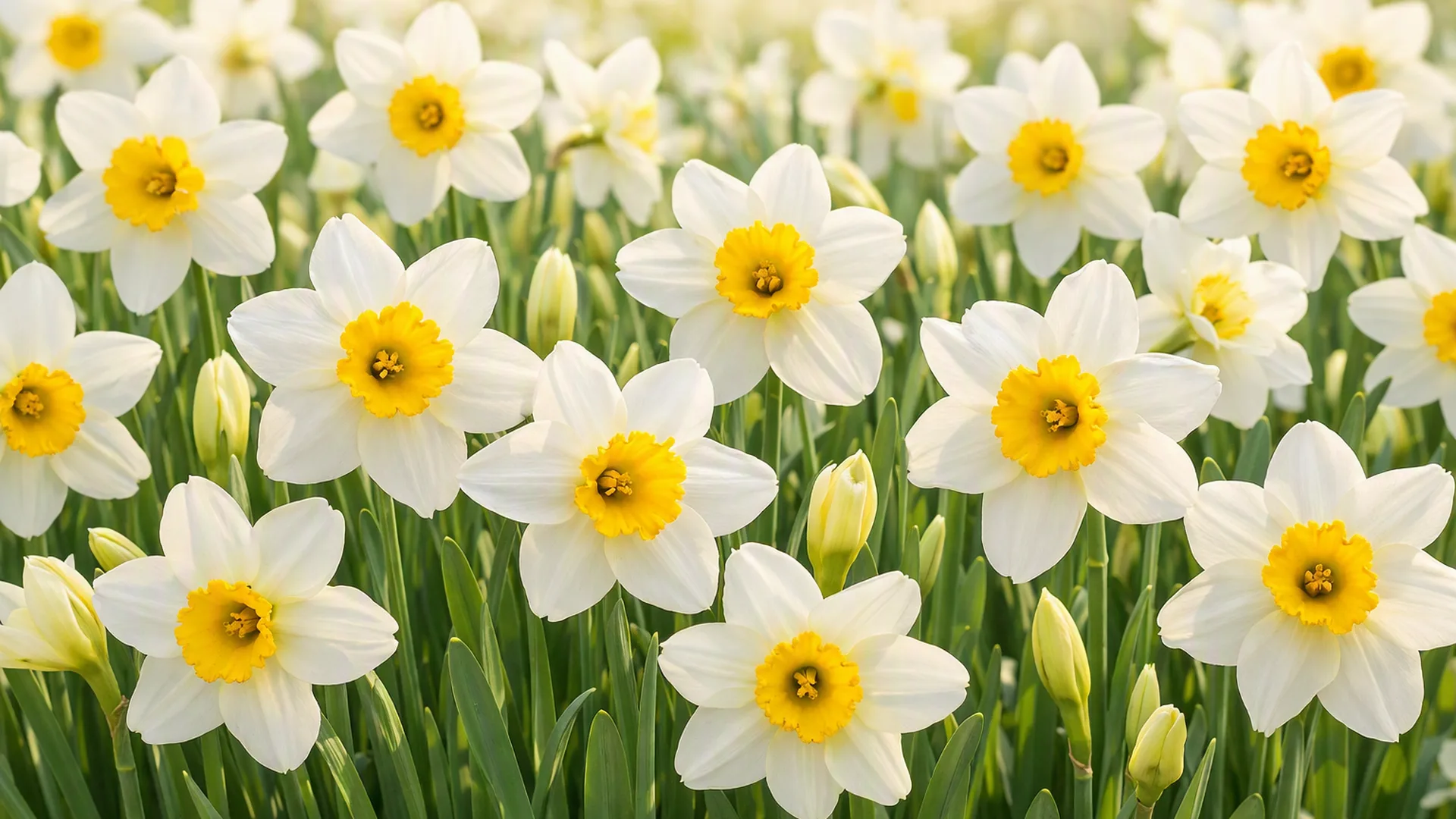
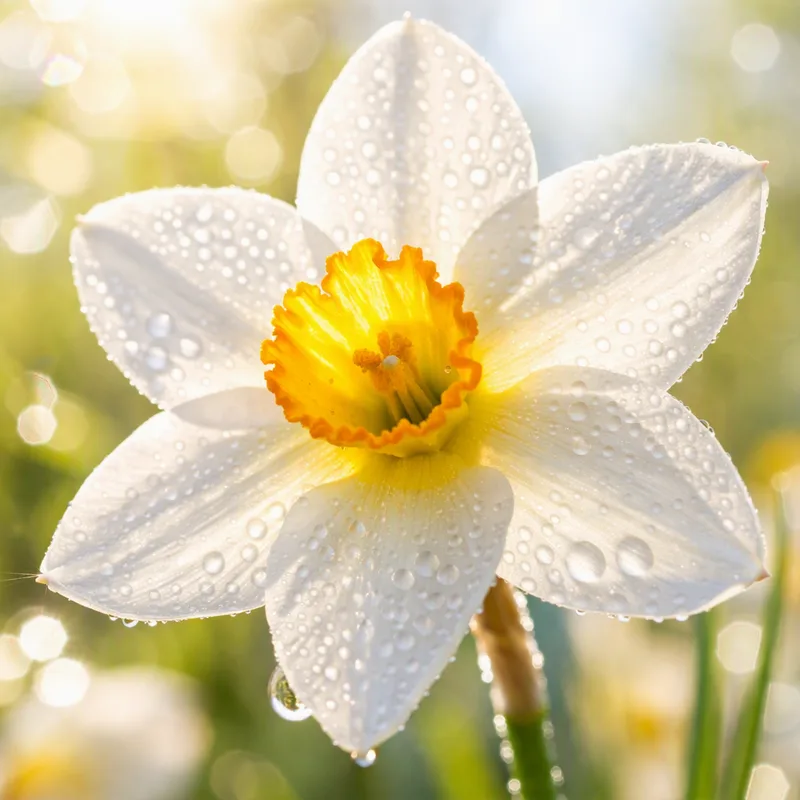
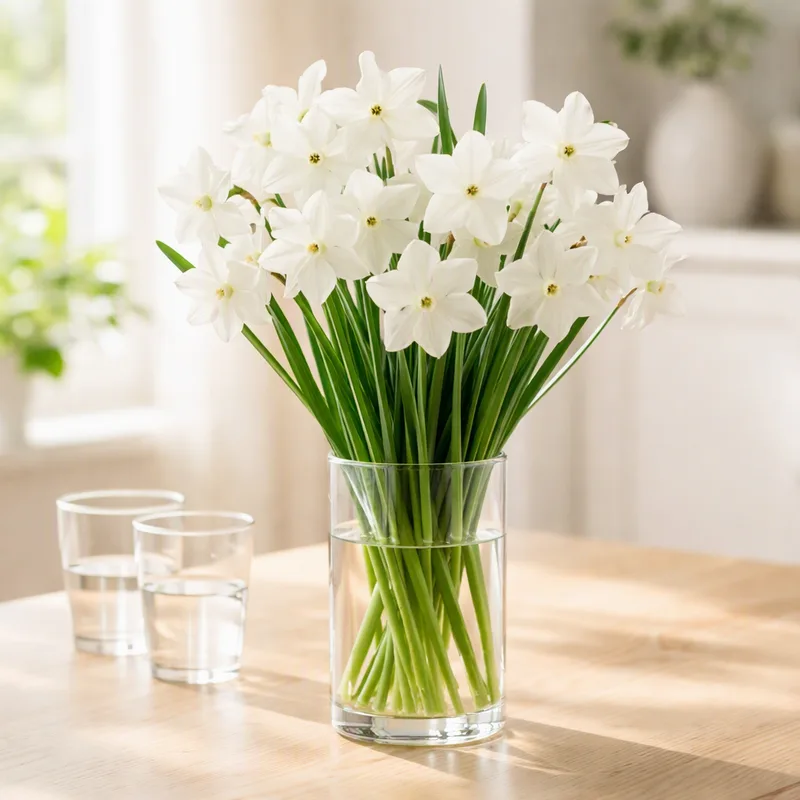
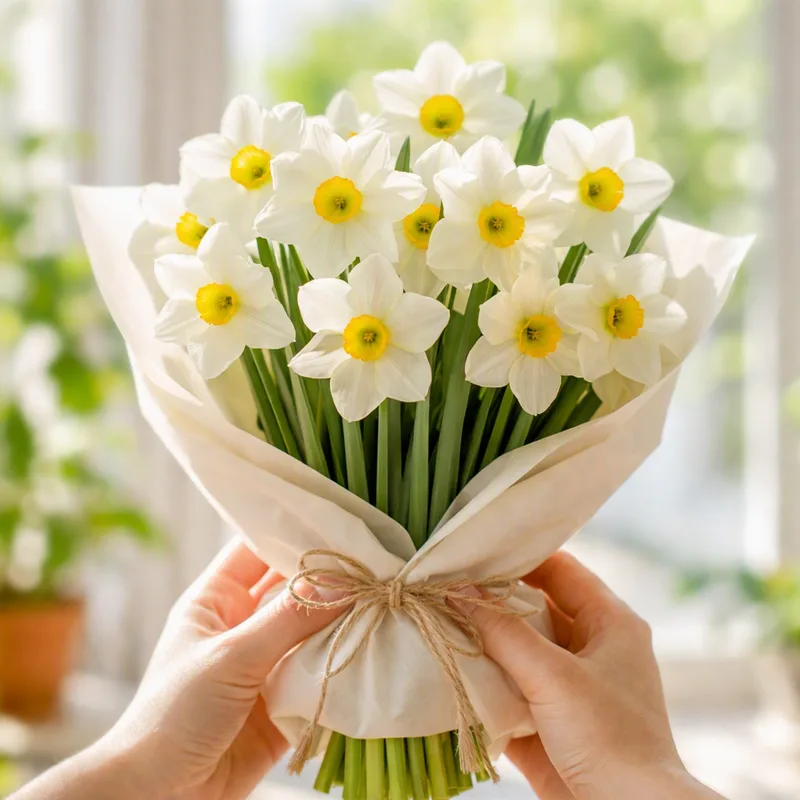
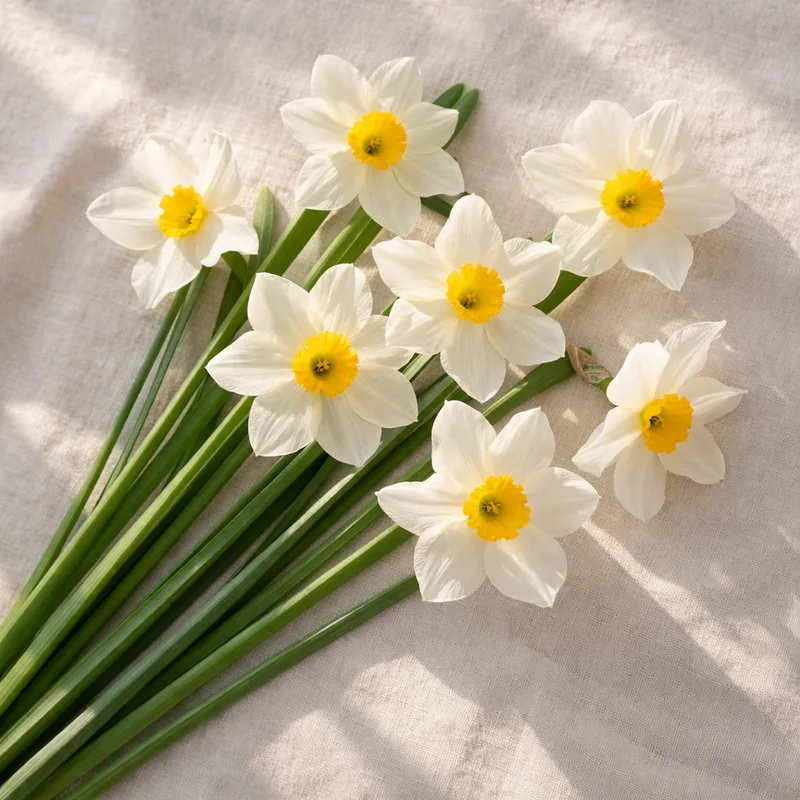
The wild daffodil, Narcissus pseudonarcissus, has pale yellow tepals and a deeper yellow trumpet. Wikipedia describes the tepals as pale yellow rather than white, so a pure white wild daffodil is not what the species looks like.
What white means here
Gardeners looking for white daffodils are usually choosing between several things:
- The pale, cream-toned forms, close to the wild look, with cream petals and a yellow trumpet.
- Bicolour garden types whose petals are white and whose trumpet is yellow.
- Fully white cultivars, which are hybrids and not the wild plant.
- Paperwhites and other tazetta narcissi, which are a different group in the same genus.
Search results for white daffodil flower meaning often lead to these garden forms. In the language of flowers, daffodils are linked with new beginnings, and white is often read as a symbol of purity.
Planting pale daffodils
Choose a place with sun in winter and a little shade in summer. Plant bulbs in autumn, March to May, in grass or under deciduous trees. In cool regions such as the Southern Highlands, Tasmania and the Victorian high country they return year after year. In warm areas, bulbs need extra chilling or short-term treatment as annuals.
Pale beside gold
A drift of pale flowers beside classic yellow ones gives depth. Plant in groups of at least a dozen for effect.
Bulbs, animals and pale petals
The ASPCA ranks daffodils as toxic for dogs, cats and horses; the bulb is the most dangerous part, so store and plant bulbs where animals cannot dig them up.