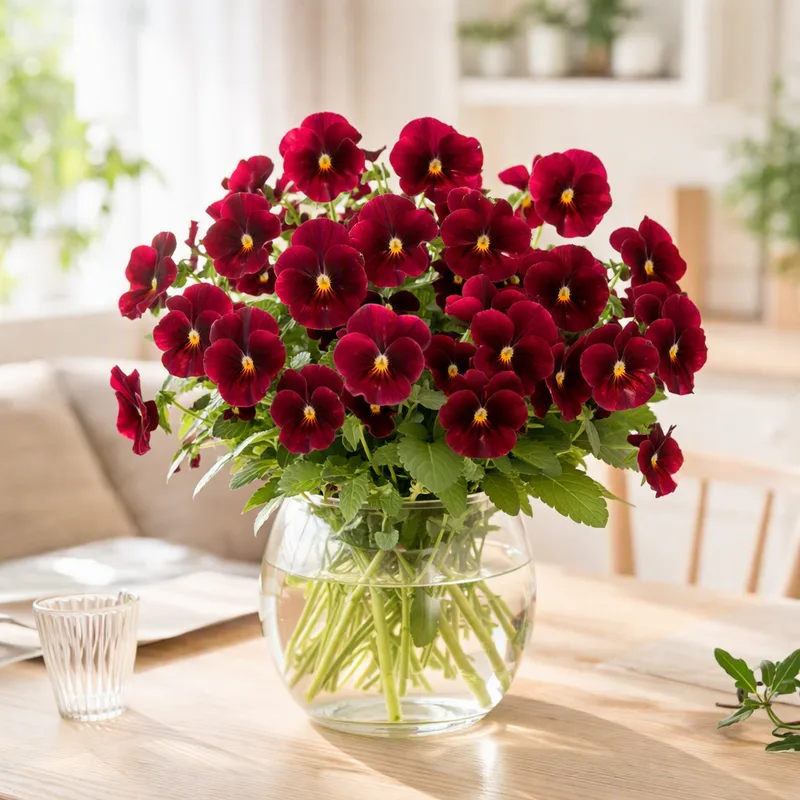
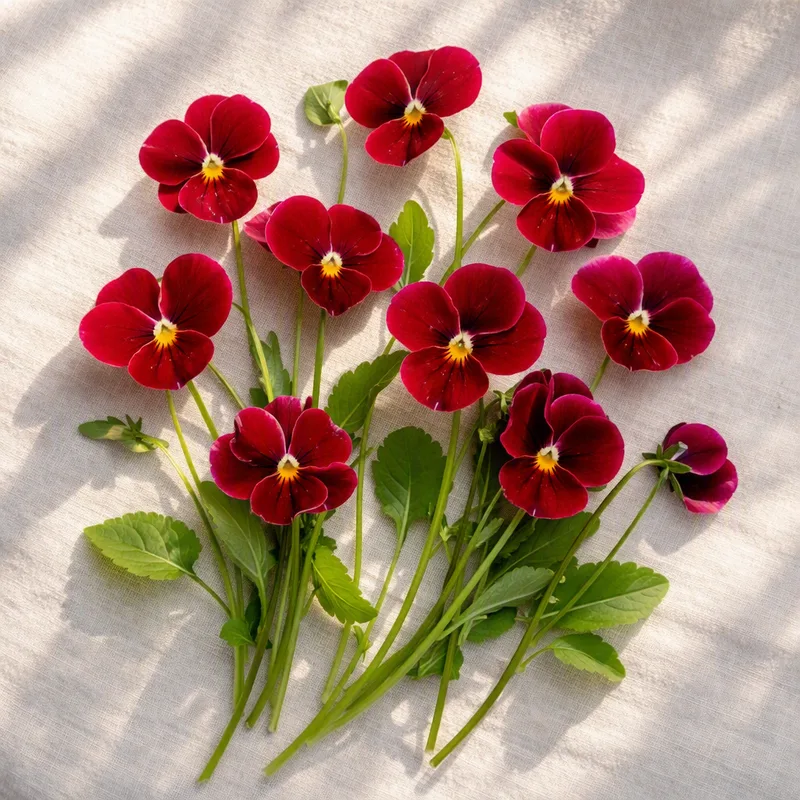
Is there a red violet?
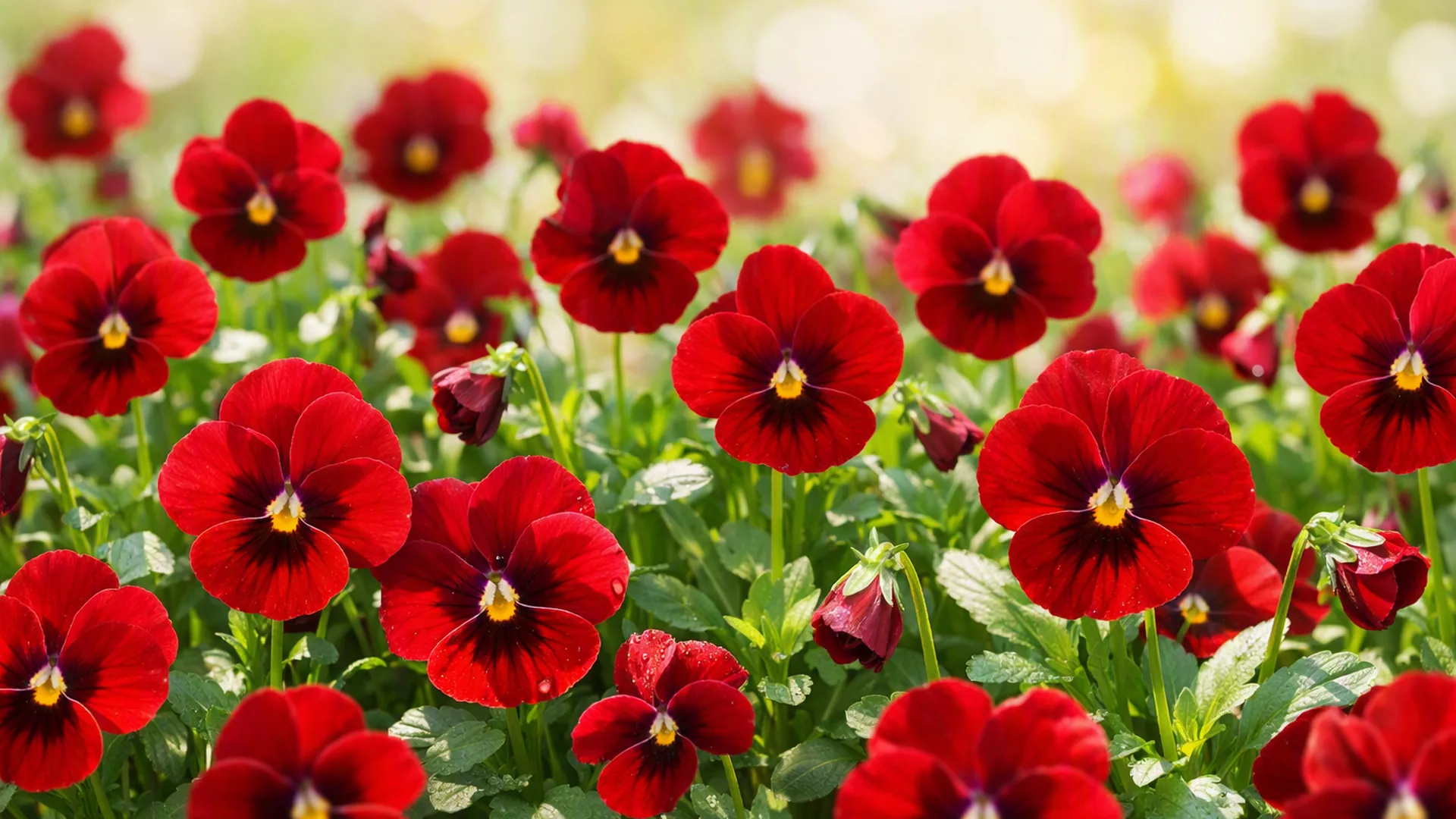
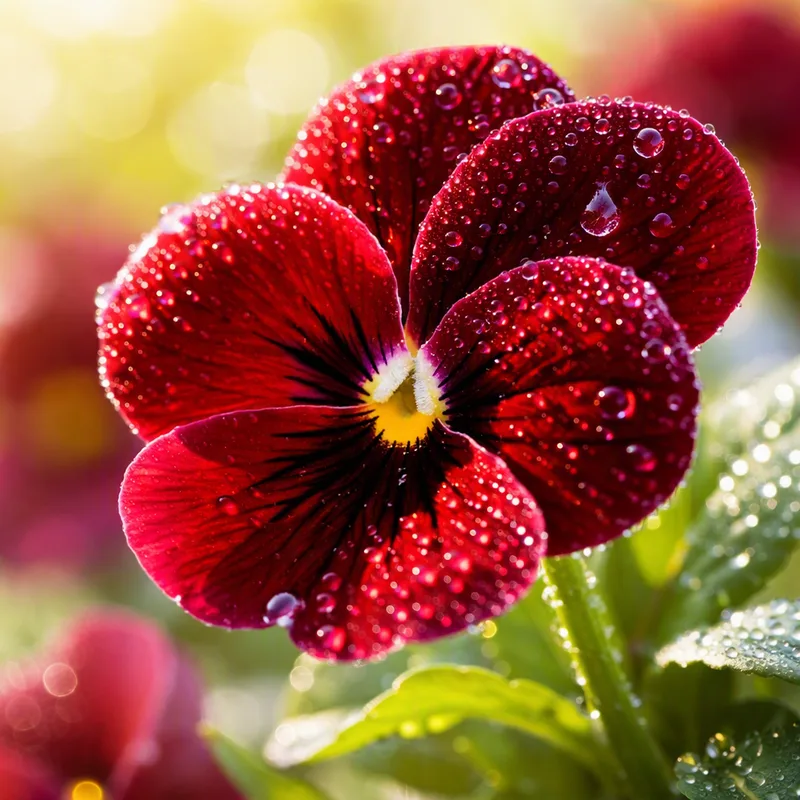
True scarlet is not a typical colour in the genus Viola. What gardeners call red violas and pansies are usually deep wine, burgundy or crimson shades, often with a dark blotch in the middle. Wild violets run from violet-blue to white and yellow.
Bringing deep colour to the garden
- Plant in autumn, between March and May, in sun to part shade.
- Pair burgundy violas with silver foliage for strong contrast.
- Pinch off faded flowers to extend flowering into spring.
- Water consistently, since small root systems dry out fast in warm winds.
Where they work best
Red-toned violas suit pots, window boxes and the edges of garden beds. In Melbourne, Hobart and Canberra, they flower strongly through the cool months. In Brisbane and coastal Sydney, they last until the first run of hot days. In the tropics, they struggle, and heat-tolerant flowers are a better choice.
What red adds
Violets in general traditionally stand for faithfulness and modesty. A deep red tone suggests warmth and devotion, but there is no fixed tradition behind red violets specifically.
Pansies and violas also self-seed, so a few plants can fill a bed within a season or two. Pull out unwanted seedlings early if you want to keep control, and replace tired plants with fresh ones each autumn.
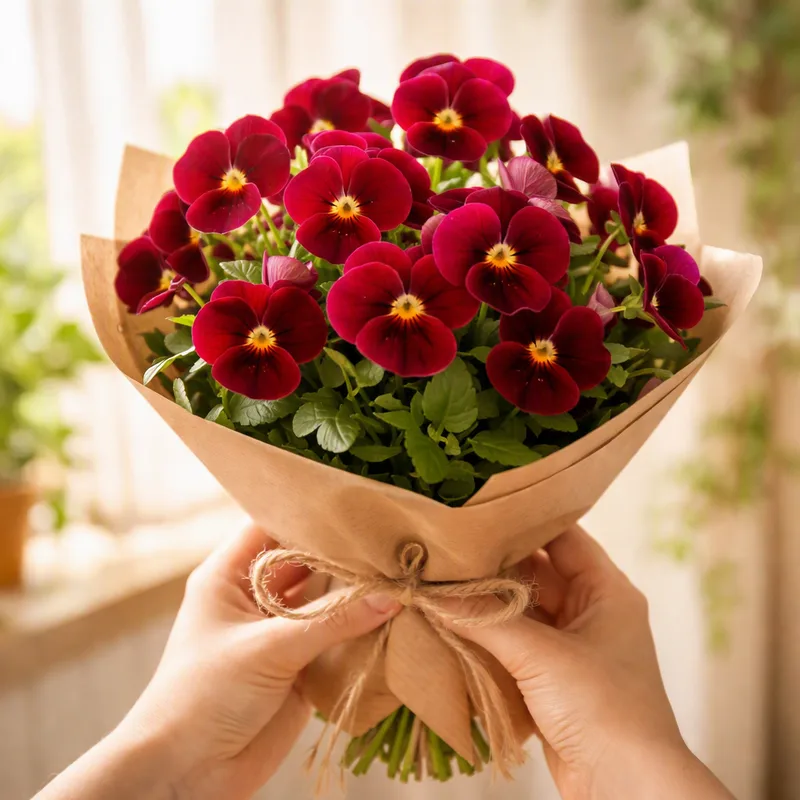
A posy of violas
A tiny posy of violas in an egg cup looks charming. Cut stems short, stand them in cool water and keep them out of strong sun.