Why white is the favourite
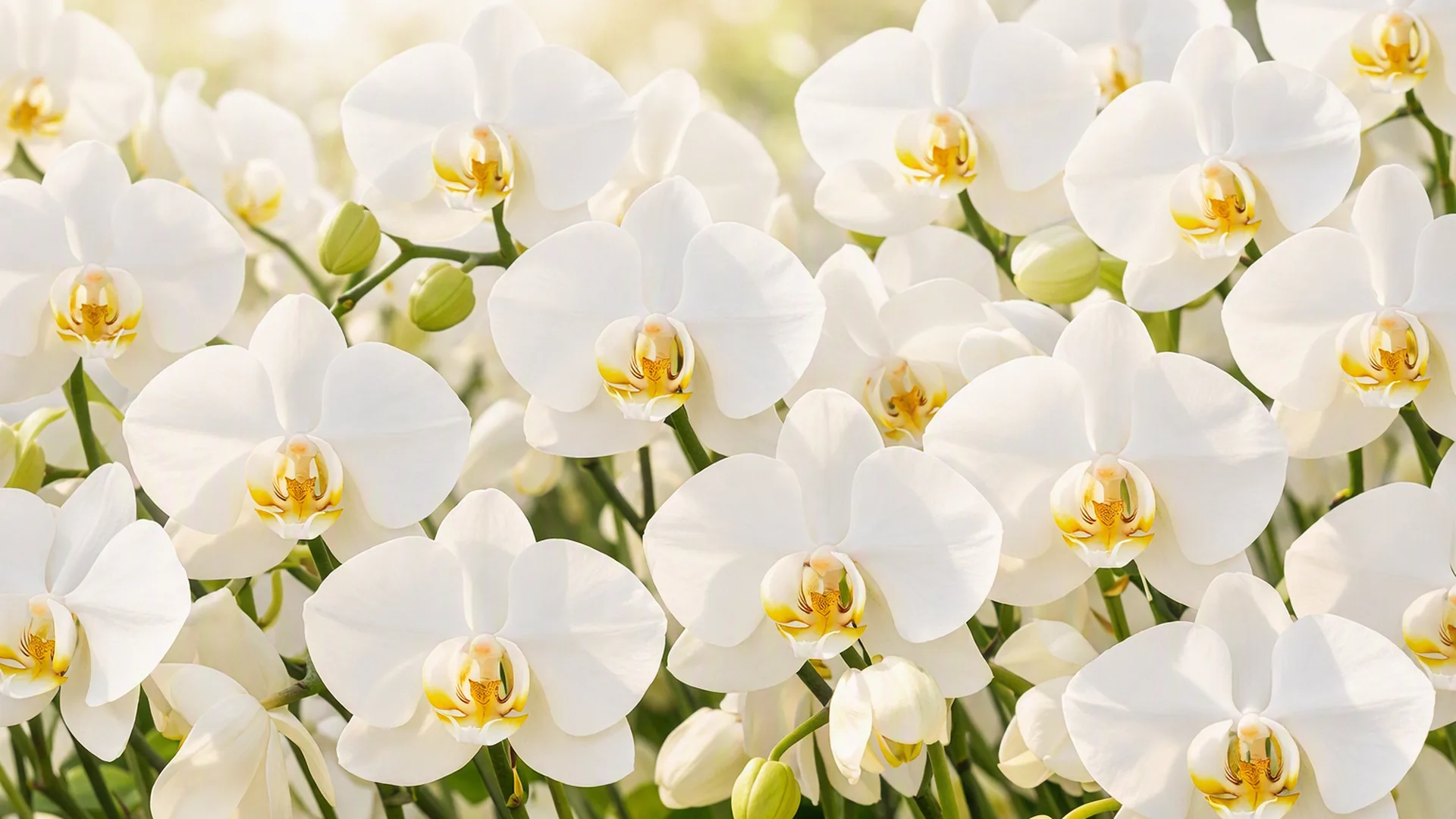
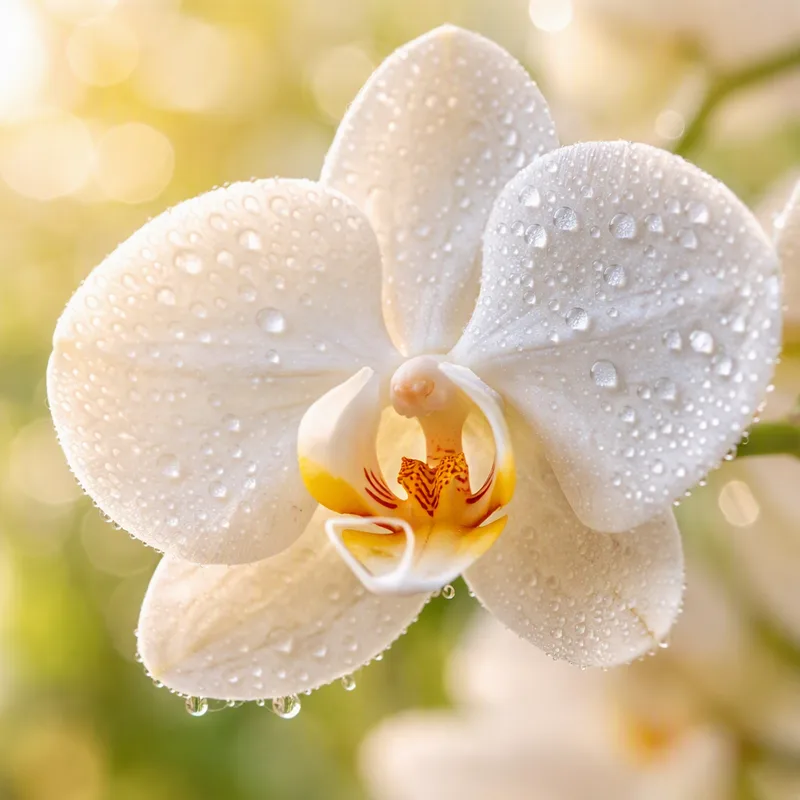
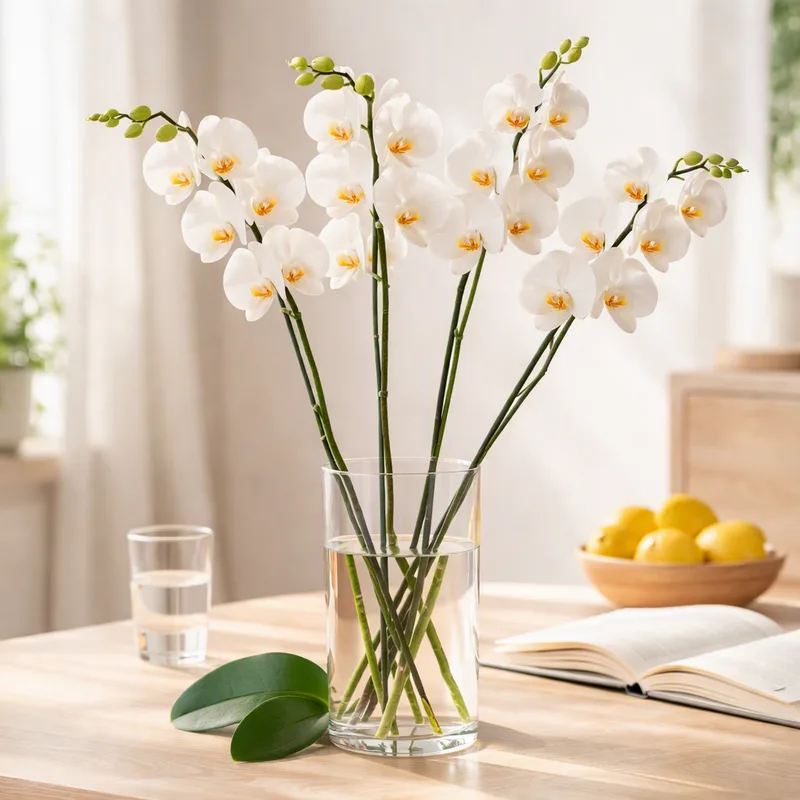
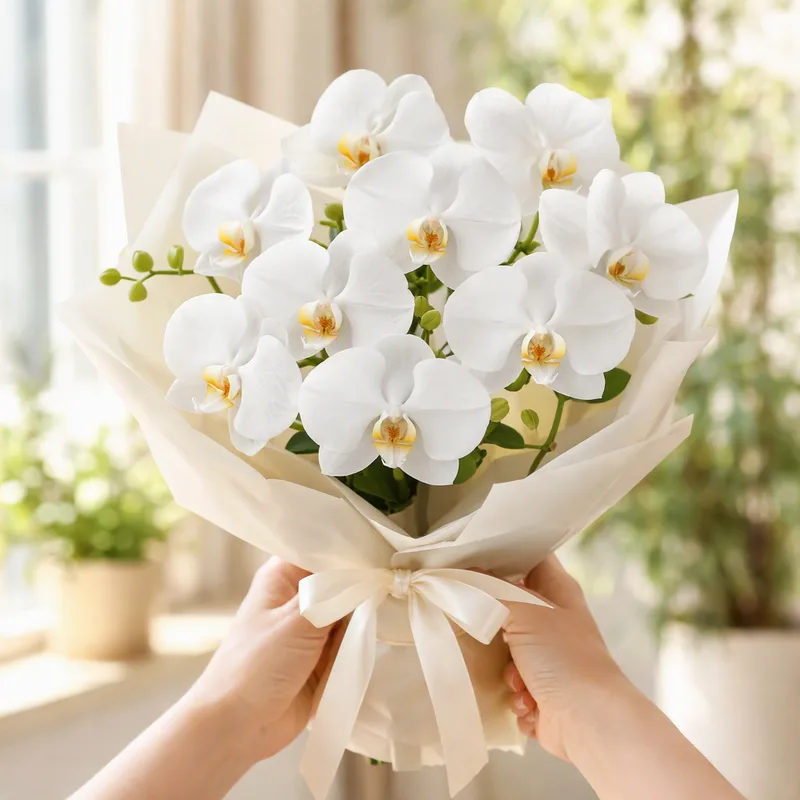
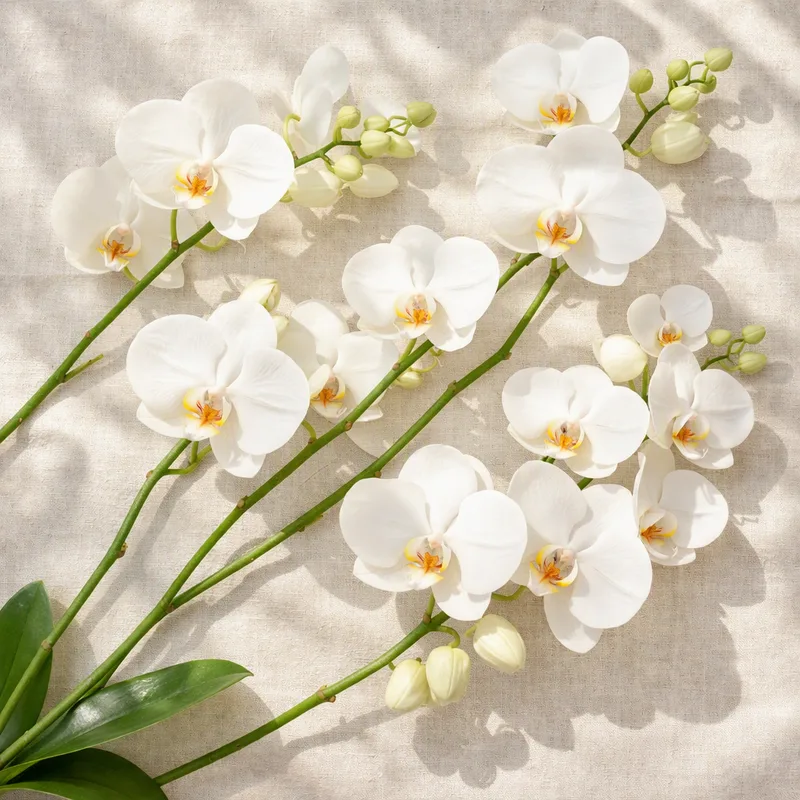
A white phalaenopsis suits almost any room because the flowers pick up whatever tone is around them. Many carry a small yellow or pink blush in the throat of the lip, so two plants labelled white can look quite different side by side. In the language of flowers, white orchids are traditionally linked with purity, elegance and respect, which is why they turn up at weddings, christenings and funeral tributes alike.
Everyday care for white a moth orchid
The roots are the key. They are thick, silvery and made to cling to a tree, so they need air and a quick-draining bark mix. In an Australian house that usually means:
- a bright spot with no harsh midday sun on the leaves;
- water about once a week in the warmer months, less when the weather cools, and only when the roots have turned from green to silver;
- no standing water in the cover pot;
- a weak orchid feed every second watering while it is growing.
Southern states have a cold-weather risk indoors. A sill beside a single pane in a Melbourne or Hobart July is the quickest way to lose buds, while a hot north-facing window in Brisbane in January can cook them.
After the last flower drops
White flowers can last two months or more. Cut a green spike back to a node and you may get side flowers; a spike that has gone brown is removed at the base. Some growers put the plant in a cooler room for a few weeks in autumn to nudge a new spike along.
Keeping pets safe around white a moth orchid
Moth orchids are generally listed as non-toxic to cats and dogs. They are still plants, so keep the pot where small hands and paws will not shred it.