A spectrum rather than one shade
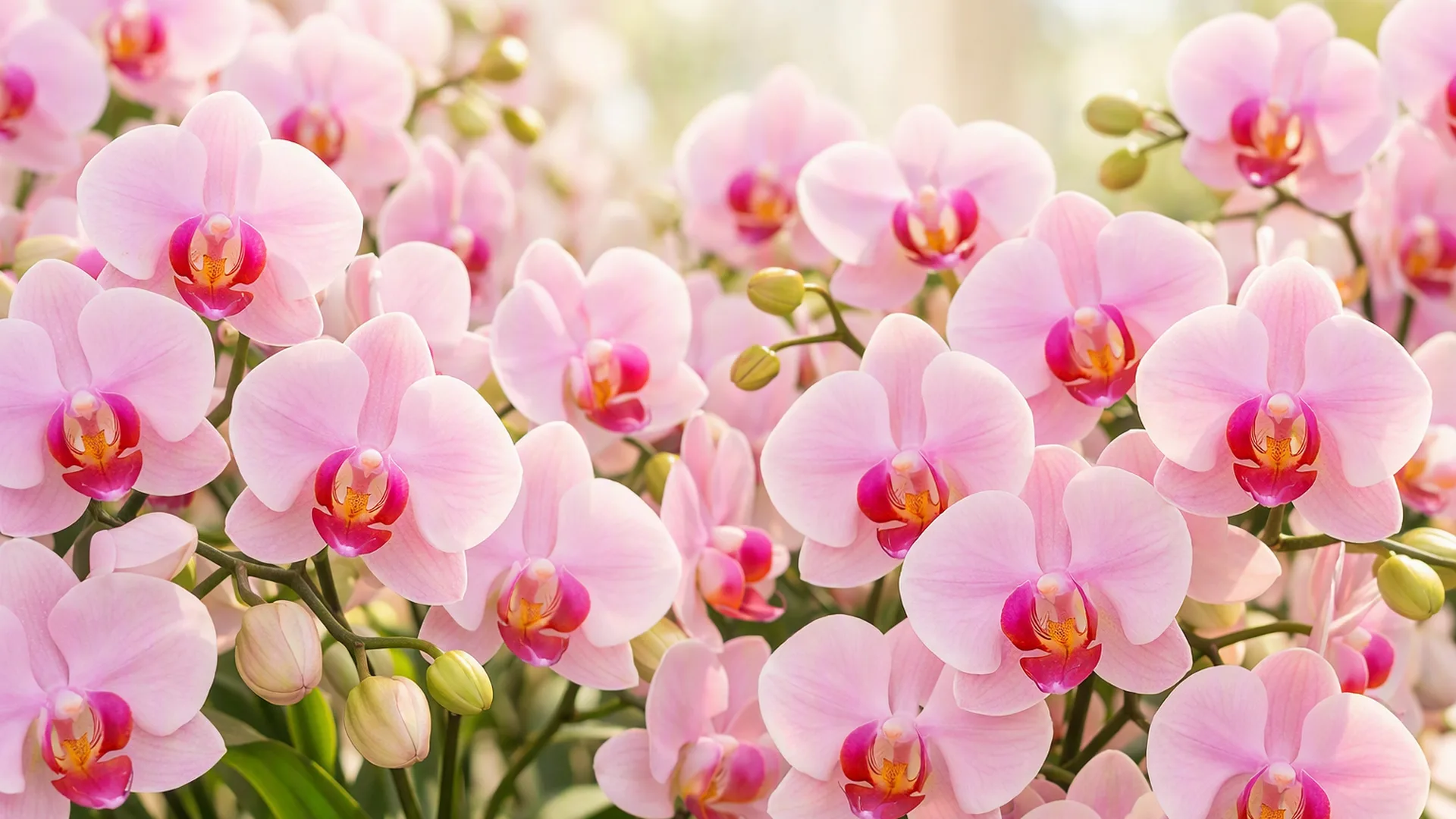
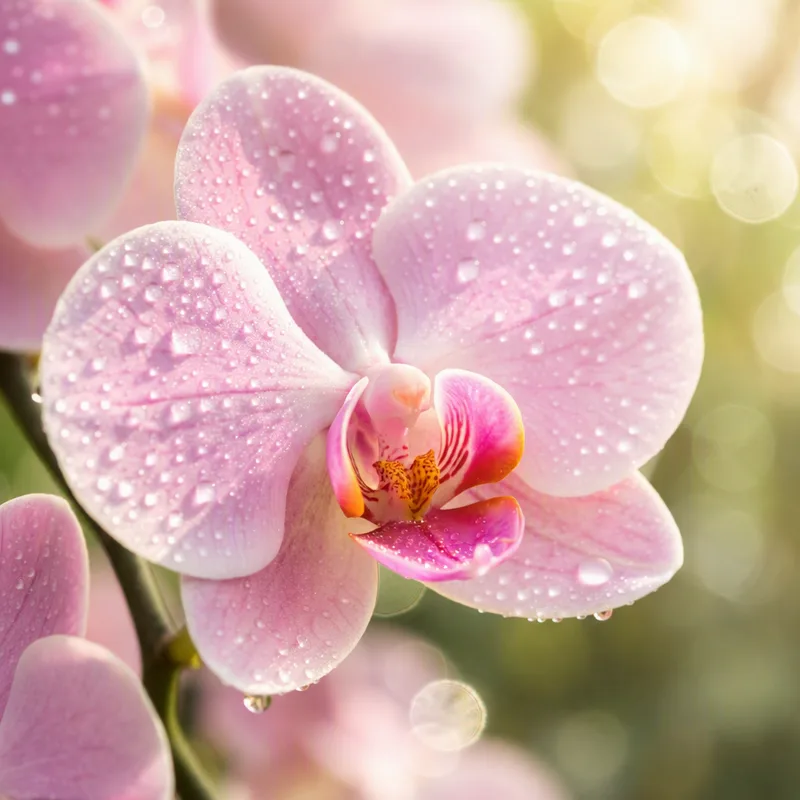
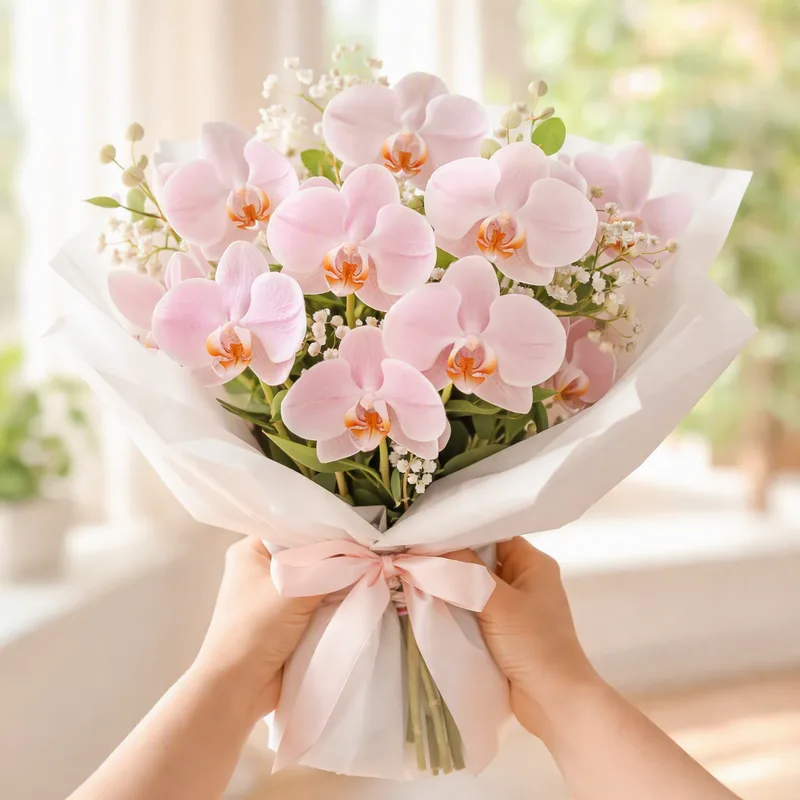
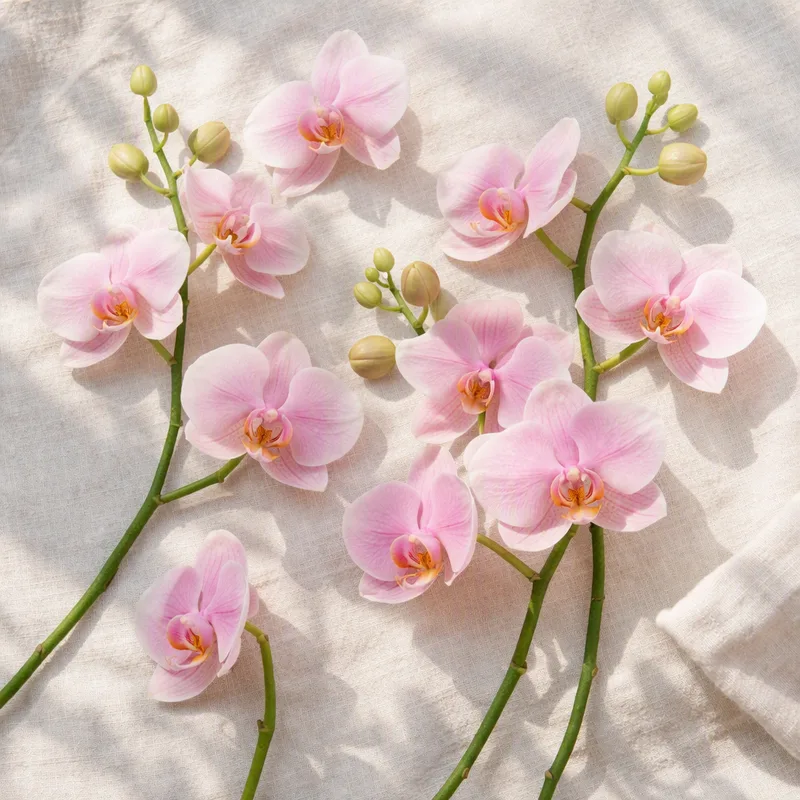
Pink phalaenopsis run from nearly white with a flush at the edges to vivid fuchsia, and some are striped or spotted. Because breeders have worked on pink for so long, it is the colour where you will find the most variety in size, spike length and petal shape. Traditionally, pink stands for gentleness, gratitude and admiration, which is why it is a common pick for Mother's Day on the second Sunday of May, when the weather is turning cool.
Autumn care for a May gift
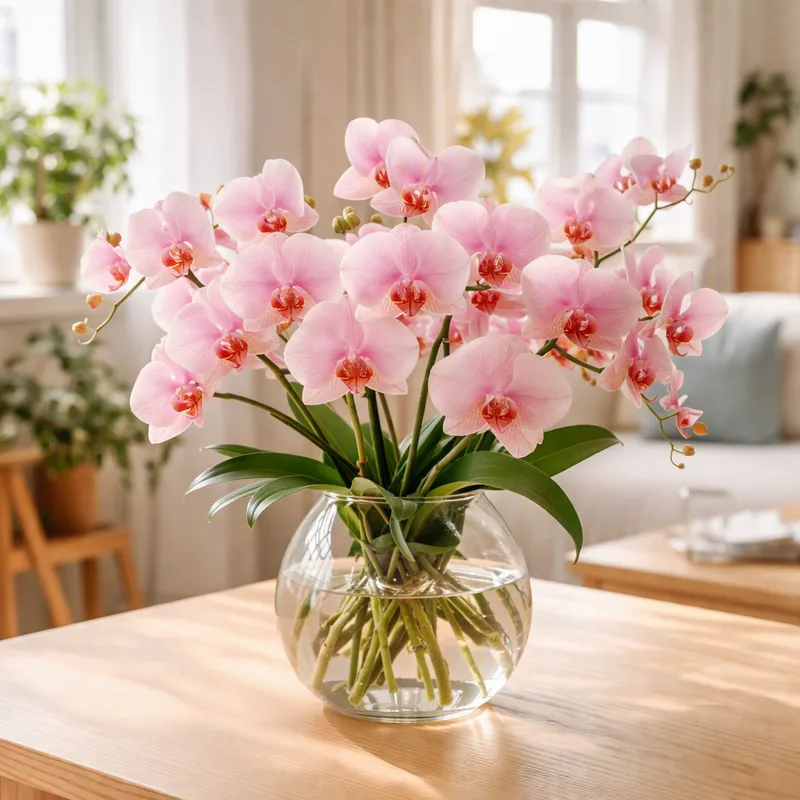
A plant received in May has a few things to avoid. Cool-night draughts near windows can drop buds, and heaters dry the air quickly. Keep it in a bright room, a little away from the glass, and water only when the roots look silvery.
- Pot: clear plastic inside a decorative cover, emptied after watering.
- Mix: orchid bark, which drains quickly and lets air reach the roots.
- Feed: a diluted orchid fertiliser every couple of weeks in the growing season.
Understanding the plant
The genus has about seventy species across Asia, New Guinea and Queensland. Wild plants live on trees, which is why the aerial roots should stay visible and never be buried or snipped off while they are plump and green.
When pink a moth orchid finishes blooming
Cut a green spike back to a node, or remove a brown spike at its base. Pink plants often rebloom within a year if they get good light and a short run of cooler nights in autumn.
The moth orchid is generally considered non-toxic to cats and dogs.