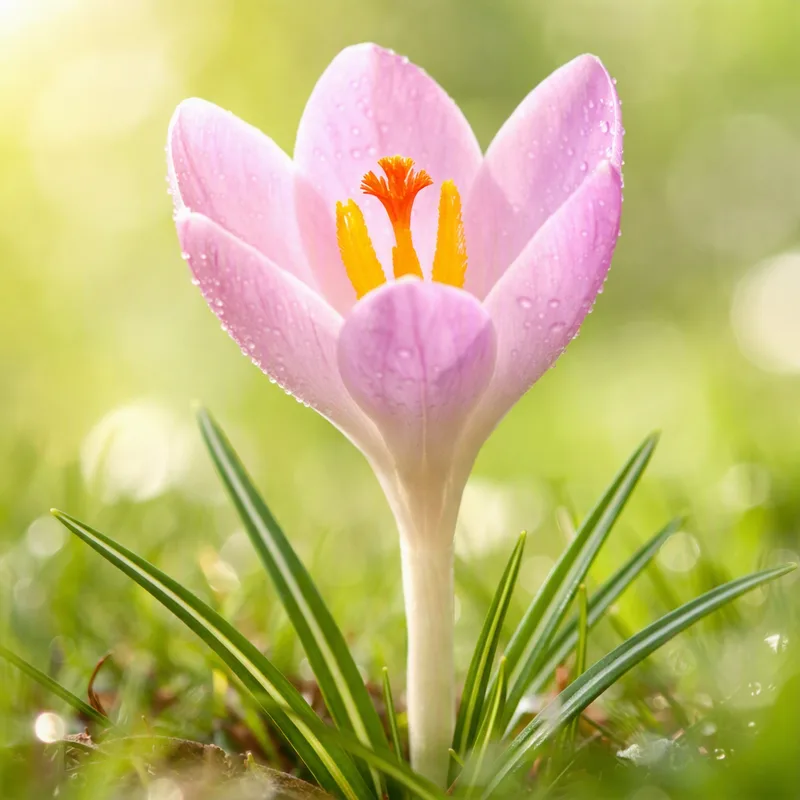


A softer shade of an old favourite
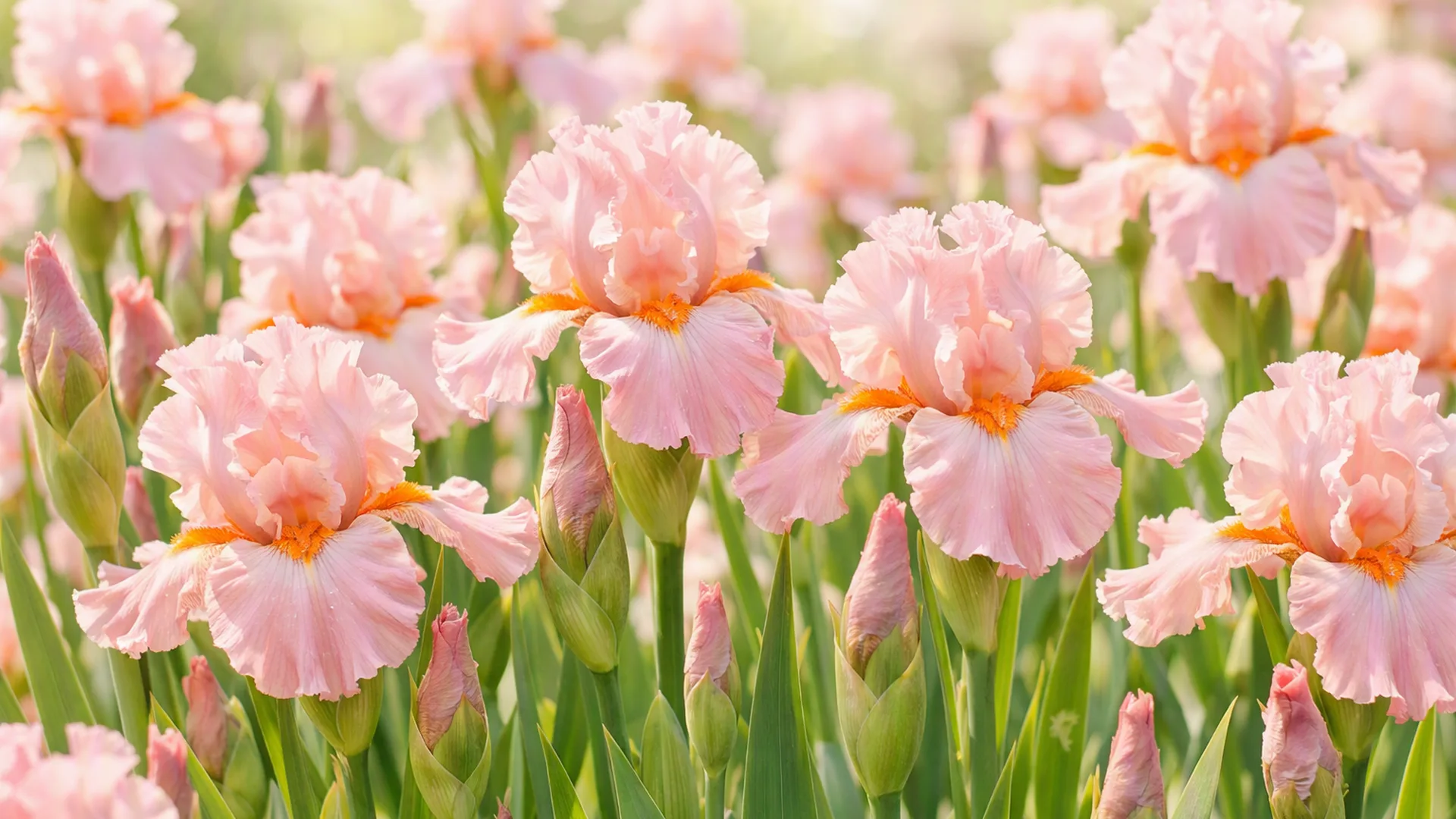
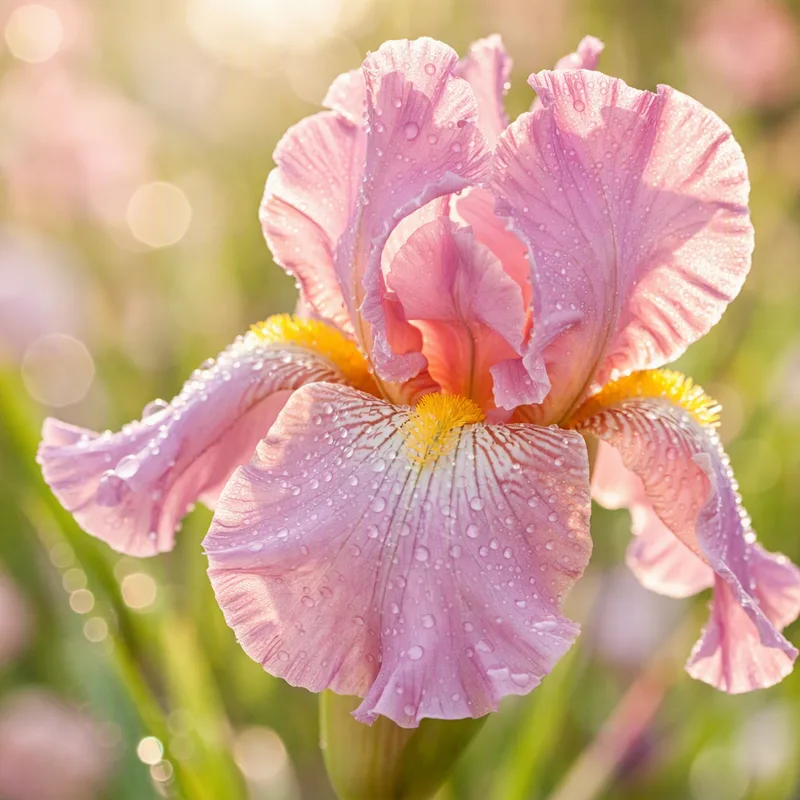
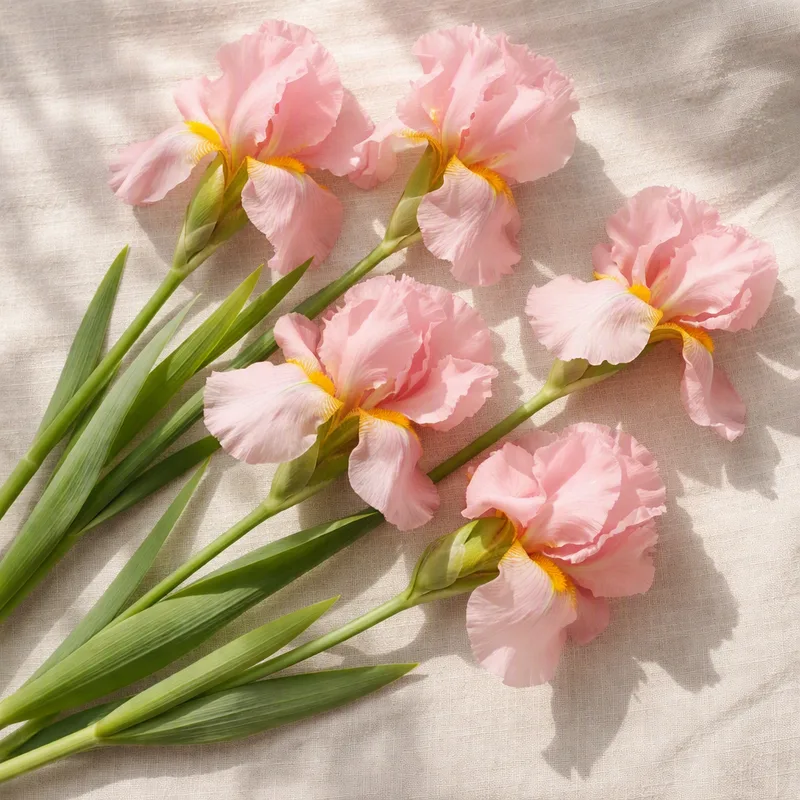
Pink in iris tends towards blush, orchid or salmon, often with a contrasting beard in orange or coral. Breeders have developed a surprisingly wide pink range in tall bearded irises, and Japanese irises include rose-pink and lavender-pink flowers on large, flat blooms.
Types and uses
- Tall bearded pinks flower on 70 to 90 cm stems and work at the back of a border.
- Border and dwarf bearded pinks suit pots and edges.
- Japanese pink irises prefer moist ground and suit pond edges.
- Pink Dutch irises are rarer and mainly grown as cut flowers.
Planting calendar
Bearded irises are planted or divided after flowering, in late summer or early autumn, with their tops exposed to the sun. Expect blooms between roughly September and November. Japanese irises prefer a spring planting and acid, humus-rich soil. Mulch lightly, but keep mulch off the rhizomes.
Wet summers and snails
Wet summer weather can bring soft rot, so improve drainage and remove diseased material. Snails and slugs chew the leaves in damp spells. Leaf spot appears as brown flecks on foliage and can be removed by cutting the affected tips.
Pink irises and pets
The ASPCA lists irises as hazardous for dogs, cats and horses. The rhizomes carry the most toxin, and signs include salivation, vomiting and diarrhoea.
If you grow pink irises in a pot, check drainage holes each spring and repot congested clumps. A crowded rhizome mat flowers less and rots more easily, particularly in humid coastal gardens where summer storms leave the soil wet for days. Add a handful of slow-release fertiliser low in nitrogen, since too much leafy growth means fewer flowers.