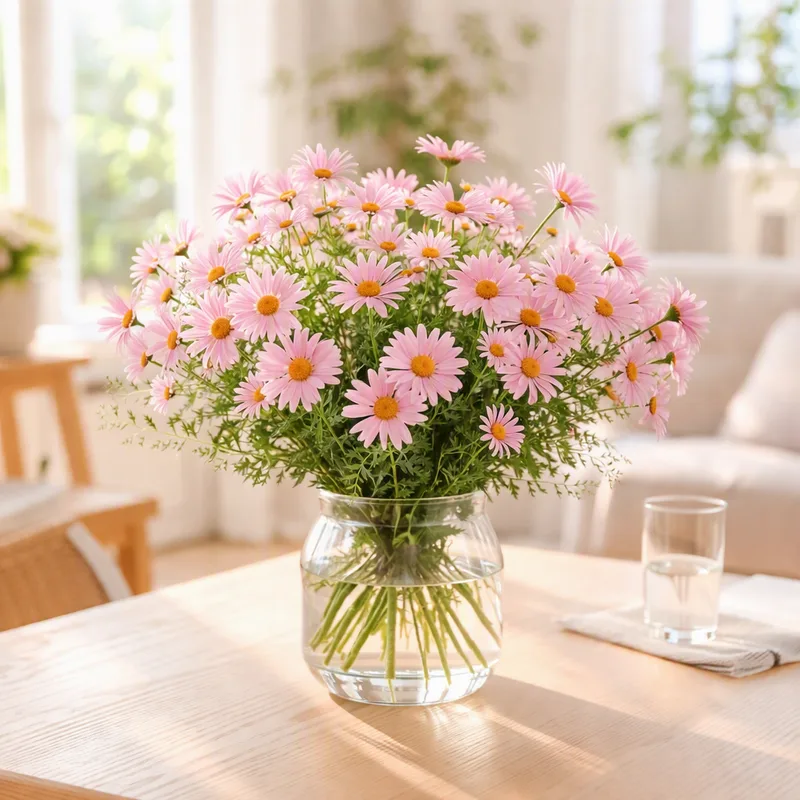
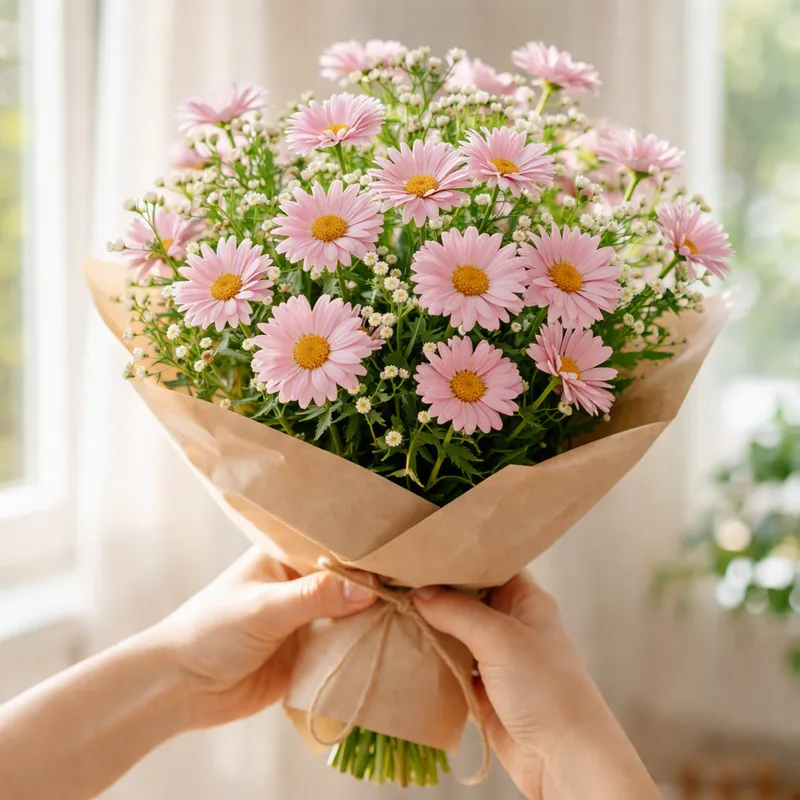
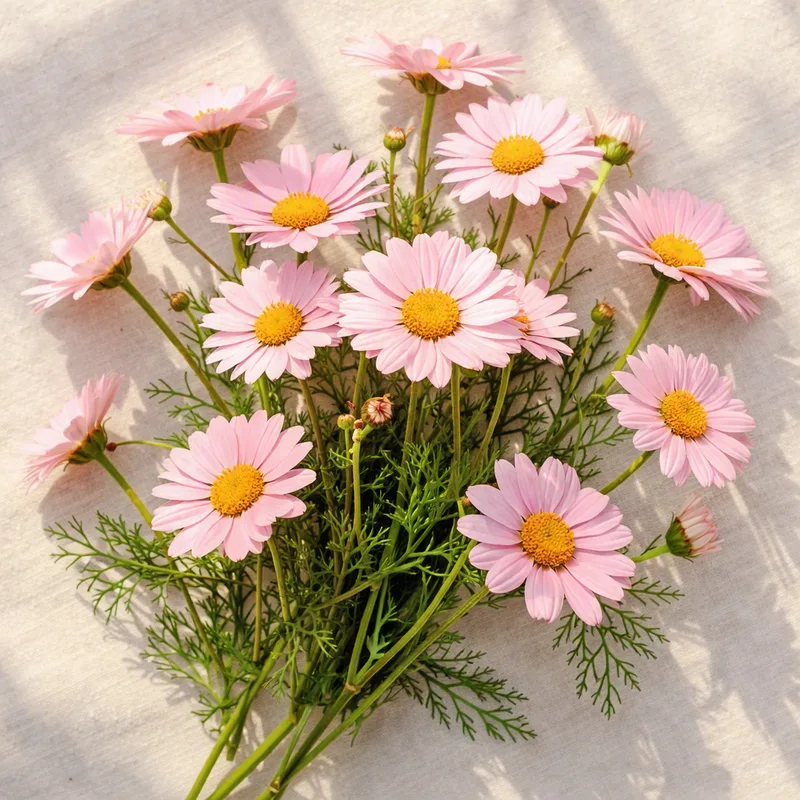
Soft pink and bright pink
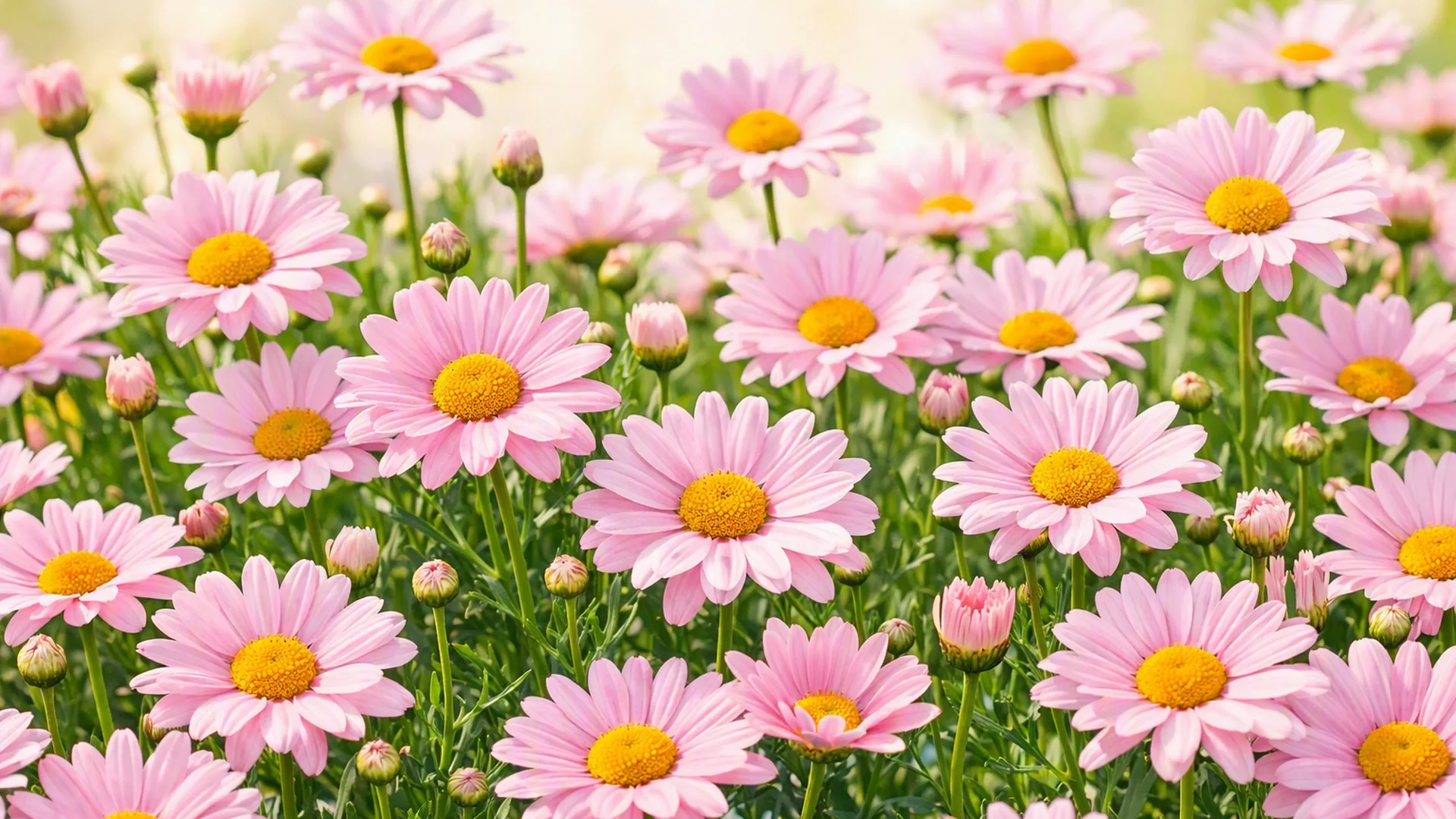
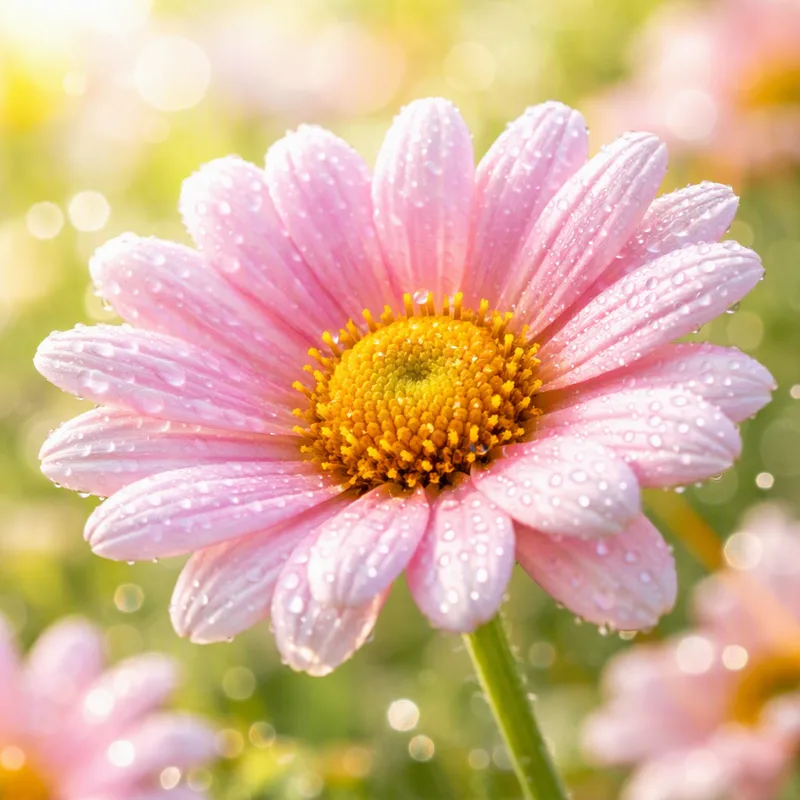
Pink is the most popular marguerite shade after white. The pale forms have petals the colour of icing sugar, and the deeper ones glow like candy. Each flower has a yellow centre, and some cultivars have double or fluffy heads. The plant is Argyranthemum frutescens, and breeders have created a long line of cultivars.
Pink daisies versus other pink daisies
When people search for "pink daisy flower" they may be looking at gerberas, osteospermums, pink English daisies (Bellis) or marguerites. The marguerite is the one that forms a woody bush up to about a metre tall and flowers on and off throughout the year.
Growing pink marguerite daisies the Australian way
- Sun for at least half of the day.
- Free-draining soil or good potting mix.
- Tip-prune regularly and cut back hard in autumn if leggy.
- Feed with a liquid fertiliser during the growing season.
Aphids and leaf miners sometimes attack, and a spray of soapy water or a squash by hand keeps numbers down.
Spots that suit pink daisies
They suit courtyards, balcony pots, cottage gardens and low hedges. In frost-prone regions grow them in pots that can move under cover, and in humid tropical climates expect shorter life.
Pink daisies traditionally stand for gentle affection and sweetness, which makes them a natural choice for birthdays and a little thank-you.
Pet safety around pink marguerite daisies
Daisy-family plants may cause vomiting or skin irritation in pets. Stop animals from chewing them and call a vet if they do.