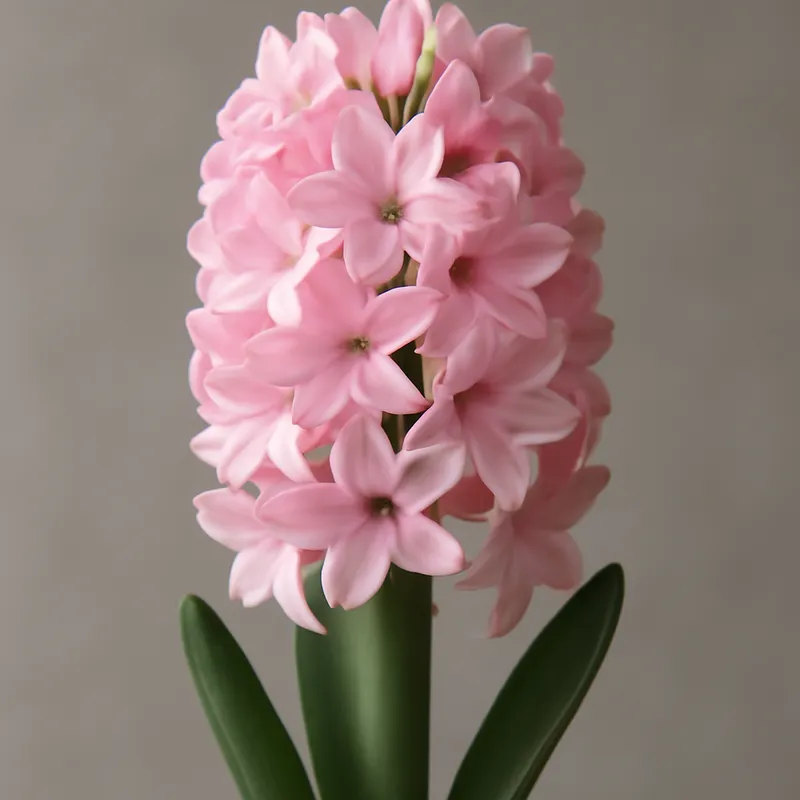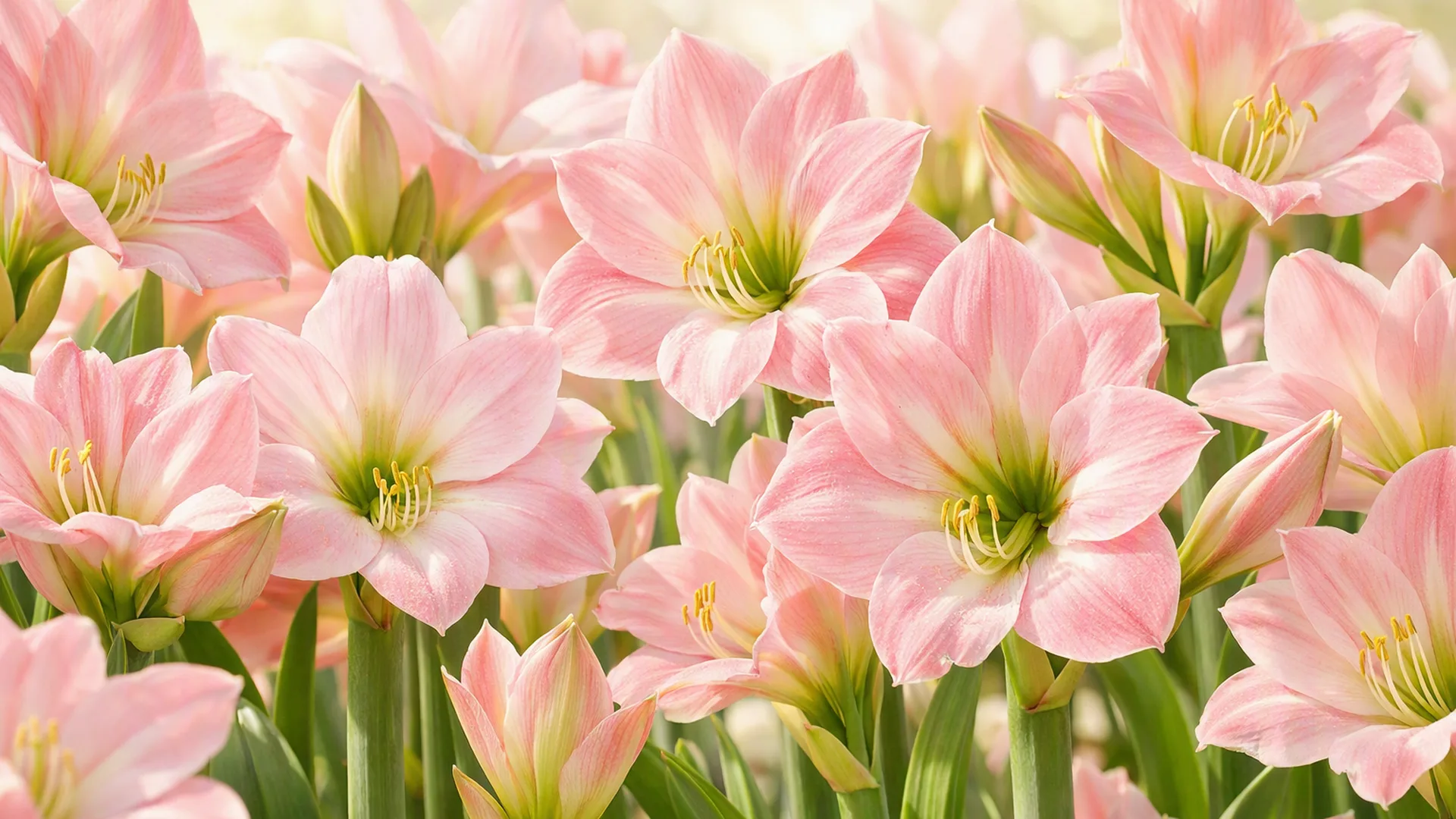
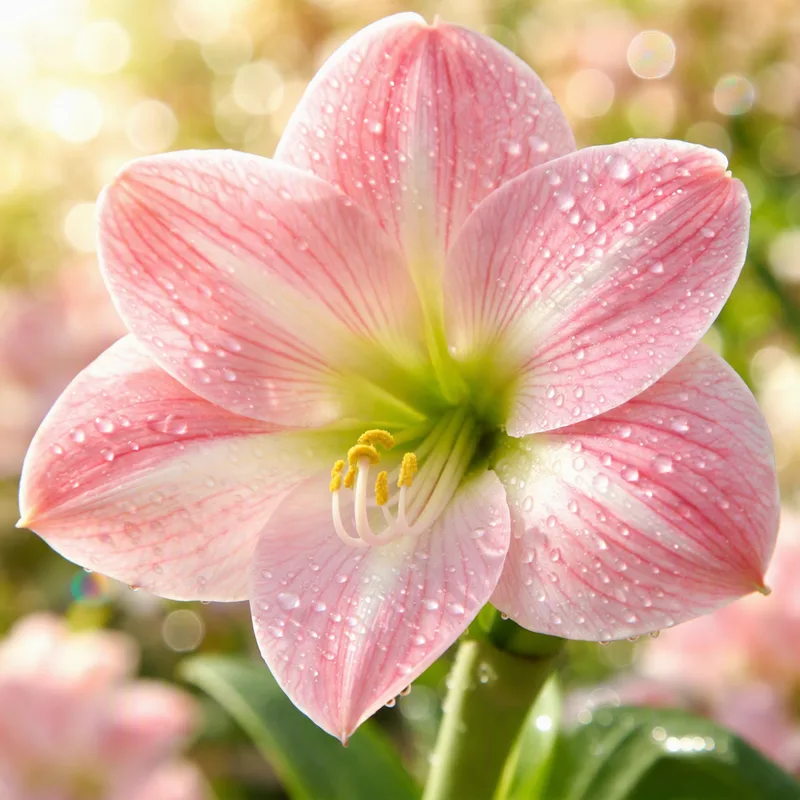
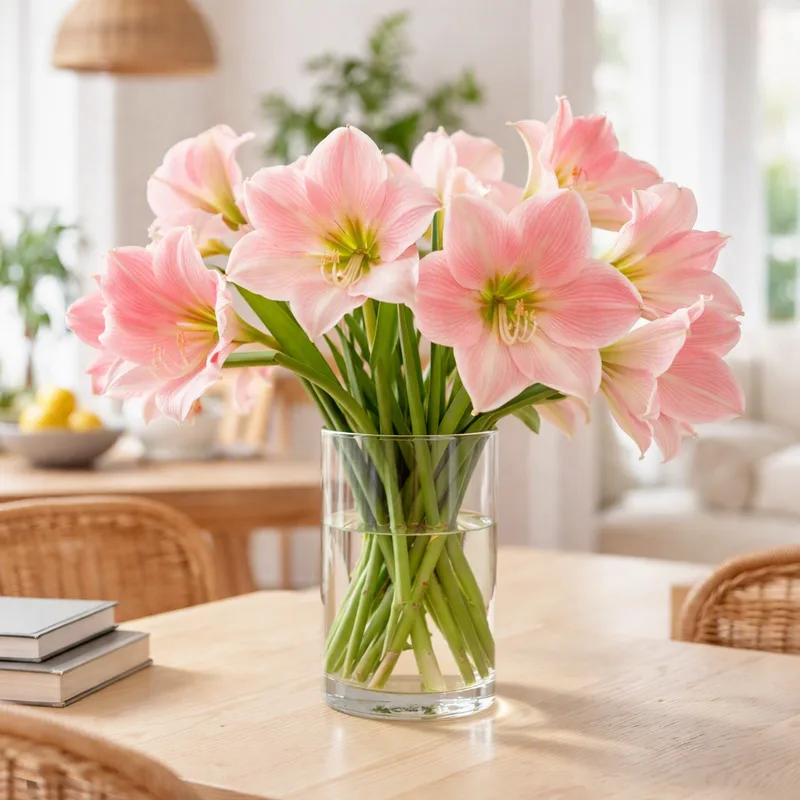
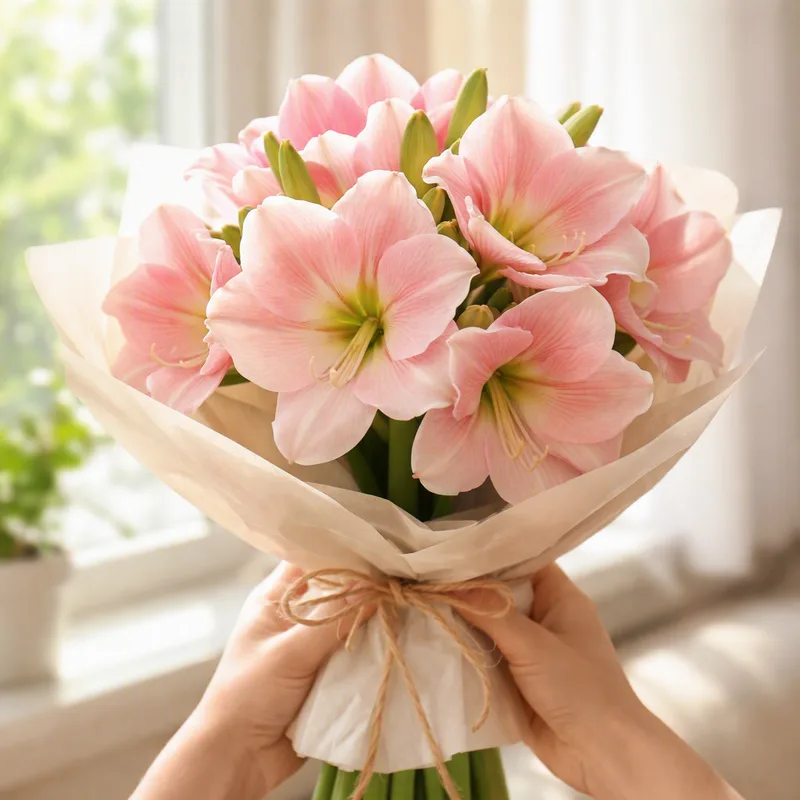
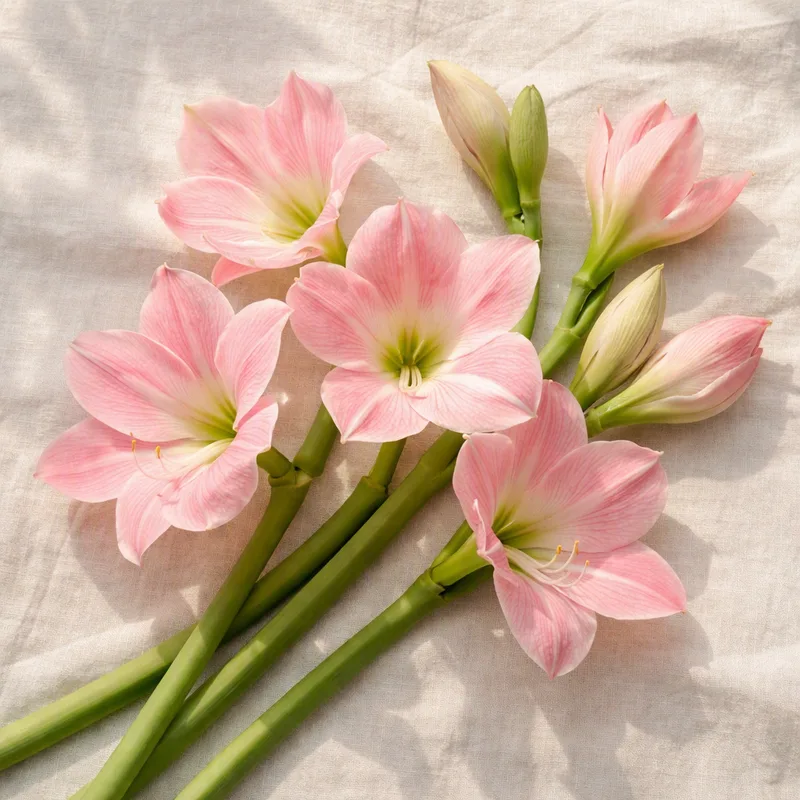
Two pink amaryllis
Pink is one of the most mixed-up shades in this group. A Hippeastrum hybrid in soft salmon or candy pink is a spring flower sold in pots. The wild-origin Amaryllis belladonna, called naked lady or Cape belladonna, carries scented pink trumpets on bare stems in autumn, around March and April. Gardeners across southern Australia know it as the flower that appears after the first autumn rain.
Pink amaryllis meaning
People often search for the meaning of a pink amaryllis. Amaryllis in general is linked to pride and radiant beauty, and pink softens that into gentle admiration, which makes it a kind gift between friends or for Mother's Day in May.
Growing pink amaryllis the Australian way
- Belladonna bulbs like hot, dry summers, baked soil and full sun.
- Hippeastrum prefers part shade in warm places and regular summer feeding.
- Both need well-drained ground; neither tolerates soggy clay.
- Plant bulbs with the neck at the surface.
Naked ladies do well in Perth, Adelaide and Melbourne, where the summers dry the bulbs naturally. They can clump up in old gardens and survive for decades.
Pet safety around pink amaryllis
Under the entry for Amaryllis spp., the ASPCA lists toxicity for dogs, cats and horses, naming lycorine and signs such as vomiting, diarrhoea, drooling and tremors. Cut stems in a vase are less of a risk than a chewed bulb, but both deserve to be kept clear of pets.
Keeping pink amaryllis fresh indoors
Stems last about a week. Cut them at an angle and use clean water. Because the stems are hollow, they can split, and a rubber band around the base prevents that.