
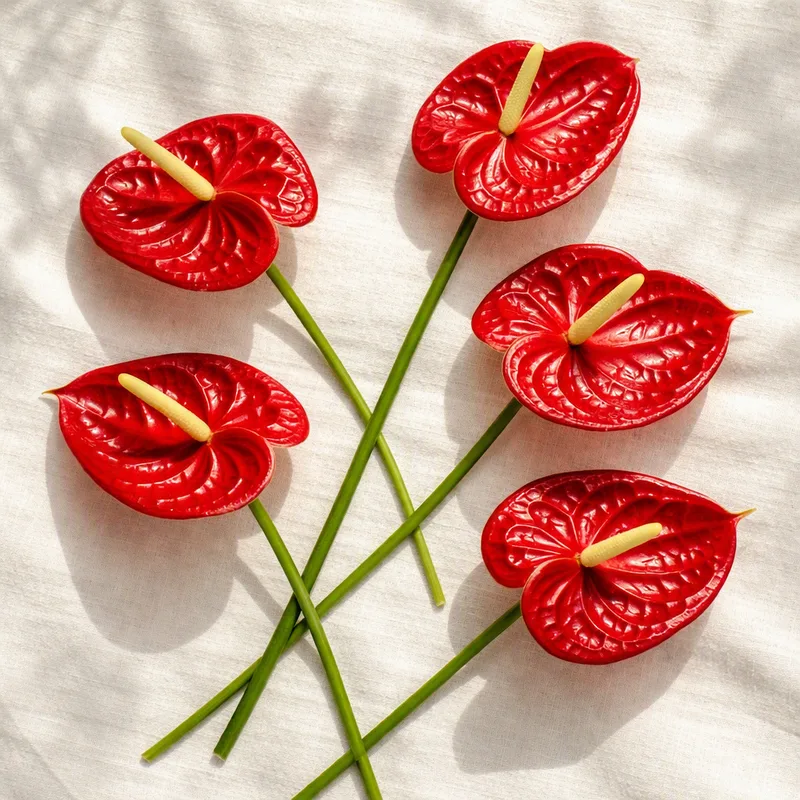
A flower that is really a leaf
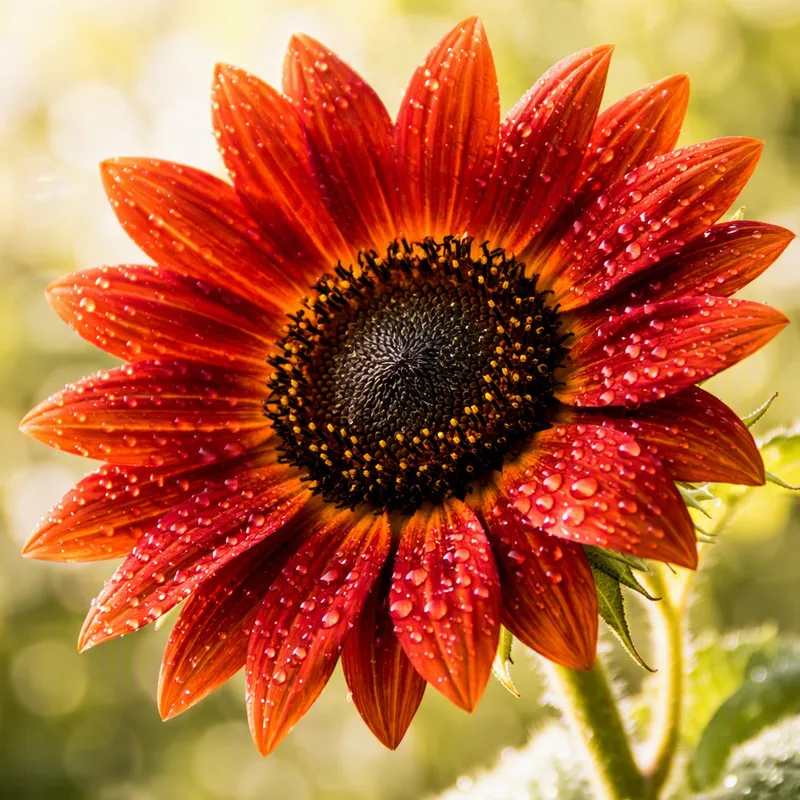
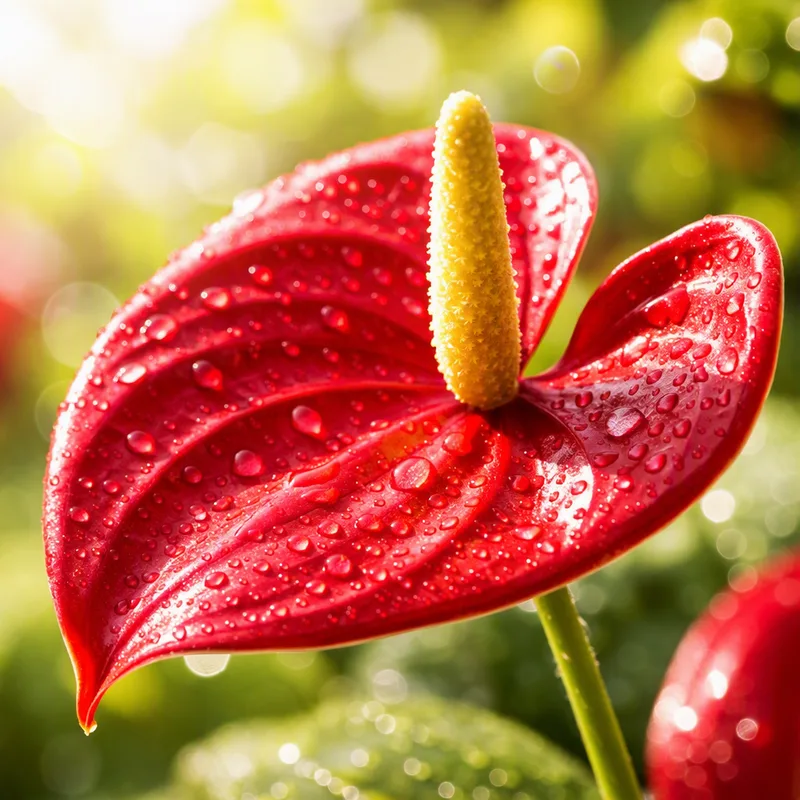
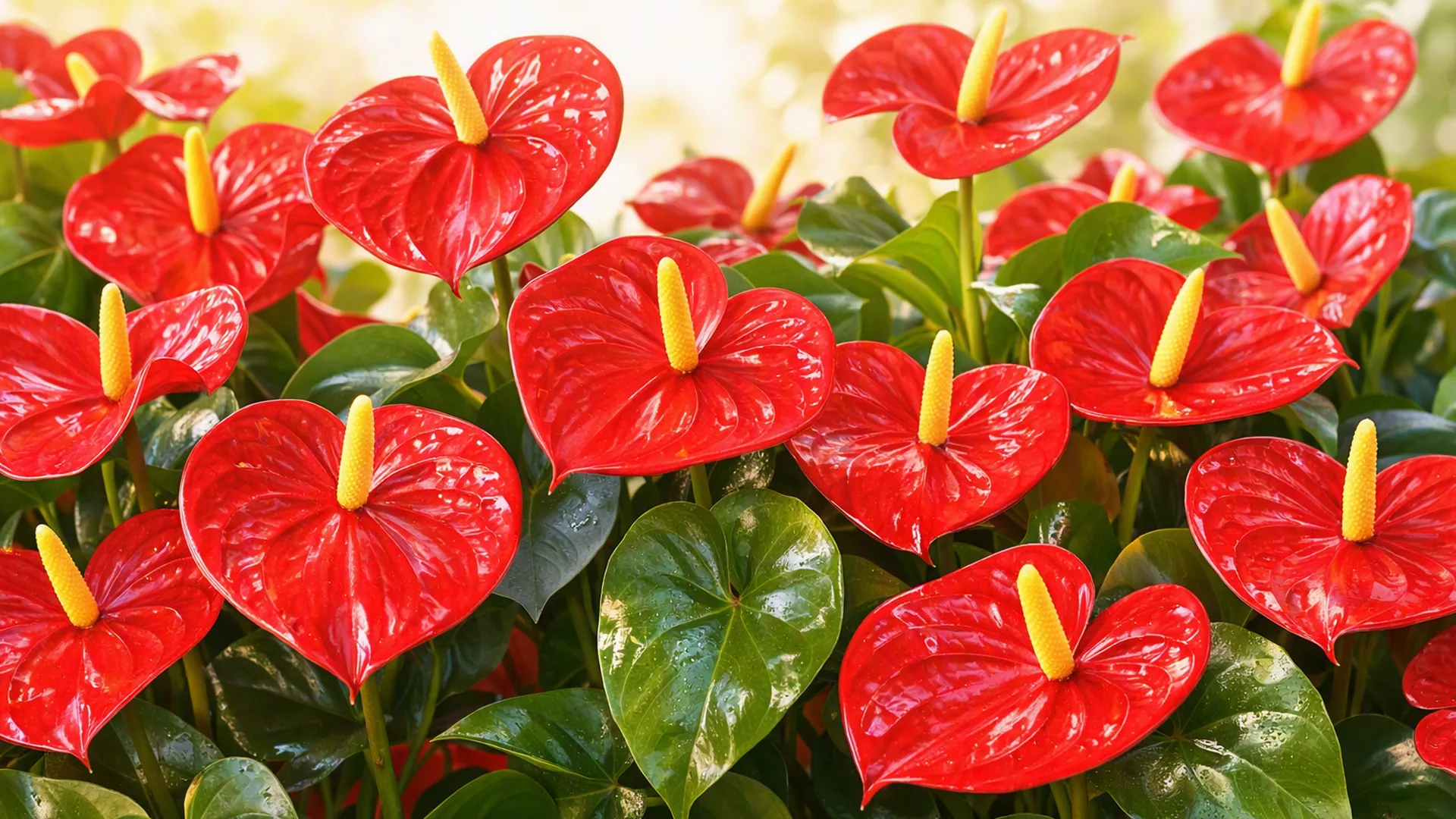
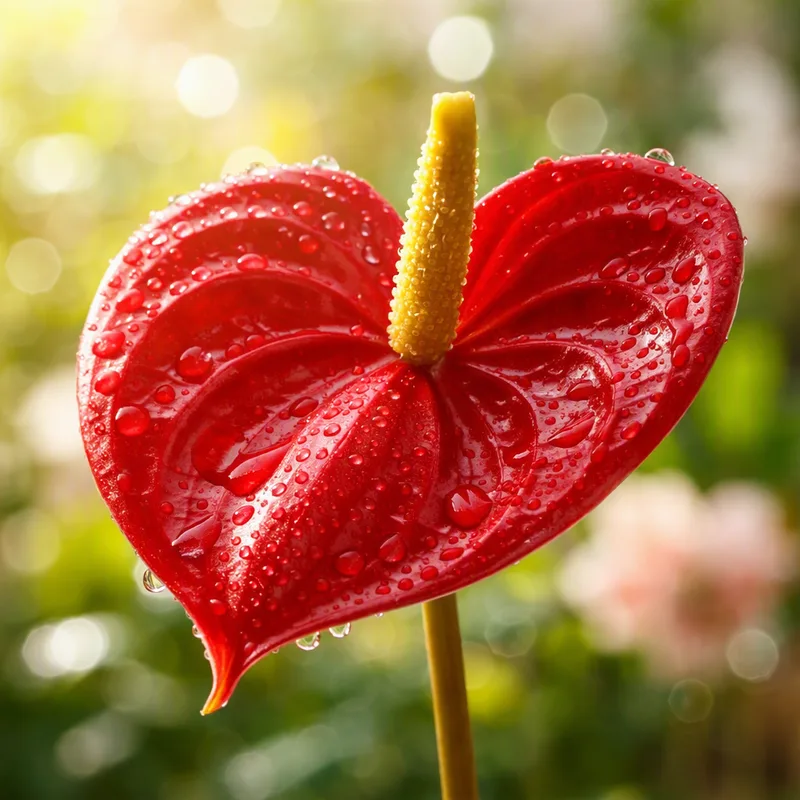
What looks like a glossy red petal is a spathe, a waxy bract. The little candle standing in the middle is the spadix, and that is where the true flowers sit. The genus name refers to a flower with a tail. This species originates in Colombia and Ecuador, where it grows in warm, humid shade and flowers all year round.
Why it suits Australian homes
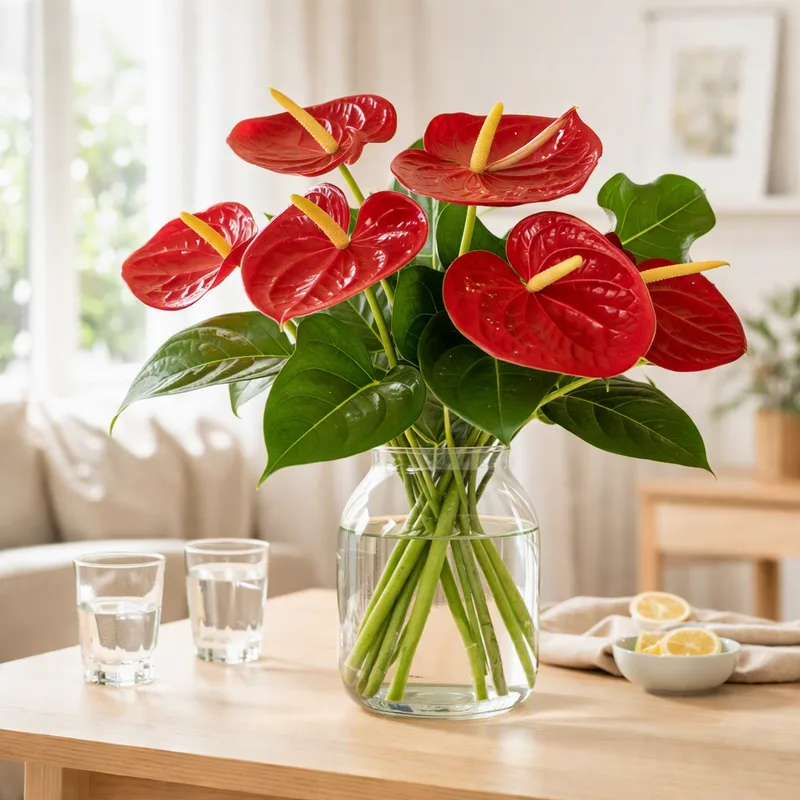
It is a houseplant that likes what many Australians already have: a warm, bright room without direct sun. In Darwin, Cairns and Brisbane it can sit on a shaded verandah for part of the year, while in Hobart, Canberra and Melbourne it should stay indoors through winter.
- Light: bright but filtered, never midday sun.
- Water: keep the mix lightly moist, and let the top dry a little between drinks.
- Humidity: a tray of damp pebbles or a bathroom with a window helps.
- Feed: a weak liquid fertiliser every month in the growing season.
- Pot: a loose, airy mix with bark.
Flower longevity
A single spathe stays colourful for weeks, so plants can be in colour for most of the year. Yellowing leaves usually point to overwatering.
Take care with it
The whole plant contains calcium oxalate crystals and saponins and causes mouth irritation, drooling and vomiting if chewed. The ASPCA puts a relative, the flamingo flower, on its toxic list for dogs, cats and horses, citing insoluble calcium oxalates. In people, the Poisons Information Line on 13 11 26 can advise at any time.