The one in every florist's window
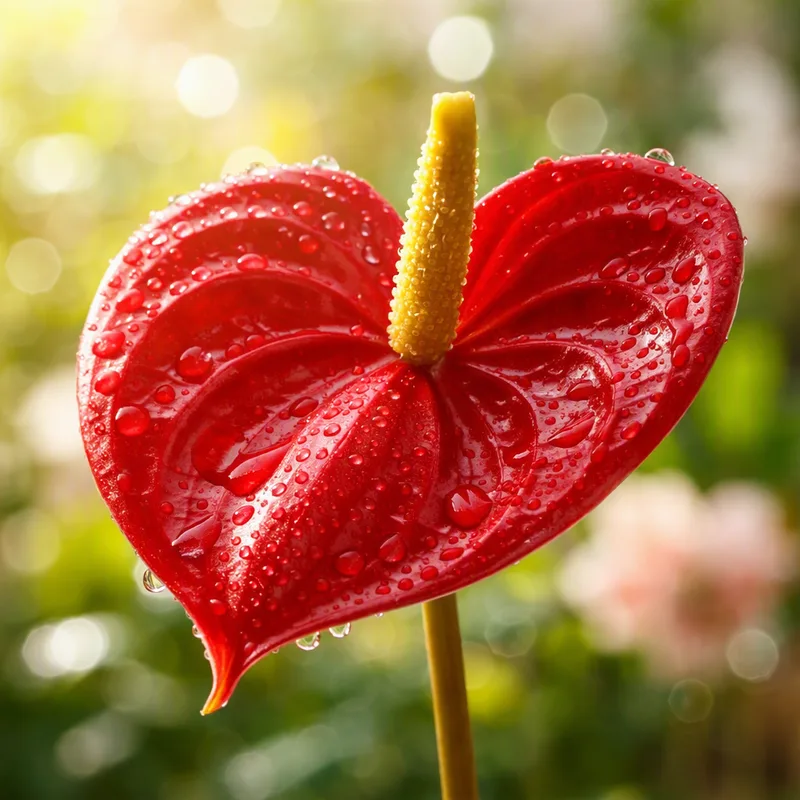
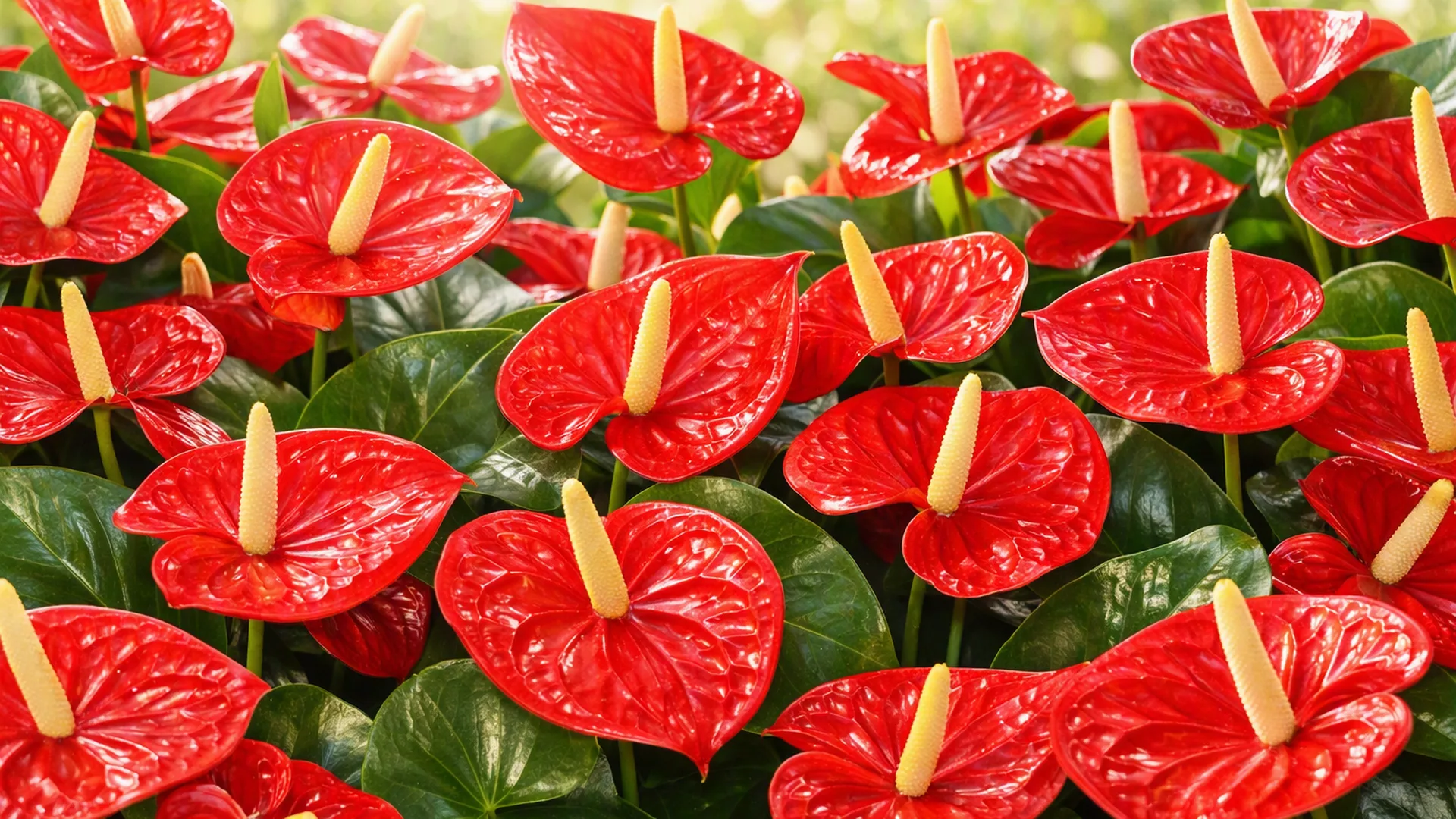
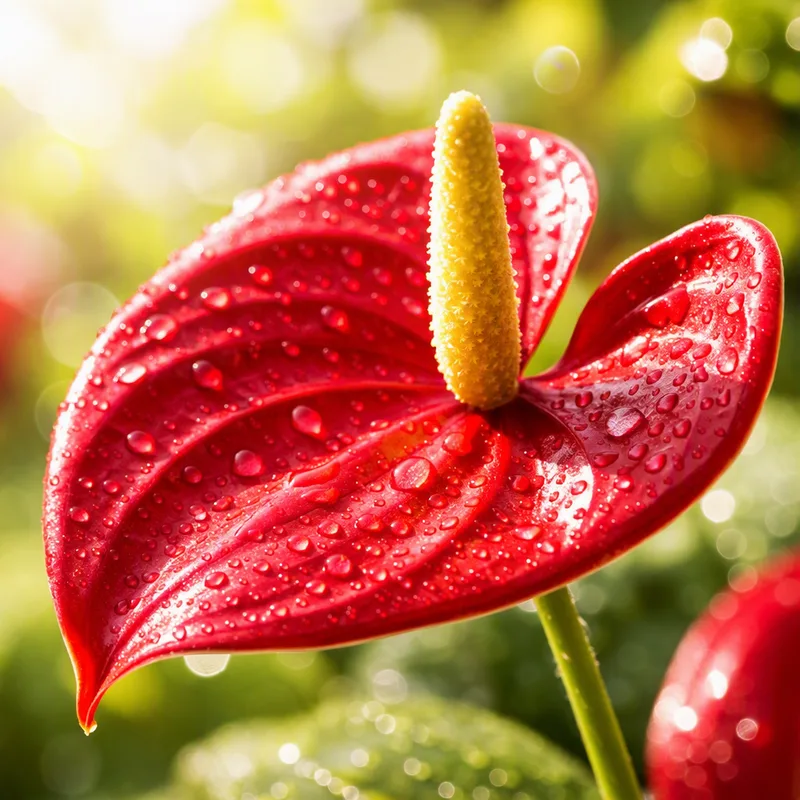
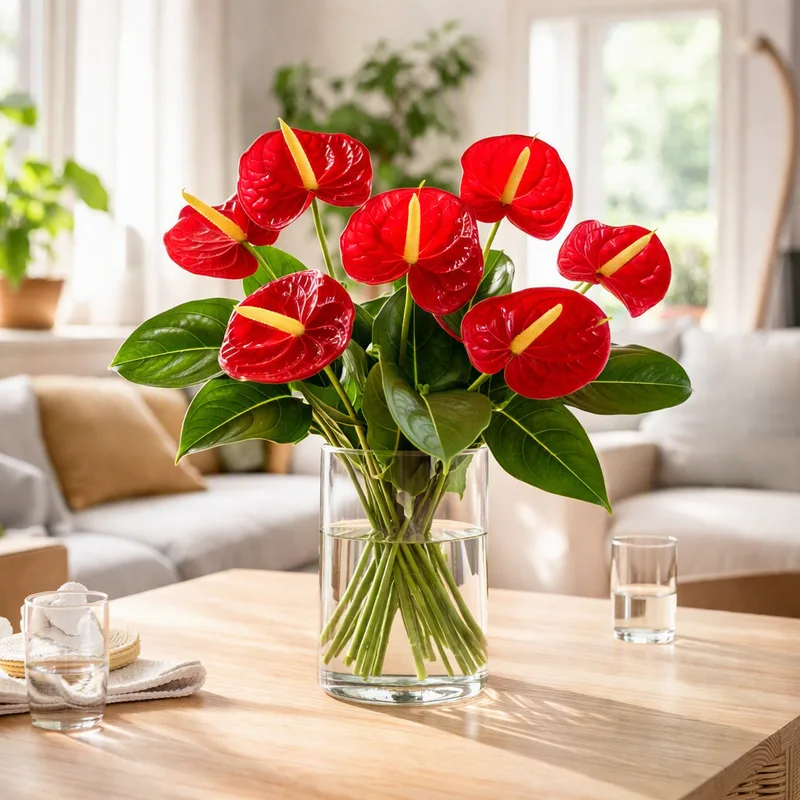
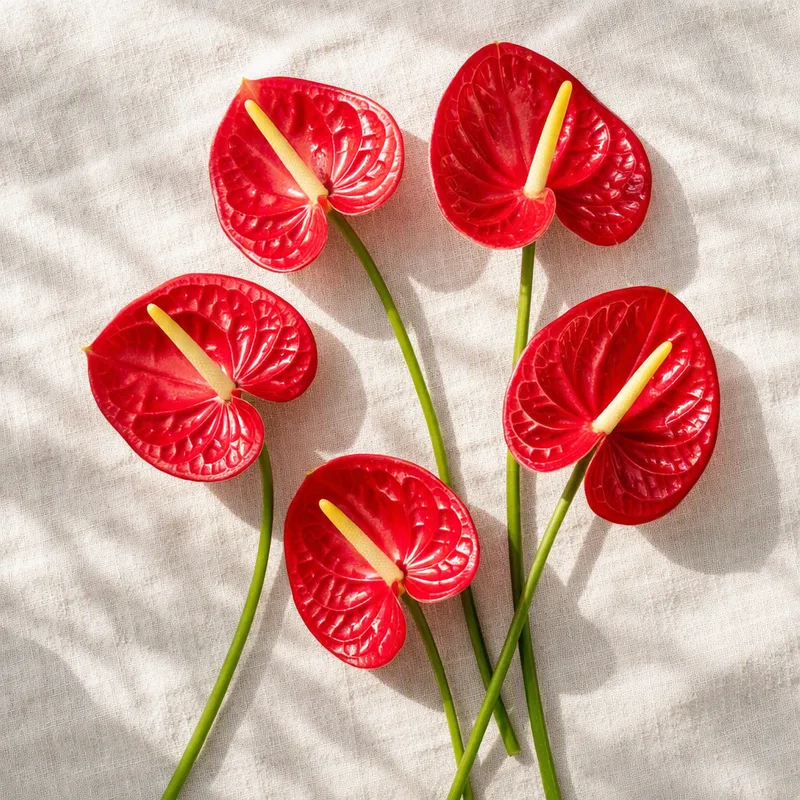
Red anthurium is the best-known form of Anthurium andraeanum. The red parts are spathes, waxy and slightly puckered, and each lasts for weeks. It is a tropical plant by origin, from the forests of Colombia and Ecuador, so it expects warmth and humidity.
What red an anthurium traditionally says
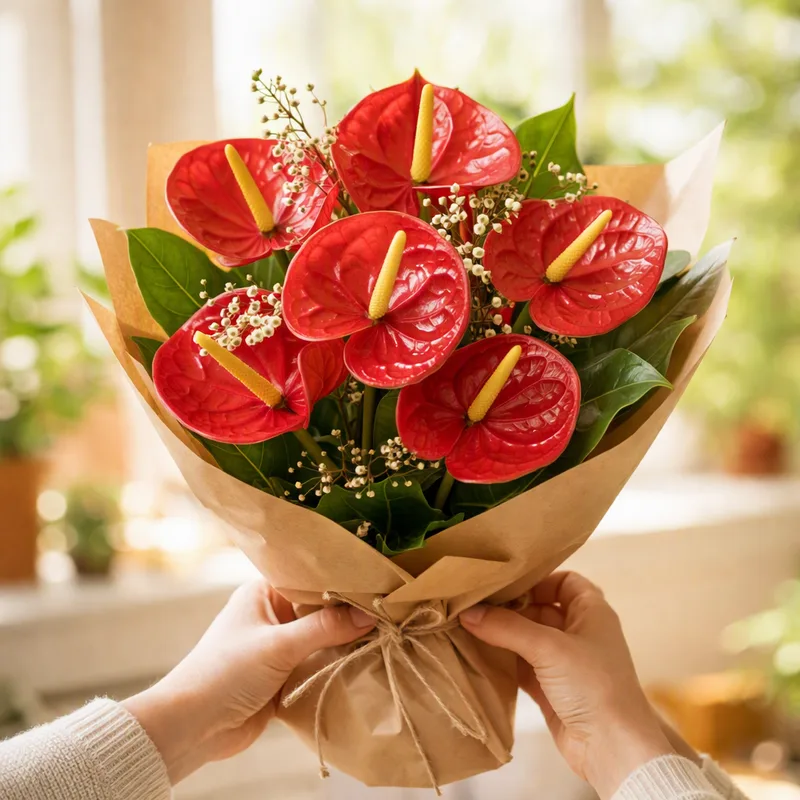
Red anthuriums are traditionally associated with passion and a warm welcome, which is why they appear in tropical-style arrangements and as an alternative to roses on Valentine's Day, in late summer.
Day-to-day care
- Light: bright and indirect. A spot a metre from an east window is ideal.
- Water: moderate. The mix should be moist but never soggy.
- Temperature: warm and steady. In Melbourne, Canberra or Hobart, keep it away from cold window glass in winter.
- Humidity: grouping plants or using a pebble tray helps.
- Repotting: every second year into a loose, bark-rich mix.
Everyday care for red an anthurium
Brown leaf edges mean dry air or too much fertiliser. Pale, weak growth means too little light. Spathes that stay small often need more feed or light.
Why you need to be careful
The plant contains calcium oxalate and saponins, which hurt the mouth and throat. The ASPCA lists a related flamingo flower as toxic to dogs, cats and horses, with drooling, vomiting and mouth swelling among the signs. Ring the Poisons Information Line on 13 11 26 about a person, or a vet about an animal.