
Red leaves, not red flowers
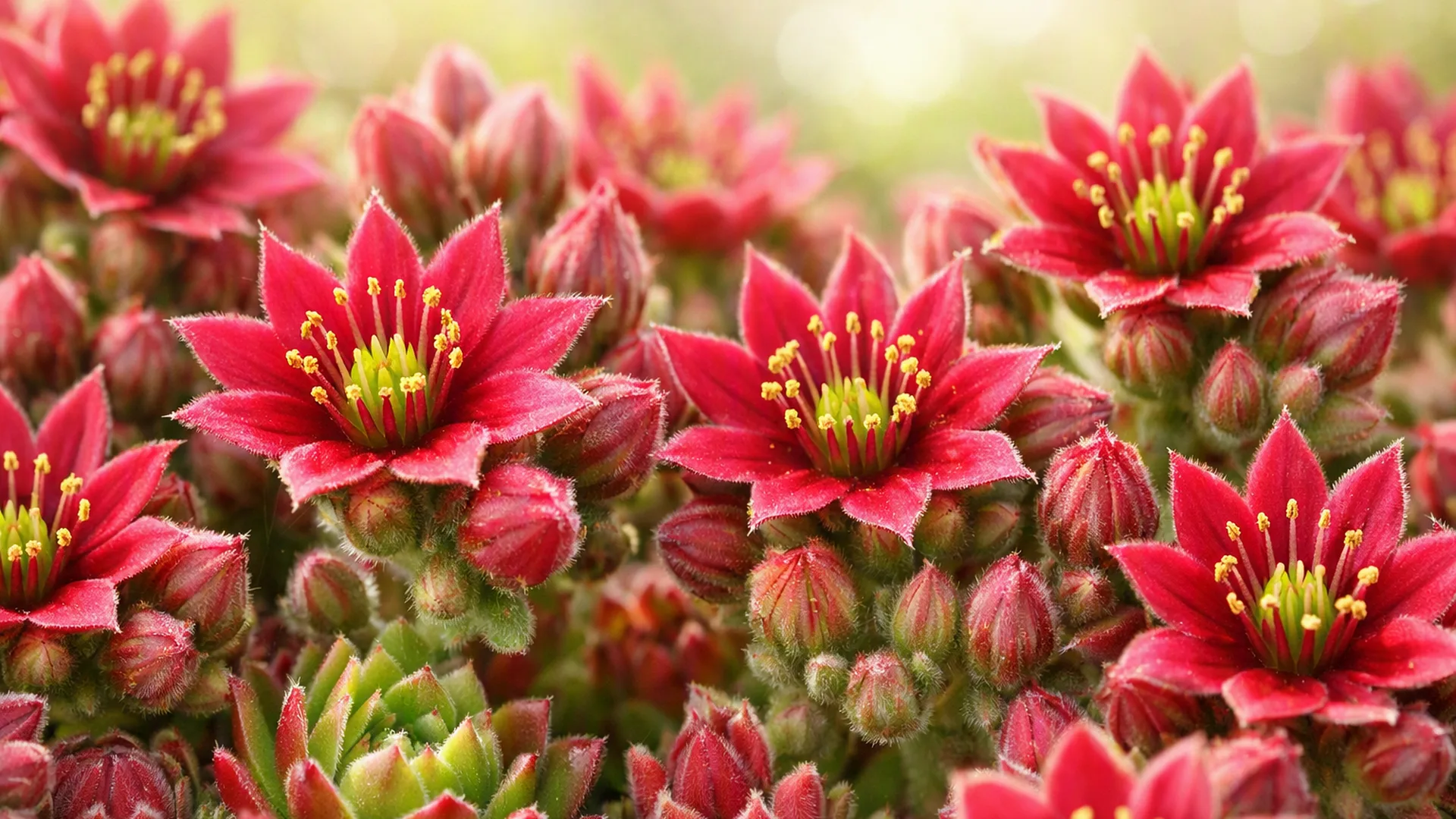
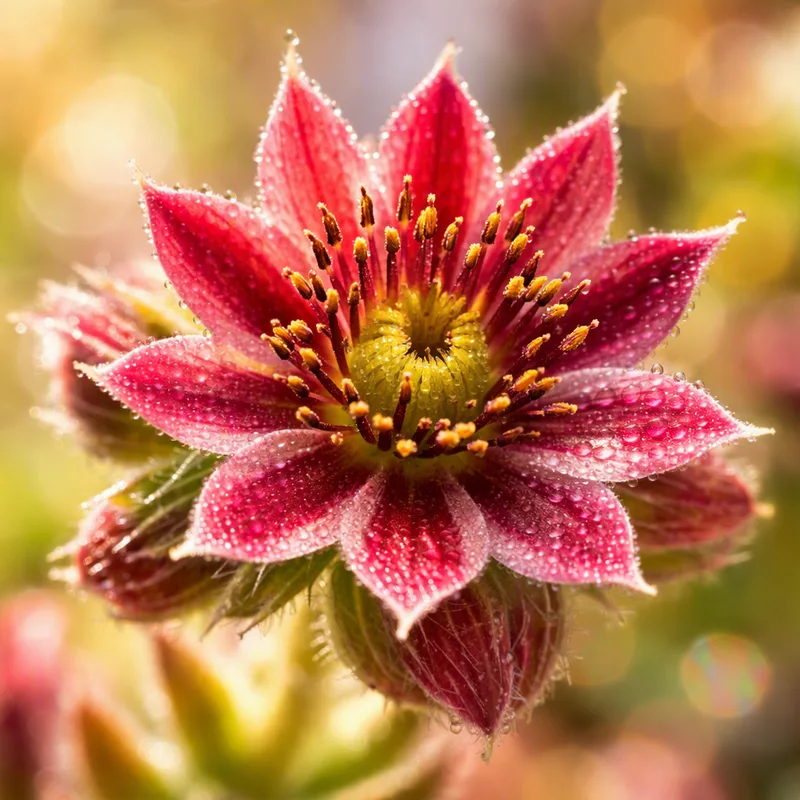
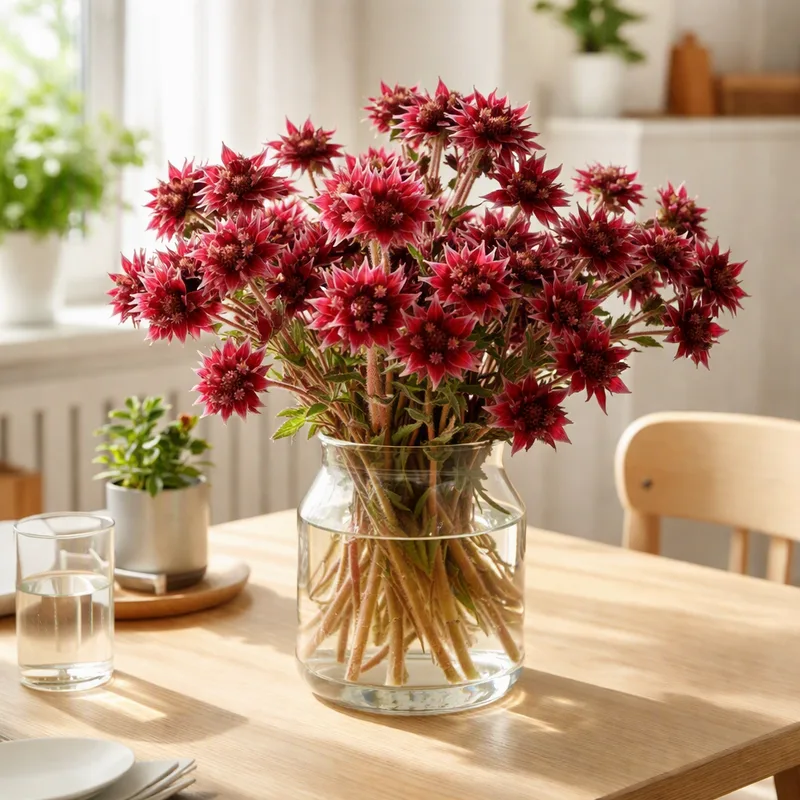
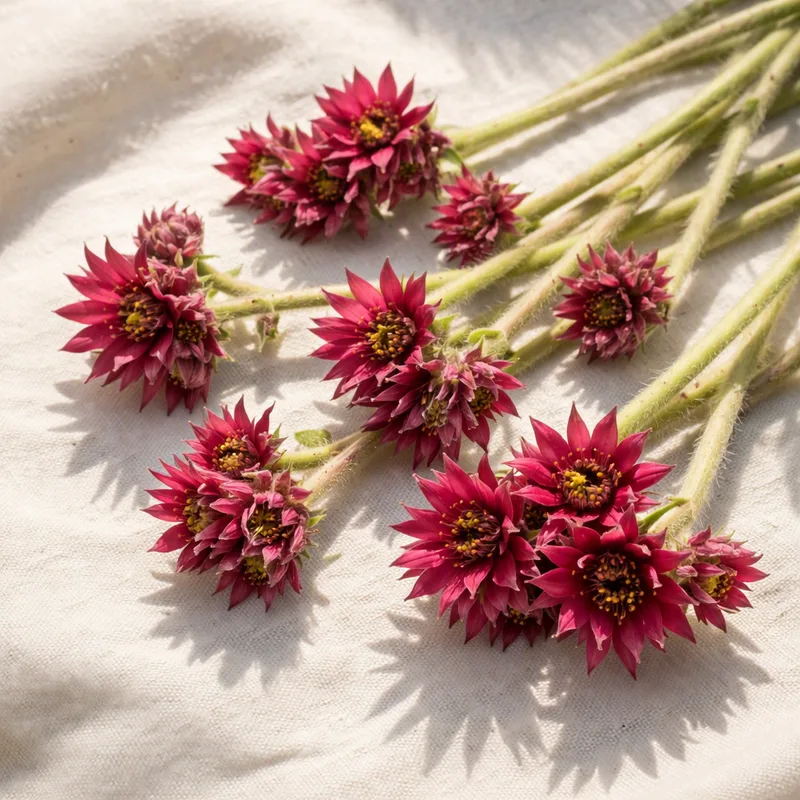
Many houseleeks carry red, purple or bronze on the tips or the whole rosette, and in some cultivars the colour spreads right through the plant. The common houseleek, Sempervivum tectorum, is a typical example, with grey-green rosettes flushed rose-red. Flowers are often reddish too, and stand on a stout stem in summer.
What affects colour
Colour is usually strongest in full sun and cool weather, and many cultivars deepen in the colder months. In shade or in rich, damp soil they turn green. Lean, gritty conditions bring out the red, and so does a cold winter, which suits gardeners in Canberra, Hobart, the Tablelands and inland Victoria.
Growing and display
- Plant in a very gritty mix, with extra sand or fine gravel.
- Choose a shallow trough, a stone wall crevice or a rooftop pot.
- Water sparingly even in summer.
- In humid coastal areas, give pots shelter from heavy rain.
Red houseleeks look good with grey-leaved plants such as lavender and with golden sedums. Each rosette lives for a few years, flowers once and dies, leaving offsets behind.
If a pet chews a rosette
Sempervivum does not appear on the ASPCA list of toxic plants. If a pet chews a succulent, a mild stomach upset is possible, and a vet can advise.
The name has an old link with roofs: Sempervivum tectorum means of the roofs, and outside its native range the plant often grows on tiles and old stone walls. Red rosettes look especially good against grey slate and dark stone.