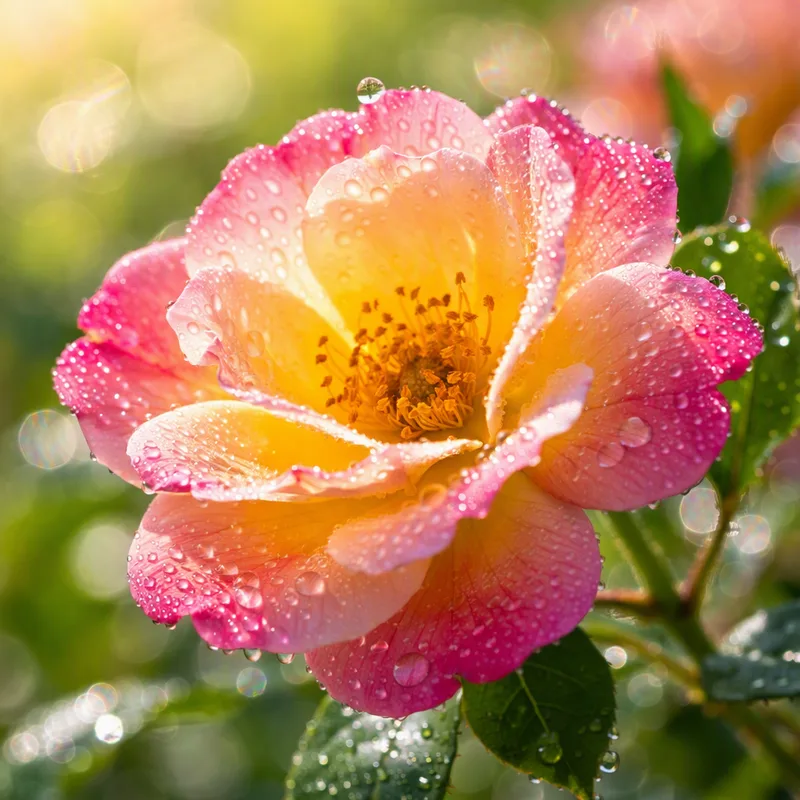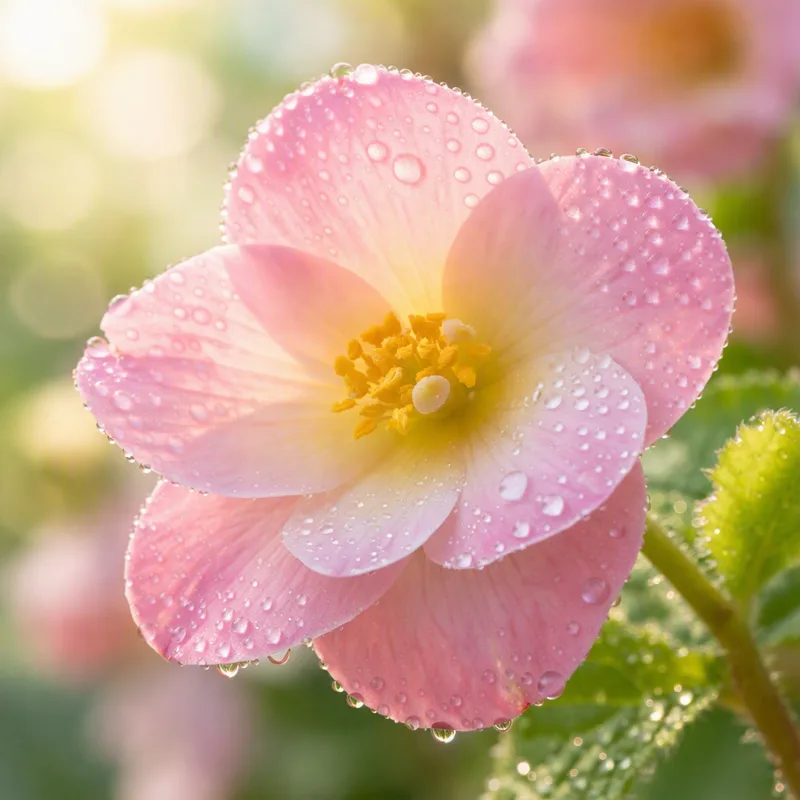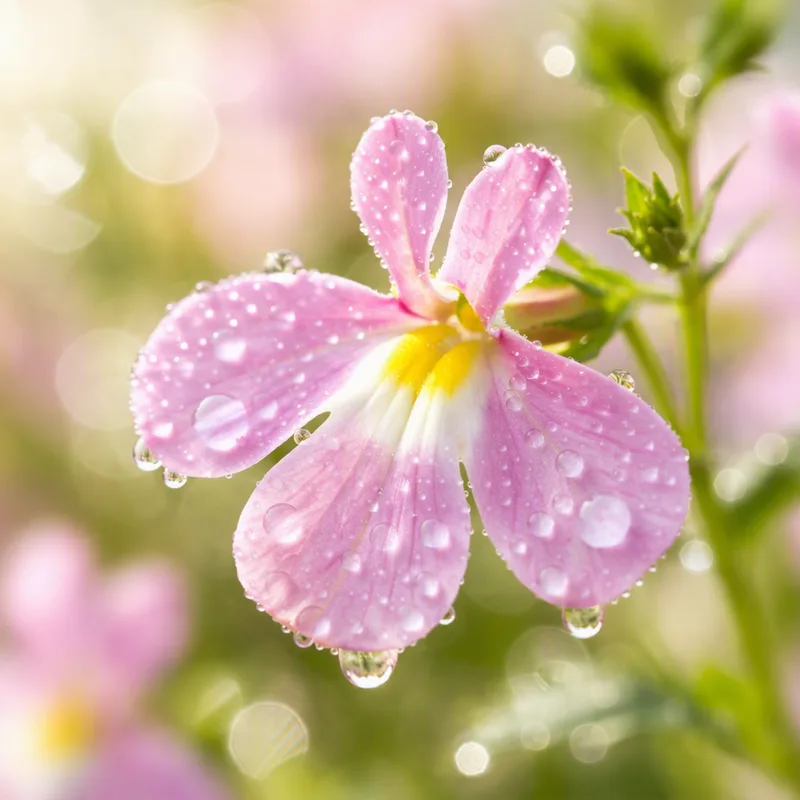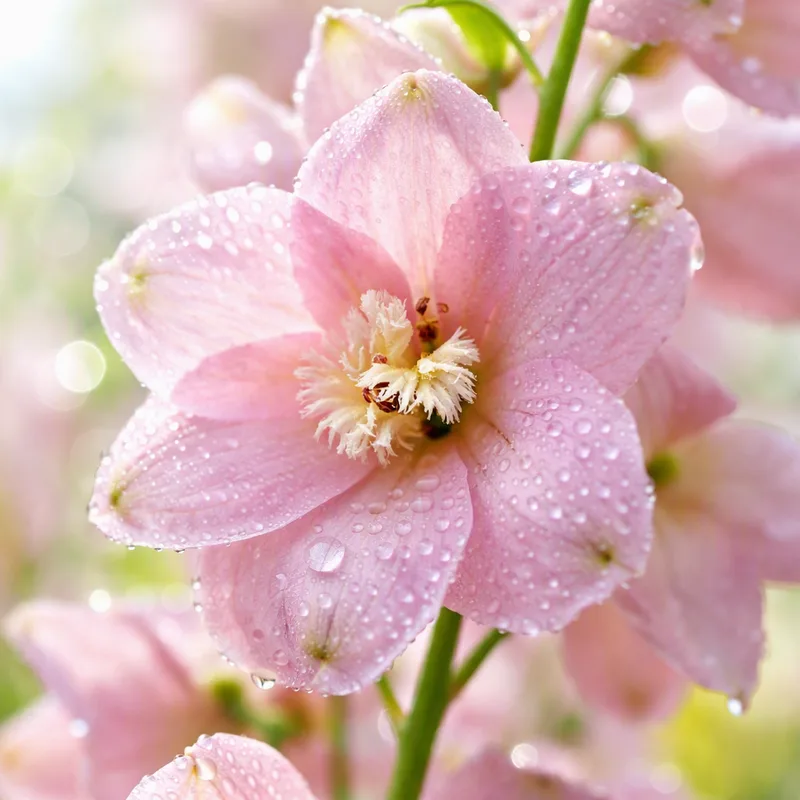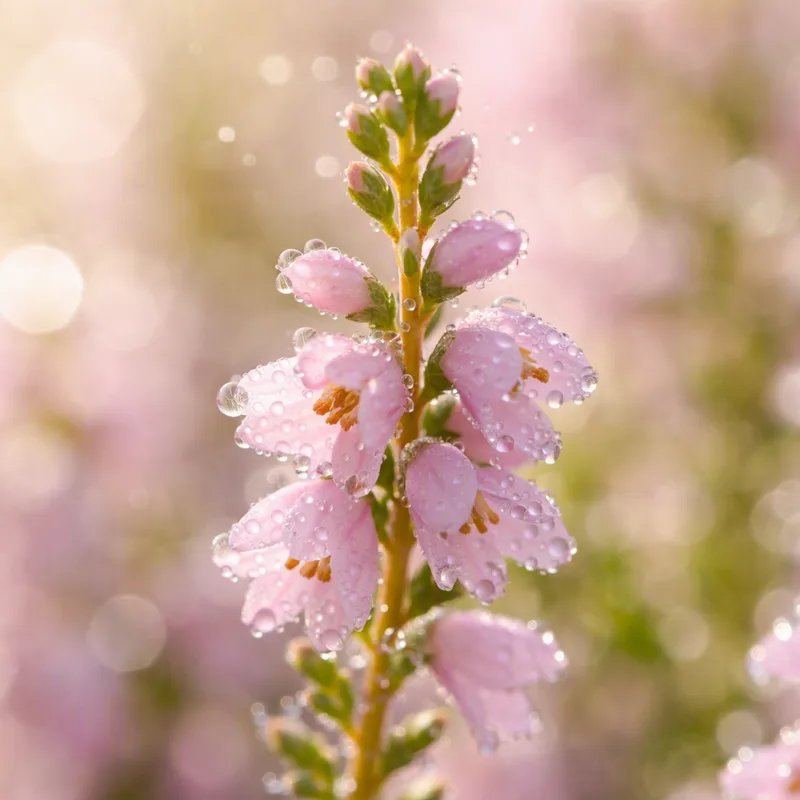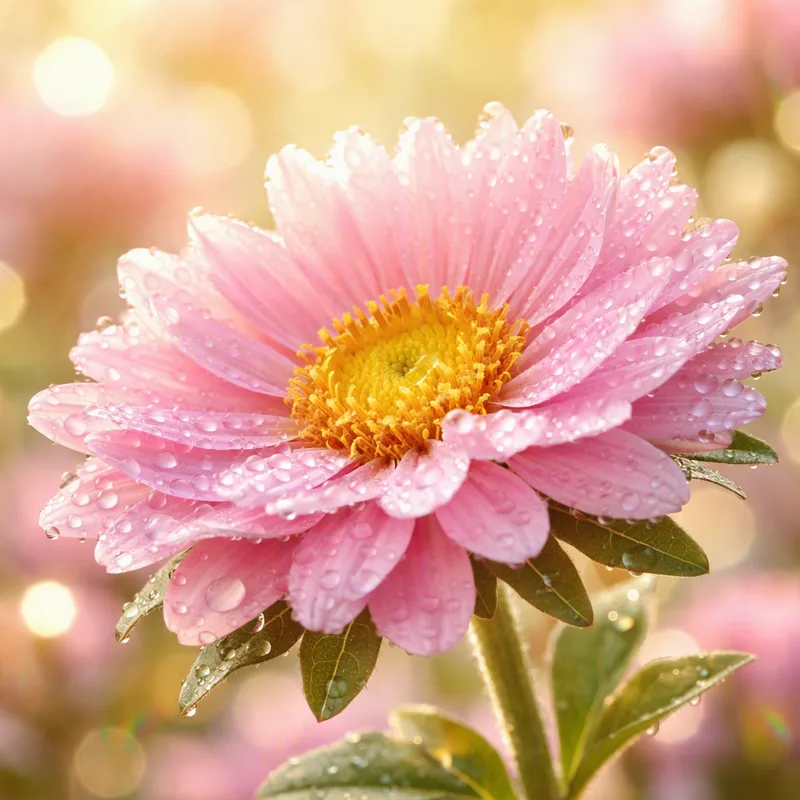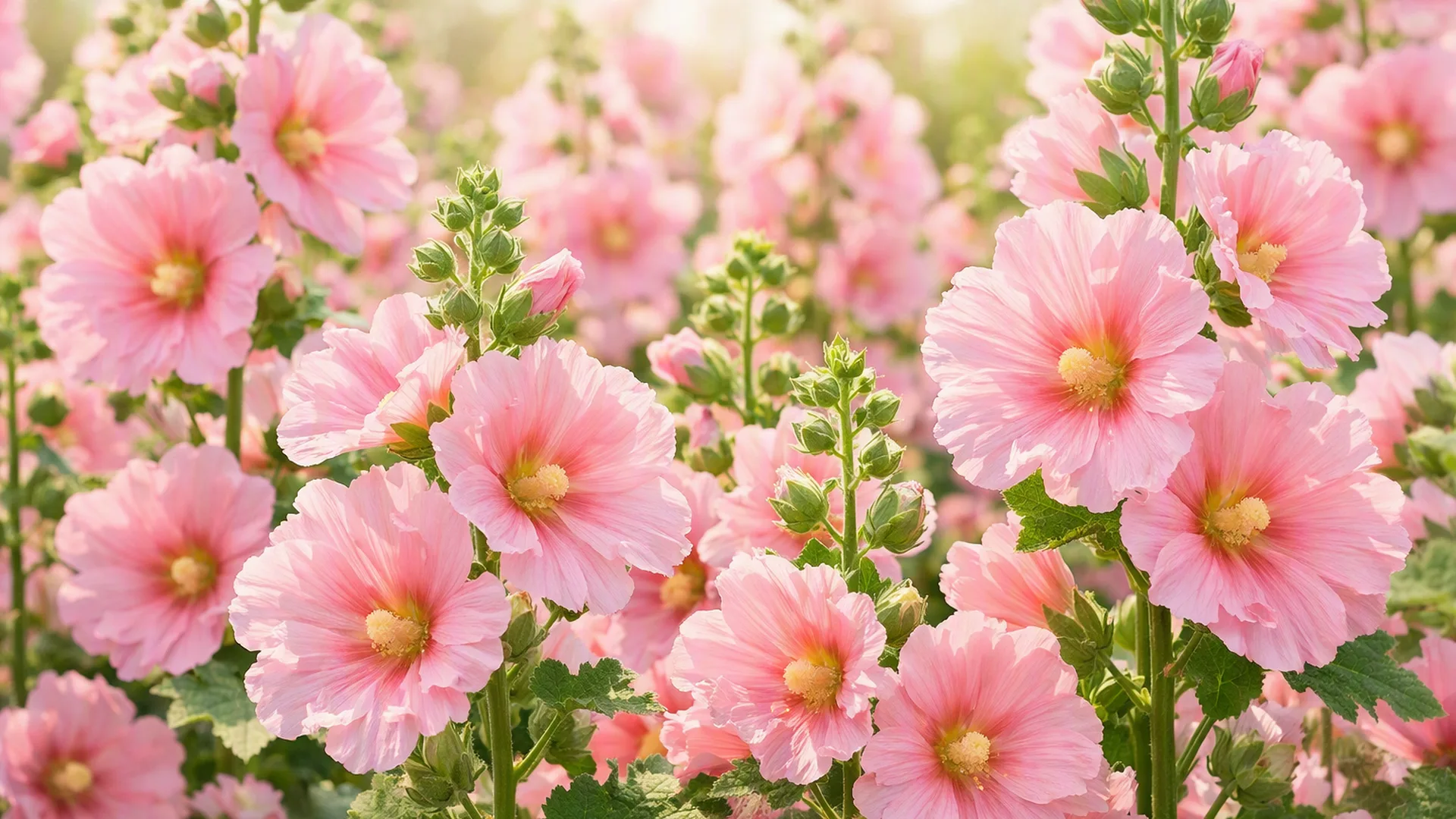
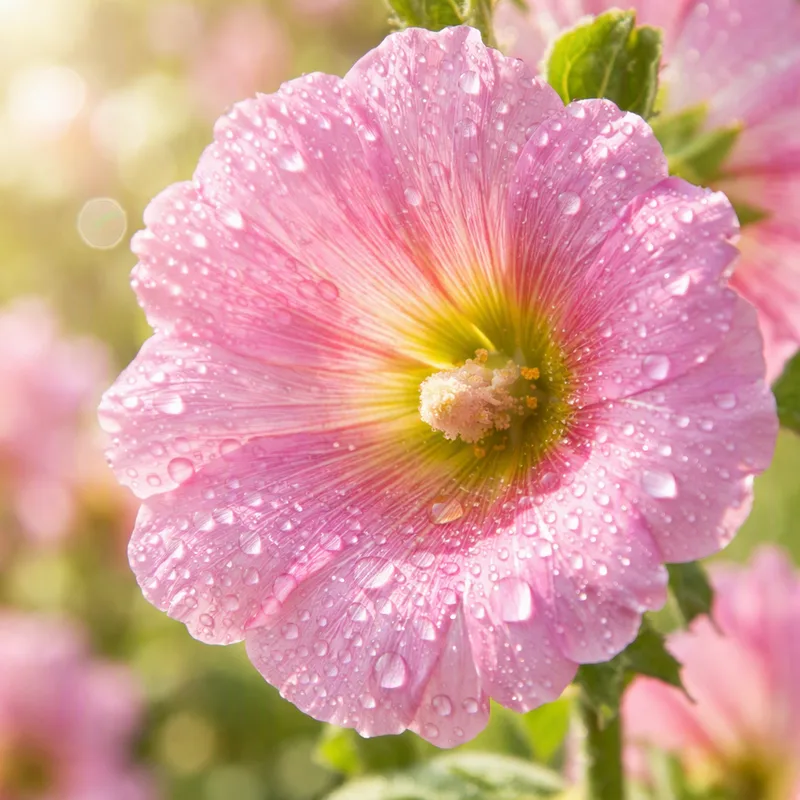
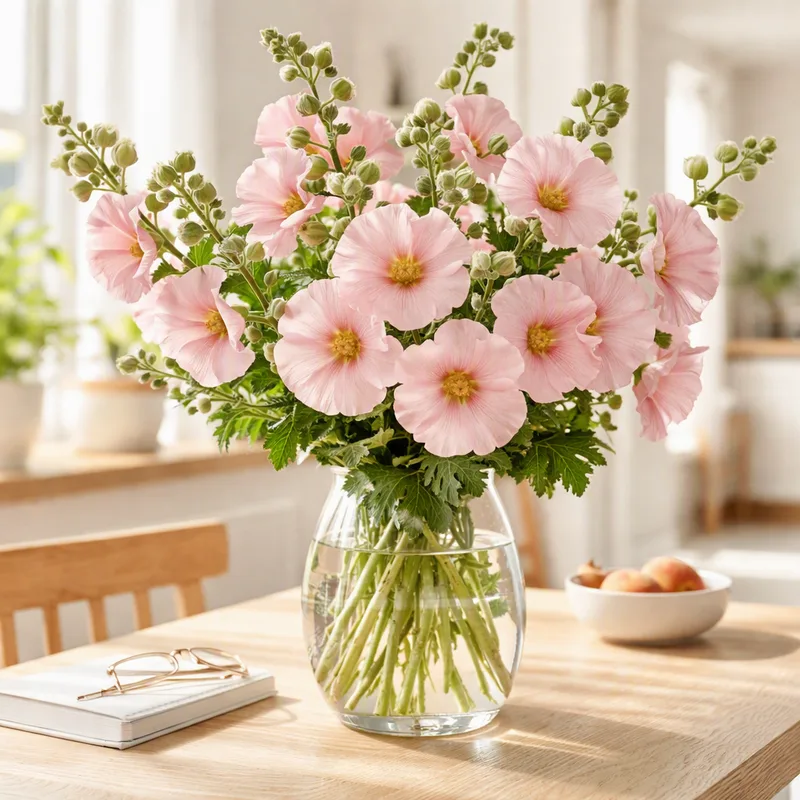
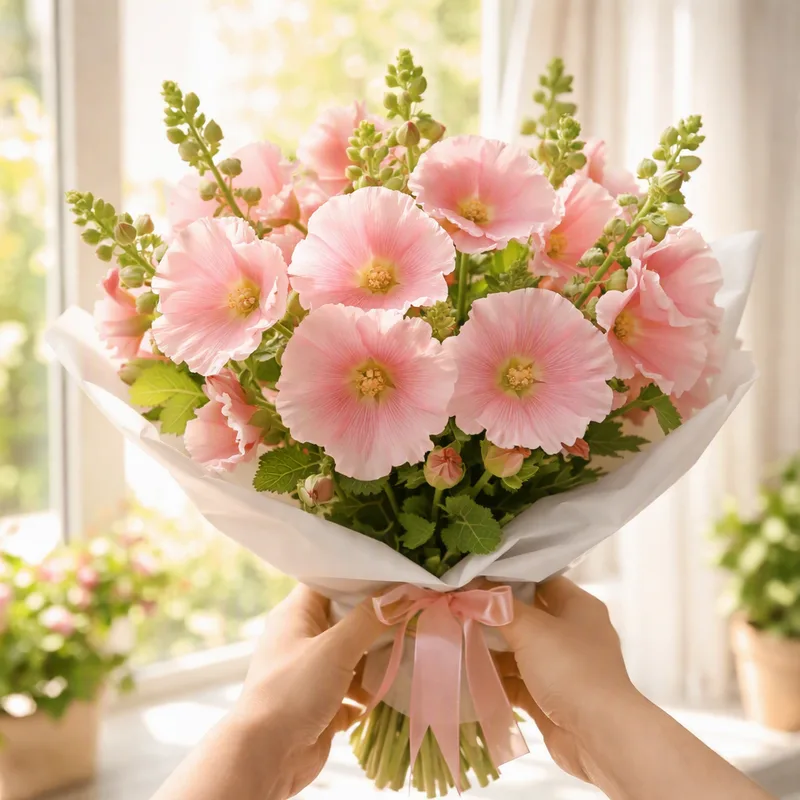
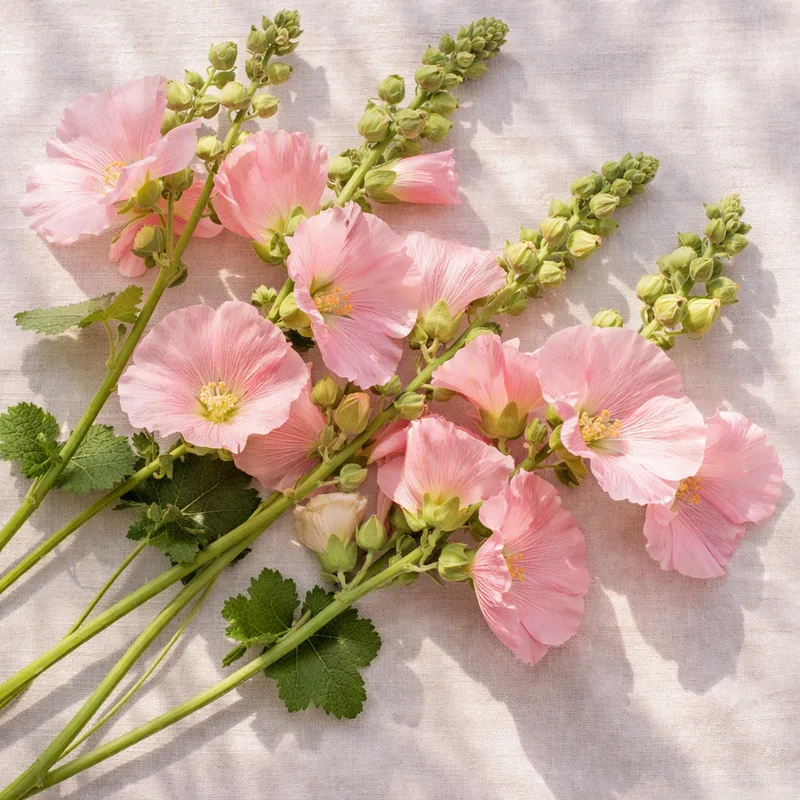
Pink is perhaps the most familiar hollyhock colour. Soft blush singles look like giant mallow flowers, which is no accident, since hollyhocks are mallows, while the double types resemble ruffled rosettes.
A cottage-garden icon
Pink spires sit well with delphiniums, foxgloves, roses and lavender in a traditional cottage border. In a modern garden, a row along a boundary fence makes a tall, informal screen in summer. Doubles such as the 'Chater's' strain give the frilly effect; single forms are better for bees.
Planting calendar for Australia
- Autumn (March to May): sow seed in a nursery bed or direct.
- Winter (June to August): plants make leaves and a deep taproot.
- Spring (September to November): feed lightly and stake the rising spike.
- Summer (December to February): flowering, with spikes opening from the bottom up.
- Late summer and autumn: let some pods ripen to collect seed, then cut spent stems.
Best regions
Pink hollyhocks do best in the southern states, in the Tasmanian climate and in elevated parts of Victoria and NSW. Perth gardeners can grow them with regular water. They are tricky in the humid tropics.
Problems
Rust turns the lower leaves orange-spotted and ragged. Clear fallen leaves, mulch lightly and avoid sprinklers. Weevils also bore into seed pods.
A word on pets and pink spires
They are not normally listed among poisonous plants, but animals can still get a tummy upset after eating a large amount of any foliage.