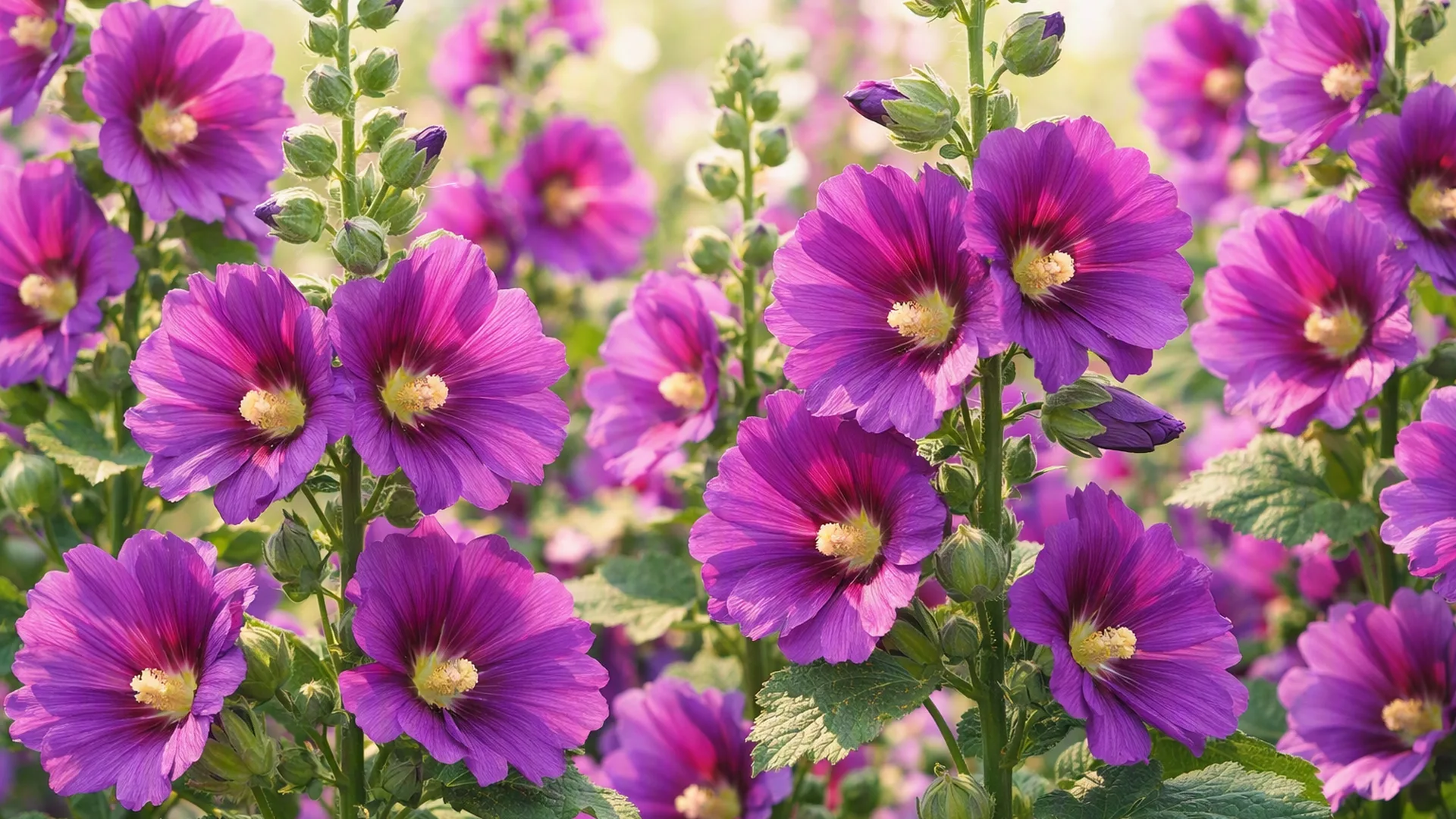
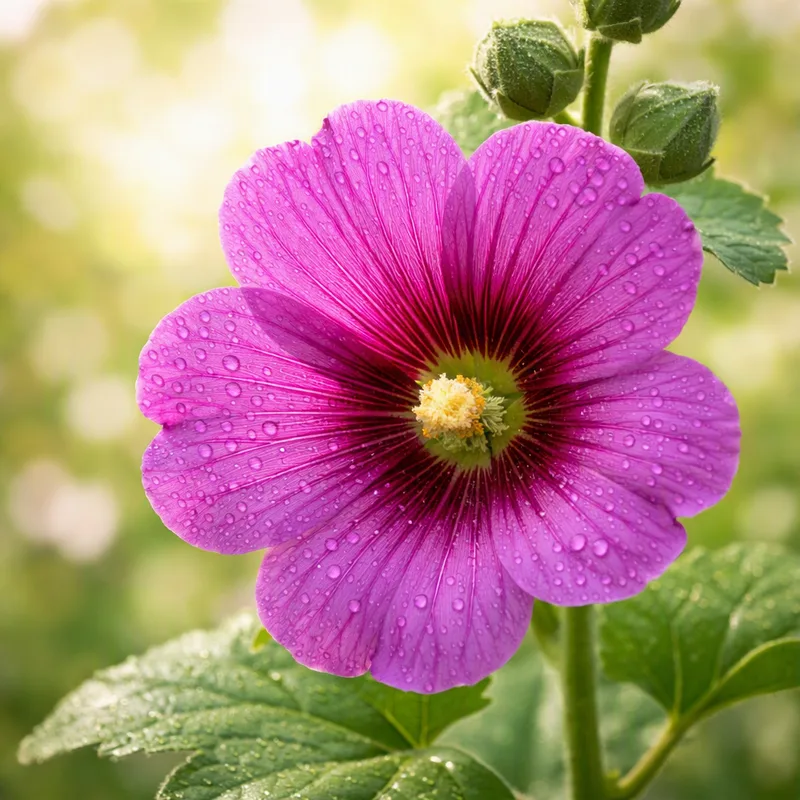
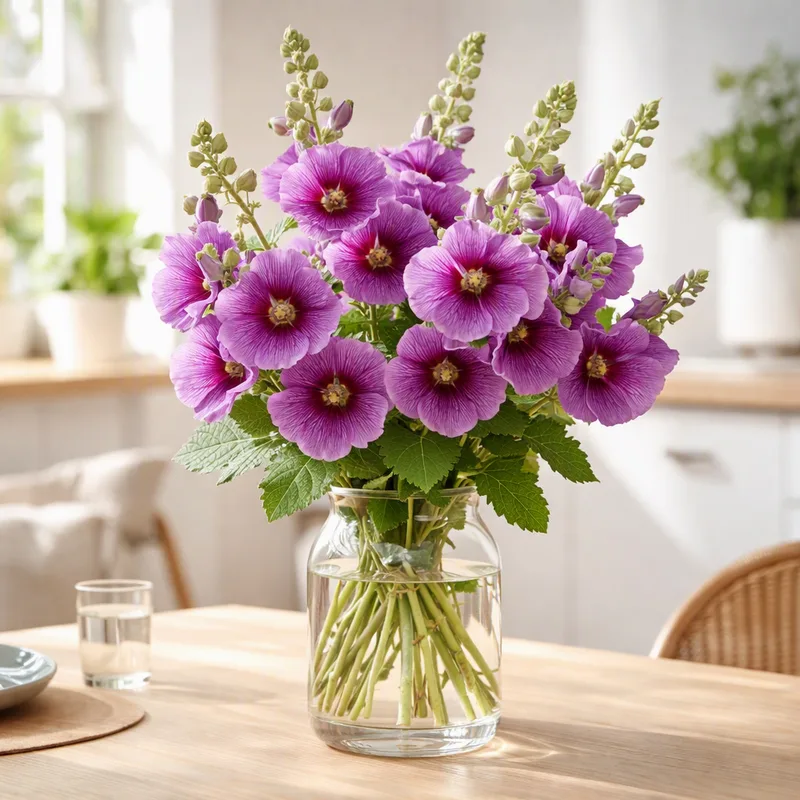
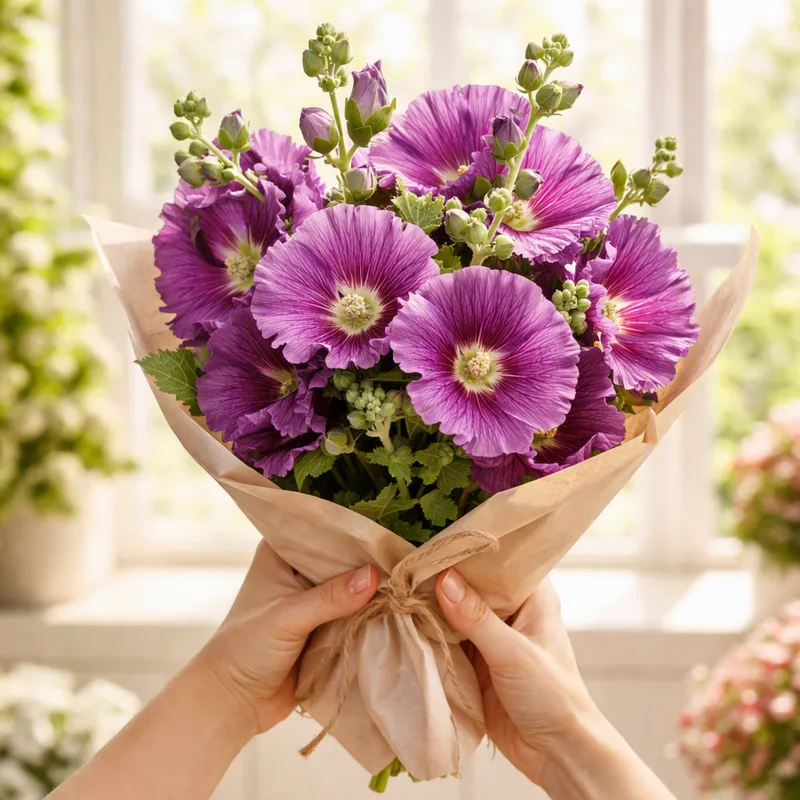
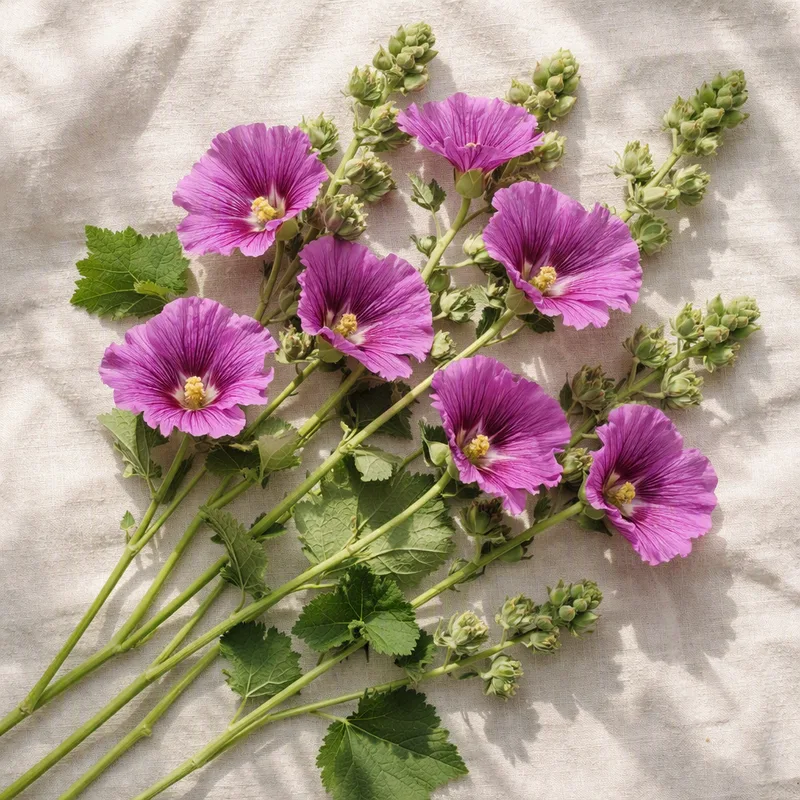
The common hollyhock, Alcea rosea, belongs to the mallow family, Malvaceae. It reached Europe from south-western China around the 15th century, and the old English name holyoke gave us the modern word. Plants can climb to well over two metres, with heart-shaped leaves and big flowers up to about 13 centimetres across.
Biennial, perennial, or both
Hollyhocks are described variously as biennials, annuals and short-lived perennials. Sown early, they may flower in their first year, but the usual pattern is leaves in the first season and a tall flowering spike in the second. They set a lot of seed, and self-sown seedlings often keep a patch going for years, which creates the impression of a true perennial.
Where they do best in Australia
- Cool temperate areas (Melbourne, Tasmania, Canberra, the Adelaide Hills): at their best, flowering from late spring through summer.
- Sydney and Perth: fine, but leaf rust is common when summers are humid.
- Brisbane and the tropical coast: much harder, since humidity encourages rust and plants decline.
Sow seed in autumn or early spring, or plant seedlings in spring. Choose a sunny, sheltered spot against a fence or wall, because wind snaps tall spikes. Water deeply in dry spells and tie stems to stakes before they flower.
Rust and other pests
Hollyhock rust shows as orange pustules on the underside of the leaves. Pick off affected leaves early, keep air moving around the plants and avoid wetting the foliage. Flowers are rarely affected, even when the leaves look untidy, but the seed pods can be damaged by weevils.
Hollyhocks and grazing pets
Hollyhock is not generally regarded as a poisonous plant, but any pet that chews a lot of foliage can get a stomach upset.