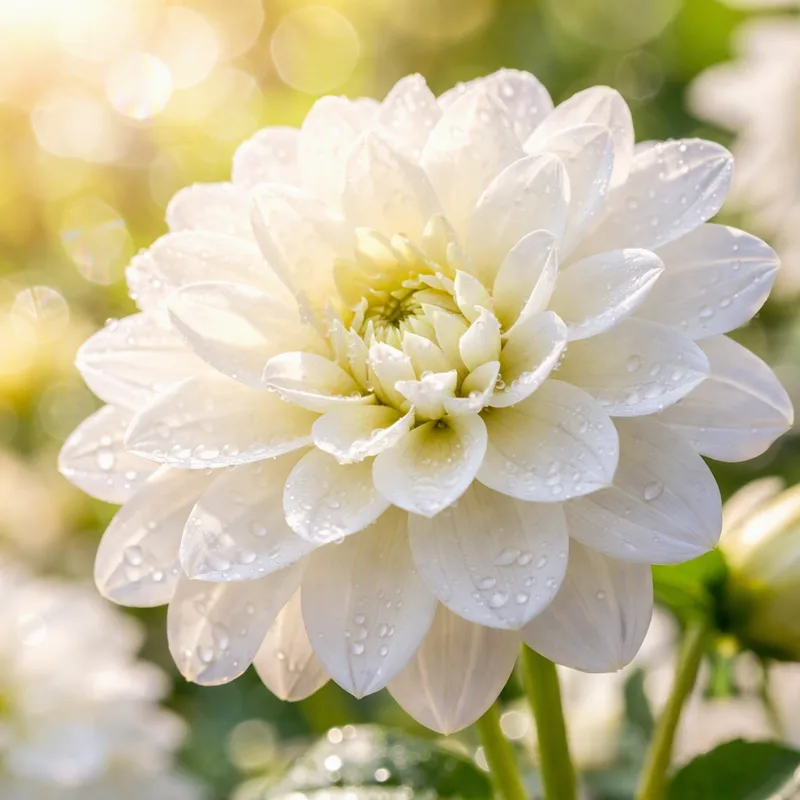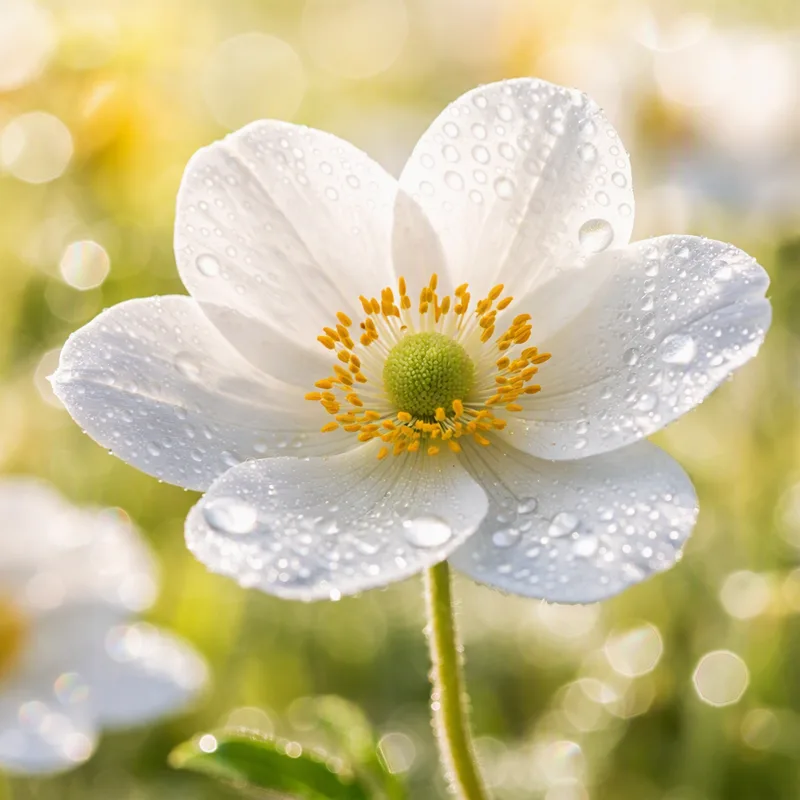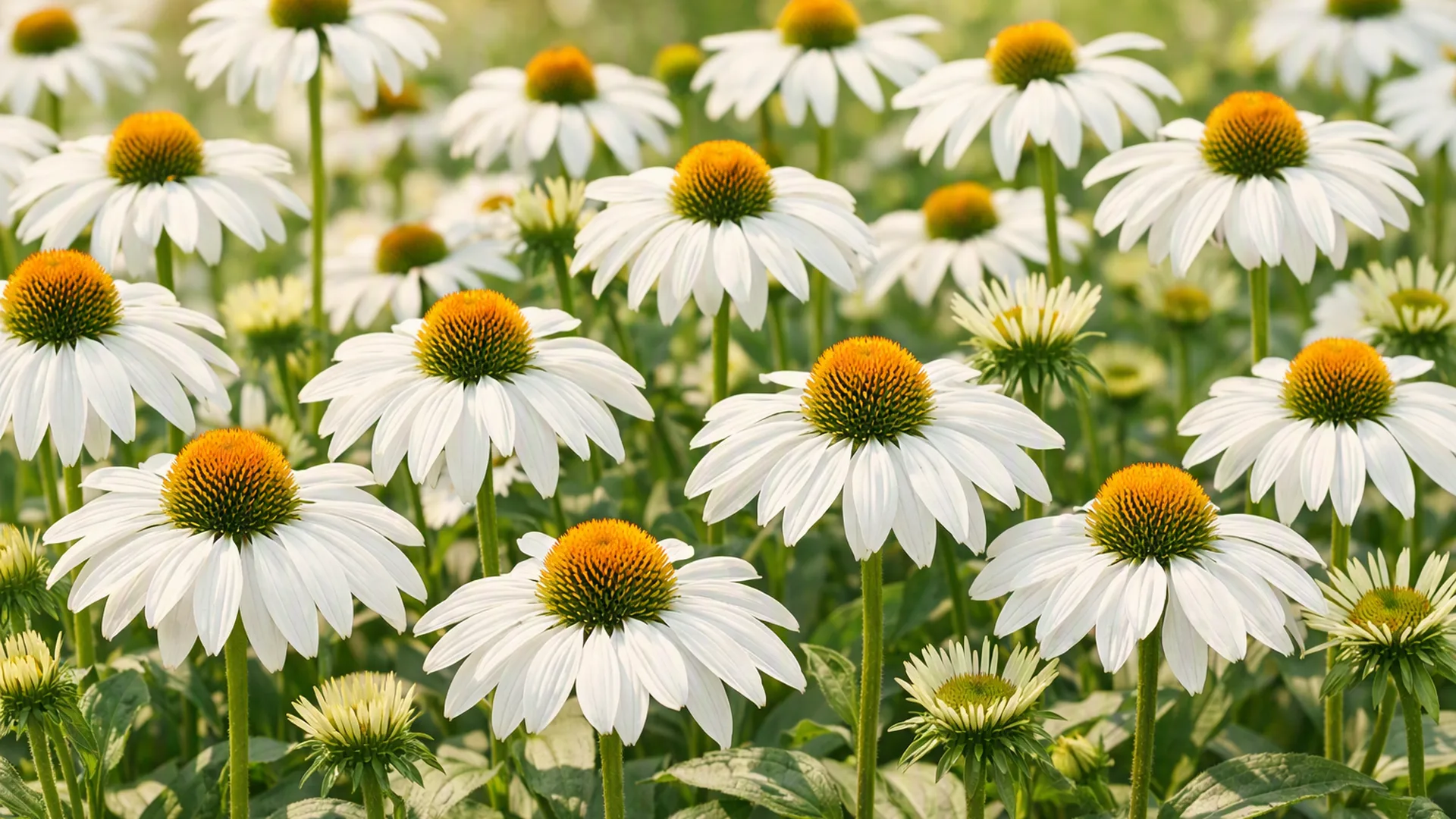
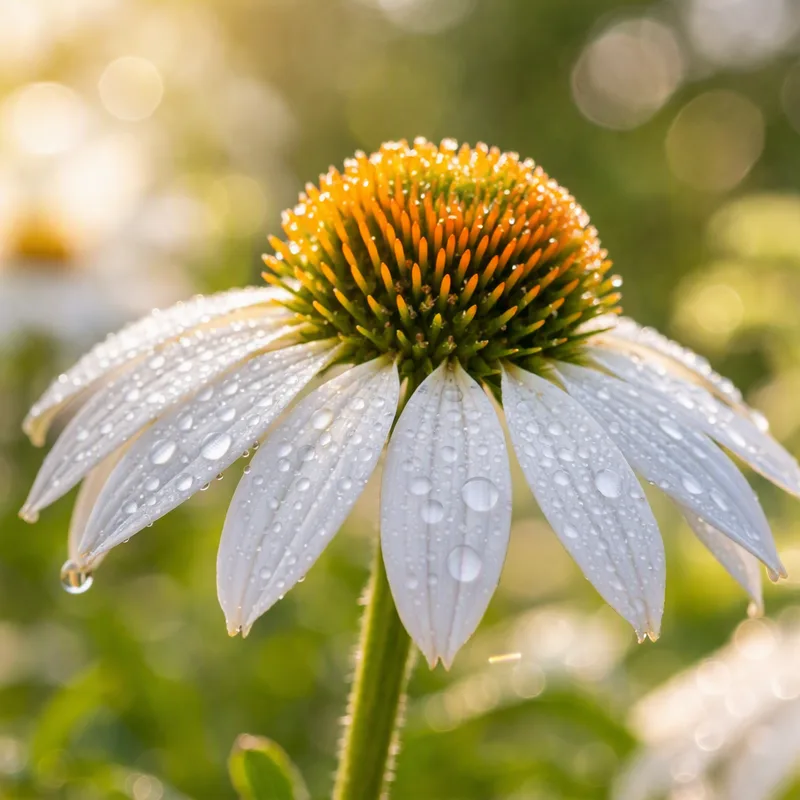
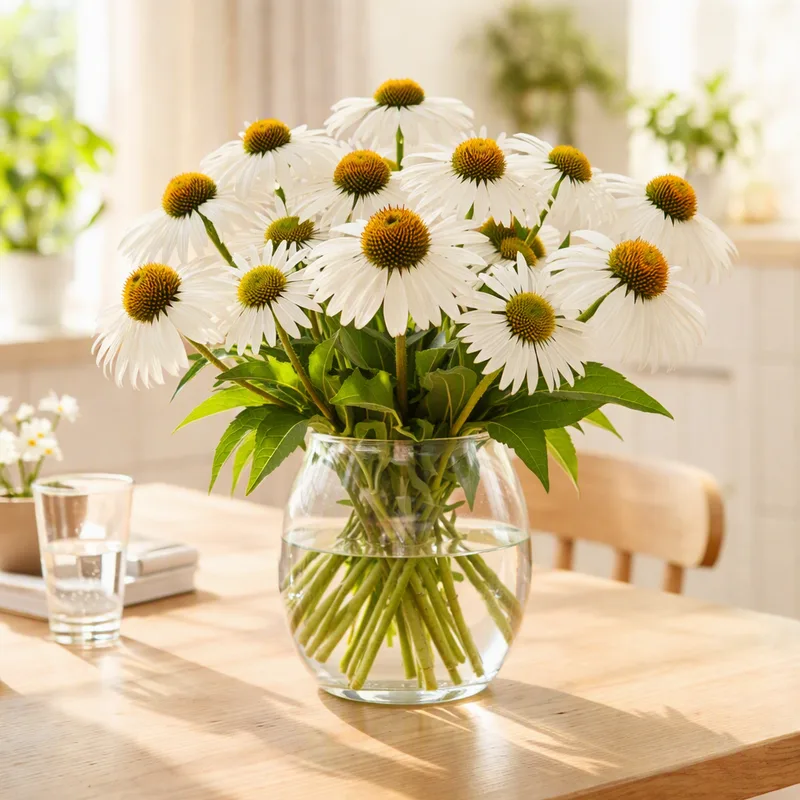

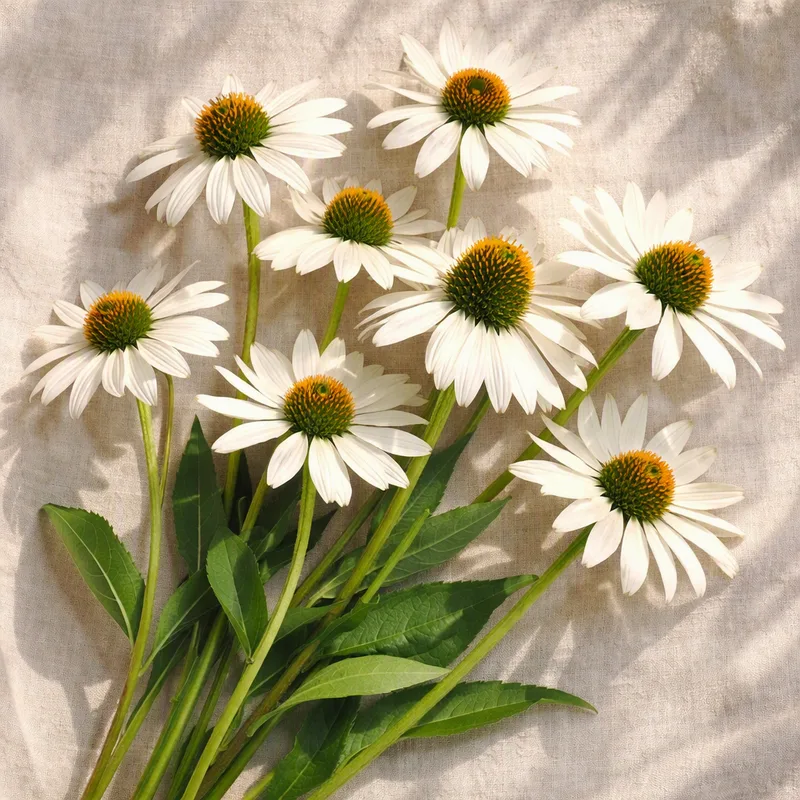
White coneflowers are cultivated forms of Echinacea purpurea in which the petals, correctly called ray florets, are cream or white while the spiny central cone stays rusty orange. The contrast is part of the appeal.
A cool-toned accent
White varieties soften a hot-coloured border. Plant them with ornamental grasses, salvias in blue and purple, or silvery plants such as lamb's ear. In the evening they stand out against dark foliage.
Well-known whites
- 'White Swan' has long, slightly drooping white petals around an orange cone.
- 'Virgin' and other upright whites hold their petals flatter.
- Doubles with pompom centres exist but are less attractive to bees.
Names vary by nursery, so check the plant tag for the type.
Siting white coneflowers
Choose a sunny, open site with free-draining soil. Plant in spring after the frost risk has passed. In Melbourne, Hobart and Canberra, white coneflowers flower from December to autumn. Further north, afternoon shade helps. Water well in the first summer and then only in prolonged dry spells.
White varieties are sometimes shorter-lived than purple ones, so divide clumps every few years or let a few seed heads ripen.
Raising white plants from seed
Seedlings of white varieties often revert to pink, because Echinacea purpurea is naturally purplish. If pure white matters, buy division-grown plants.
White coneflowers indoors and with pets
Cut stems last about a week to ten days, and foliage below the waterline should be removed. The ASPCA classes Echinacea purpurea as safe for dogs and cats.