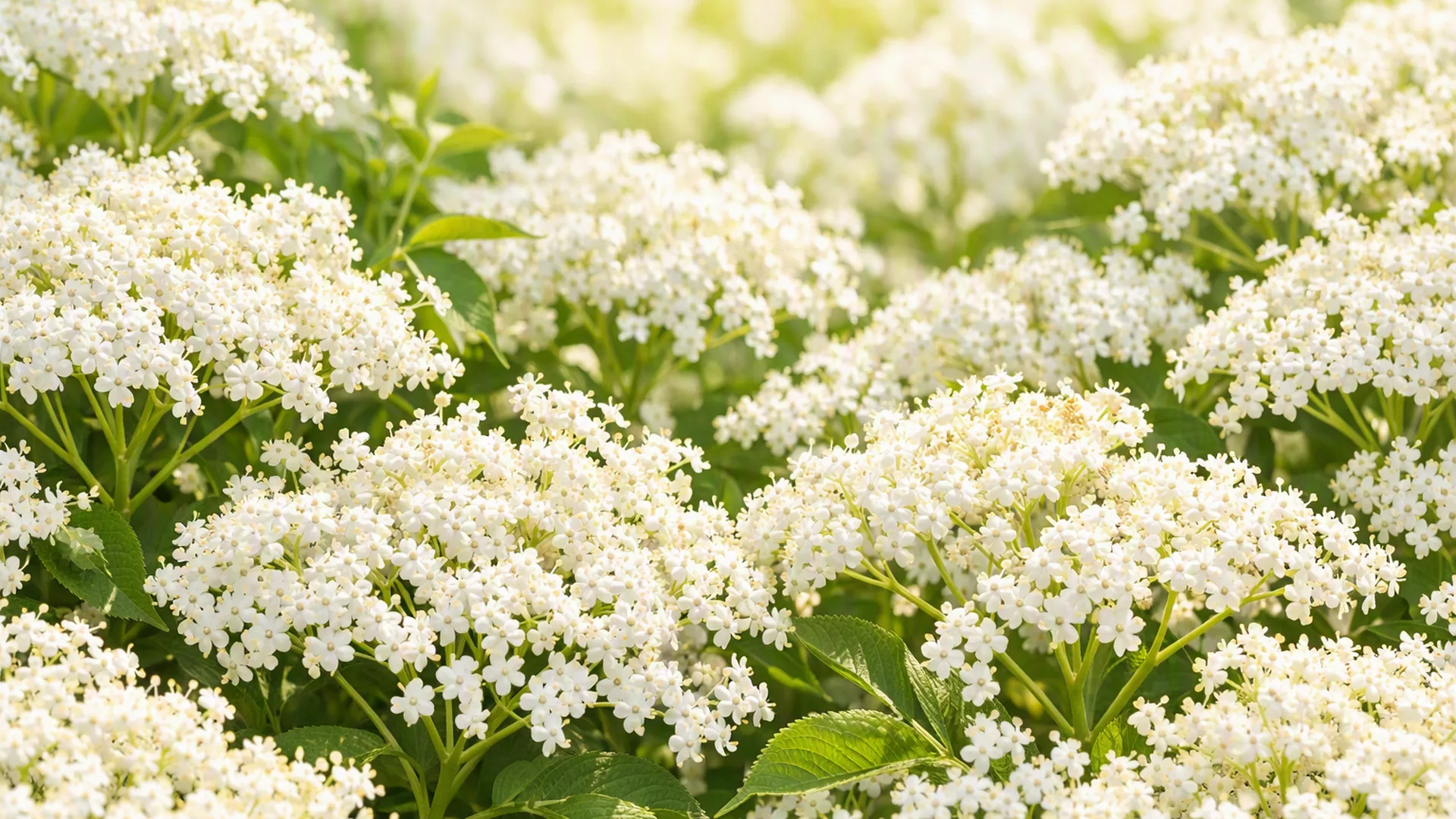
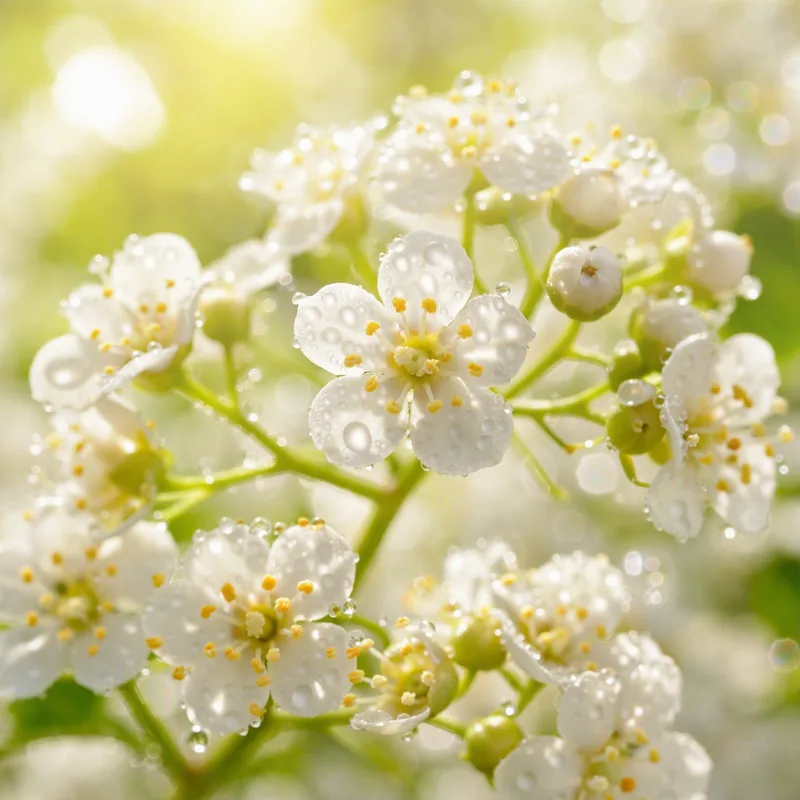
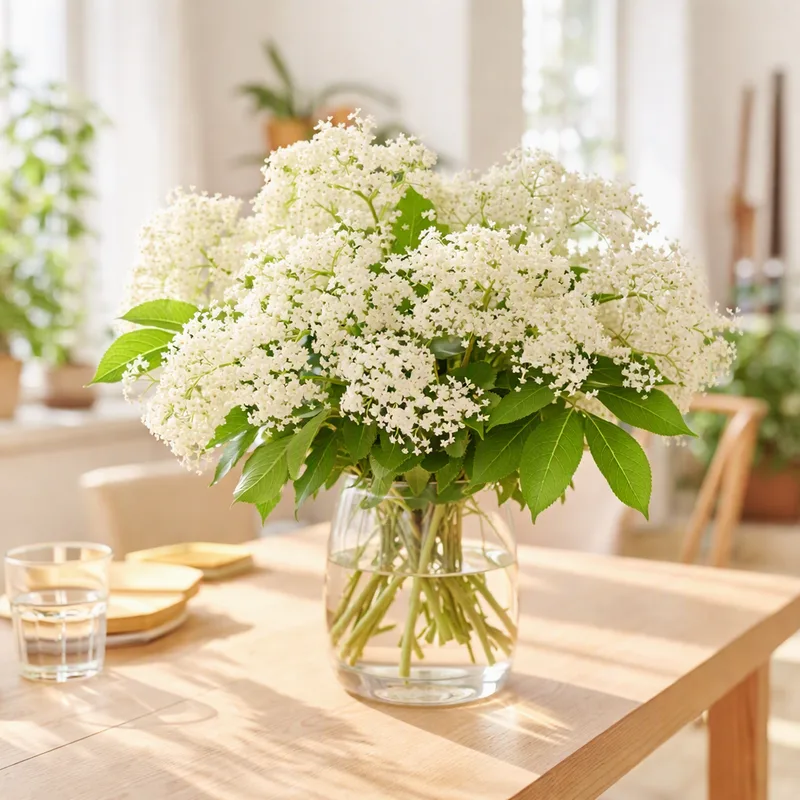
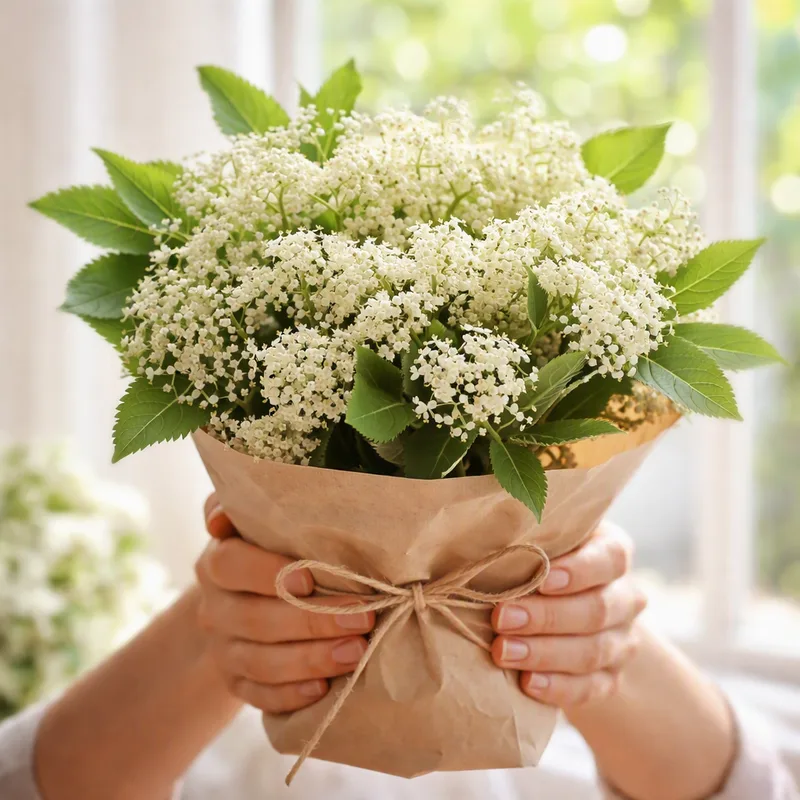
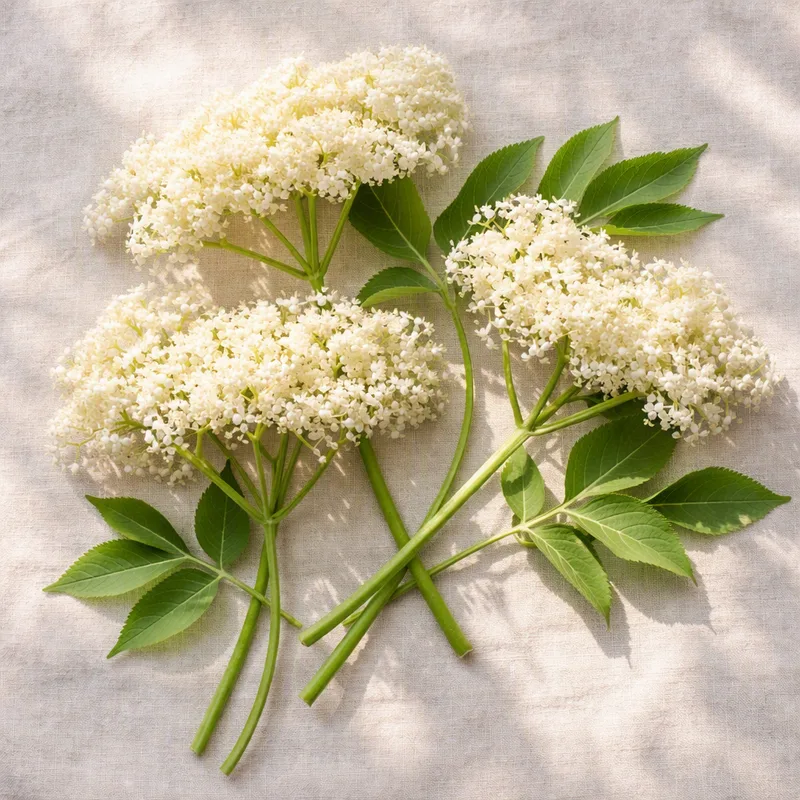
Searching for white elderflower normally means one of two things: the flowering shrub or the ingredient. Both come from the black elder, Sambucus nigra, whose flat, lacy heads open creamy white in late spring, around November in Australia and into December in cooler districts.
In the kitchen
Elderflower cordial is the famous product, made by steeping the heads in sugar syrup with lemon. Heads also go into fritters, jelly and sparkling drinks. Pick on a dry morning when the flowers are fully open and smell sweet. Shake off insects and use soon, because the scent fades quickly.
Growing the shrub
- Plant in autumn or winter in sun or part shade, with moist but free-draining soil.
- Expect a vigorous shrub of three to six metres, so allow space.
- Cut back hard in late winter if you want a smaller plant and larger flower heads.
- It does best where winters are cool, such as Tasmania, the Victorian highlands and Canberra.
Elder in a vase
Elder heads wilt fast in a vase, so most people enjoy the flowers on the shrub. If you do cut some, stand them in deep water straight away and keep them cool.
The parts to leave alone
Wikipedia reports that, besides the flowers and ripe berries, all parts of the plant contain a cyanogenic glycoside and are poisonous to mammals. Use only the flowers and cooked, ripe berries. The ASPCA also lists elderberry as toxic to dogs, cats and horses, so keep pets away from leaves and stems.