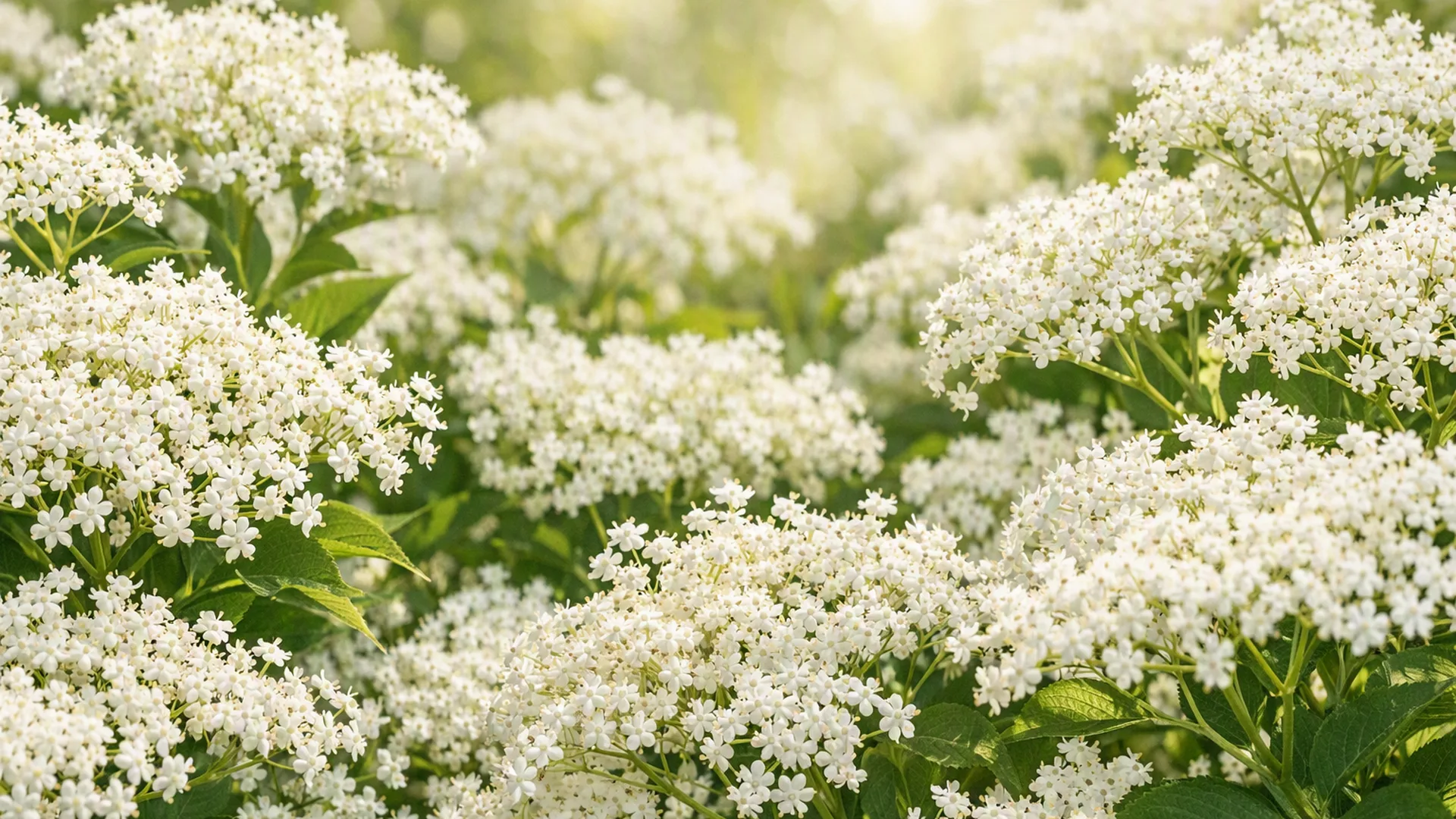
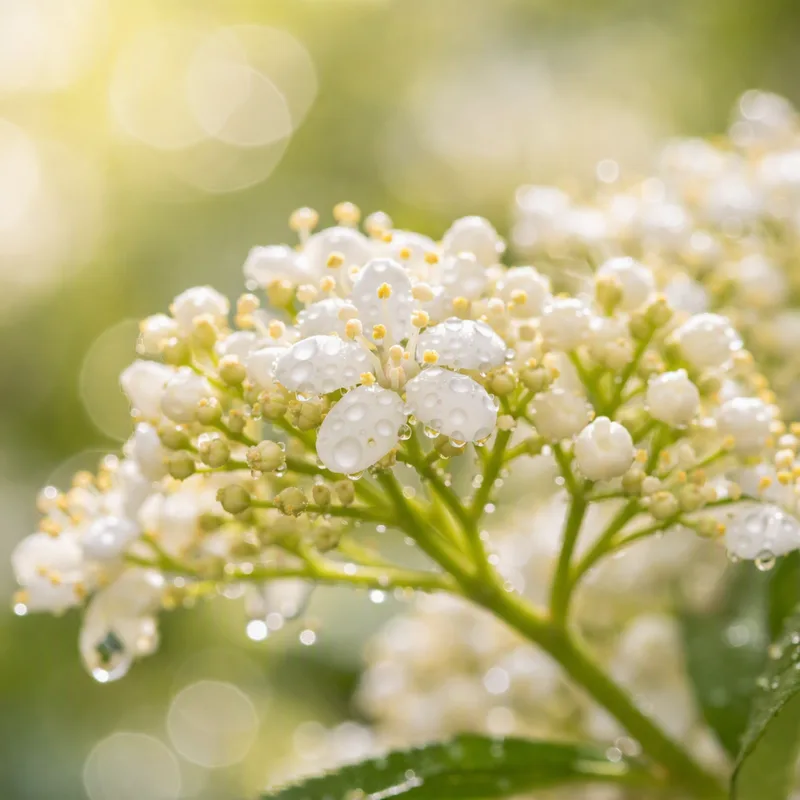
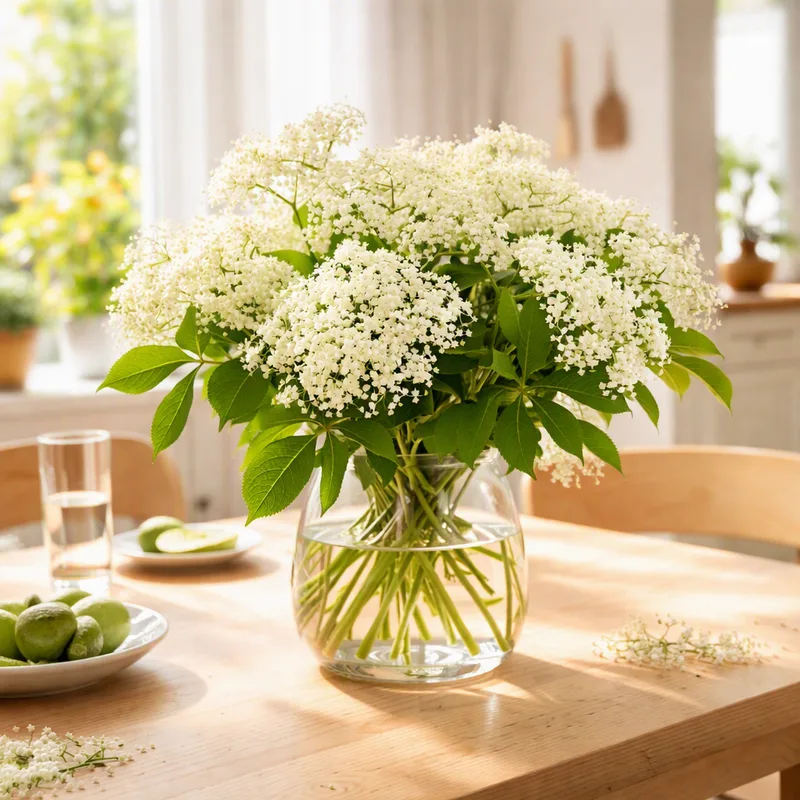
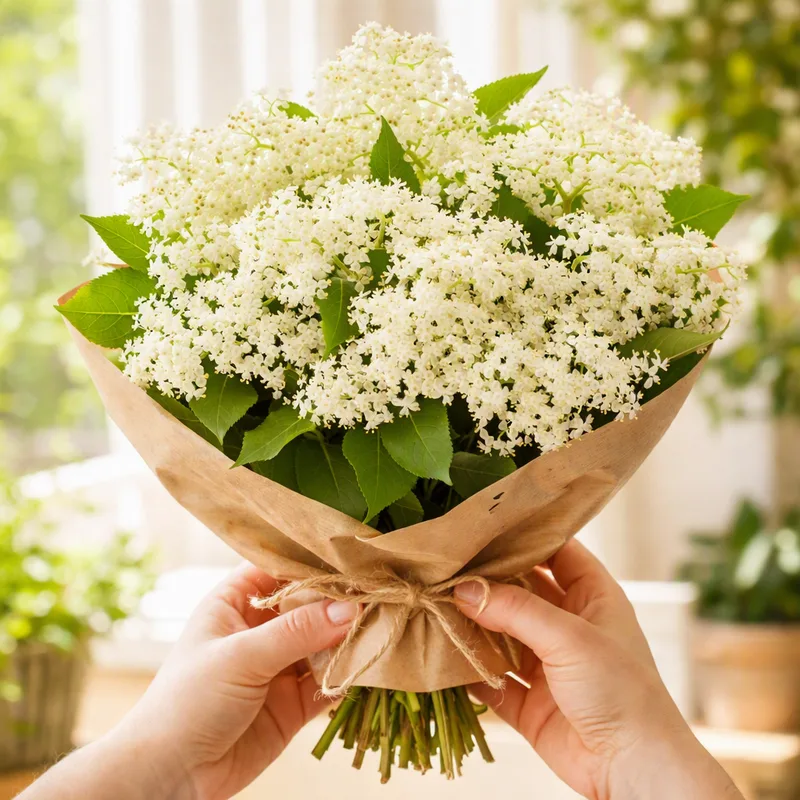
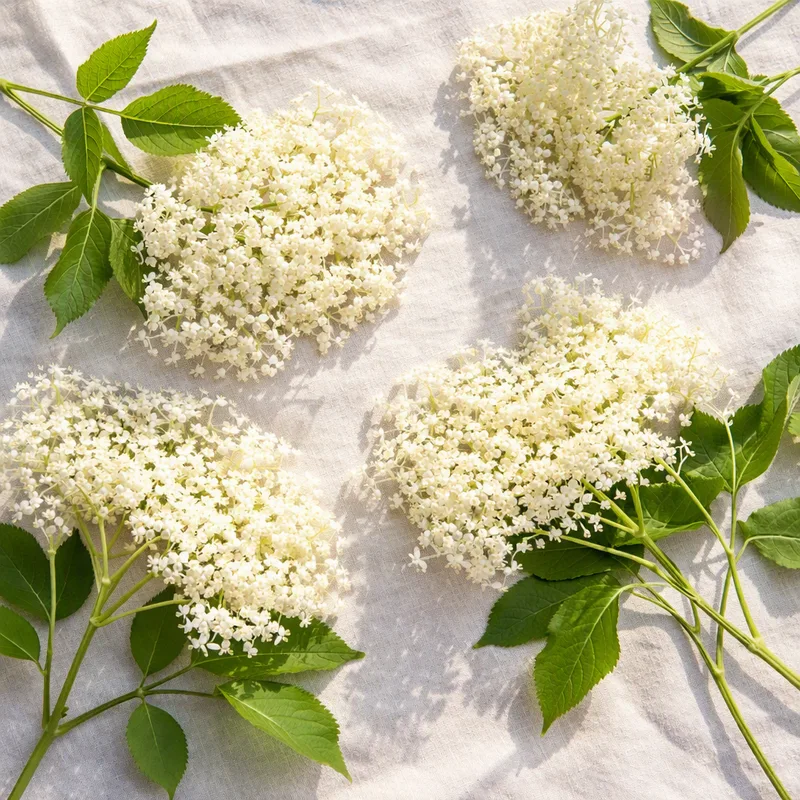
Elderflower is the flower cluster of the black elder, Sambucus nigra, a large shrub native to Europe. Its flat heads of tiny cream flowers have a honeyed, muscat-like scent and are used in cordials, syrups and baking. There is no florist bouquet to speak of: you will mainly find elder as a garden shrub or a foraged ingredient.
A shrub for cool districts
Black elder prefers cooler climates with winter chill, which makes it more common in Tasmania, Victoria and the highlands than on the subtropical coast. The shrub grows 3 to 6 metres tall, flowers in late spring (about November to December) and carries purple-black berries in late summer and autumn. It copes with ordinary soil, but regular watering helps flowers set. Prune hard in late winter to keep it a manageable size.
An Australian elder
Australia has its own elder: Sambucus gaudichaudiana, the white elderberry. It is endemic to eastern Australia, growing in cool forest and shady gorges, with small white flowers and small edible fruit. It is a different, smaller plant from the European black elder.
Kitchen dos and don'ts
The flowers are widely used in food, but it pays to be careful. Wikipedia notes that, apart from the flowers and ripe berries, all parts of Sambucus nigra are poisonous to mammals because of a cyanogenic glycoside. Unripe berries are toxic, and berries are normally cooked. Never use leaves, bark or stems in food.
Livestock and pets
Elderberry is on the ASPCA list of plants toxic to dogs, cats and horses, so keep animals away from prunings and unripe fruit, and call your vet if they have eaten some.